
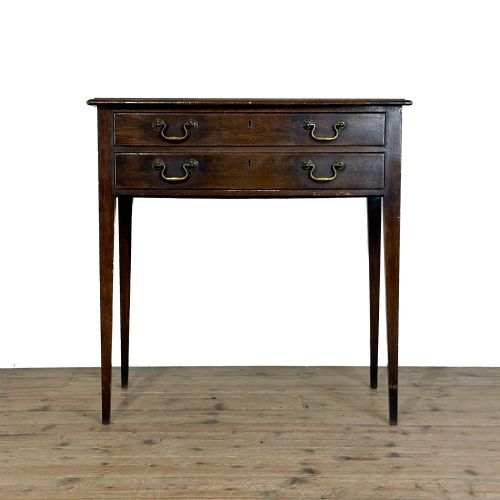
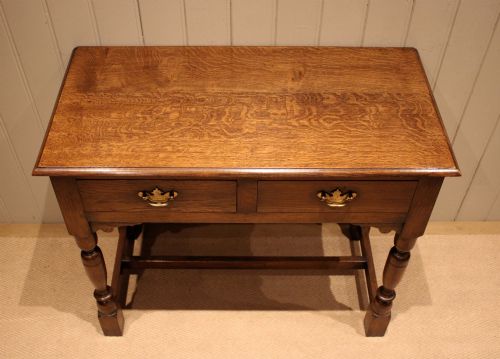

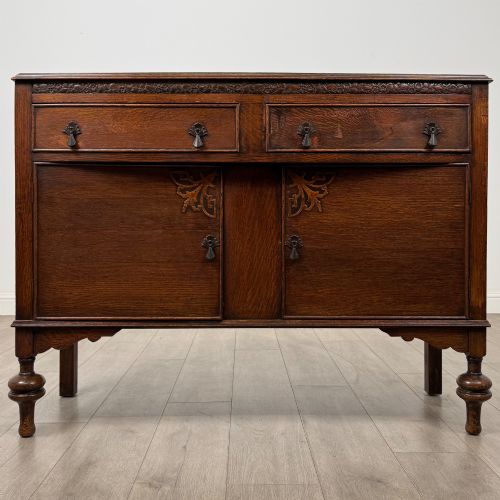
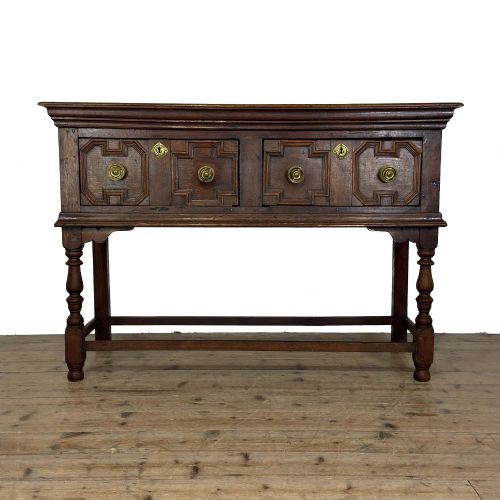
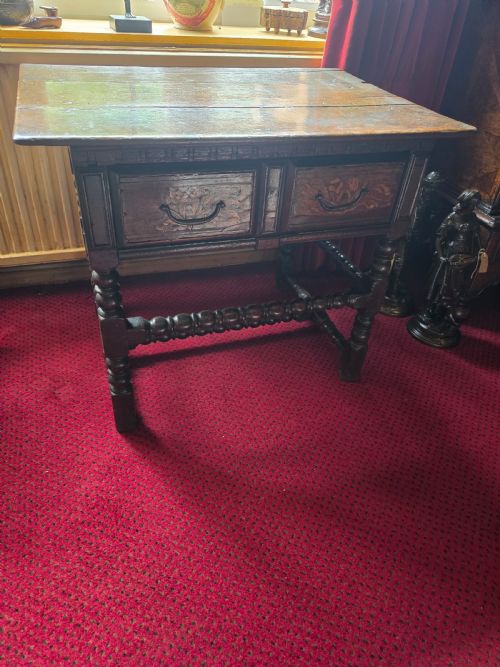
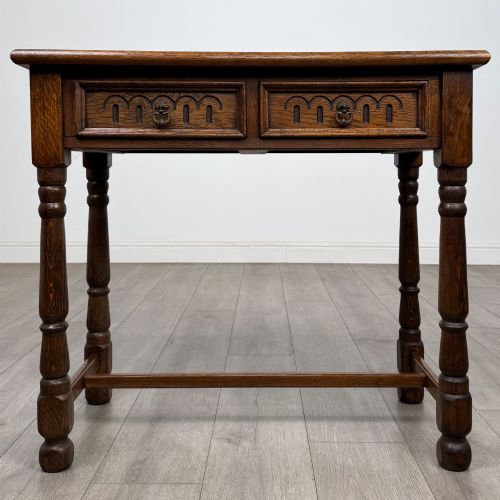


Two Drawer Oak Server
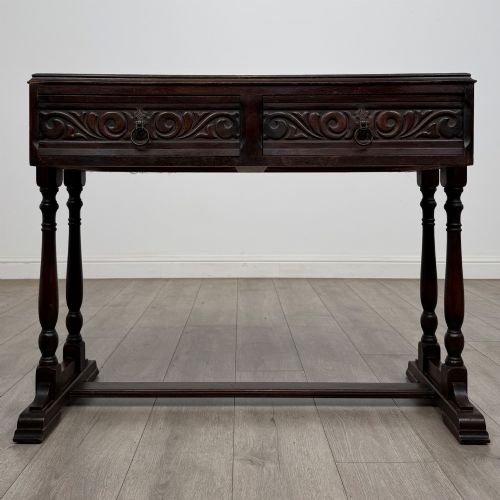
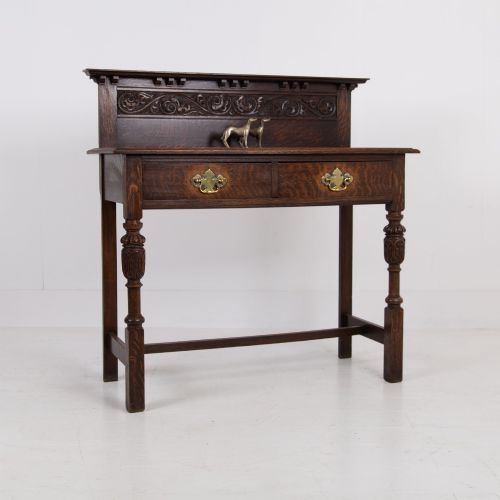
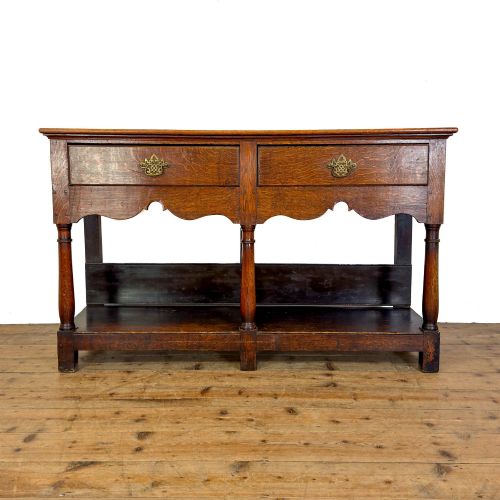
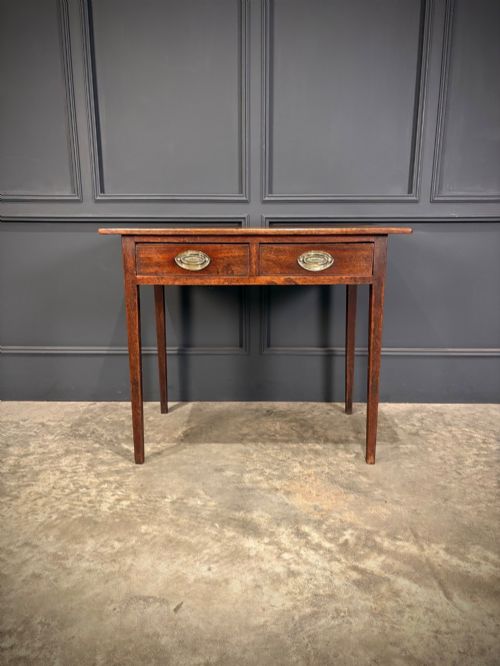
These two drawer oak server examples offer sturdy timber storage and deep historical character for any dining room or hallway.
Two Drawer Oak Server
The pieces span several centuries, reaching from the seventeenth century through Georgian and Victorian periods into the early twentieth century. Regional vernacular designs such as Welsh country pieces sit alongside revival styles and Spanish traditional work.
Side tables and smaller sideboards dominate the selection, offering two drawers arranged beneath a rectangular top. Timber selection leans heavily towards oak, complemented occasionally by mahogany, pine and painted wood surfaces.
How they were made
Carpenters utilised solid oak as the primary structural material, often paired with secondary softwoods like pine for internal framing and drawer construction. Timber surfaces frequently display natural grain patterns developed through traditional sawing methods.
Metal hardware such as brass handles and iron fittings secure the drawers and doors across various periods. Hand carving decorates panels and friezes on revival and vernacular examples, while wood inlay appears on select seventeenth century pieces.
Listings span from the seventeenth century through the Victorian and Edwardian eras, predominantly featuring oak construction with brass and iron hardware.
What varies in quality
The integrity of the timber framing and the crispness of hand-carved ornamentation separate exceptional examples from standard production. Early seventeenth and eighteenth century items display distinct joinery techniques that contrast with later twentieth century revival manufacturing.
Original hardware elements like brass pulls and iron drop handles influence the overall integrity of a piece. The depth of patination on the oak surface reflects age and handling, giving older examples a richer visual texture.
Maple and Co
The Two Drawer Oak Server Glossary
- Lowboy
- A small table with drawers, typically standing on four legs and used as a side table or dressing table. This form provides a compact surface with low storage.
- Dresser Base
- The lower section of a traditional kitchen or dining room dresser, featuring surface space and multiple drawers or cupboards below. These pieces function independently as servers or sideboards.
- Jacobean Revival
- A nineteenth or twentieth century style imitating the heavy, geometric furniture of the early seventeenth century. Carved geometric panels and bulbous legs characterise this aesthetic.
- Welsh Vernacular
- Regional furniture built by local craftsmen using available materials, often displaying simple, robust construction. These pieces reflect traditional country domestic requirements.
- Bobbin Leg
- A turned furniture leg shaped to resemble a series of wooden bobbins or spools strung together. This decorative turning technique appears on seventeenth and nineteenth century tables.
Two Drawer Oak Server: Frequently Asked Questions
What is a two drawer oak server used for?
These pieces function primarily as serving surfaces in dining rooms or as utility tables in hallways and living spaces. The twin drawers provide enclosed storage for cutlery, linen or household items.
Their robust timber construction allows them to bear weight while offering a decorative focal point against a wall.
How can I tell an eighteenth century server from a later revival piece?
Examination of the timber movement, hand-cut joinery and tool marks reveals the age of construction. Eighteenth century examples show natural wear and peg joinery characteristic of period cabinet making.
Twentieth century revival items often display machine tooling and more uniform surface patination across the oak panels.
How do I care for antique oak furniture?
Maintain the timber by keeping it away from direct heat sources and sudden humidity changes that cause wood to split. Apply traditional beeswax periodically to nourish the surface and preserve the natural patination.
Avoid chemical polishes that strip the finish and dull the grain over time.
What is a Welsh dresser base?
A Welsh dresser base forms the lower cupboard and drawer section of a traditional Welsh kitchen storage unit. These items were built sturdy to handle heavy domestic use in rural households.
Without the upper shelving tier, they serve effectively as standalone sideboards or servers.