
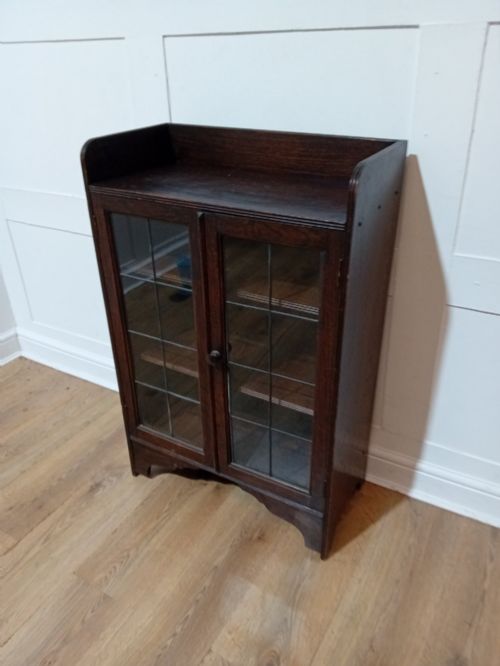
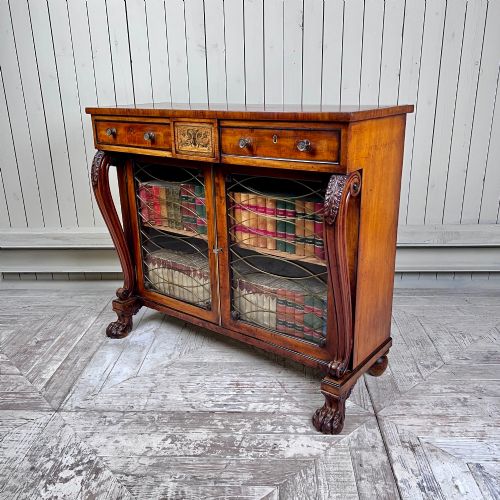
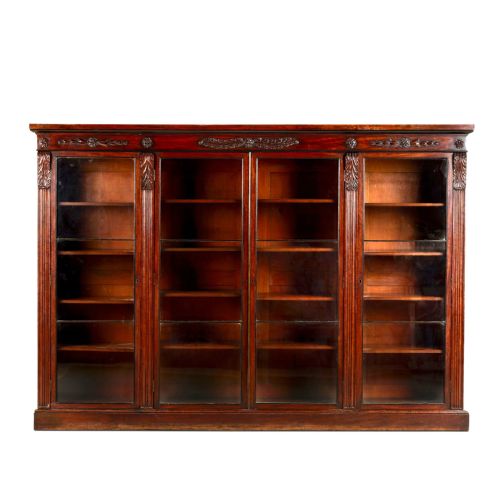
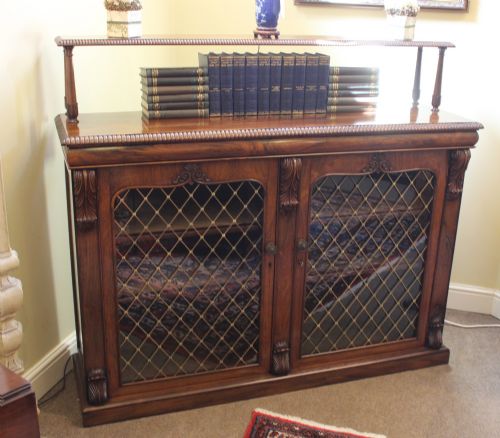
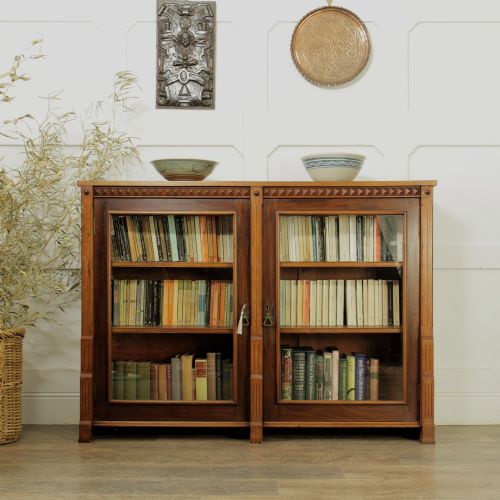
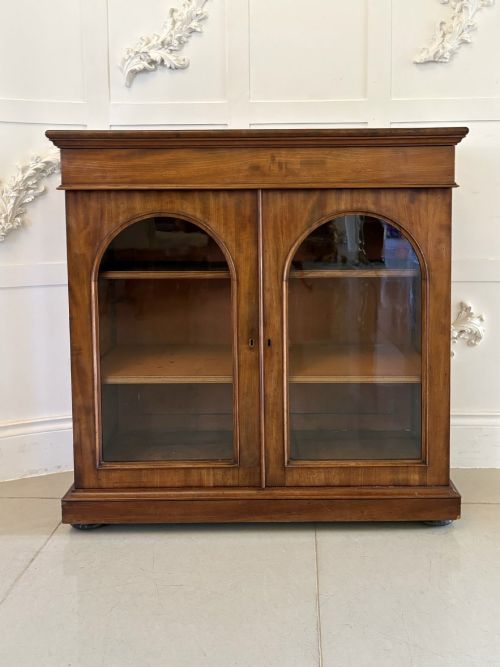
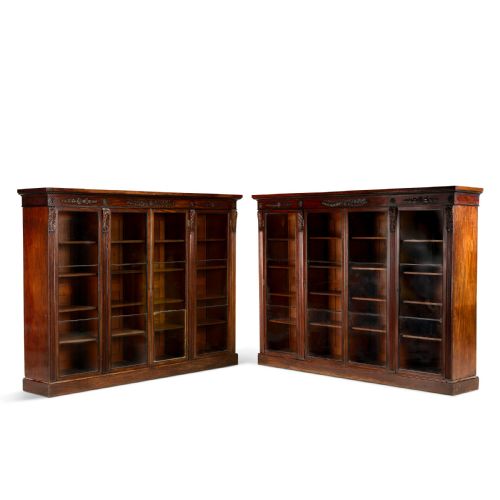
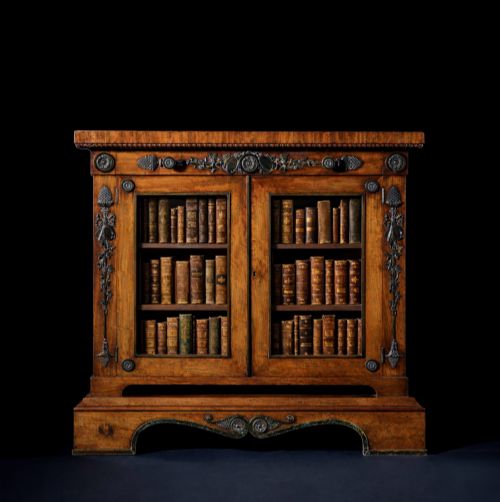
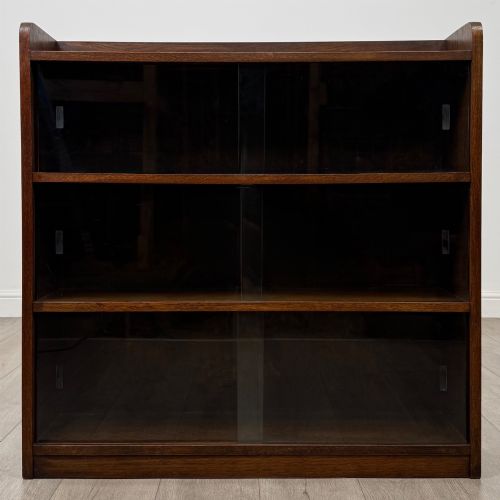
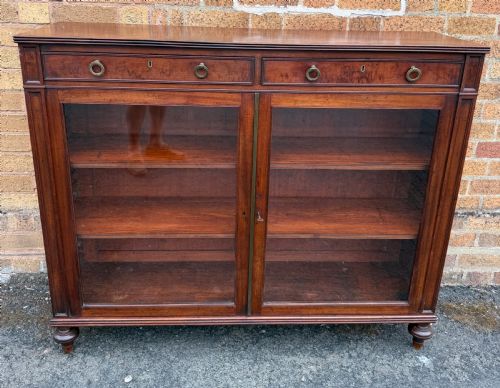
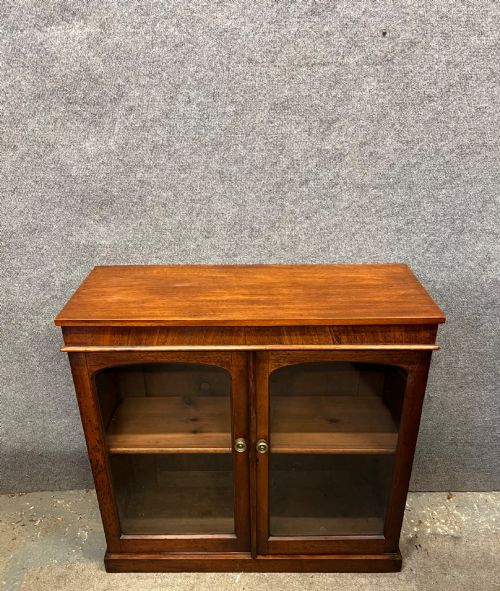
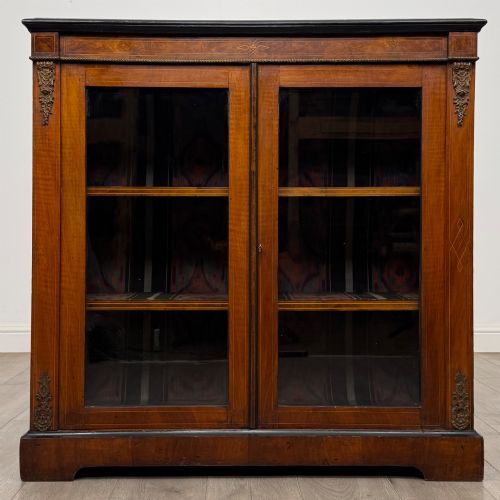
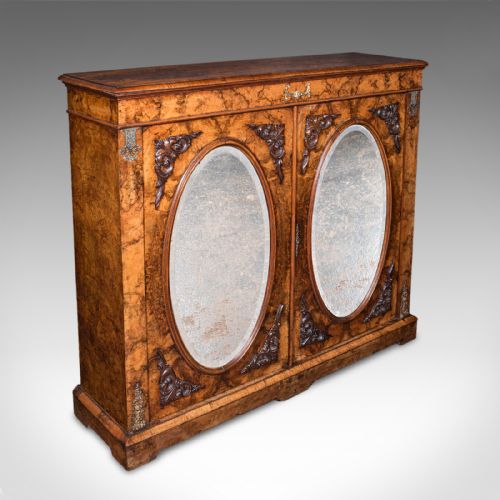
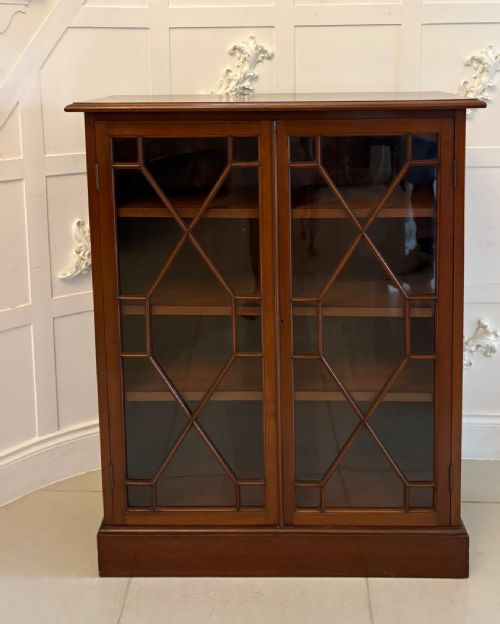
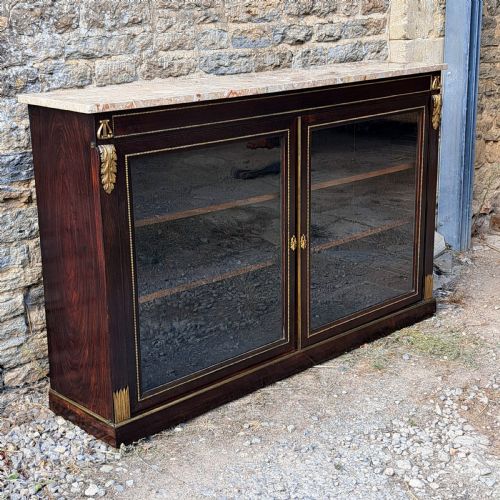
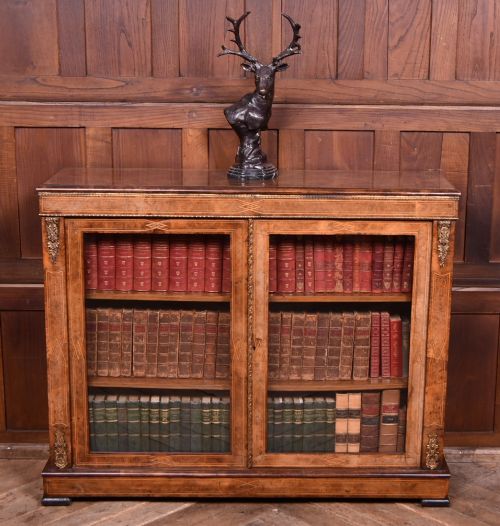
Low Glazed Cabinet
A low glazed cabinet brings timber and glass together at a useful height, giving you display space that sits comfortably beneath eye level.
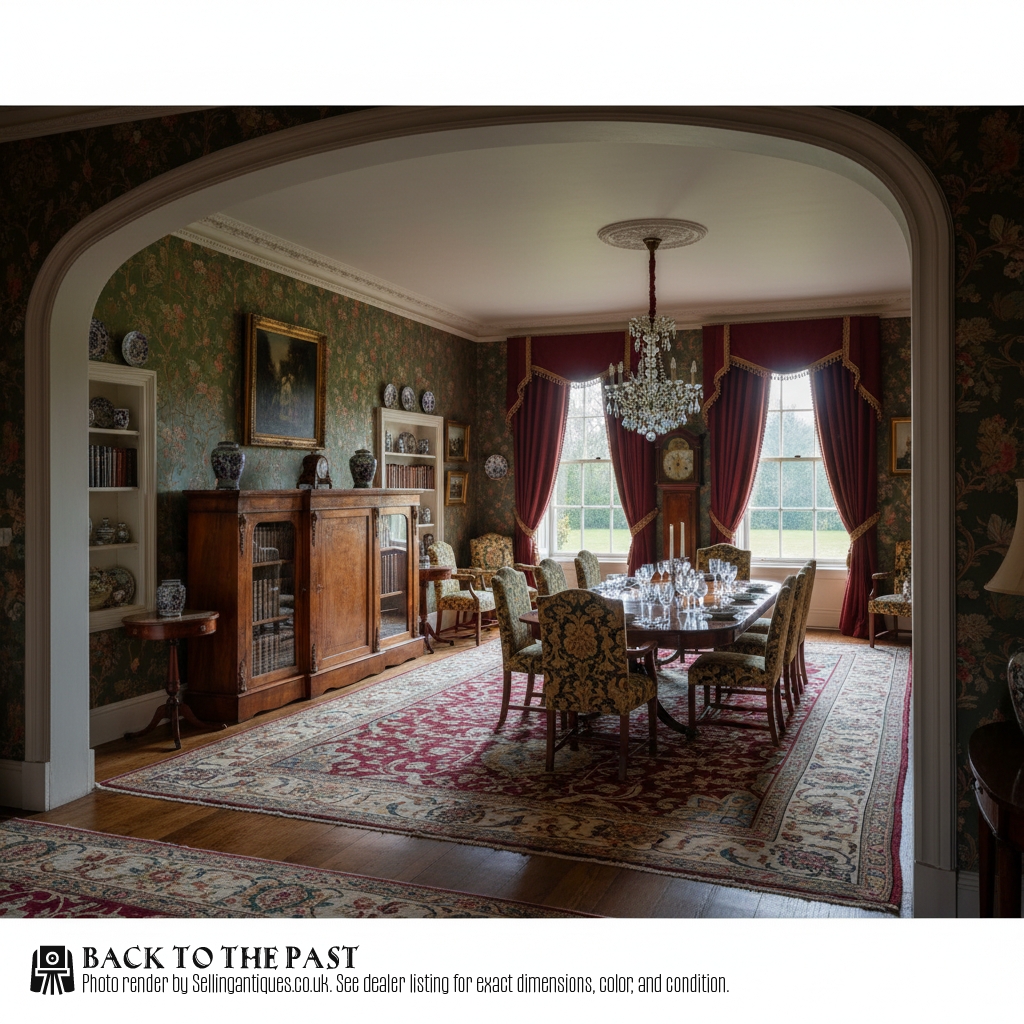
Low Glazed Cabinet
When you search for a low glazed cabinet, you are looking at items designed to hold books or display collections while keeping the room feeling open. The versions you are most likely to meet on this page span the Georgian, Regency, Victorian, and Edwardian periods.
The form appears in various guises across these eras, including side cabinets, chiffoniers, pier cabinets, and bookcases with glazed doors. Timber construction dominates, with mahogany, walnut, and rosewood forming the primary bodies of the pieces.
Makers adapted the low glazed cabinet for different rooms, ranging from the drawing room to the morning room. Dimensions and proportions shift from the linear Regency designs to the heavier Victorian breakfronts and the lighter Edwardian displays.
Materials and Construction
Cabinetmakers built these low glazed cabinets using solid timbers and decorative veneers such as burr walnut, amboyna, and figured mahogany. Glass panels, secured by timber glazing bars or astragals, protect the contents while offering a clear view of the interior shelves.
Periods represented span Georgian, Regency, Victorian, Edwardian, and Arts and Crafts styles.
Distinctions in Execution
The choice of timber grain dictates much of the visual appeal, separating standard production from exceptional examples through figured veneers and well-matched mahogany or burr walnut. Finer pieces demonstrate precise joinery in the glazing bars and crisp casting in any bronze or brass mounts.
Proportion and restraint in ornament separate the more refined cabinets from simpler utilitarian cupboards. Well-executed inlay and well-chosen secondary timbers show the care taken by the cabinetmaker during construction.
The Low Glazed Cabinet Glossary
- Astragal
- Timber or metal moulding that divides panes of glass within a door. These bars form geometric patterns across the glazed front.
- Chiffonier
- A low sideboard or cabinet developed in the Regency period, often featuring a shelf on top and enclosed cupboards below.
- Breakfront
- A piece of furniture where the central section projects forward from the flanking wings. This layout creates depth and breaks up the horizontal line of the cabinet.
- Pier cabinet
- A narrow cabinet designed to fit the wall space between windows. They frequently feature glazed doors to display porcelain and small objects.
Low Glazed Cabinet: Frequently Asked Questions
Where should I place a low glazed cabinet?
These cabinets suit living rooms, studies, and hallways where a tall bookcase would block light or overwhelm the proportions of the room. Their lower height leaves wall space free above for art or mirrors.
Position them away from direct heat sources to protect the polished timber surfaces and the antique veneers from drying out or splitting over time.
How do I care for the wood and glass?
Dust the timber regularly with a dry cloth and apply occasional high-quality wax to nourish polished surfaces like mahogany and walnut. Avoid modern silicone sprays that build up and attract dust.
Clean the glass panes with a mild glass cleaner applied to a cloth rather than sprayed directly, ensuring the liquid does not seep into the timber frames or antique glazing bars.
Can the shelves be adjusted?
Many period glazed cabinets feature fixed shelving, though surviving examples from the nineteenth century occasionally incorporate adjustable shelf systems supported on wooden racks or metal pins.
Check the interior of the specific cabinet to see whether the shelves are set into fixed housings or designed to be moved to accommodate different heights of books.
What is the difference between a chiffonier and a pier cabinet?
A chiffonier is typically a low sideboard configuration originating in the Regency era, often combining a lower cupboard with a raised shelf back or glazed doors for storage. They were common in dining rooms and living spaces.
A pier cabinet is generally narrower, designed specifically to stand against the narrow pier of wall between two windows. They almost exclusively feature glass doors to display decorative collections.