
Low Dressing Stool
A low dressing stool offers compact seating for the vanity, combining timber frames with textile or leather upholstery across several historic periods.
Low Dressing Stool
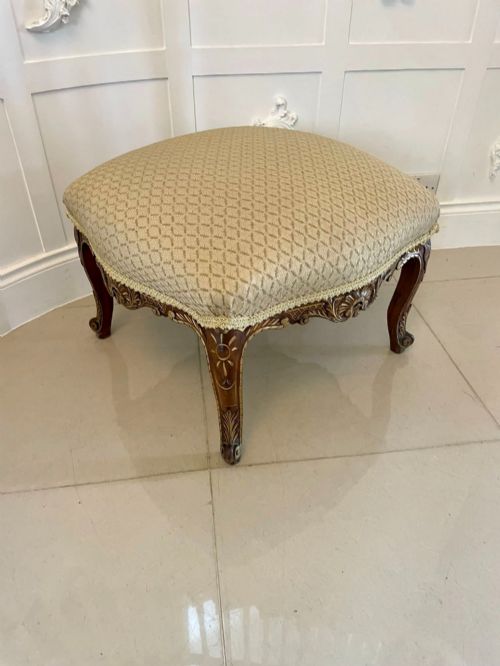
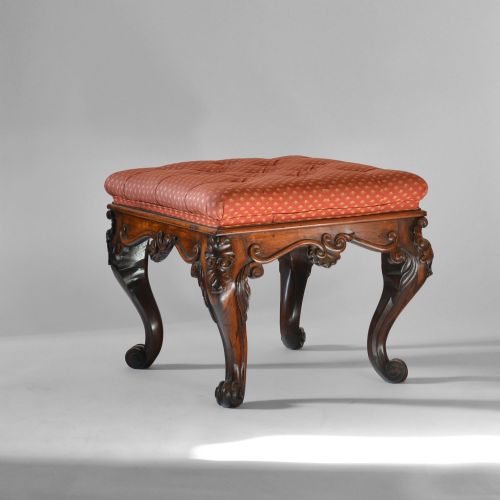
A low dressing stool serves as a practical seat before a bedroom vanity or dressing table, sitting lower than standard chairs to allow comfortable grooming. When you explore this selection, you encounter pieces spanning from the eighteenth century through the Victorian era and into the Art Deco period.
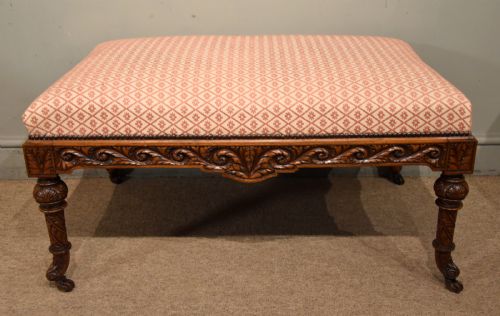
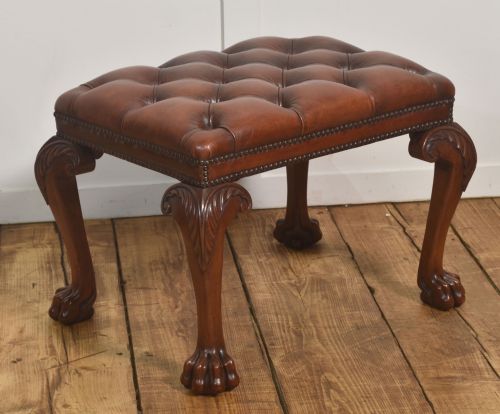
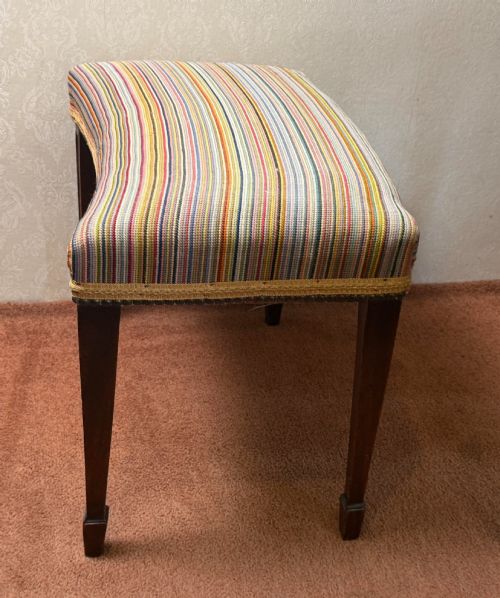
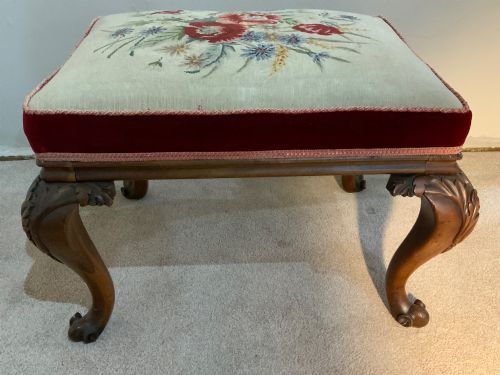
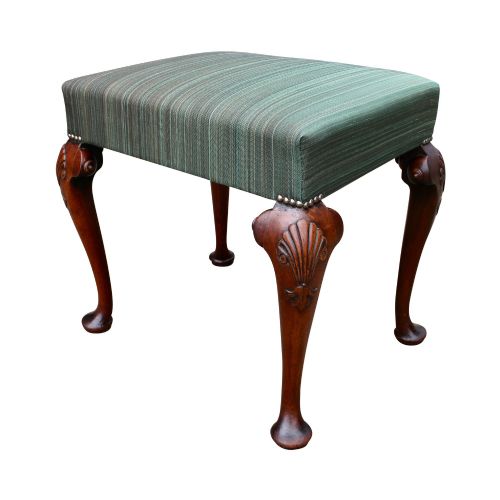
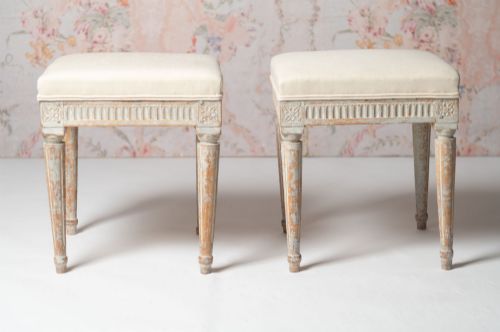
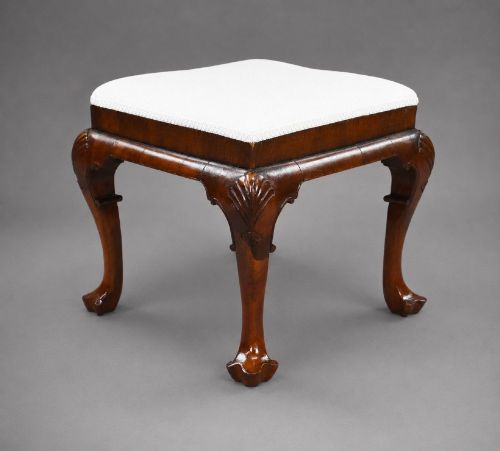
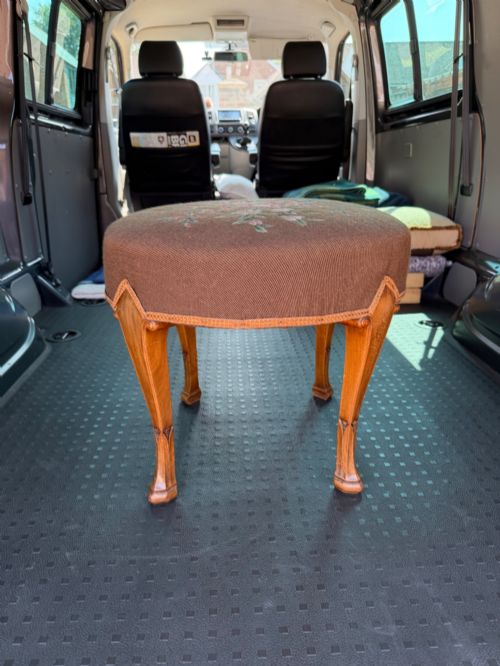
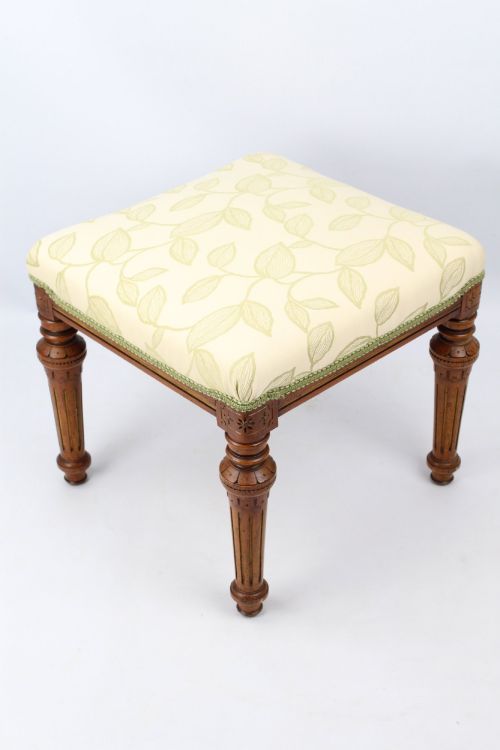
The most common forms on this page include mahogany, walnut, and rosewood frames paired with upholstered seats in fabric, leather, or tapestry. Many examples adopt historical revival designs, notably Queen Anne and Chippendale styles, featuring cabriole legs or square tapering supports.
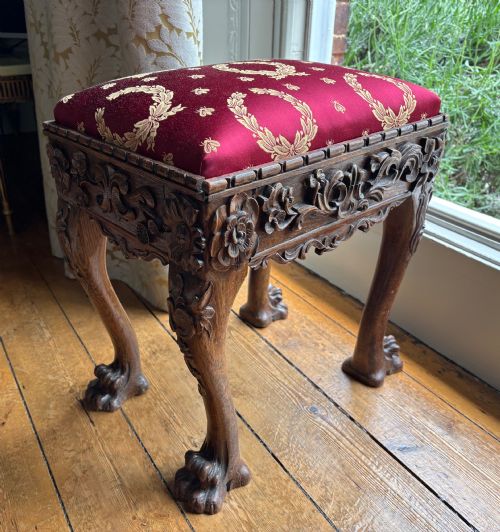
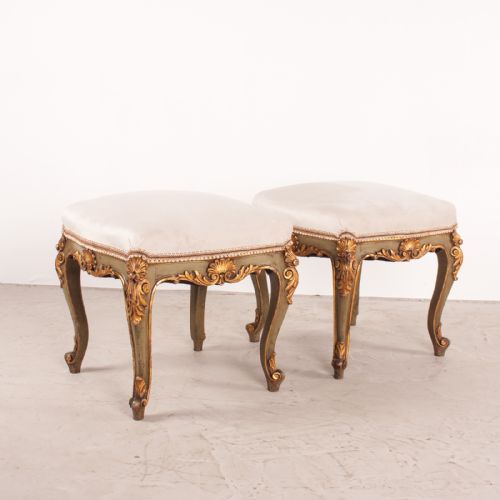
Originating largely from British and continental workshops, these seats range from simple turned beech frames with cane seats to elaborately carved giltwood and walnut salon pieces. Their compact dimensions make them adaptable for placement in bedrooms and dressing rooms alike.
Materials and construction
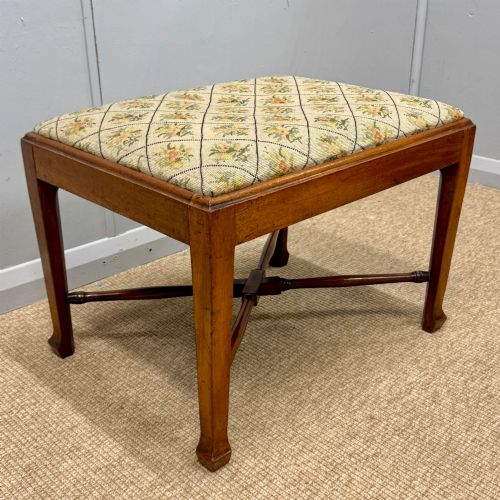
Cabinetmakers constructed the frames primarily using dense hardwoods such as mahogany, walnut, and rosewood, occasionally employing oak, beech, or exotic veneers like burr walnut and birds eye maple. These timbers were shaped into cabriole legs, straight tapering supports, or barley-sugar turnings, often joined with cross stretchers for stability.
Upholstery methods involved securing textiles, leather, tapestry, or needlepoint over padded seats, sometimes incorporating brass detailing or carved gilt accents on the wooden framework. Joinery techniques varied from traditional pegging in earlier pieces to sturdier nineteenth-century framing.
The selection includes revival styles such as Queen Anne, Chippendale, and Victorian Rococo alongside distinct Art Deco pieces.
Judgments of quality
The distinction between standard and superior pieces rests on the crispness of the hand-carved wood detail and the selection of figured timber veneers. Finer examples display carefully chosen grain patterns on walnut or mahogany frames and exhibit robust joinery that withstands daily use.
The integrity of the frame and the quality of the upholstery execution also dictate the standing of a piece. Original or sympathetic reupholstering using traditional materials preserves the character of older seating far better than modern synthetic replacements.
Harry and Lou Epstein·Arthur W Simpson·Gillows of Lancaster·Loidrault Freres Paris
The Low Dressing Stool Glossary
- Cabriole leg
- A furniture leg that curves outward at the knee and tapers inward toward the ankle, typical of Queen Anne and Chippendale designs. This form mimics the natural shape of an animal's leg.
- Cross stretcher
- Wooden rails connecting the lower legs of a stool to provide structural support and stability. They frequently feature central bosses or turnings.
- Needlepoint
- A type of counted thread embroidery stitched onto canvas to create durable decorative seat covers. It appears frequently on Victorian and Edwardian dressing stools.
- Oyster veneer
- Slices cut transversely from small branches or roots to produce circular or oval patterns resembling oyster shells. This technique is found on earlier walnut furniture.
- Giltwood
- Timber coated with a thin layer of gold leaf or gilt paint to give a metallic finish. It is characteristic of decorative continental and Victorian revival pieces.
Low Dressing Stool: Frequently Asked Questions
What is a low dressing stool used for?
A low dressing stool provides a seat specifically scaled for a dressing table or vanity mirror. Its compact height allows a person to sit comfortably while grooming.
Beyond the bedroom, these small seats function easily as movable footstools or occasional perches in living spaces.
Are these stools comfortable for daily seating?
Most pieces feature padded upholstered tops covered in leather, textile, or fabric designed for sitting. Because they lack backs, they encourage upright posture during short tasks.
Their primary purpose involves vanity use rather than lounging for extended periods.
How do Art Deco stools differ from earlier ones?
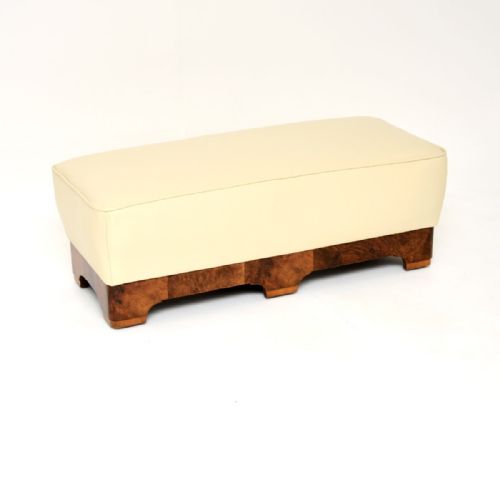
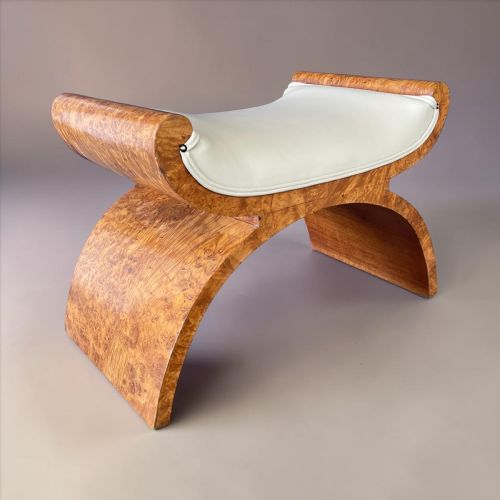
Art Deco dressing stools lean into streamlined forms utilising burr walnut, birds eye maple, and leather. They discard ornate historical carving in favour of clean geometric lines.
Designers during this period focused on smooth polished wood grains and minimalist silhouettes.