
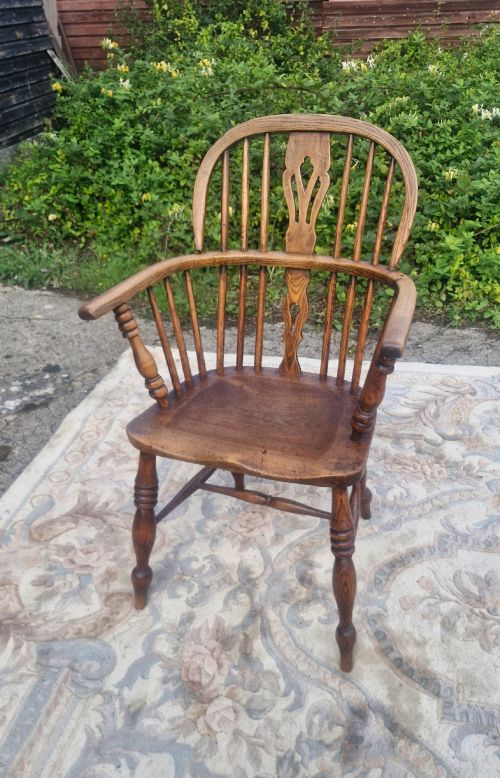
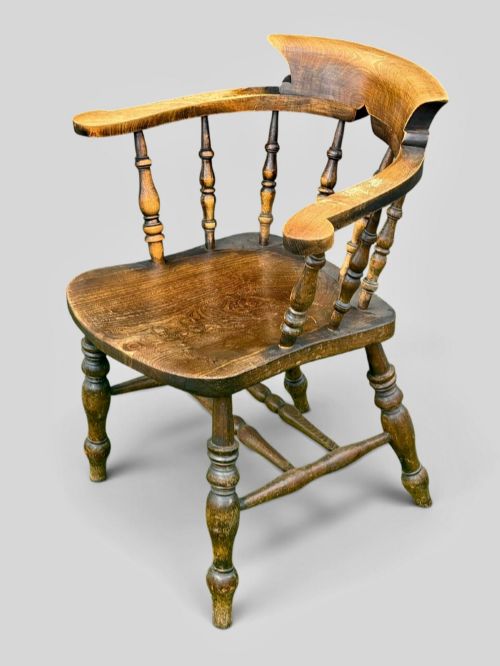
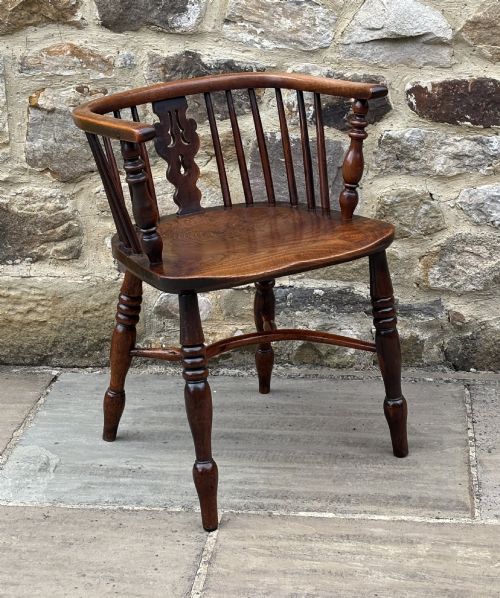
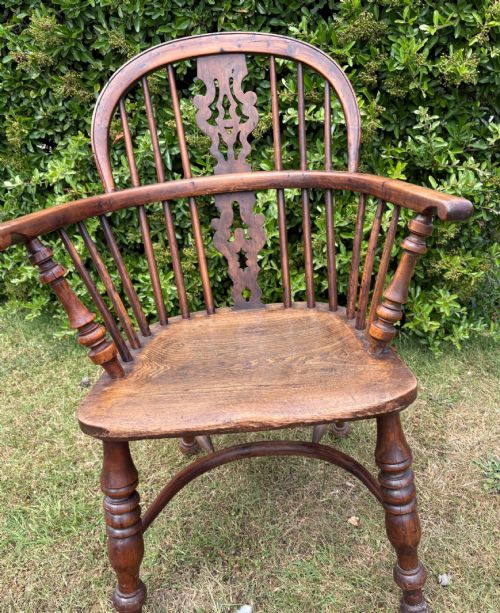
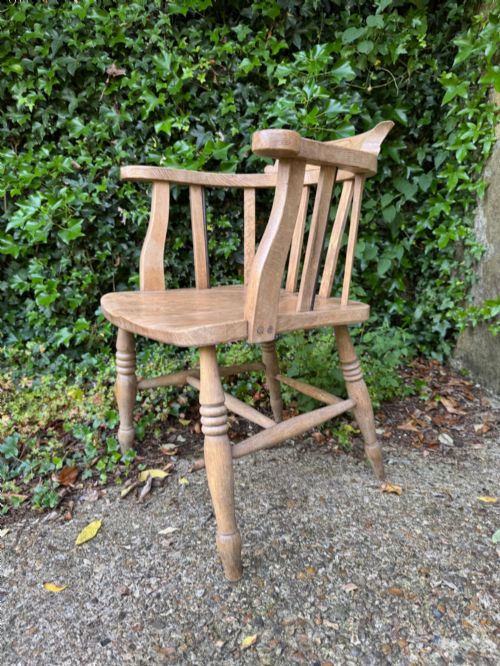
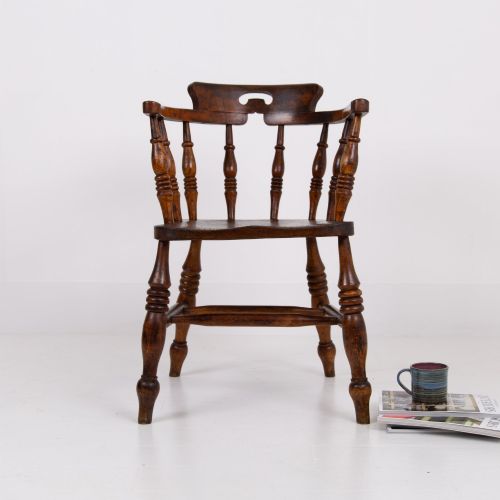
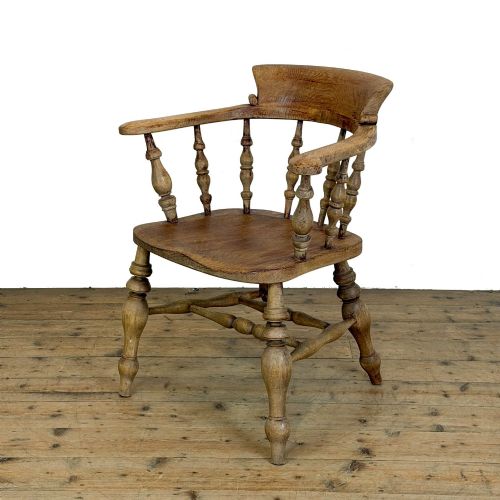
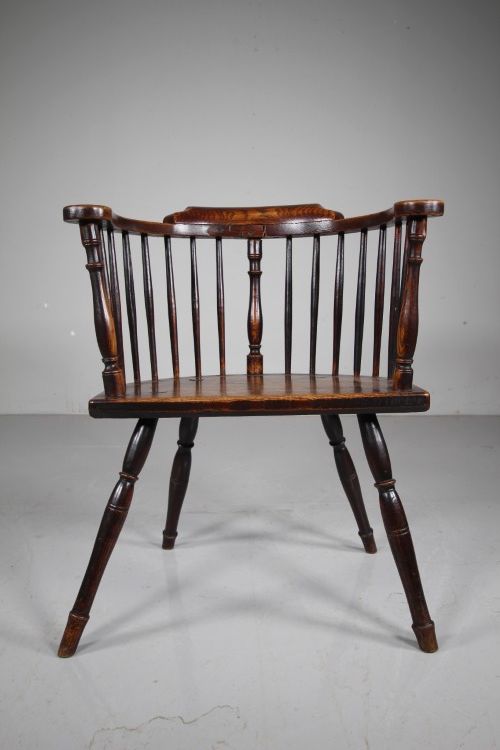
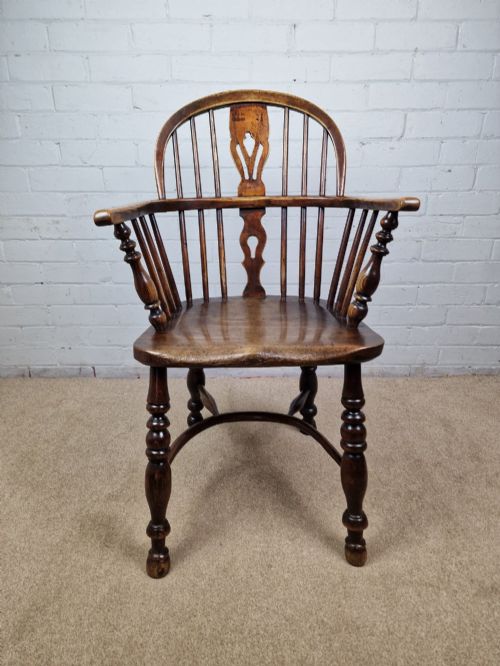

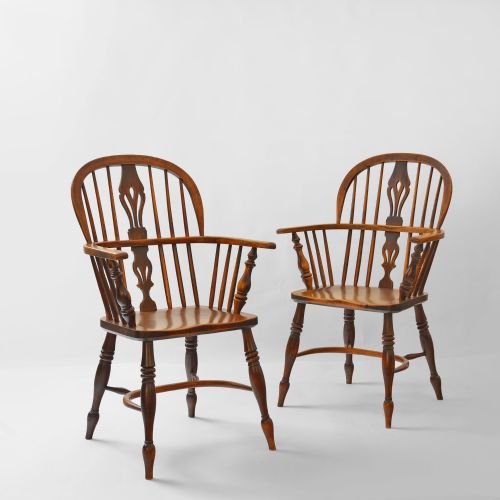


Low Back Windsor Armchair
A low back Windsor armchair brings sturdy English vernacular character and solid timber construction to any room.
Low Back Windsor Armchair
A low back Windsor armchair is a traditional English seating form characterised by a low, often bowed back rail supported by vertical spindles rather than a high backrest. When searching for a low back Windsor armchair, buyers encounter pieces originating from regional English workshops spanning the eighteenth and nineteenth centuries.
The most common variations appearing in these listings combine a shaped elm seat with ash spindles and legs, or feature dense yew wood construction. These pieces include smokers bows, captain chairs, and provincial country armchairs designed for everyday domestic and tavern use.
Examples range from single provincial finds to matched sets of dining chairs and pairs originating from Nottinghamshire, Worksop, and the Thames Valley. Their robust stick-back construction and low profile make them practical seating options that fit easily beneath tables or beside hearths.
How they were made
Traditional makers built these chairs using a combination of turned green wood and sculpted solid timber. Seats were typically carved from a single thick slab of elm to provide a comfortable, scooped sitting surface.
Underframes and spindles rely on tough timbers like ash, beech, and oak, shaped on a lathe and joined directly into bored holes in the seat using wedges and glue. Selected models incorporate richly figured yew wood, sometimes featuring burr splats and natural grain patterns that highlight the maker's material choices.
Some nineteenth-century examples were built in child sizes, offering miniature low back Windsor seating for younger household members.
What varies in quality
Quality in these chairs rests upon the selection of timber and the harmony of regional proportions. Examples fashioned from figured yew wood or retaining untouched original paint surfaces stand apart from standard utility seating.
The sophistication of the arm bow steam-bending and the careful shaping of the comb or splat dictate the refinement of the piece. Well-balanced turnings on the legs and H-stretchers alongside deep, comfortable seat saddles distinguish superior provincial craftsmanship from basic workshop output.
Gabbitass Worksop·Rockley Maker·Prior
The Low Back Windsor Armchair Glossary
- Smokers bow
- A low-backed Windsor chair variant featuring a continuous curved arm and back rail, historically popular in nineteenth-century smoking rooms and taverns. These comfortable elbow chairs often paired ash framing with elm seats.
- Captain's chair
- A sturdy low-backed armchair designed with a rounded top rail supported by numerous turned spindles. The form offers compact seating whilst maintaining robust country construction.
- Comb back
- A Windsor chair style where vertical spindles rise through a flat or shaped crest rail resembling the teeth of a comb. This construction provides additional back support while maintaining the characteristic stick-back aesthetic.
- Wheel back
- A Windsor chair design featuring a pierced wooden splat carved in the circular shape of a spoked wheel. This decorative central element is set between the vertical spindles of the backrest.
Low Back Windsor Armchair: Frequently Asked Questions
What is a low back Windsor armchair?
A low back Windsor armchair is a traditional wooden seating form featuring a central seat slab with independent legs and back spindles inserted directly into bored holes. They rely on stick-back construction rather than traditional cabinet-made joinery.
These chairs developed through regional English provincial traditions, offering sturdy everyday seating with low profiles that suited domestic kitchens and public houses alike.
How do I date an antique Windsor chair?
Dating involves examining the combination of timbers used, tool marks on the underside of the elm seat, and the turning style of the legs and stretchers. Earlier eighteenth-century examples often display broader proportions and heavier underframes.
Nineteenth-century variants, including Victorian smokers bows, frequently utilise standardised machine turnings alongside steam-bent ash bow rails and distinct regional characteristics.
Where were Windsor chairs made?
Windsor chairs were produced across various English counties, with notable production centres in the Thames Valley, Nottinghamshire, and Yorkshire. Provincial makers utilised local timbers available in their surrounding woodlands.
Makers in towns such as Worksop and regional workshops supplied local demand as well as sending pieces to larger cities via established transport networks.
Can I use these chairs for daily dining?
Their durable construction from dense hardwoods like ash, elm, and yew makes these chairs well-suited for regular daily seating around a dining table. The robust peg and wedge joinery is engineered to withstand active use.
Placing them in a dining space brings historic character and solid timber reliability, provided the original seat joints and legs remain secure.