
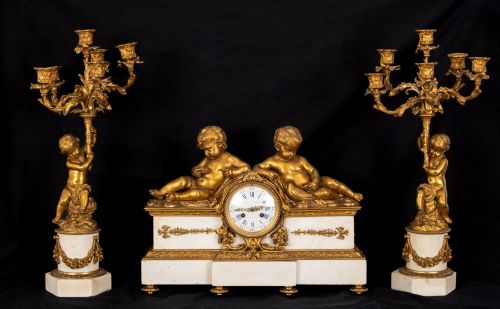


Louis XVI Table Clock
A louis xvi table clock brings French Neoclassical precision and gilt bronze symmetry to a mantelpiece or desk.
Louis XVI Table Clock
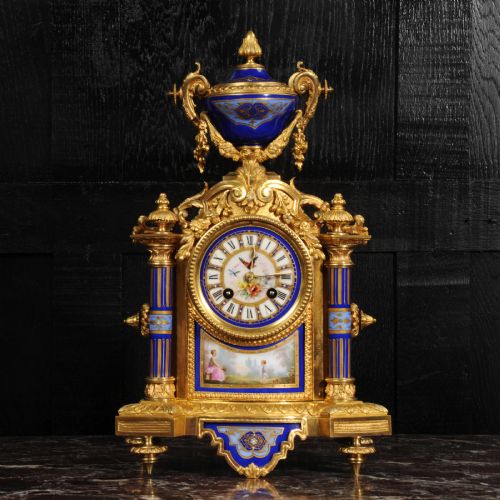
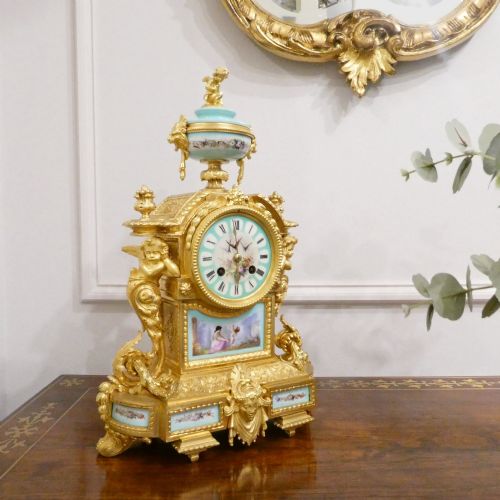
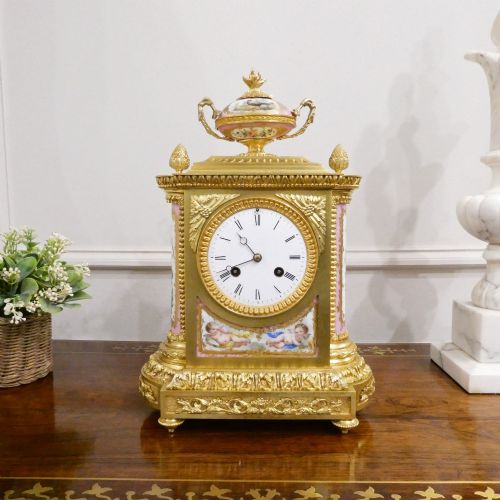
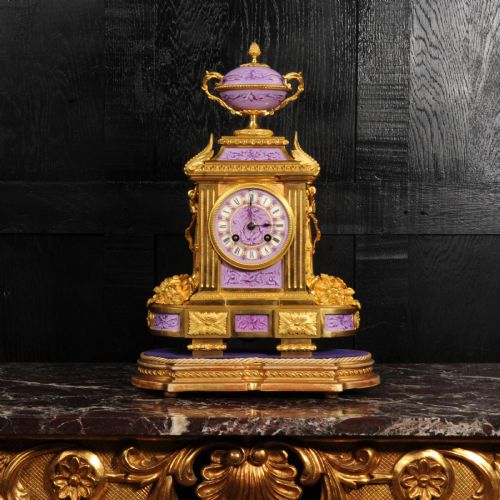
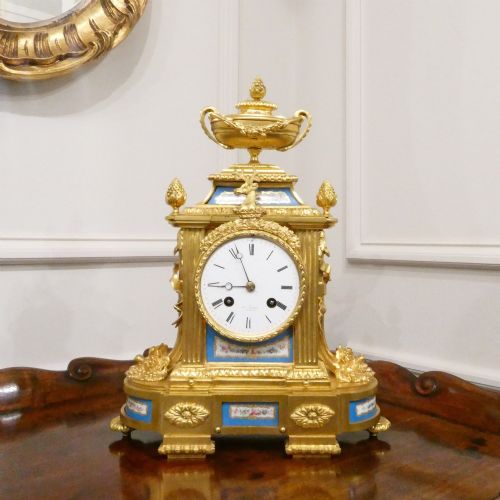
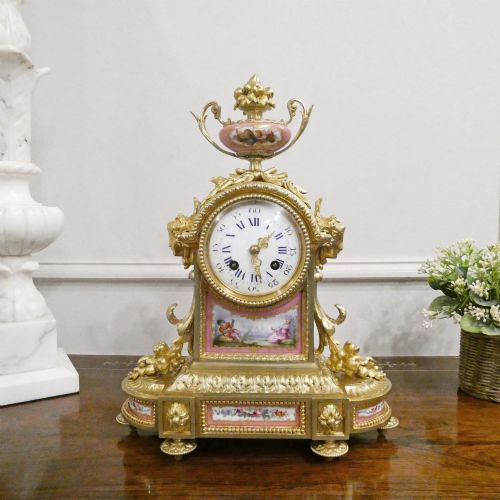
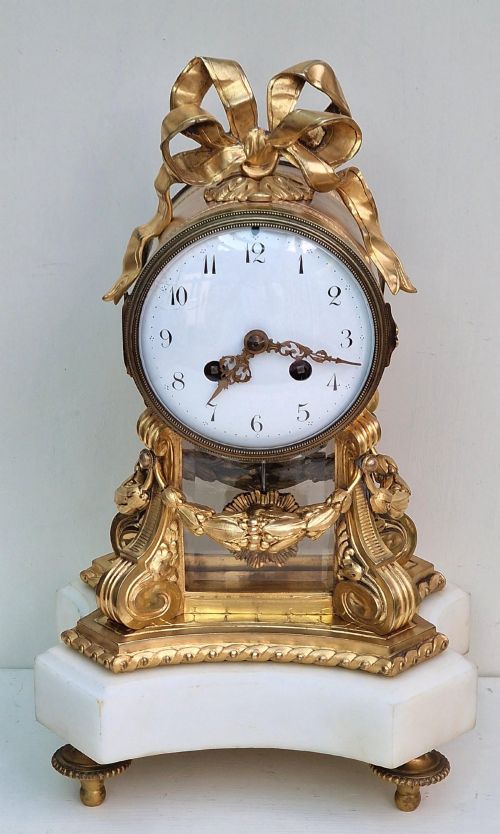
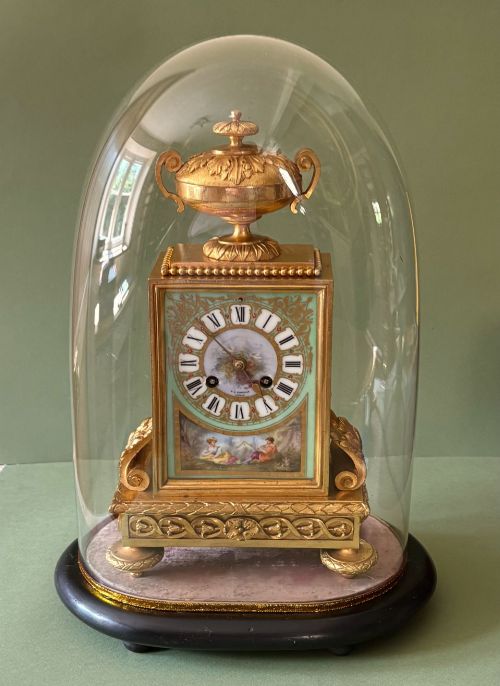
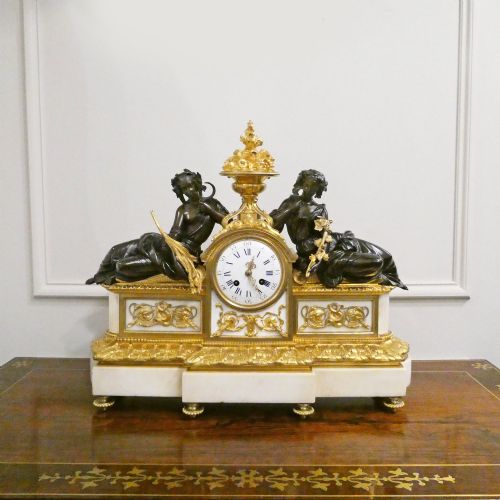
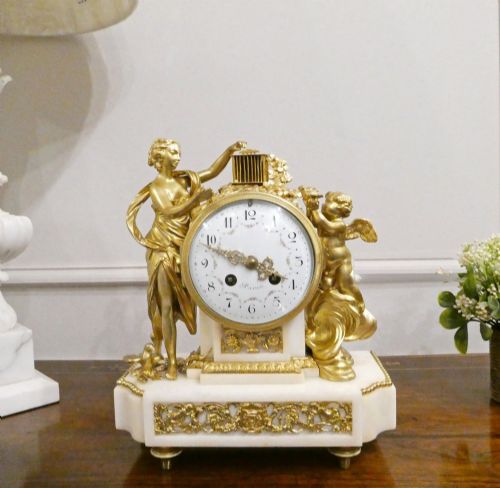
A louis xvi table clock typically takes the form of a mantel clock or clock garniture, housing a mechanical movement within an architectural or sculptural case. The examples found here span the eighteenth, nineteenth, and early twentieth centuries, capturing both original period production and later revival styles.
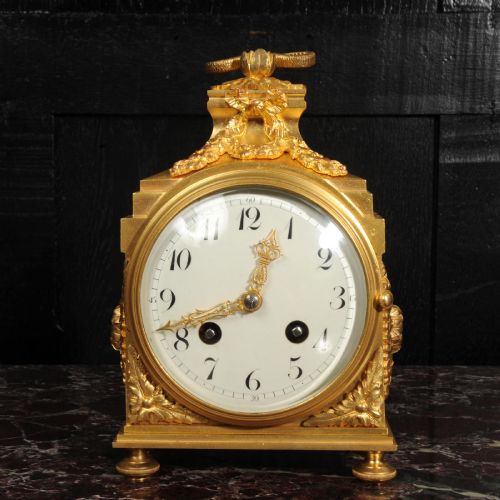
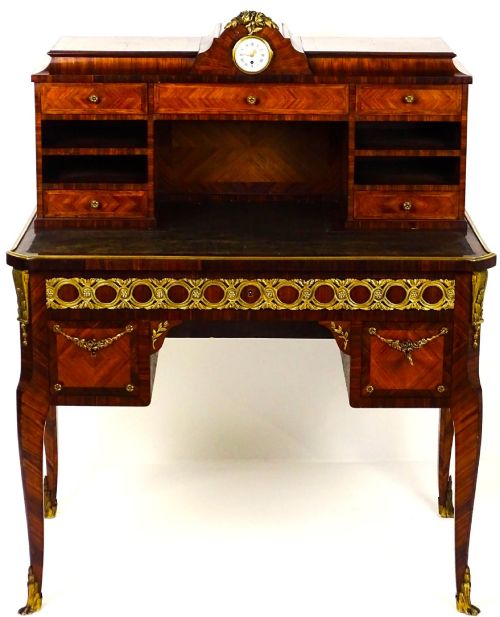
Most pieces seen on this page follow the Louis XVI or French Neoclassical style, featuring symmetrical mounts, urn motifs, and classical proportions. Alongside standard mantel clocks, variations include drum head clocks, four-glass bracket clocks, and desk clocks set in marble or wood.
How they were made
Cases combine cast ormolu and gilt bronze with contrasting elements of white marble, rouge marble, and hand-painted porcelain panels such as Sèvres. Metal components were cast, chased, and gilded, then assembled around brass clock movements driven by springs or pendulums.
Dial faces frequently utilise enamel on copper with painted roman or arabic numerals, protected behind bevelled glass. Cabinetry elements incorporate Kingwood veneers and brass inlay where wooden desks or specialised clock cases are concerned.
Several timepieces feature permanent brass doves perched atop the case, offering romantic companionship that requires neither feeding nor water.
What varies in quality
The crispness of the bronze chasing and the depth of the fire-gilding separate standard production from exceptional pieces. Superior cases show sharp relief in floral swags, drapery, and figural details like putti or doves, rather than soft, flat casting.
The integration of the materials dictates overall harmony, with finer clocks employing carefully matched marbles and hand-painted porcelain panels that complement the surrounding metalwork. Movement makers of note provide mechanical reliability and refined escapements alongside decorative merit.
Japy Freres·Jean-Baptiste Delettrez·Achille Brocot·Henry Marc·Vincenti·Henry Dasson·Le Roy Paris·Louis Goret·Sacre·Le Roy Et Fils·Paul Sormani
The Louis XVI Table Clock Glossary
- Ormolu
- Gilt bronze created by applying a mixture of gold and mercury to a bronze base and heating it until the mercury vaporised. This historic fire-gilding technique produces a durable, warm metallic lustre.
- Clock garniture
- A set comprising a central clock flanked by matching decorative objects such as urns or candelabra. These matched sets were designed to sit symmetrically on a mantelpiece.
- Pendule d'Officier
- A portable military or officer's table clock fitted with a carrying handle on top of the case. They usually feature striking mechanisms and compact proportions.
- Boulle
- Marquetry technique involving tortoiseshell and brass inlay developed in France. It appears on select clock cases and desk surfaces within these listings.
- Sèvres
- Porcelain produced by the royal French factory, frequently mounted into clock cases as painted dial faces or decorative plaques. The blue and polychrome floral designs are characteristic of the medium.
Louis XVI Table Clock: Frequently Asked Questions
How do I wind a mechanical table clock?
Most clocks use a key inserted into winding holes on the enamel dial to tension the mainsprings. Care should be taken not to overwind the mechanism.
Moving the hands requires following specific instructions depending on whether the movement has an anchor escapement or a silk suspension. Adjustments to the pendulum regulator control the timekeeping speed.
Where should I place a heavy marble clock?
Marble and bronze clocks require a sturdy, level surface such as a heavy mantelpiece or a stable desk. The substantial weight of stone cases means proper support is essential for safety and balance.
Avoid placing these pieces in areas subject to direct sunlight or damp conditions, which can affect the gilding, marble, and internal brass mechanisms over time.
What is the difference between Louis XVI and Empire styles?
Louis XVI design draws on classical restraint, featuring straight lines, symmetry, urns, and delicate floral swags. The proportions remain balanced and light compared to earlier baroque excess.
Later nineteenth-century revivals adapted these motifs, while the French Empire style introduced heavier, more militaristic symbols inspired by antiquity. The pieces on this page lean heavily toward the refined Neoclassical vocabulary of the eighteenth century.
How do I identify a revival clock from an original eighteenth-century piece?
Examining the movement, casting techniques, and screw types helps determine the period of manufacture. Nineteenth-century makers frequently produced high-quality revivals that mirror earlier designs with great skill.
Signatures on the dial or backplate often name the maker and provide clues to the production era. Stylistic shifts and technological updates in the escapement also reveal whether a piece is period or later.