



Enamel Dial Desk Clock
An enamel dial desk clock brings precision and fine metalwork to a surface, offering a neat piece of period engineering for daily use.
Enamel Dial Desk Clock
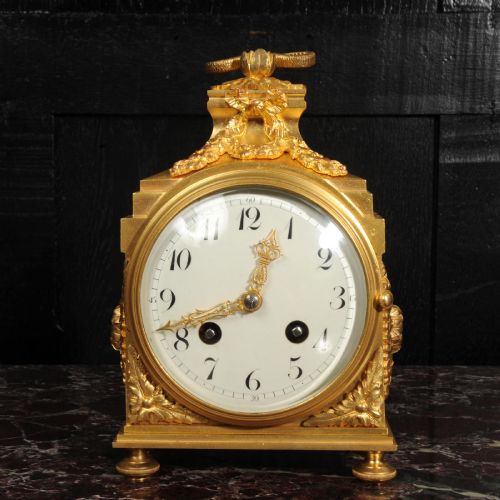
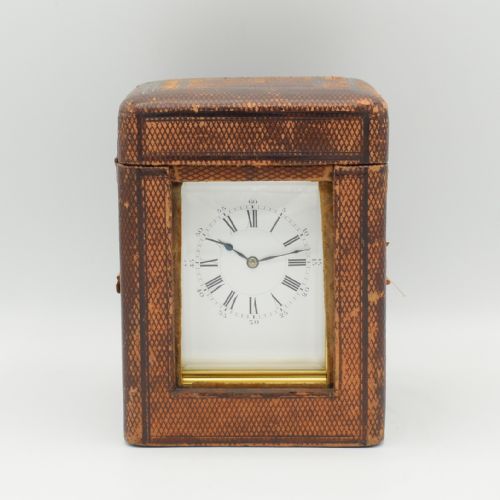
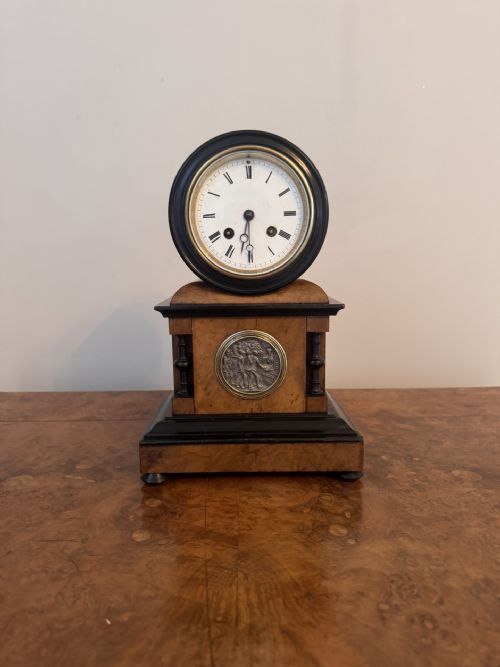
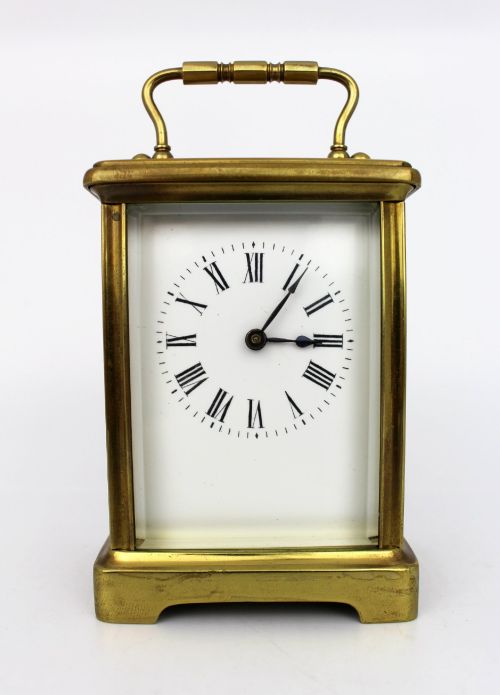
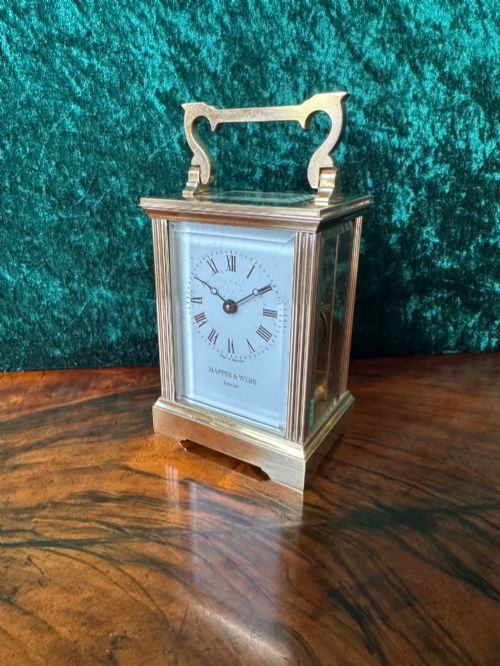
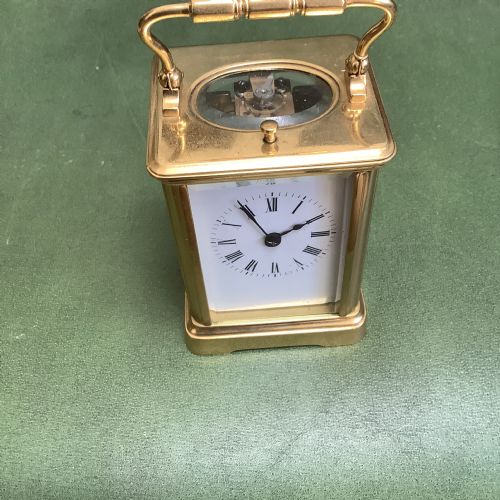
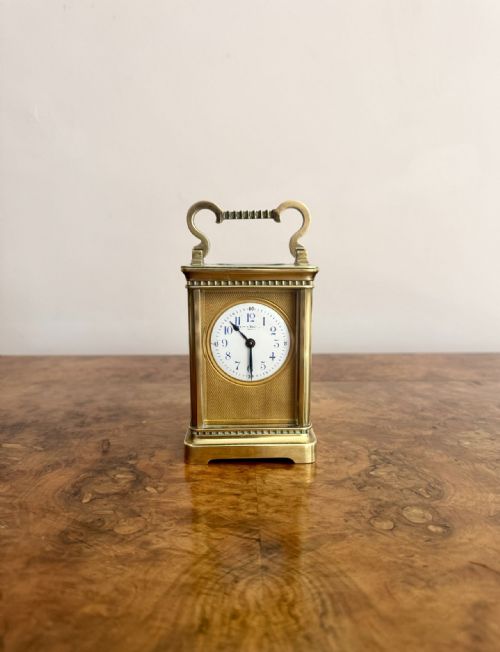
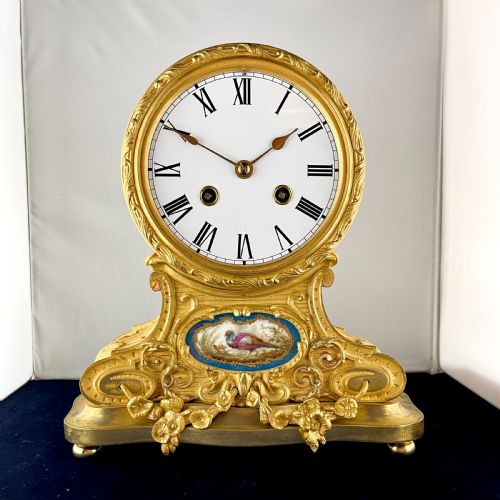
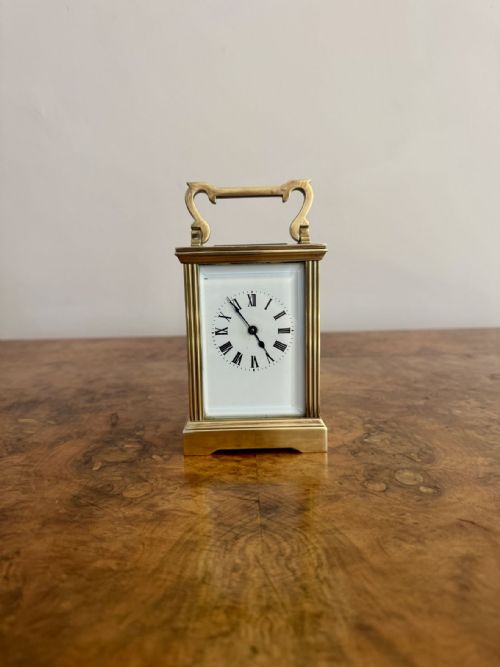
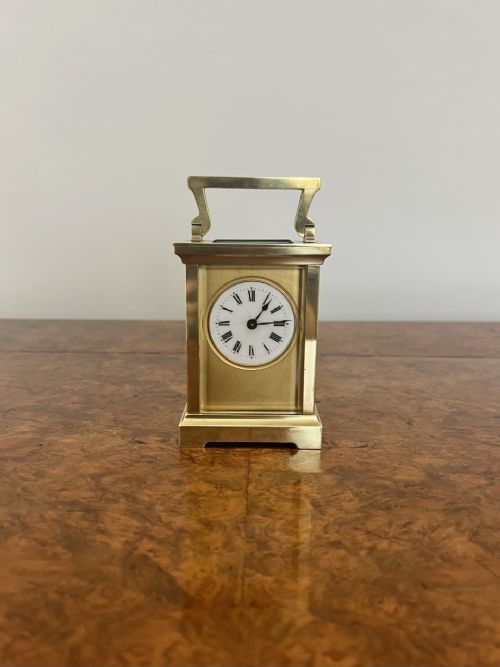
When you search for an enamel dial desk clock, you encounter portable and stationary timepieces spanning the Victorian, Edwardian and twentieth-century periods. These range from carriage clocks housed in brass gorge cases to mantel clocks, pocket watches and miniature strut clocks.
French and English workshops produced the majority of these pieces, employing styles that draw on French Rococo Revival, French Empire and traditional Victorian designs. The dial serves as the visual centre, paired with brass, gilt bronze, ormolu, porcelain and glass cases.
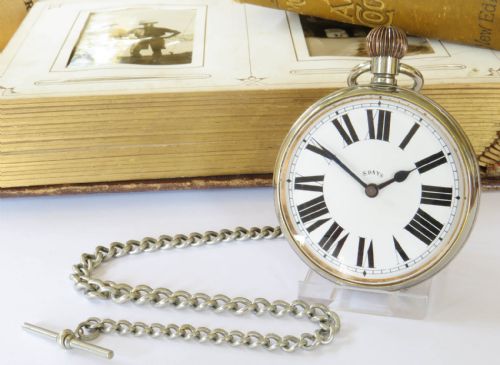
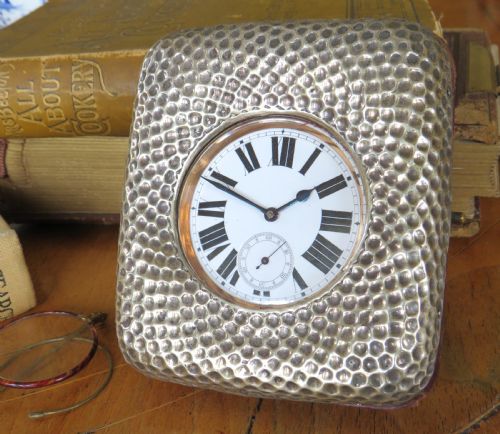
Carriage clocks with travel cases dominate the selection, often featuring Swiss movements or bell strike repeating mechanisms. Alongside these, you find four glass mantel clocks, pocket watches on chains and small travel clocks in silver or leather housings.
How they were made
Casework relies heavily on cast brass, gilt bronze, ormolu and glass panels that permit a view of the internal gear train. Makers also utilised marble, porcelain and faux tortoiseshell to enrich the exterior architecture of mantel and bracket clocks.
Dials utilise enamel fired onto metal plates to create a crisp white surface for Roman or Arabic numerals. Movement construction involved brass plates, steel pivots and escapements designed for eight-day timepieces or repeat striking functions.
What varies in quality
The crispness of the enamel dial and the fineness of the hands establish the visual standard of the clock. Hairlines or chips on the enamel surface lower the desirability compared to a pristine white face.
Engraving depth and case finishing distinguish standard production from superior pieces. Heavy cast brass gorge cases with fully engraved gilt brass surfaces and multi-train movements sit at the upper end of the range.
Henri Jacot·Mappin and Webb·Pickford of London·Drocourt Paris·Henry Jacob·Tiffany·Sacre
The Enamel Dial Desk Clock Glossary
- Gorge case
- A stepped brass carriage clock case with distinct moulded pillars at the corners. This housing style appeared frequently in late nineteenth-century French workshops.
- Pendule d'Officier
- A French officer clock typically fitted with a striking movement and a handle for travel. These heavy brass pieces often feature detailed ormolu mounts.
- Champlevé enamel
- A technique where troughs are dug into a metal surface and filled with vitreous enamel before firing. It appears on miniature strut easel clocks from the Edwardian period.
- Goliath pocket watch
- An oversized pocket watch designed to sit on a desk or travel stand rather than in a waistcoat pocket. They often feature eight-day movements.
- Four glass mantel clock
- A clock encased in four bevelled glass panels that expose the mechanical movement from all sides. They were produced in brass frames during the late nineteenth and early twentieth centuries.
Enamel Dial Desk Clock: Frequently Asked Questions
How do I wind a carriage clock?
Use the matching key on the winding arbours located on the backplate of the movement. Turn gently until you feel resistance, taking care not to overwind the mainspring.
Keep the travel case nearby for storage when moving the clock between rooms. Ensure the clock sits on a level surface so the balance wheel beats evenly.
What is a repeater movement?
A repeater mechanism strikes the hours and quarters on demand when you press a button or pull a cord on the case. This function allowed owners to check the time in the dark without lighting a candle.
Clocks with this feature contain extra train gears and tiny gongs inside the brass case. They require careful handling during transport to protect the delicate striking hammers.
How do I date a brass carriage clock?
Examine the shape of the brass case, the style of the escapement and any maker marks stamped on the backplate. Earlier Victorian examples often feature heavy mercury-gilt surfaces and simpler platform escapements.
Twentieth-century pieces frequently incorporate Swiss movements and refined lever platforms. Travel cases and retailer signatures also provide clues to the decade of manufacture.
Where should I place a desk clock?
Position the clock away from direct sunlight, moisture and draughts to protect the enamel dial and metal casework. A stable mantelpiece, desk or side table offers an ideal spot where vibrations remain minimal.
Allow the clock to rest on a firm surface to maintain accurate timekeeping. Avoid placing heavy objects near glass panel cases like the four glass mantel design.