
Louis XVI Style Lighting
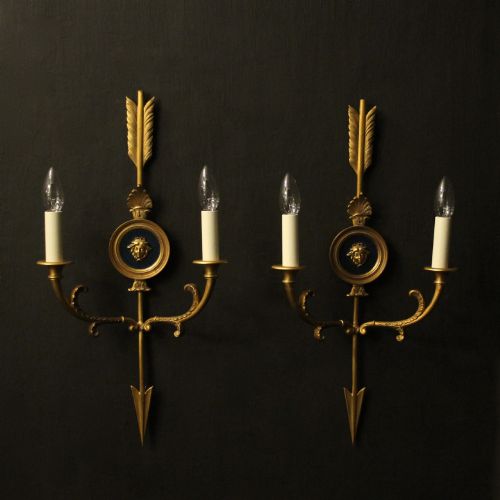
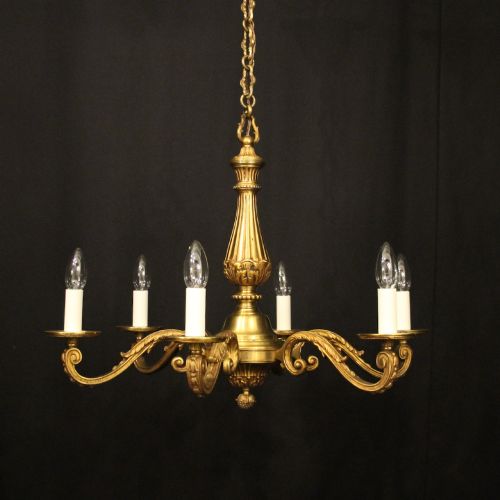
Louis xvi style lighting brings French neoclassical elegance to interiors through gilded bronze, marble, and crystal forms.
Louis XVI Style Lighting
Louis xvi style lighting encompasses chandeliers, wall sconces, candelabra, and table lamps rooted in eighteenth-century French design. Pieces originate primarily from nineteenth-century revivals and early twentieth-century workshops, drawing upon neoclassical vocabulary.
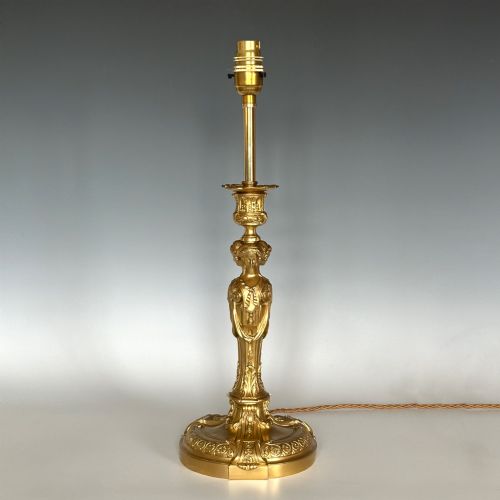
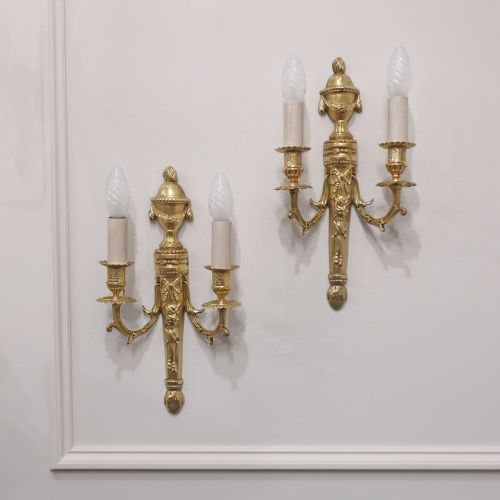
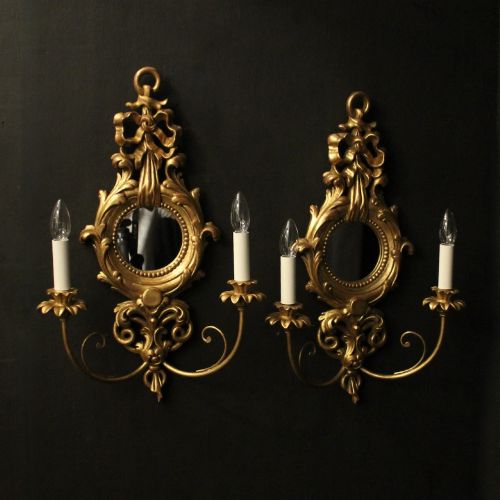
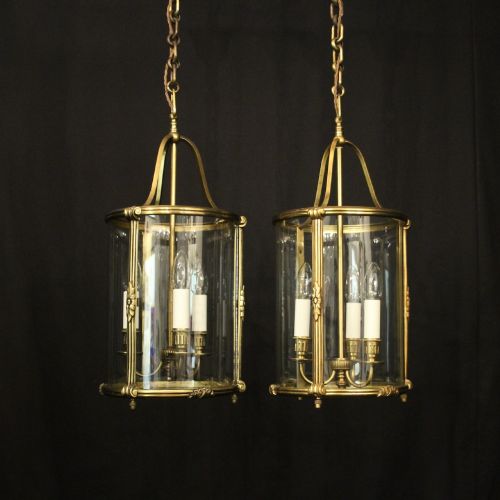
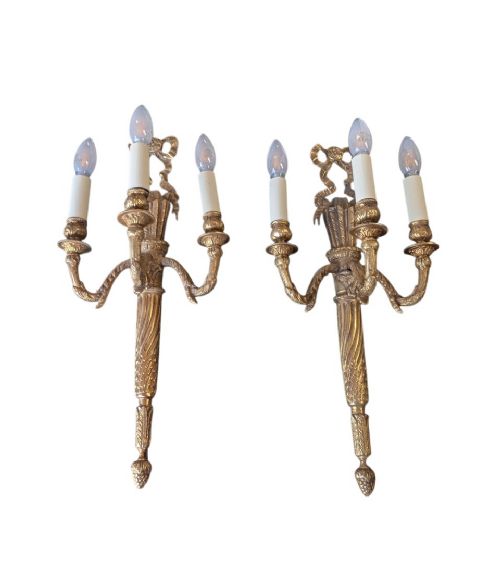
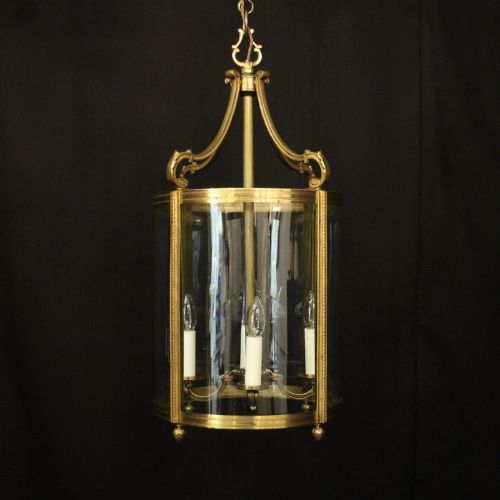
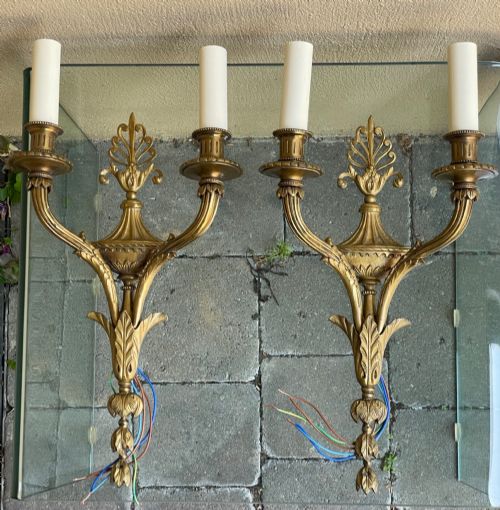
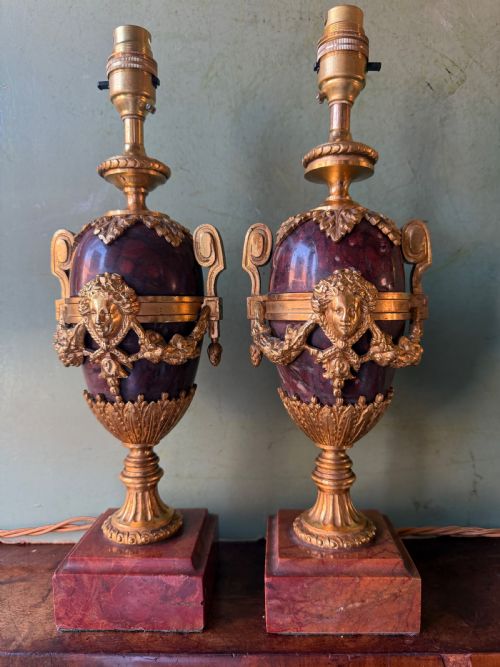
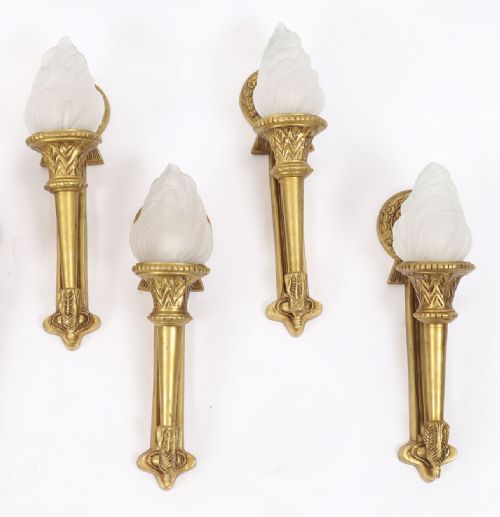
Buyers encounter table lamps, wall lights, and hall lanterns executed in gilt bronze, ormolu, and marble. These items reflect classical architectural motifs including urns, fluting, and symmetrical foliage.
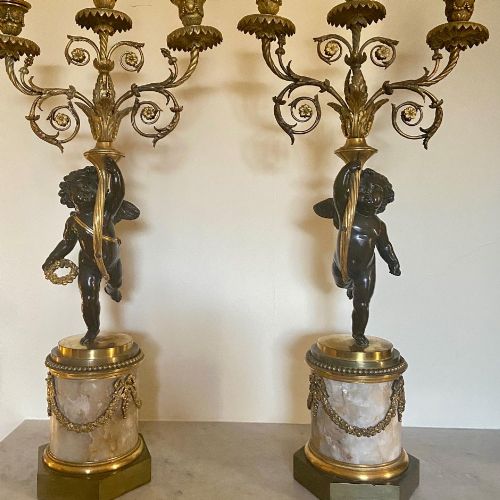
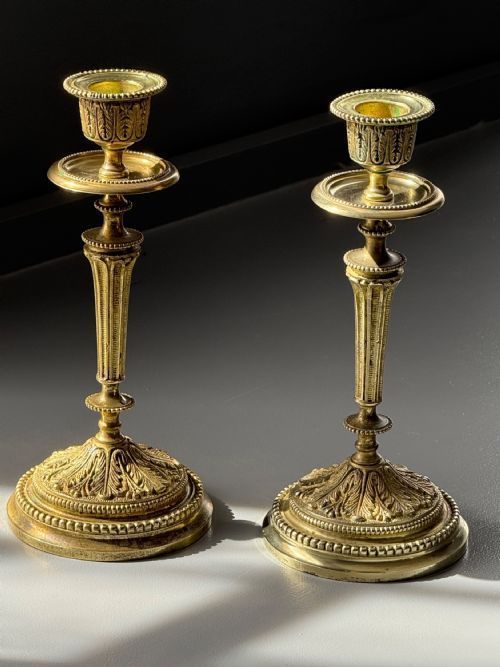
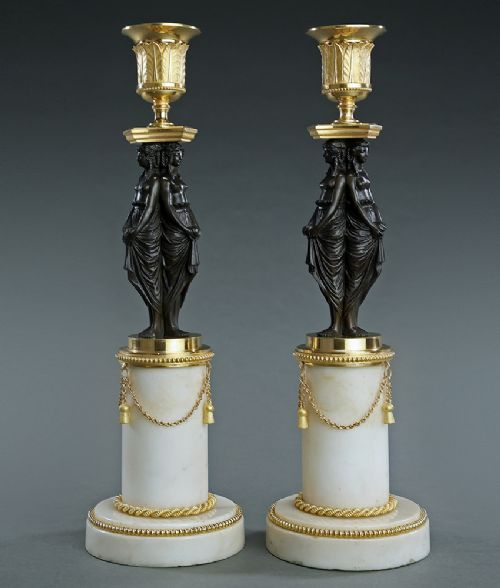
The selection ranges from grand multi-light chandeliers to pairs of decorative candlesticks adapted for electrical illumination. Most surviving examples bridge original eighteenth-century aesthetics with nineteenth-century manufacturing techniques.
How they were made
Craftsmen utilised cast bronze, brass, and gilt metals, applying gold leaf or mercury gilding to create the characteristic ormolu finish. Metal components were often chased by hand to sharpen architectural details like acanthus leaves and ribbon swags.
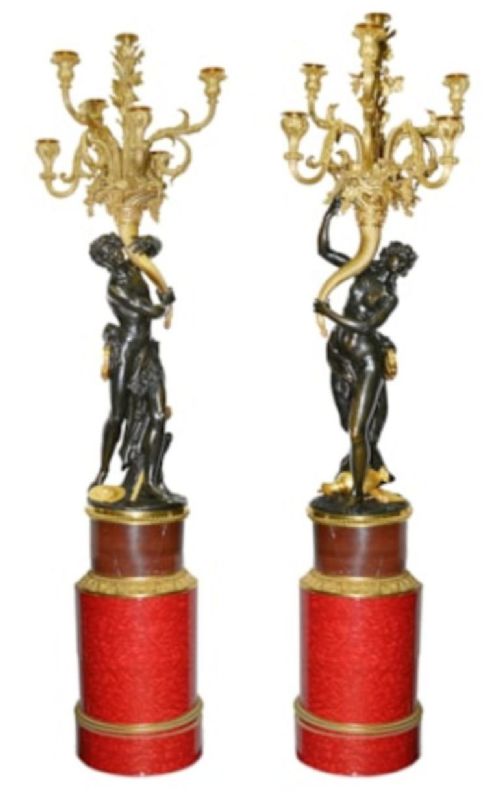
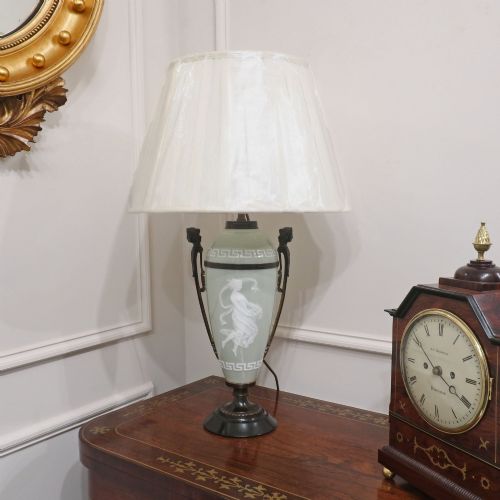
Combinations of patinated bronze, rouge marble, fluorspar, and cut glass frequently form the body of table lamps and candelabra. Natural stone bases provide weight and contrast against polished metallic surfaces.
Listings feature items fabricated from gilt bronze, ormolu, marble, glass, brass, fabric, bronze, and metal across multiple centuries.
What varies in quality
The crispness of the chasing on gilt bronze and ormolu separates standard production from finer pieces. Sharp articulation in floral garlands, caryatids, and ram's head masks indicates superior workshop execution.
The selection and turning of natural materials such as rouge marble and carved giltwood determine the overall presence of a fixture. Integrated design harmony between mountings and stone bodies defines the upper tier of the range.
Casier·Francois Redmond·Dugourc
The Louis XVI Style Lighting Glossary
- Ormolu
- Gilded bronze produced by applying a mercury and gold amalgam to a bronze base and firing it. This technique creates a durable, warm metallic lustre found on high-end neoclassical furnishings.
- Candelabra
- Branched lighting fixtures designed to hold multiple candles, frequently converted to electricity in later periods. They often feature central shafts decorated with classical figures or urns.
- Girandole
- An ornamental branched wall light featuring a mirror or highly polished backplate to reflect candlelight. The reflective surface enhances the illumination within a room.
- Cassolette
- A decorative vessel that functions alternately as a perfume burner or a covered vase. In lighting contexts, these are often mounted with arms or adapted as lamp bases.
- Pate sur pate
- A ceramic decorating technique where liquid clay is applied in successive layers to create a raised relief design. It appears on porcelain elements incorporated into table lamps.
Louis XVI Style Lighting: Frequently Asked Questions
How do I clean gilt bronze and ormolu?
Dust surfaces gently with a soft dry brush to protect the delicate gold leaf or mercury gilding. Avoid chemical cleaning agents and abrasive cloths that strip the metallic finish.
For stubborn grime, use a slightly damp microfiber cloth with mild soap, drying the metal immediately afterwards.
Are these lights wired for modern electricity?
Many surviving pieces arrive converted for electrical use from their original candle-holding format. Rewiring may be necessary to meet current safety standards depending on the age of the internal components.
Qualified electricians can adapt older fixtures while preserving the external decorative mounts and antique framing.
How do I distinguish nineteenth-century revivals from eighteenth originals?
Nineteenth-century revival pieces display casting methods, assembly screws, and patination consistent with industrial manufacturing improvements of that era. Examining the interior fittings and bronze composition reveals the production timeline.
stylistic references to classical motifs remain remarkably consistent across both periods despite technical variations.