

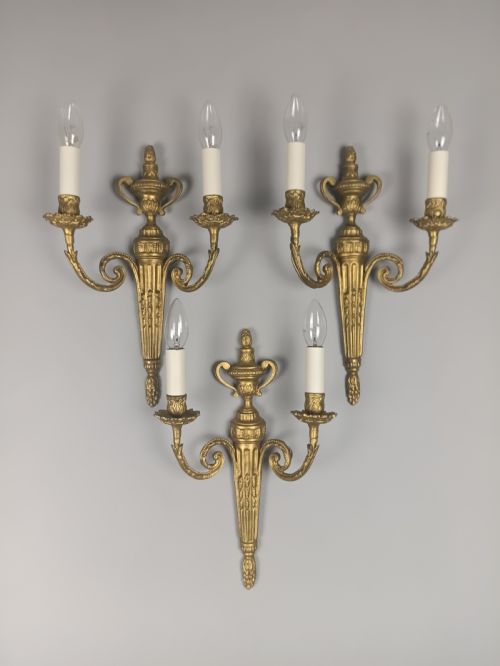
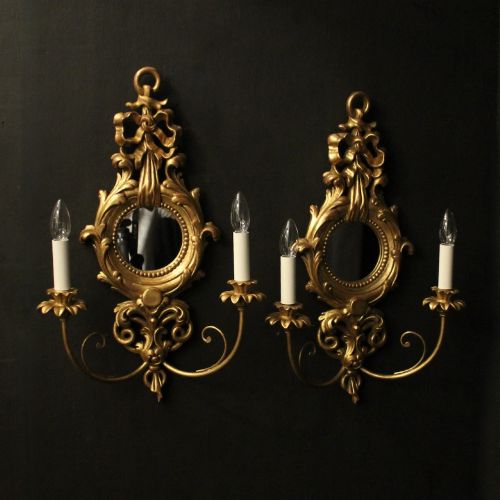
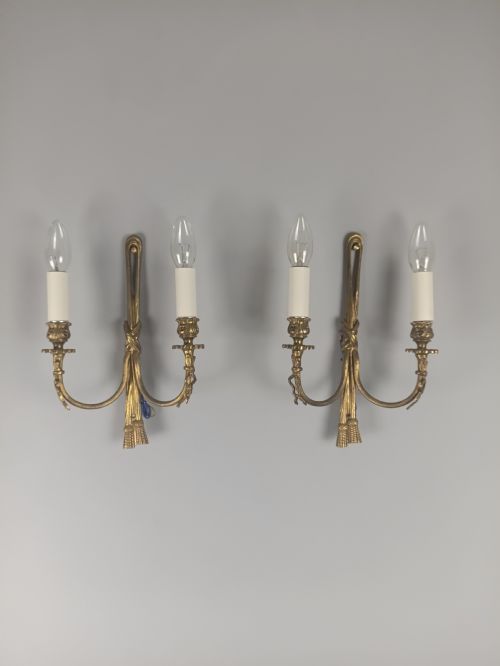
Louis XVI Gilt Light
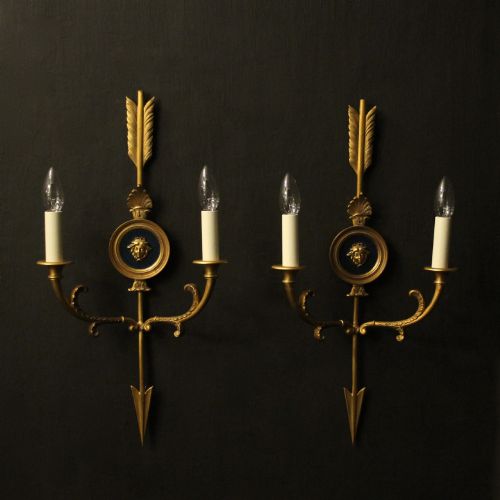
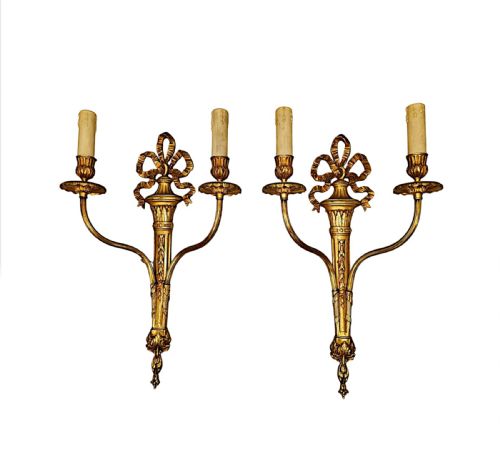
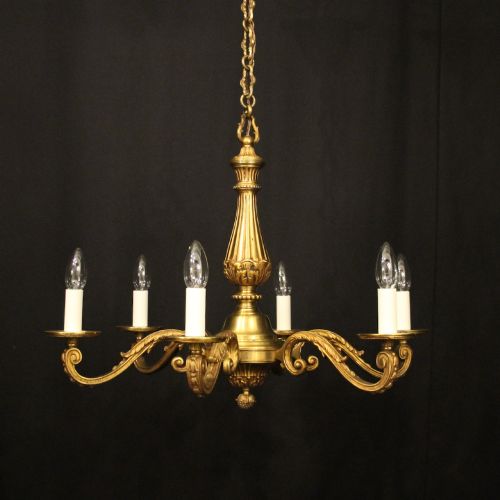
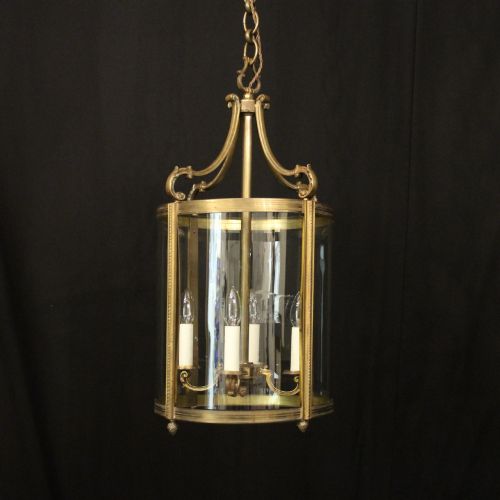
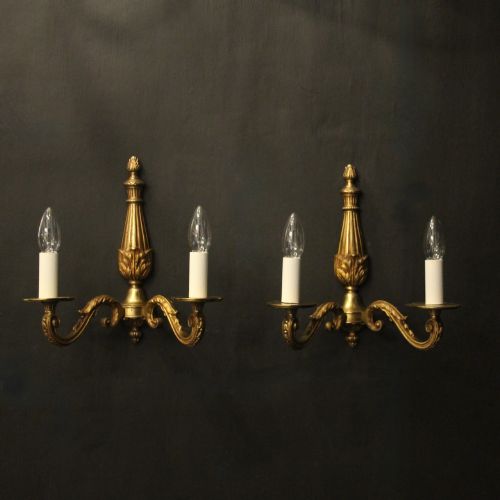
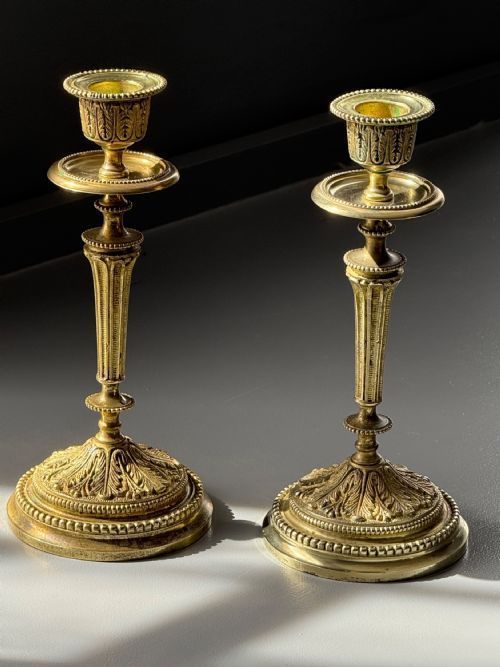
These louis xvi gilt light fittings illuminate interiors through classical symmetry, cast brass, and gilded bronze.
Louis XVI Gilt Light
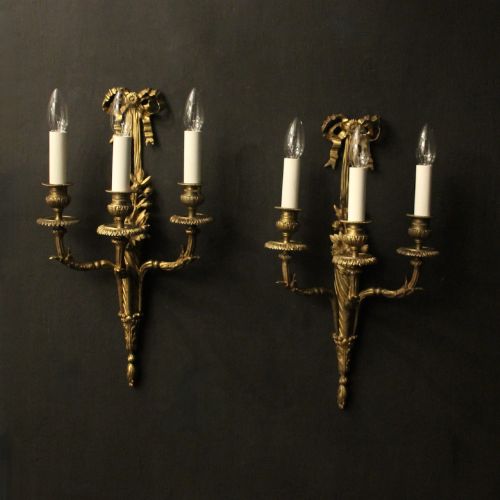
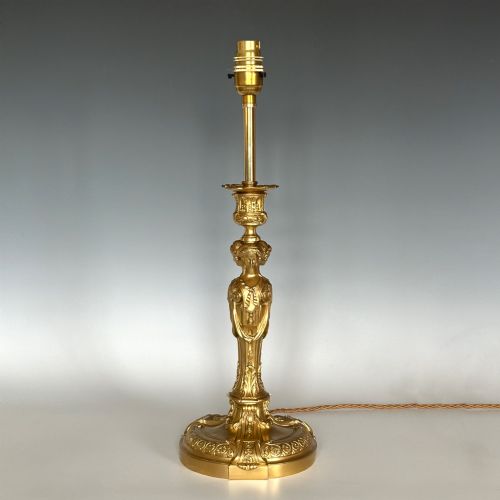
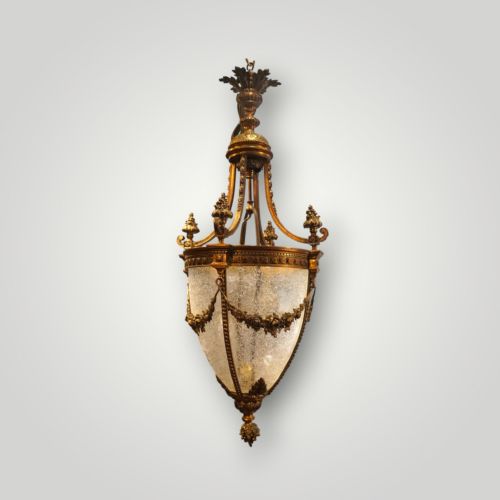
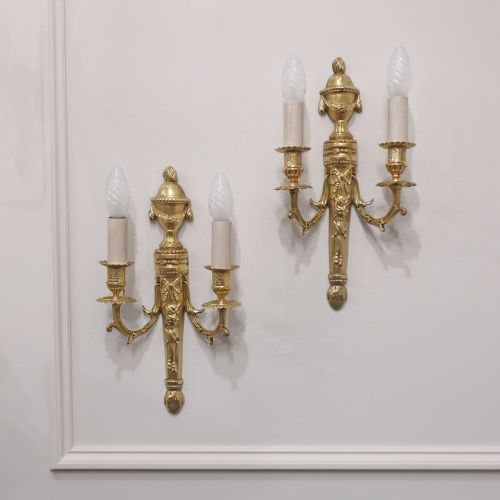
A louis xvi gilt light brings French neoclassical design into domestic spaces through wall lights, sconces, chandeliers, and table lamps. These pieces draw on eighteenth-century aesthetics, adopting architectural motifs like ribbons, caryatids, and urns.
Most items encountered here originate from the nineteenth and early twentieth centuries, spanning revival periods up to nineteen-thirty. They combine functional illumination with decorative metalwork, often pairing cast bronze or brass with marble, glass, and fabric elements.
How they were made
Casting forms the basis of these fixtures, utilising bronze, brass, or ormolu to shape detailed arms, backplates, and candleholders. Artisans chased and gilded these metal components to achieve bright reflective surfaces, frequently mounting them onto rouge marble or incorporating cut glass.
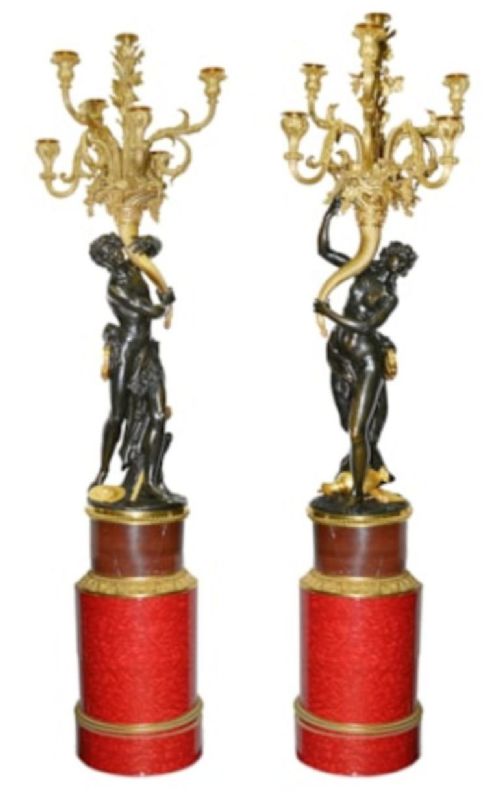
Fabric shades, fluorspar, and blue glazed ceramics appear alongside metalwork to complete table lamps and sconces. Construction techniques blend foundry work with precise mounting, securing patinated bronze figures and decorative mounts to stone bases.
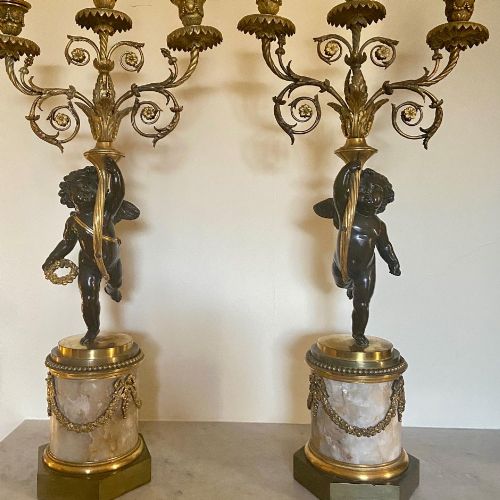
Several pieces feature mischievous bronze cherubs holding up candle arms, determined to illuminate rooms with classical style.
What varies in quality
The crispness of the casting defines the upper tier of these fixtures, where finely chased details like ram heads and ribbon tassels remain sharp and deep. Lesser examples show softer edges and shallower relief work from worn moulds.
Material selection divides the range, separating heavy gilded bronze and original ormolu from lighter brass or gilded metal. Heavier mountings, integrated marble elements, and maker-stamped components distinguish the finest items from standard production pieces.
Henri Vian·Casier·Maison Baguès
The Louis XVI Gilt Light Glossary
- Ormolu
- Gilded bronze produced through a mercury amalgamation process, yielding a durable gold surface on decorative metalwork. This technique characterises high-end French neoclassical lighting.
- Girandole
- A branched wall-mounted light fixture designed with mirrors or reflective brass backplates to amplify illumination. These pieces often feature paired arms and symmetrical classical ornaments.
- Cassolette
- A decorative vessel that functions alternately as a perfume burner or a covered vase, frequently adapted into lamp bases. They incorporate marble and ormolu mounts.
- Caryatid
- A sculpted female figure serving as an architectural support column, appearing on candlesticks and lamp standards. This classical motif derives from ancient Greek design.
- Fluorspar
- A halide mineral prized for its distinct colour banding, utilised in select nineteenth-century candelabra bases alongside patinated bronze.
Louis XVI Gilt Light: Frequently Asked Questions
What styles define a louis xvi gilt light?
These fixtures adhere to French neoclassical and Louis XVI revival aesthetics, employing strict symmetry and straight lines rather than Rococo curves. Common decorative motifs include ribbons, torches, urns, and acanthus leaves.
Craftsmen drew inspiration from eighteenth-century architectural details, translating them into wall sconces, candelabra, and hall lanterns during later nineteenth and early twentieth-century revival periods.
How are wall lights and sconces mounted?
Most wall-mounted fixtures utilise a central backplate secured directly to wall surfaces, supporting one or more curved arms. These backplates often feature ribbon ties, quivers, or neoclassical medallions.
Wiring configurations vary due to the age of the pieces, requiring professional conversion for modern electrical standards while preserving the original metalwork.
What materials appear in these light fixtures?
Gilt bronze, ormolu, and brass form the structural and decorative core of these pieces, providing a golden finish. Secondary materials include rouge marble bases, cut glass drops, and patinated bronze figures.
Table lamps frequently incorporate glazed ceramics or carved wood alongside metal mounts, reflecting the diverse manufacturing approaches of nineteenth-century French workshops.
How do you distinguish nineteenth-century pieces from later revivals?
Earlier nineteenth-century pieces typically exhibit heavier bronze casting, hand-chased surface details, and traditional assembly methods like threaded pins. Later twentieth-century examples from the nineteen-twenties and thirties often utilise lighter brass and simpler construction.
Maker stamps and foundry marks provide definitive attribution, though many quality workshop pieces remain unsigned.