


Louis XVI Fauteuil Pair
A louis xvi fauteuil pair brings balanced neoclassical symmetry and carved elegance to a grand salon or bedroom.
Louis XVI Fauteuil Pair
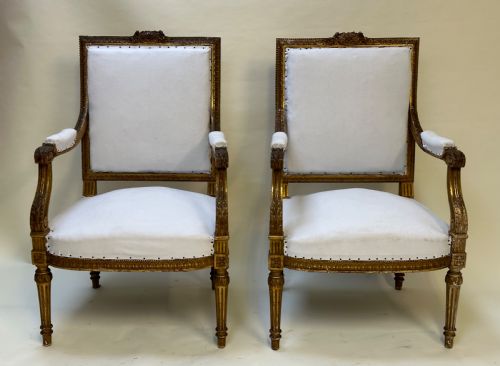
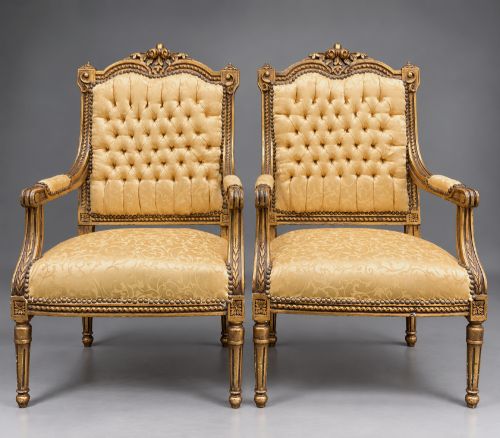
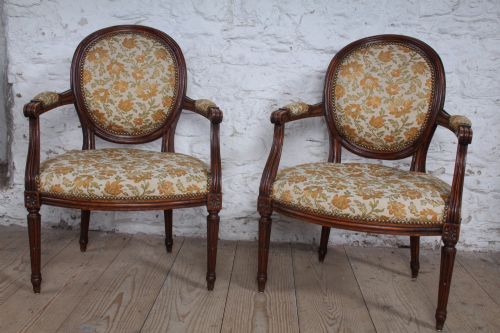
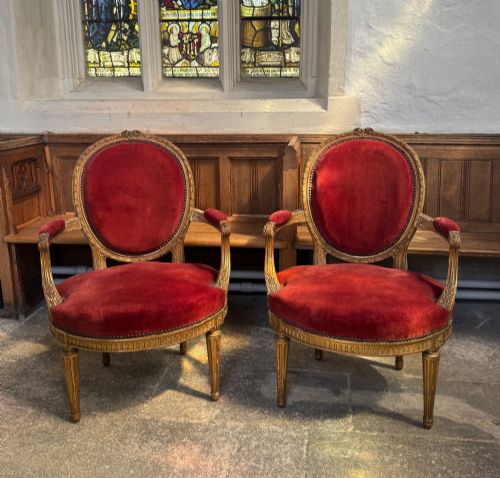
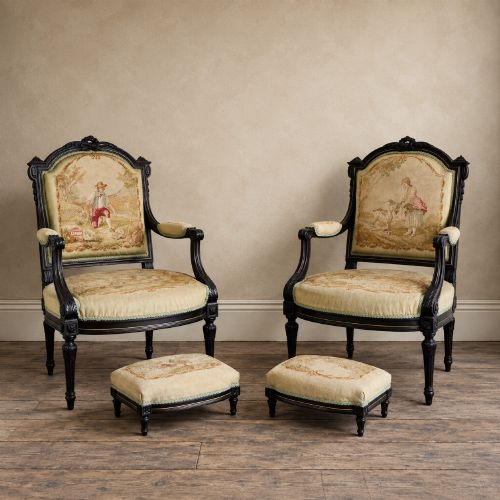
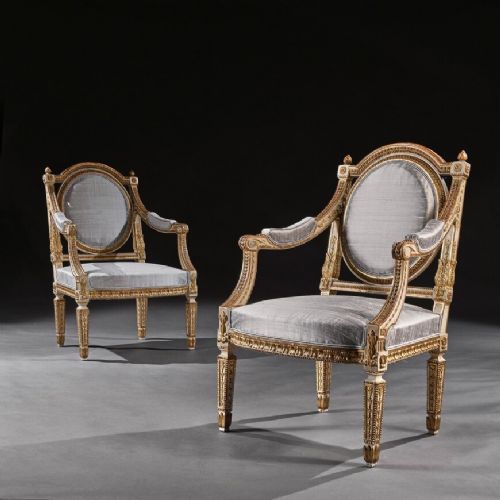
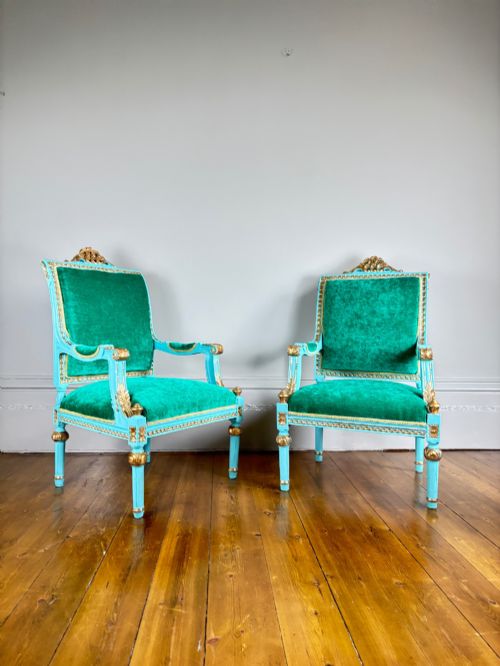
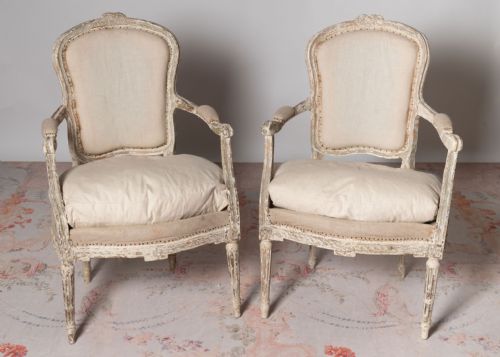
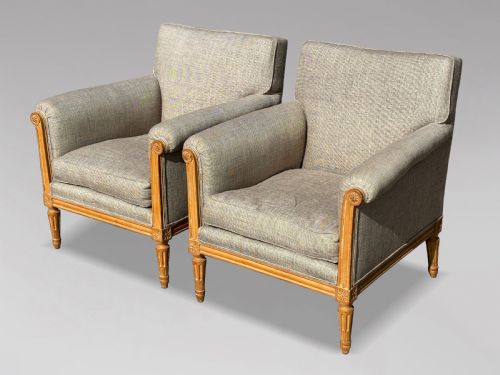
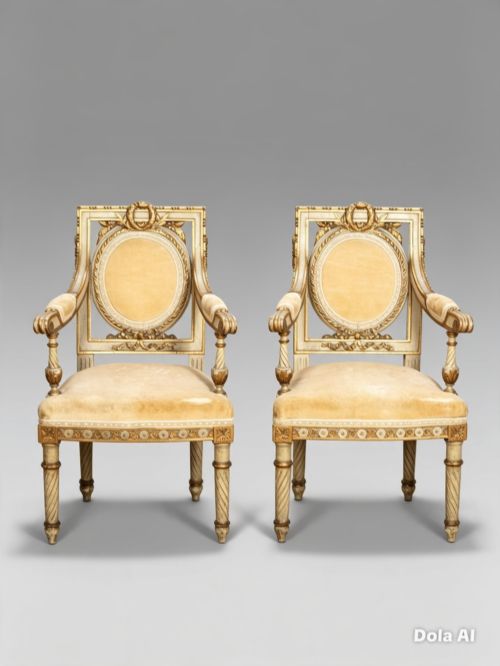
A louis xvi fauteuil pair consists of matching open-armed seating designed in the neoclassical taste, most frequently appearing from the nineteenth century in revival styles. These pieces replicate the restrained straight lines, tapered legs and geometric frames of the eighteenth-century French original. Buyers encounter them fashioned as salon chairs, bedroom seating or decorative elbow chairs upholstered in velvet or fabric.
The majority of pieces originate from French workshops, though Italian and English interpretations also appear in the records. Surviving examples often display the characteristic oval or square padded backrest flanked by exposed wooden framing. They function both as decorative focal points and usable seating within period interiors.
Materials and construction
Makers shaped these frames predominantly from beech and walnut, employing traditional joinery to support the open arm design. Many examples received a finish of giltwood, silver gilt, or paintwork, sometimes enhanced with parcel gilding over carved details.
Upholstery completed the piece, utilising fabrics such as velvet supported by internal stuffing and webbing. Carved ornamentation on the wood frames relied on neoclassical motifs executed by hand before finishing.
Listings feature beech and walnut frames finished in giltwood, paint, and ebonising across the nineteenth and early twentieth centuries.
Distinctions in quality
The crispness of the wood carving separates standard revival pieces from finer interpretations. Skilled artisans achieved deep, clean relief work on the neoclassical foliage and fluted legs, whereas lesser examples display softer, shallower definition.
The choice of finish and the integrity of the original giltwood or painted surface dictate the visual success of the pair. Uniformity between the two chairs in a pair, regarding frame stability and matching upholstery, maintains the aesthetic balance expected of matching seats.
The Louis XVI Fauteuil Pair Glossary
- Fauteuil
- An open-armed upholstered armchair with exposed wooden sides. This form became popular in France during the eighteenth century.
- Giltwood
- Timber coated with gold leaf or a gold-coloured metallic preparation. It provides a bright reflective surface on carved chair frames.
- Neoclassical
- A style inspired by classical antiquity characterised by symmetry, straight lines and restrained ornamentation. It defines the aesthetic of these seats.
- Parcel Gilt
- Wood framing where only specific carved details receive gilding, leaving the painted or natural wood visible elsewhere. This technique highlights particular decorative motifs.
- Regency
- An English design period spanning the early nineteenth century that influenced domestic seating styles. Pieces from this era often incorporate classical revival elements.
Louis XVI Fauteuil Pair: Frequently Asked Questions
Where should I place a fauteuil pair?
These armchairs suit formal drawing rooms, large bedrooms or quiet reading corners where their decorative frames remain visible. Placing them opposite a fireplace or flanking a low table creates a balanced seating arrangement.
Because of their open arms and upright backs, they function well for conversation rather than lounging. Their neoclassical proportions also allow them to sit comfortably against panelled walls or beneath large mirrors.
How do I date a revival armchair?
Dating relies on examining the timber preparation, tool marks, and the ageing of the gilt or painted surface. Nineteenth-century revival pieces often display machine-sawn timber elements hidden beneath the upholstery, contrasting with older hand-worked frames.
The specific style of the revival, whether Edwardian or nineteenth-century French, provides clues through the wear patterns and the composition of the underlying padding materials.
Are these chairs comfortable for daily use?
While padded for support, these seats feature upright backs and rigid wooden arms designed for formal posture rather than deep relaxation. Modern users often add a small cushion for extended sitting.
The firm upholstery and supportive frame make them practical for occasional seating in living spaces or bedrooms.
How do I maintain giltwood finishes?
Giltwood requires gentle dusting with a soft, dry brush to prevent the accumulation of dirt within the carved recesses. Moisture and harsh cleaning agents damage the delicate gold leaf surface.
Keep these chairs away from direct sunlight and strong heat sources to protect both the wooden frames and the surrounding upholstery fabrics.