



Louis XVI Dresser
A louis xvi dresser brings classical restraint and practical storage to a room, grounding the space with fine timber and disciplined proportions.
Louis XVI Dresser
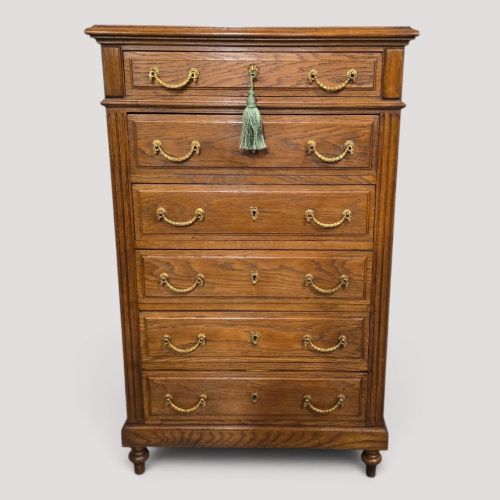
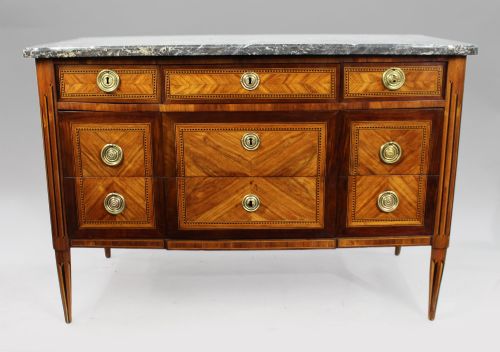
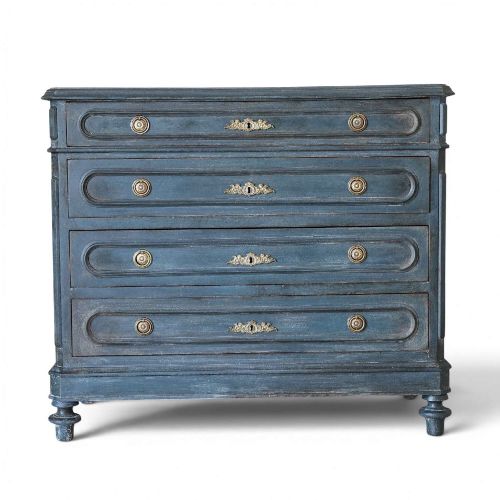
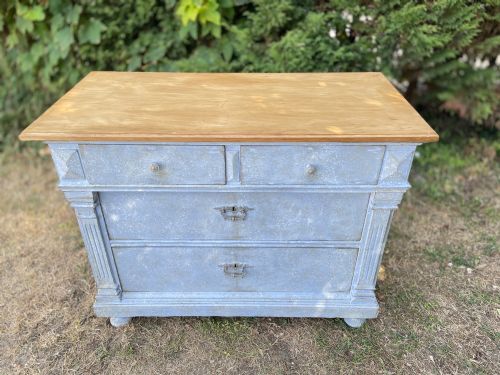
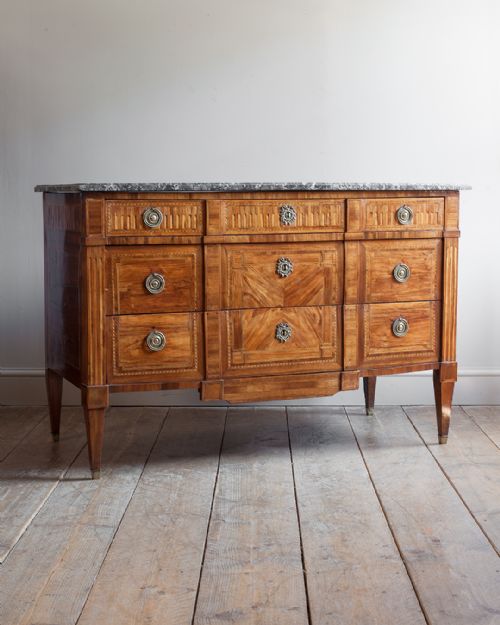
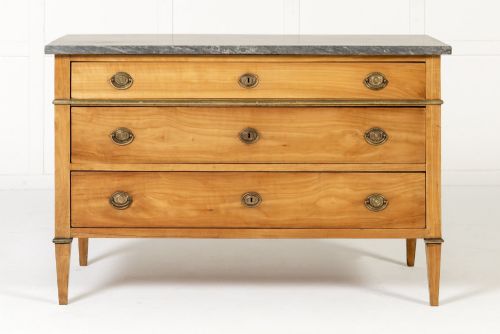
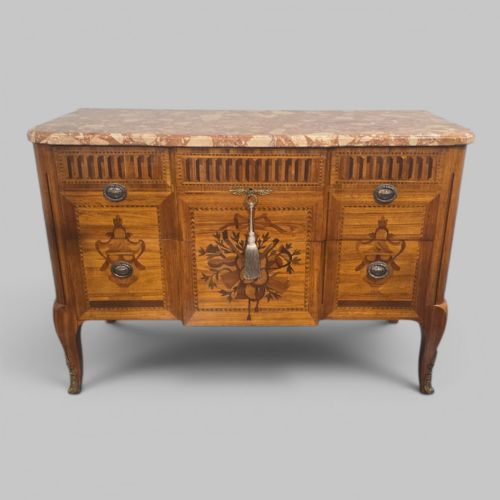
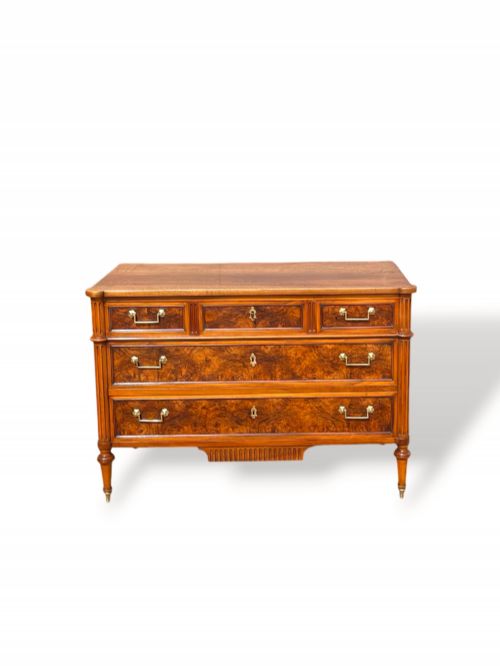
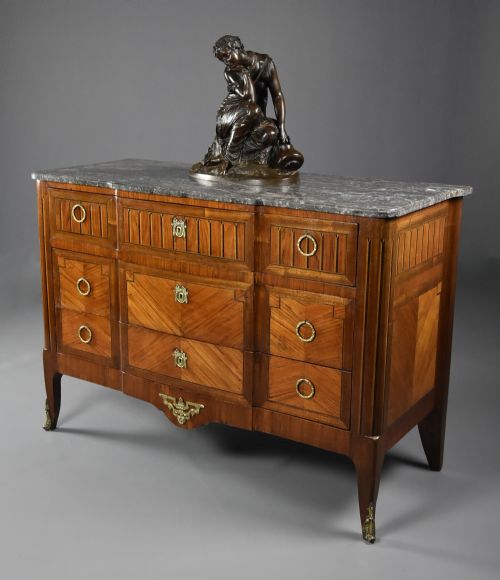
A louis xvi dresser, commonly taking the form of a commode or chest of drawers, embodies the architectural symmetry and straight-lined sobriety characteristic of the late eighteenth century and its later revivals. These pieces function primarily as bedside or parlour storage while serving as a distinct focal point through their restrained ornamentation.
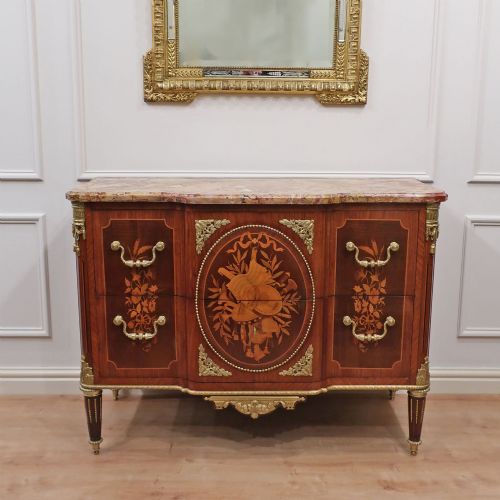
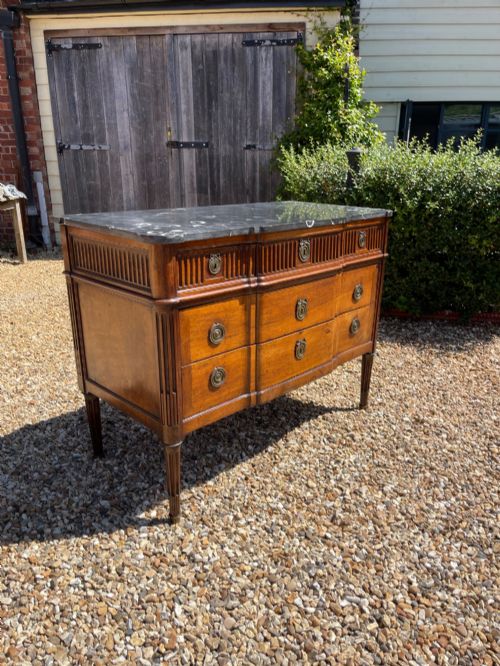
Object types span traditional commodes, chests of drawers, and occasional buffets, capturing both period originals and nineteenth-century adaptations. The physical form relies on rectangular carcasses, tapering fluted legs, and subtle brass mounts that reflect classical restraint rather than baroque excess.
Markers of quality
Quality rests upon the crispness of the timber selection and the precision of the veneer work, whether executed in simple figured mahogany or intricate multi-wood parquetry. Superior examples exhibit seamless integration between the timber carcass and the fitted marble top, with secondary woods chosen for internal drawer linings showing equal age and care.
The refinement of the cast ormolu mounts and the subtlety of the carved fluting on the uprights separate workshop standards. Original hardware, intact marble without later repairs, and stable structural joinery throughout the drawer frames determine the standing of an individual piece.
Listings feature walnut, mahogany, oak, and kingwood pieces spanning the eighteenth century through to nineteen-ten.
Mon Krieger
The Louis XVI Dresser Glossary
- Commode
- A low chest of drawers or cabinet developed in France during the eighteenth century. This form serves as the primary shape associated with the search phrase.
- Ormolu
- Gilded bronze used for decorative mounts and hardware on high-end furniture. The material adds metallic contrast to timber surfaces.
- Parquetry
- Geometric wood inlay work arranged in patterns such as cubes or chequers. Craftsmen apply these veneers to enhance the visual depth of drawer fronts.
- Marble top
- A polished stone slab fitted to the upper surface of the cabinet. This feature provided a durable, cool surface popular in French domestic interiors.
- Gustavian
- The Swedish interpretation of French neoclassical design, characterised by lighter painted finishes. These pieces share the straight lines and restraint of the louis xvi aesthetic.
Louis XVI Dresser: Frequently Asked Questions
How do I spot an eighteenth-century original?
Examine the internal drawer construction for hand-cut dovetails, tool marks, and uniform oxidation on secondary timbers like oak or walnut. Period pieces display natural wear patterns around pulls and keyholes that machine production cannot replicate.
Check the timber species used for interior linings and drawer bases against known eighteenth-century French cabinetmaking conventions. Original marble slabs should sit flush into the rebates of the timber top without modern resin fillers.
Can I use a marble top commode daily?
These cabinets were built for daily domestic storage in bedrooms and reception rooms, making them exceptionally sturdy for modern use. The drawers slide on traditional wooden runners that require occasional waxing to maintain smooth operation.
Protect the stone surface from acidic liquids and heavy impacts, as period marble can stain or chip. Regular dusting with a soft cloth preserves both the timber veneer and the polished metal mounts.
What is the difference between revival and period pieces?
Eighteenth-century originals carry the exact construction methods, timber ageing, and subtle design shifts characteristic of the Louis XVI reign. Nineteenth-century revival pieces, produced around eighteen-eighty or nineteen-hundred, imitate these forms with precise machine assistance and slightly different secondary woods.
Both categories offer high craftsmanship, but revival pieces often feature bolder neoclassical interpretations and standardised hardware. Examining the carcass timber and assembly techniques provides the clearest guide to the exact age.
Where should I place a louis xvi dresser at home?
The balanced proportions and flat sides allow these pieces to anchor a hallway, dining room, or bedroom with equal ease. The marble top makes a commode suitable for displaying lamps, ceramics, or mirrors without risking water rings on the wood.
Keep the cabinet away from direct heat sources and strong sunlight to prevent timber shrinkage and veneer lifting. Allowing space around the piece lets the classical lines and brass mounts command attention.