


Louis XVI Console
A louis xvi console brings architectural restraint and classical symmetry to a room through carved timber, marble tops, and disciplined ornamentation.
Louis XVI Console
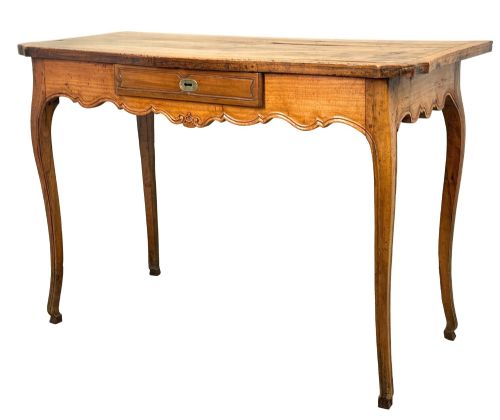
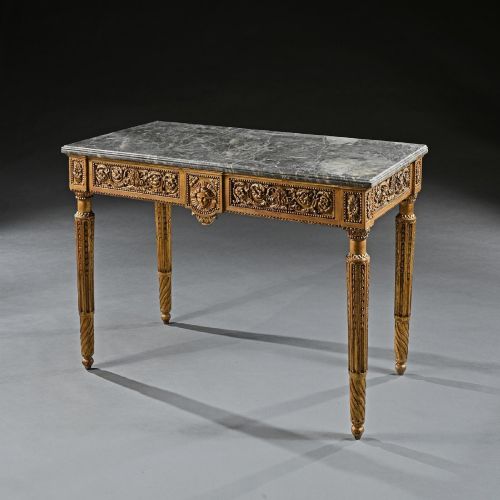
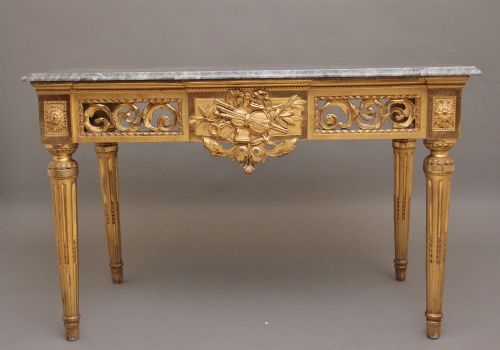
A louis xvi console is typically a wall-fixed or demi-lune table designed to stand beneath a mirror or against a panelled wall, reflecting the rectilinear geometry and classical revival of the eighteenth century. You will encounter genuine eighteenth-century examples alongside substantial nineteenth-century revival pieces produced in French and continental workshops.
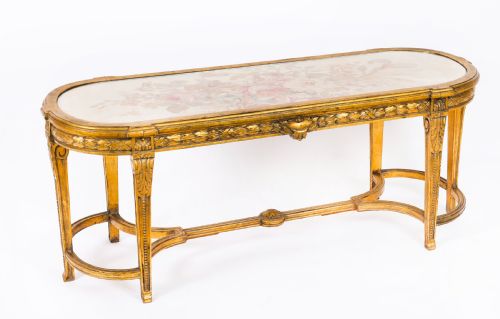
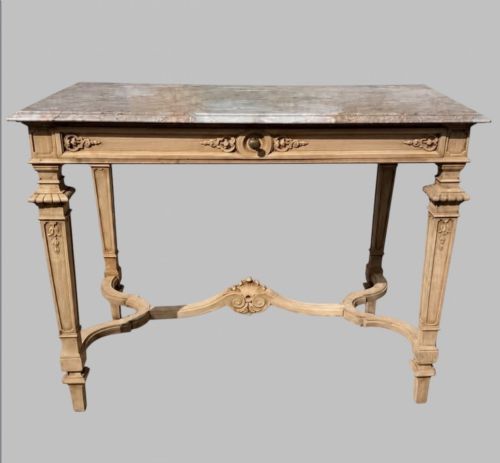
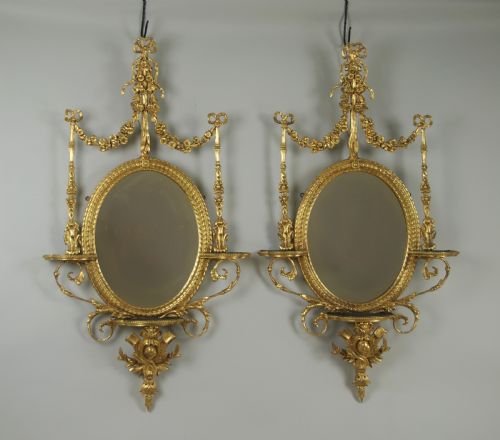
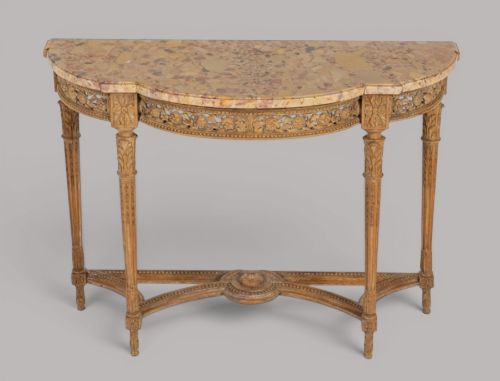
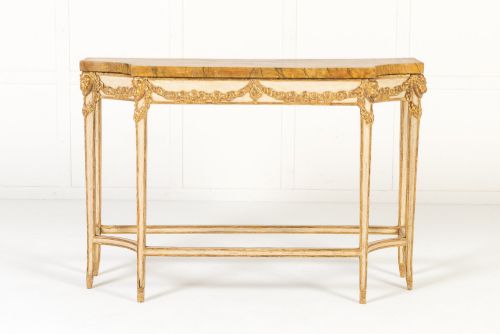
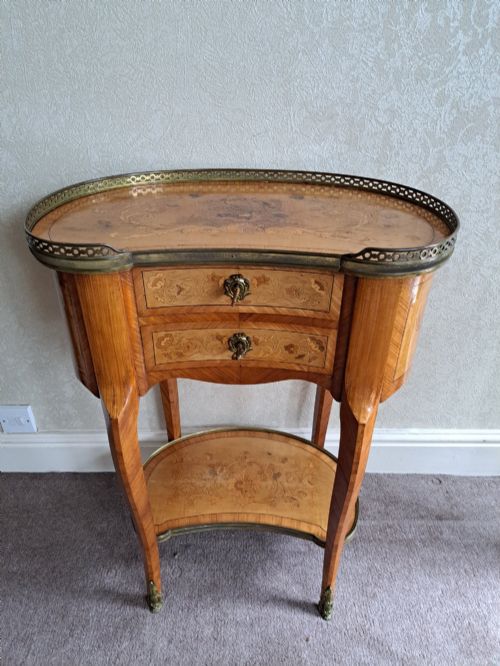
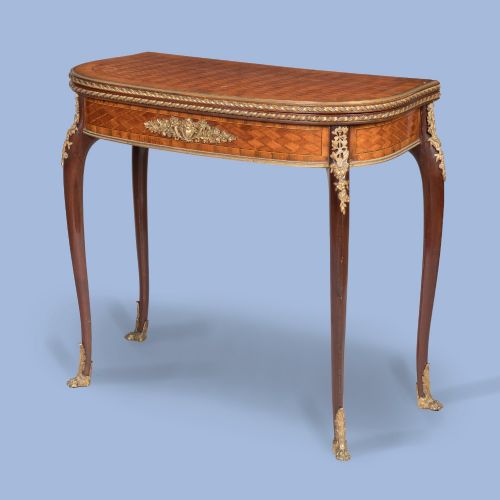
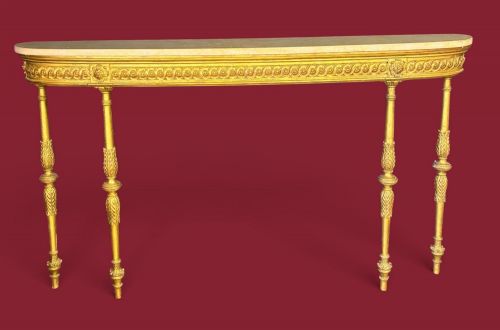
The selection ranges from structural giltwood frames with veined marble tops to painted and parcel-gilded side tables, card tables, and occasional variants. These pieces span original period construction through to later revival interpretations from the Victorian and Edwardian eras.
Materials and technique
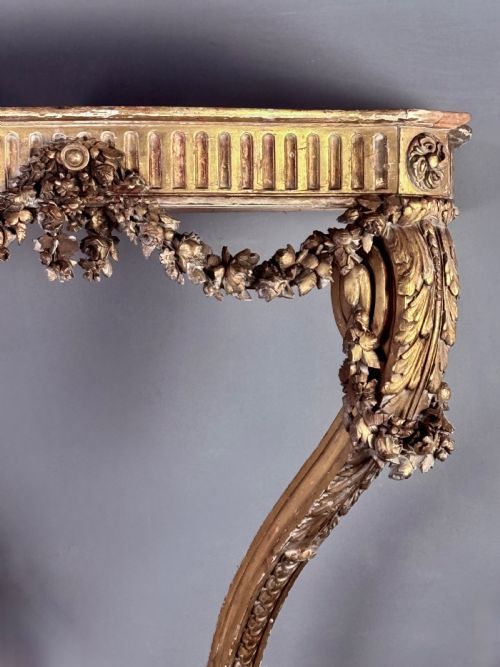
Makers constructed these frames from solid hardwoods like oak, walnut, and beech, often applying gesso before gilding with gold leaf or finishing with painted decoration. Tops frequently feature shaped white or coloured marble, supported on fluted legs with carved acanthus or floral detail.
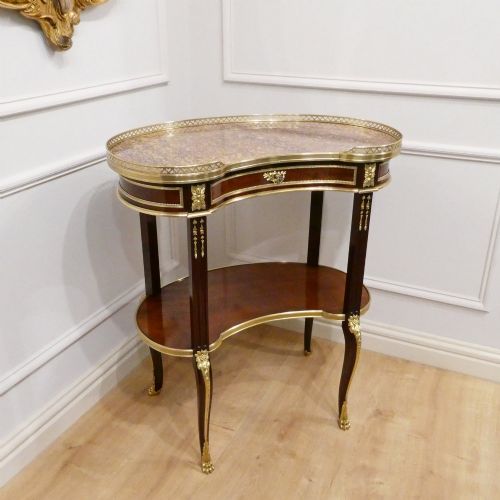
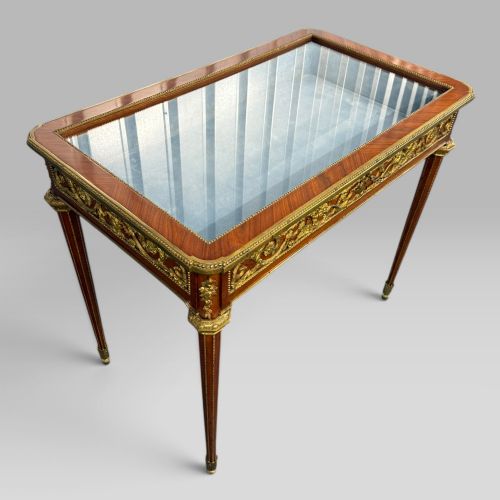
Ornate mounts in cast or chased ormolu appear alongside intricate parquetry and marquetry veneers in kingwood, tulipwood, and mahogany. Joinery follows traditional cabinet-making practices, combining pegged mortise and tenon frames with carefully fitted surface veneers.
Craftsmanship and proportion
Quality rests in the crispness of the hand-carved ornament and the weight and detail of the cast ormolu mounts rather than surface flash alone. Superior tables display harmonious proportions, sharp fluting on the legs, and tight joints where the marble top meets the frieze.
The choice of materials dictates the tier of the piece, with richly figured veneers and heavy original marble slabs marking out exhibition-grade commissions. Simpler painted or giltwood variations rely on the balance of their silhouette and the integrity of the surviving finish.
Felix Alfred Ternisien·Maison Millet·Francois Linke·Maison Mottheau·H and L Epstein
The Louis XVI Console Glossary
- Demi-lune
- Having a half-moon shape with a flat back edge designed to sit flush against a wall. This profile defines many classic side and console tables.
- Ormolu
- Gilt bronze ornamentation cast and chased by hand, applied to furniture corners, friezes, and legs for contrast. The technique involves mercury gilding on older pieces.
- Parquetry
- Geometric wood inlay forming repeating patterns such as cubes or chevrons across the surface of a tabletop. Artisans used contrasting timbers like tulipwood and kingwood to achieve tonal depth.
- Gesso
- A plaster-based primer applied to wood frames to create a smooth base for subsequent gilding or paint. Its application allows carvers to achieve sharp relief details.
- Pier table
- A table designed specifically to stand against the wall beneath a pier glass mirror. They often share matching decorative schemes with the mirror frame above.
Louis XVI Console: Frequently Asked Questions
Where should a console table go?
These tables find their traditional home in an entrance hall, a drawing room, or along a main wall beneath a large mirror. Their shallow profile allows them to occupy narrow circulation spaces without blocking movement.
Pairing the table with a matching mirror creates a balanced focal point that reflects light and anchors the surrounding furniture arrangement.
Are marble tops original?
Most period tables retain their fitted marble slabs, which were cut specifically to follow the serpentine or demi-lune contour of the wooden frieze. Replacement tops occasionally occur due to the fragile nature of stone over centuries of use.
Inspecting the underside reveals whether the marble rests securely on original blocking and matches the age and wear pattern of the base.
How do I distinguish revival pieces?
Nineteenth-century revival items often display heavier framing, machine-sawn timber elements behind the hand-carved surfaces, and standardised cast ormolu mounts. Makers during this period drew inspiration directly from eighteenth-century design books.
Examining the wood shrinkage, patina, and fastening screws helps clarify whether a piece dates to the original neoclassical period or later revival eras.
Can these tables support heavy objects?
While structurally sound, antique consoles with wall-fixed or console designs often rely on the wall for absolute stability, particularly when carrying heavy marble tops. Freestanding centre tables offer more independent support but share similar weight limits.
Placing lamps, books, or decorative ceramics suits them well, while heavy structural use is best avoided to protect joints and surface finishes.