



Louis XV Walnut Buffet
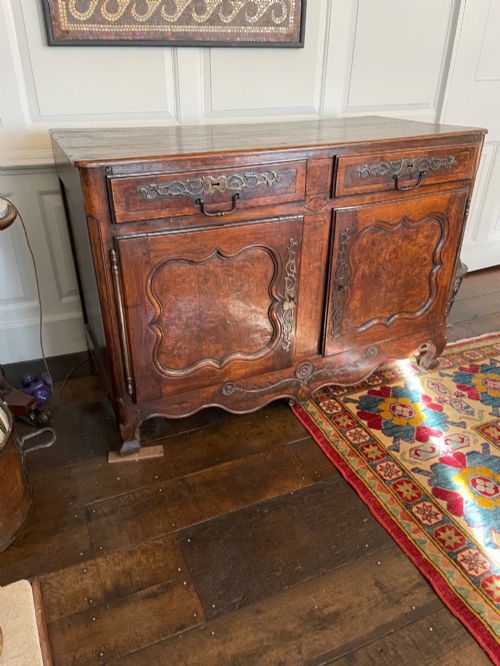
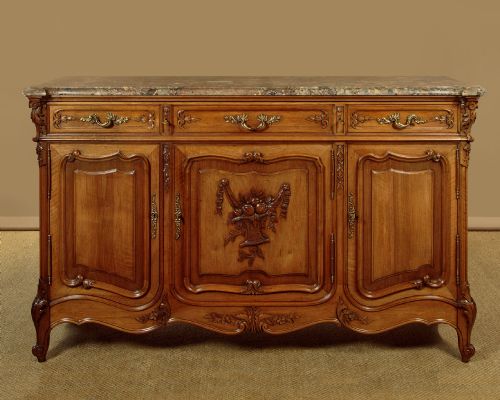
A louis xv walnut buffet brings substantial French provincial storage into a room, offering warm timber surfaces and classic serpentine shaping.
Louis XV Walnut Buffet
A louis xv walnut buffet provides functional storage through spacious cupboards and serving surfaces, rooted in 18th century French provincial and revival traditions. These pieces range from authentic period furniture to later revival interpretations spanning the nineteenth and early twentieth centuries.
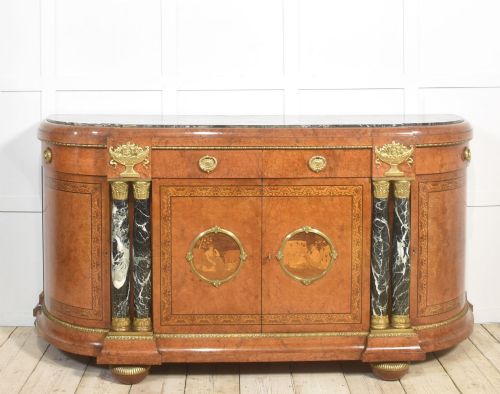
The form appears in various configurations, including two-body cupboards, sideboard cabinets, and marble-topped servers. Walnut and burr walnut dominate the construction, often enhanced by marquetry inlay and mounted hardware.
Buyers frequently encounter revival pieces from the Victorian and Edwardian eras alongside older provincial examples. Each version delivers the characteristic curvilinear silhouette and substantial utility that defines the style.
Materials and construction
Cabinetmakers utilised solid walnut and burr walnut for the primary structure, applying intricate marquetry patterns to drawer fronts and door panels. Timber selection dictated the grain movement and rich tone of the finished surface.
Marble tops in various shades were fitted to many revival and provincial sideboards to provide a durable serving surface. Ormolu, brass, and iron mounts added functional reinforcement and decorative contrast to the timber framework.
Louis XV Walnut Buffet Retail Price Guide 2026
Typical asking prices for louis xv walnut buffet among the pieces listed under this phrase on Sellingantiques today, from the lower quarter to the upper quarter. They describe what is for sale here now, not the wider market.
Some serpentine buffets hide secret drawers clever enough to outwit the most determined dessert thief.
Factors of quality
The refinement of the carving and the precision of the marquetry inlay separate standard production from exceptional work. Sculpted serpentine lines and balanced proportions indicate superior cabinetmaking skill.
The selection of figured burr walnut and the integration of heavy marble slabs alter the presence of the piece. High-grade cast ormolu mounts and original hardware contribute further to the distinction between tiers of quality.
The Louis XV Walnut Buffet Glossary
- Marquetry
- Decorative veneer work forming intricate patterns or pictures using various coloured woods. This technique requires meticulous cutting and fitting.
- Ormolu
- Gilded bronze mounts applied to furniture for decorative effect. The technique provides a metallic contrast against dark walnut timber.
- Serpentine
- A gently undulating line curving outward then inward, commonly seen on the front edges of these cabinets. It defines the characteristic movement of the style.
- Buffet deux corps
- A tall two-part cupboard featuring an upper and lower section for storage and display. This form offers substantial capacity for dining rooms.
Louis XV Walnut Buffet: Frequently Asked Questions
How do I clean the walnut surface?
Dust the timber regularly with a soft, dry cloth to prevent the accumulation of grit. Apply a quality beeswax periodically to nourish the walnut grain.
Avoid using modern silicone sprays or harsh chemical cleaners that can degrade the historic finish. Gentle maintenance preserves the natural warmth and patina of the wood.
Can I place a heavy lamp on the marble top?
Marble tops are sturdy and designed to hold decorative objects, lamps, and serving items. Ensure the weight is distributed evenly across the stone slab.
Use protective pads beneath heavy items to prevent scratching the polished surface. The stone provides a durable counter resistant to everyday use.
Are these buffets suitable for modern dining rooms?
These pieces provide deep cupboard storage and generous surface space well suited to contemporary dining rooms. The warm timber tones integrate easily with various interior styles.
Consider the overall dimensions and ceiling height of your room before placement. A large sideboard or two-body cupboard requires adequate clearance to display its proportions properly.
What is the difference between provincial and revival pieces?
Provincial pieces date from the eighteenth century and reflect regional French craftsmanship tailored for domestic utility. They display honest construction and simpler, robust lines.
Revival pieces date from the nineteenth and early twentieth centuries, often incorporating more ornate marquetry and ormolu mounts. These later interpretations emulate the earlier rococo aesthetic with high decorative ambition.