

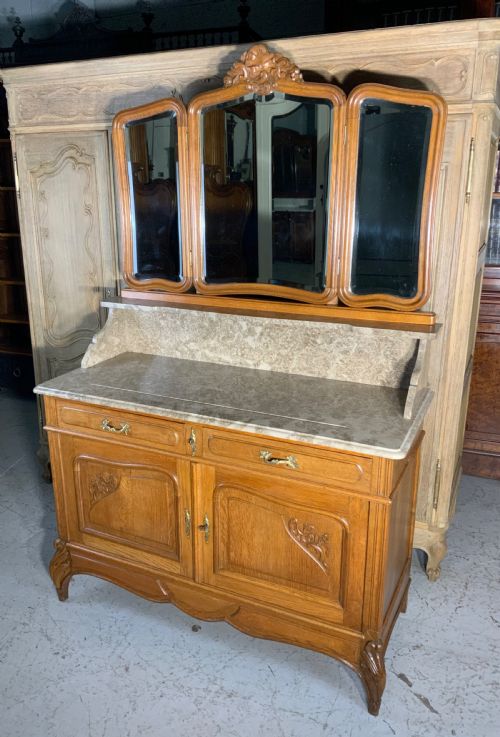
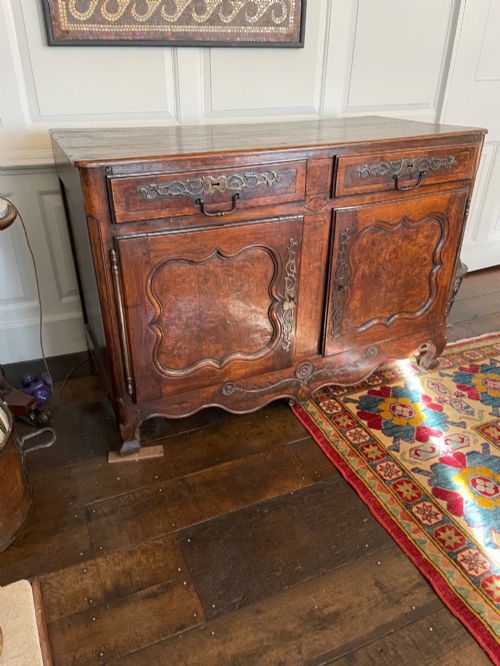
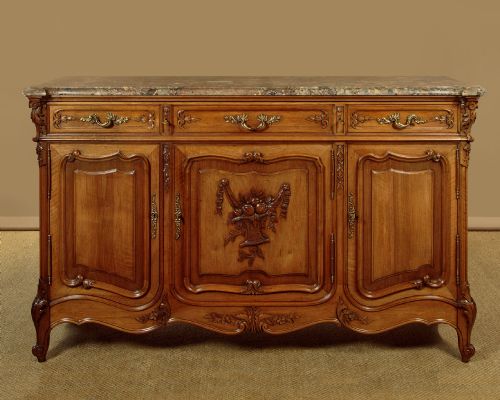
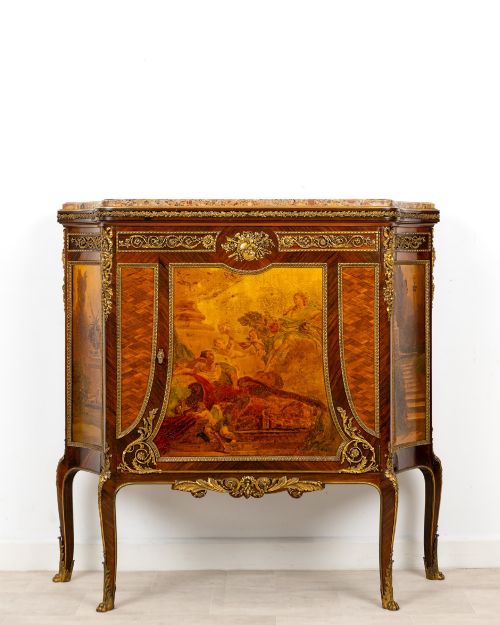



Louis XV Style Credenza
These pieces of louis xv style credenza bring rococo curves, rich veneers and heavy marble tops into domestic interiors with undeniable presence.
Louis XV Style Credenza
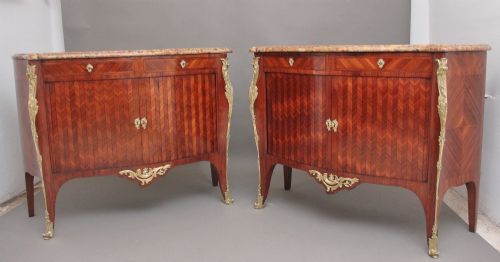
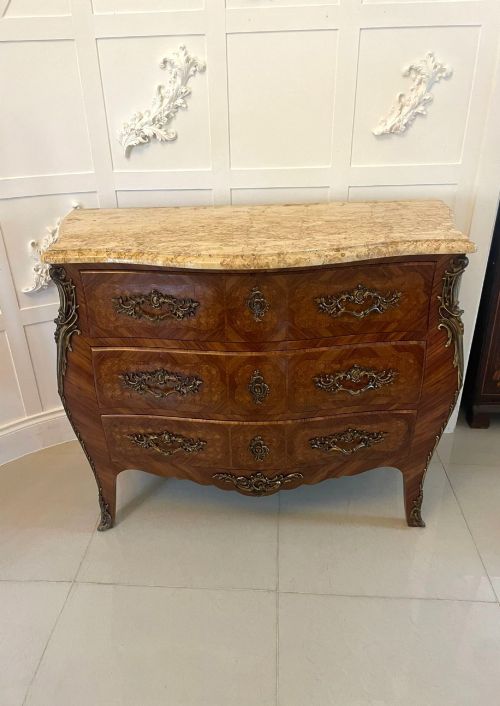
A louis xv style credenza encompasses substantial side cabinets, commodes, pier cabinets and buffets produced across the nineteenth and early twentieth centuries. These forms reflect nineteenth-century revivals of earlier French court aesthetics, adapting serpentine shapes and decorative mounts for later drawing rooms and salons.
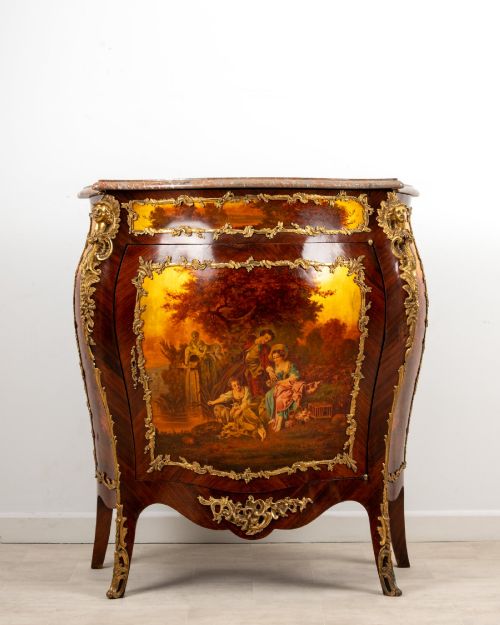
Nineteenth-century examples dominate the selection, alongside pieces from 1900 through the 1930s. Makers frequently employed forms such as the bombé cabinet, the two-door sideboard or the marble-topped commode, drawing upon Louis XV revival, French provincial and rococo vocabularies.
Originating predominantly from French workshops, these items serve as primary focal points within a room. Their proportions demand space, functioning both as display surfaces and functional storage cabinets.
Materials and Technique
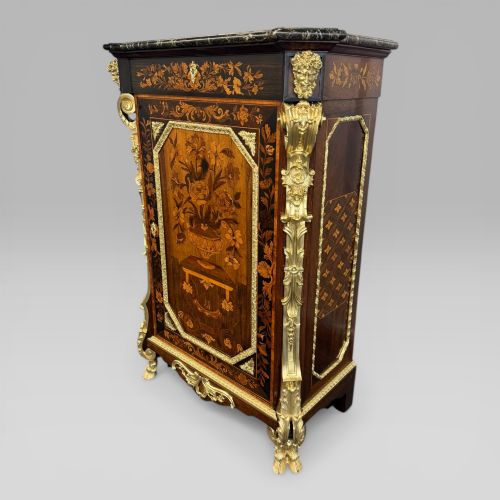
Cabinetmakers constructed carcass frames from native and exotic timbers, applying fine veneers of kingwood, rosewood, walnut and burr walnut in geometric parquetry or intricate floral marquetry patterns. Vernis Martin painted finishes and specialised Chinoiserie decoration also appear across specific cabinet surfaces.
Heavy marble slabs, notably Carrara varieties, form the top surfaces of many pieces, shaped to follow the serpentine or straight contours of the wood below. Cast or chased ormolu mounts, brass details and silver mounts accent the corners, feet and drawer fronts, fixed securely to the timber structure.
Louis XV Style Credenza Retail Price Guide 2026
Typical asking prices for louis xv style credenza among the pieces listed under this phrase on Sellingantiques today, from the lower quarter to the upper quarter. They describe what is for sale here now, not the wider market.
Some nineteenth-century makers hid secret drawers within the serpentine curves of their commodes, designed for safeguarding small treasures.
Markers of Quality
The sophistication of the marquetry and the crispness of the ormolu mounts set finer pieces apart from standard production. Superior cabinets show hand-chiselled detailing in the bronze mounts and seamless alignment of timber grains across opening doors.
Construction methods reveal the standard of a piece, with tight dovetail joints in the drawer construction and substantial, uncompromised timber carcases. The thickness, polish and natural figuring of the marble top further indicate the original investment in materials.
Edward Holmes Baldock·Maison Millet·Krieger of Paris·Joseph Zwiener·Mercier Frères
The Louis XV Style Credenza Glossary
- Ormolu
- Gilded bronze used for decorative mounts and accents on furniture. It provides a bright metallic contrast against dark exotic veneers.
- Marquetry
- The art of applying pieces of veneer to a structure to form decorative patterns and pictures. It utilises various wood species for natural colour contrast.
- Bombé
- A swelling, outwardly curved furniture shape characteristic of rococo designs. This bulging profile requires advanced woodworking techniques to achieve.
- Parquetry
- Geometric wood inlay patterns resembling mosaic work. Cabinetmakers arrange small wooden tiles to create repeating diagonal or checkerboard designs.
- Credenza
- A sideboard or display cabinet used for storing and serving. These pieces typically feature cupboards enclosed by doors rather than open shelving.
Louis XV Style Credenza: Frequently Asked Questions
What is a louis xv style credenza?
It is a decorative storage cabinet inspired by eighteenth-century French court furniture, featuring curved lines and ornate mounts.
These pieces typically incorporate wood veneers and marble tops for display and domestic use.
How do I style a credenza at home?
Position the piece against a principal wall in a dining room or living space where its proportions can command attention.
Balance the heavy marble top with understated lamps or ceramic objects to maintain visual harmony.
How can I date these cabinets?
Examine the construction methods inside the drawers and the composition of the timber carcase beneath the veneers.
Nineteenth-century revival pieces often display machine-sawn timber elements alongside hand-finished ormolu mounts.
What woods were used in these cabinets?
Cabinetmakers utilised exotic timbers such as kingwood and rosewood alongside native walnut, burr walnut and oak.
These woods were selected for their natural grain patterns and suitability for detailed marquetry work.