


Louis XV Oak Chest
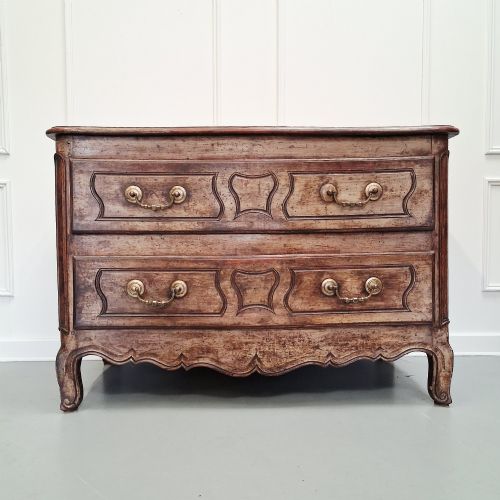
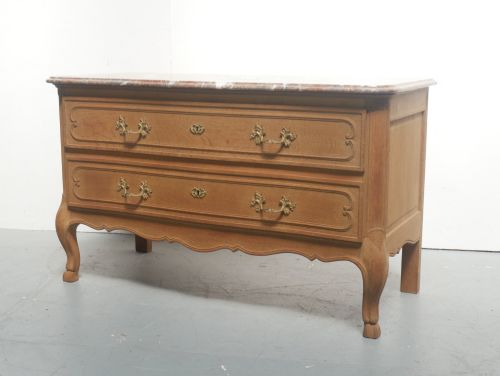
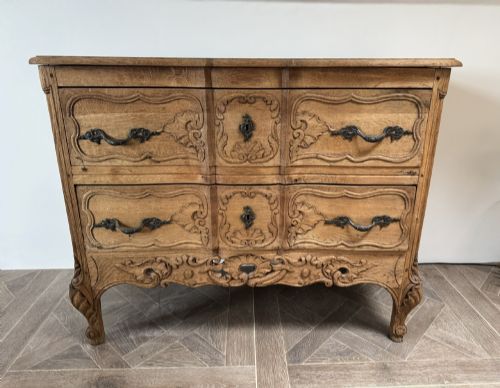
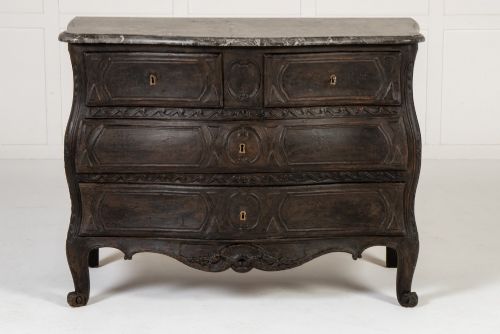
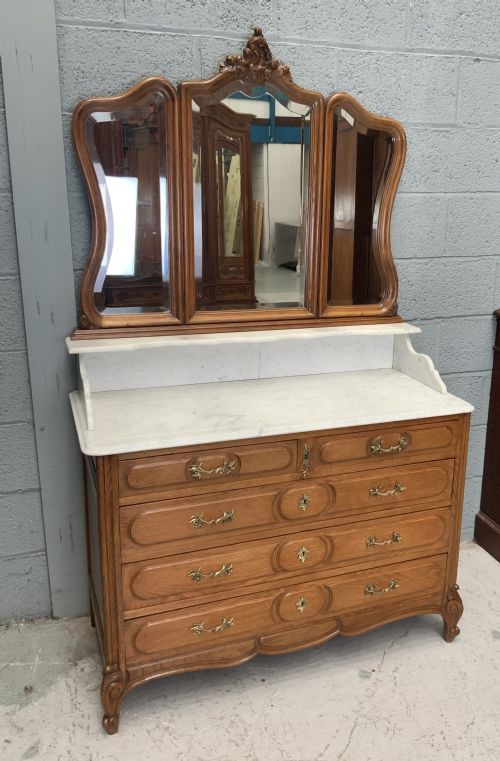
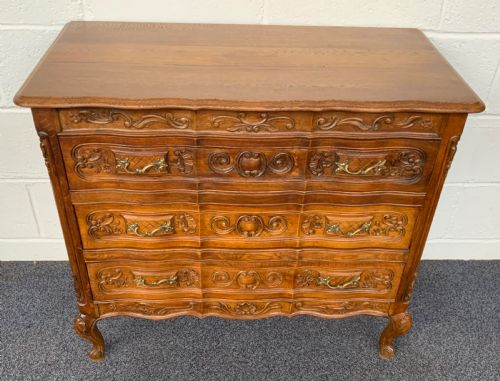
These pieces of louis xv oak chest offer regional French provincial character, combining heavy timber construction with serpentine and bombe outlines.
Louis XV Oak Chest
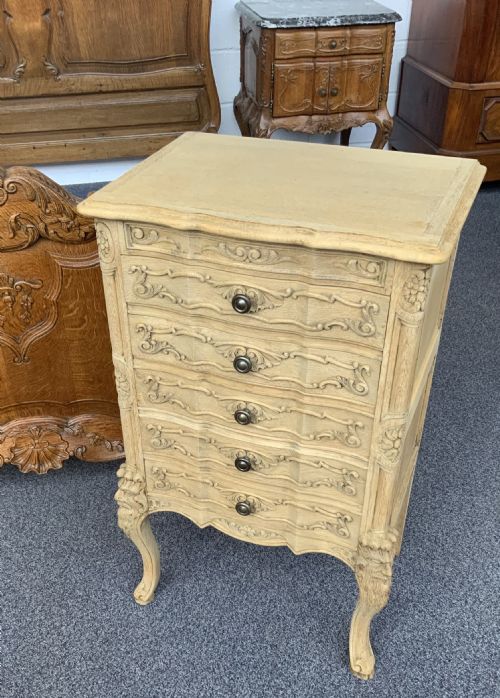
A louis xv oak chest brings organic grain and flowing curves into domestic spaces through forms like commodes, washstands, and bedside cabinets. Buyers searching this phrase encounter examples ranging from mid-eighteenth century originals to later revival pieces produced across the nineteenth and early twentieth centuries.
The most common formats on this page include three-drawer commodes and serpentine chests featuring carved details. Regional French provincial workshops adapted metropolitan court fashions into sturdier local timbers, yielding robust storage furniture with distinctive shaping.
Materials and construction
Makers utilised solid oak alongside contrasting elements of brass hardware and occasionally marble tops. Surfaces received various treatments including traditional clear finishes, paint, ebonising, or modern bleaching.
Joinery techniques supported complex serpentine and bombe silhouettes requiring skilled timber shaping and carving. Metal mounts and handles secured to drawer fronts complemented the carved wooden contours of the facades.
Some miniature commodes survive, proving that even eighteenth-century cabinetmakers enjoyed building things for tiny clothes.
Evaluating quality and proportion
Quality rests in the fluidity of the carved lines and the balance of the serpentine or bombe proportions. Superior examples demonstrate crisp hand-carving in the oak and harmonious integration of secondary materials such as marble.
The sophistication of the silhouette dictates distinction, separating straightforward provincial storage from ambitious cabinet work. Details like drawer construction and the refinement of surface finishes further distinguish individual pieces.
The Louis XV Oak Chest Glossary
- Commode
- A low chest of drawers or cabinet developed in France during the seventeenth century. These pieces typically feature multiple drawers and prominent serpentine or bombe facades.
- Bombe
- A bulging or swelling contour found on the front and sides of case furniture. This curvilinear form requires advanced woodworking skill to execute properly in solid timber.
- Serpentine
- A line or surface featuring a central outward curve flanked by inward curves. It defines the characteristic profile of many drawer fronts on these pieces.
- Bleached oak
- Timber treated to lighten its natural tone while retaining visible grain patterns. This finish appears frequently on twentieth-century interpretations of French provincial furniture.
- French Provincial
- Furniture styles originating from regional cabinetmakers outside Paris. These designs interpret high-style metropolitan aesthetics using local materials and simpler construction.
Louis XV Oak Chest: Frequently Asked Questions
How do I spot an 18th century piece?
Eighteenth-century examples display hand-cut joinery, timber shrinkage appropriate to age, and authentic surface patination developed over centuries of use.
Revival pieces from the twentieth century often utilise mechanical fastenings or scrubbed and bleached surface treatments not typical of period workshops.
Where should I place a commode?
These chests function effectively in bedrooms, hallways, or living spaces as focal storage furniture. Their decorative serpentine or bombe outlines require adequate floor space to be fully appreciated.
Marble-topped variants tolerate placement in bathrooms or dressing areas provided humidity remains stable.
What is the difference between commodes and bedside cabinets?
Commodes provide substantial storage through multiple wide drawers intended for clothing or household linens. Bedside cabinets represent scaled-down companions designed to stand beside sleeping quarters.
Both forms share the characteristic French oak construction and carved stylistic vocabulary.
Are painted finishes original?
Painted surfaces appear on both period items and later revival furniture reflecting evolving domestic tastes. Examination of the paint layers helps determine whether a finish relates to the original period or subsequent decoration.
Scrubbed and painted treatments alter the visual weight of the oak timber considerably.