


Louis XV Oak Buffet
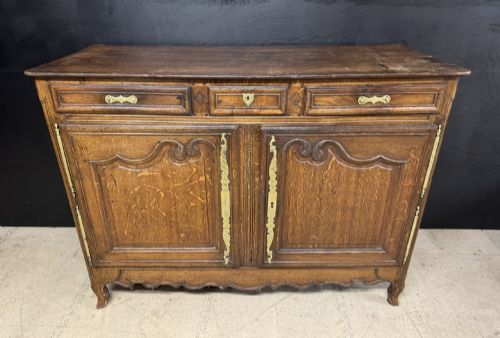
A louis xv oak buffet brings robust provincial character and sweeping serpentine lines to a room.
Louis XV Oak Buffet
A louis xv oak buffet stands as a practical storage piece rooted in eighteenth-century French provincial craftsmanship. These pieces offer substantial utility through deep cupboards and wide surfaces, built to serve dining rooms and kitchens alike.
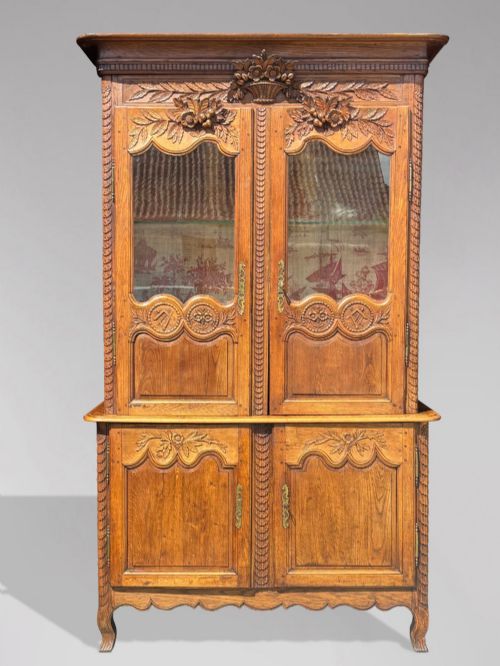
Most examples found here date from the eighteenth century, alongside later revivals from the nineteenth and twentieth centuries. The primary form involves low sideboards or grand two-body cabinets, known as buffets deux corps.
Makers shaped these items from solid oak, walnut, and sometimes incorporated marble tops or painted finishes. They display regional French styles including Louis XV, Louis XV Style, and French Provincial designs.
How they were made
Cabinetmakers constructed these pieces primarily using solid oak and walnut, joined with traditional framing techniques. Iron and brass hardware, such as hinges and escutcheons, secure the doors and drawers.
Surface decoration relies on deep panelled carving and parquetry work rather than applied veneers. Some later twentieth-century iterations incorporate marble tops and glass elements.
Structural elements include pegged joints and hand-planed timbers that show the marks of original provincial workshops.
Masonic symbols occasionally hide within the carved foliage of provincial buffets.
What varies in quality
The crispness of the hand-carved panelling and the depth of the relief work distinguish finer examples from simpler provincial output. Superior pieces retain their original brass mounts and untouched timber patination.
Proportion and structural integrity separate exceptional cabinets from ordinary ones, particularly in the balance of the double-body units and the fit of large timber doors. Altered marble tops or replaced hardware shift a piece away from its original state.
KRIEGER of Paris
The Louis XV Oak Buffet Glossary
- Buffet deux corps
- A tall two-part cabinet featuring a smaller upper cupboard set back upon a deeper base buffet. This form provides maximum storage capacity in a traditional dining setting.
- Parquetry
- A geometric mosaic of wood pieces used for decorative effect on surfaces like tabletops. It demonstrates advanced woodworking skill in arranging grain patterns.
- French Provincial
- Furniture styles originating from regions outside Paris during the eighteenth and nineteenth centuries. These designs adapt court fashions into sturdier local forms.
- Escutcheon
- A flat plate of brass or iron surrounding a keyhole. It protects the surrounding wood from wear and adds decorative detail.
Louis XV Oak Buffet: Frequently Asked Questions
What is a buffet deux corps?
A buffet deux corps is a substantial two-section storage cabinet where a narrower upper display case sits atop a deeper lower cupboard. These impressive units dominated large rural kitchens and dining rooms.
They offer immense storage capacity while displaying regional carving traditions across the dual doors and cornices.
Where were these pieces built?
These pieces originate from various French regions, reflecting local cabinetmaking traditions outside the main Parisian workshops. Provincial artisans utilised native timbers like oak and walnut.
Each region developed distinct carving motifs and proportions that hint at the specific area of manufacture.
How do I care for an oak buffet?
Maintain the timber by keeping the buffet away from direct heat sources and sudden temperature fluctuations that can dry out the old oak. Regular dusting with a soft, dry cloth preserves the natural wax finish.
Avoid commercial silicon polishes which build up and dull the historic patination over time.
Are marble tops original to these pieces?
Marble tops appear frequently on later nineteenth and twentieth-century iterations, as well as certain specific regional service buffets. Earlier eighteenth-century provincial models typically feature solid timber tops.
Inspect the seating of the stone to understand whether it represents a period modification or a later replacement.