
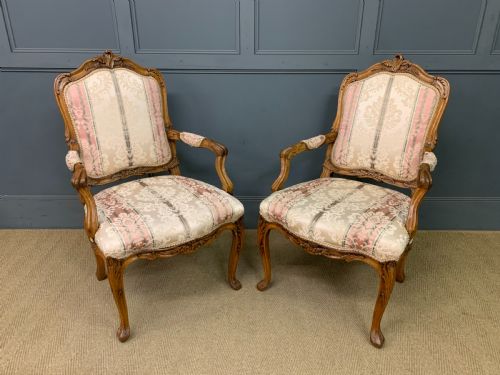
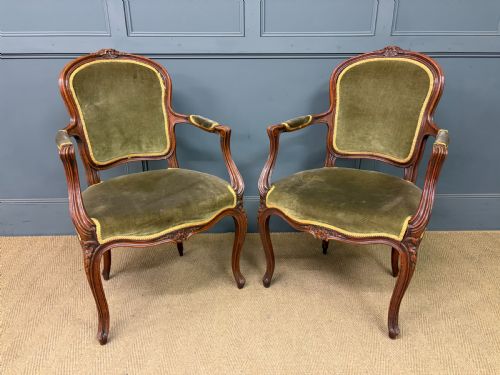
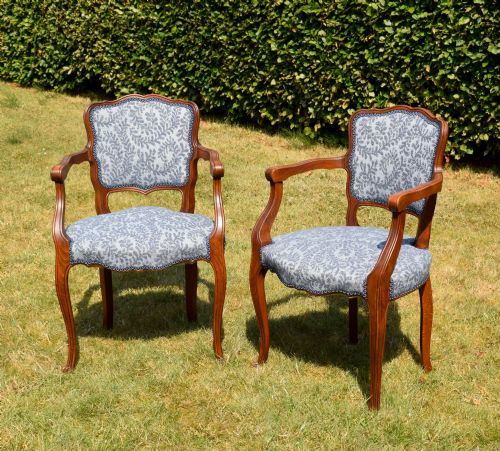
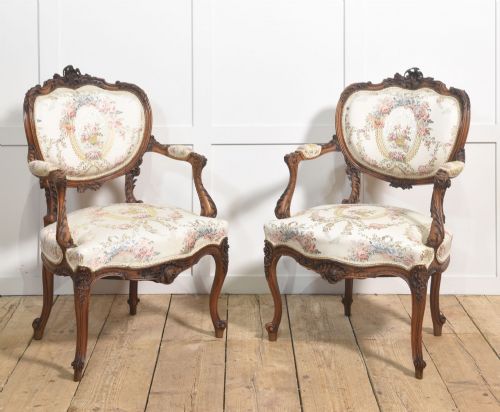


Louis XV Fauteuil Pair
A louis xv fauteuil pair brings balanced proportion and sweeping curves into a room, offering matched seating rooted in eighteenth-century French design.
Louis XV Fauteuil Pair
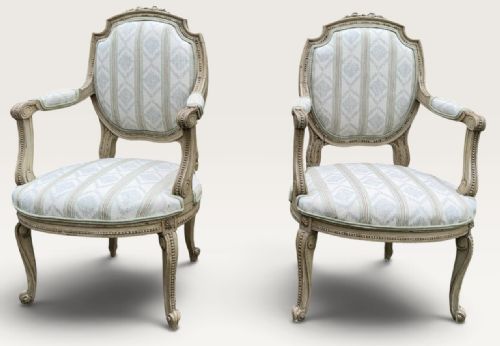
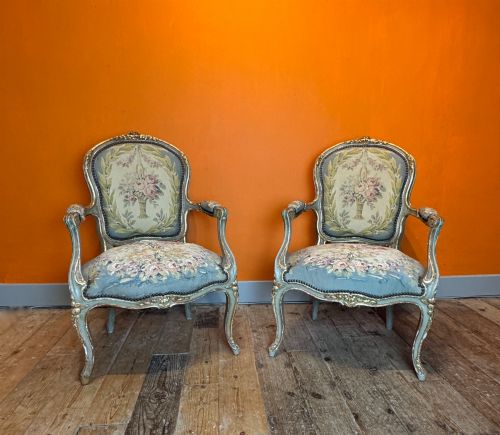
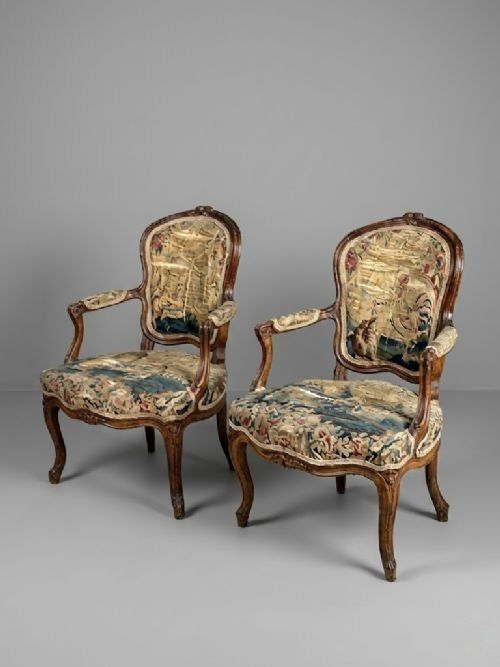
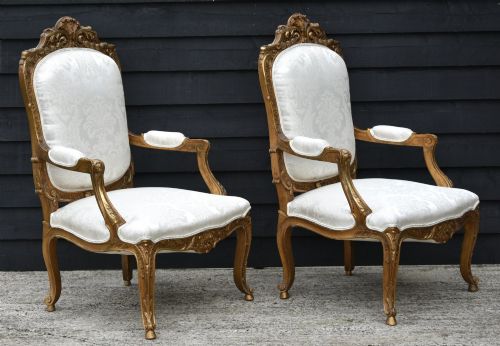
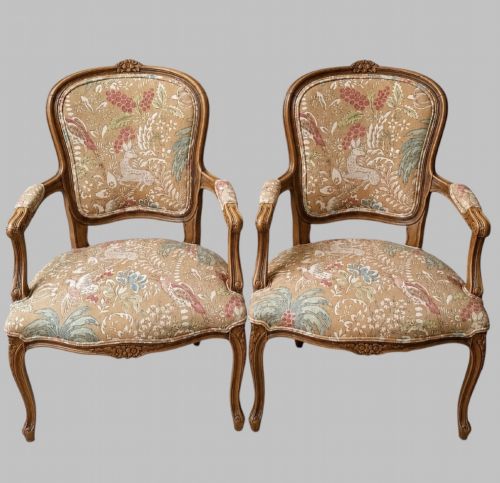
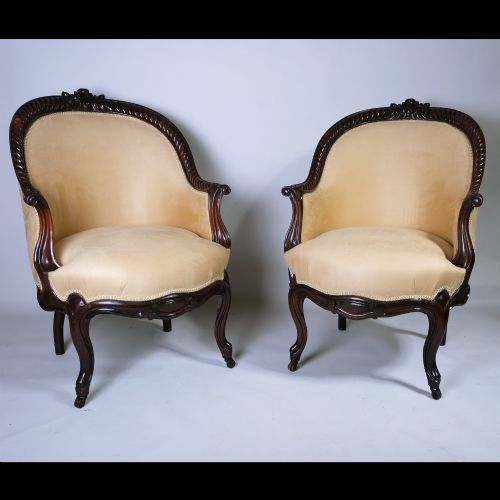
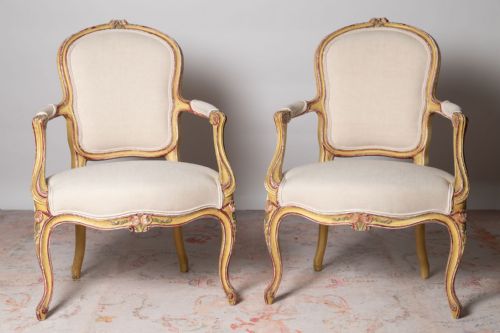
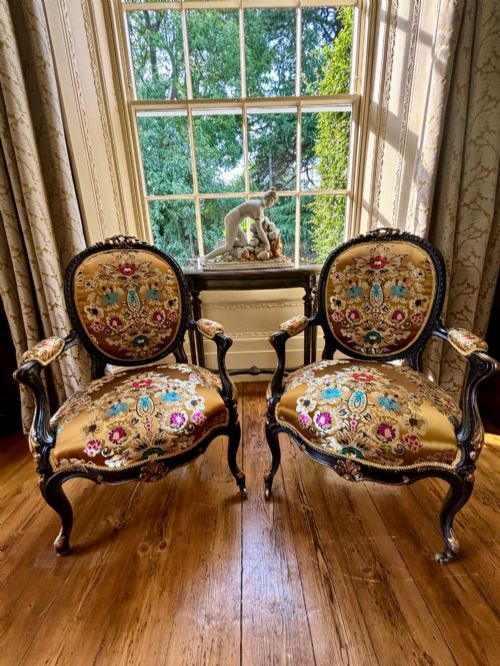
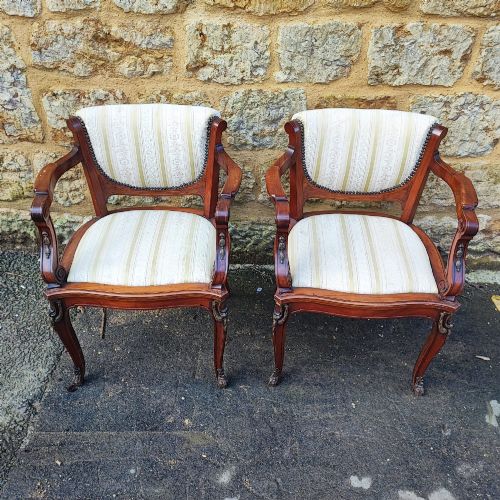
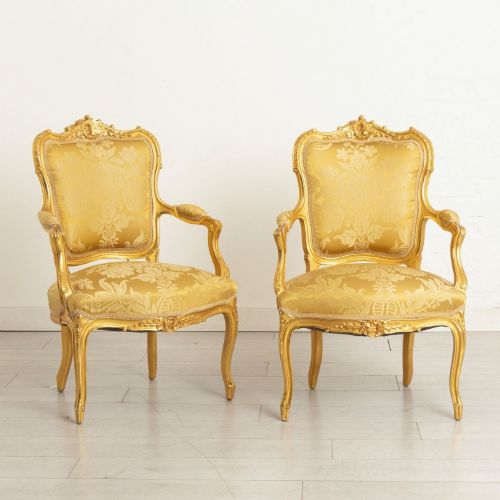
A louis xv fauteuil pair consists of matching open-armed seating designed for eighteenth-century French social interiors, combining formal presence with comfortable proportions. Buyers encounter these most frequently as nineteenth-century revivals, though eighteenth-century examples and twentieth-century interpretations also appear.
The form relies on characteristic curved lines, including cabriole legs, serpentine seat rails, and moulded cartouche-shaped backs. Pairs typically serve as statement seating in formal salons, libraries, or drawing rooms.
Makers working across the nineteenth and twentieth centuries adopted the Louis XV style to satisfy enduring demand for French aesthetic codes. These seats accommodate various textile coverings, from traditional tapestry and silk to contemporary velvet and linen.
How they were made
Cabinetmakers constructed the frames using hardwoods like walnut, beech, mahogany, and oak, selecting timber capable of supporting deep carving. Artisans shaped the wood by hand, creating flowing contours along the arms, rails, and crests without straight structural lines.
Surfaces received diverse treatments including clear wax, applied paint, parcel gilding, or full giltwood finishes to suit changing interior tastes. Upholstery methods secured horsehair or natural stuffing over webbing, finished with decorative textile covers fixed by tacks or trimming.
The inventory records regional interpretations ranging from French country house seating to grand salon throne chairs.
What varies in quality
The crispness and depth of the hand-carved ornamentation dictate the primary tier of craftsmanship, separating sharp floral motifs from soft or mechanical casting impressions. Wood selection also plays a role, with dense timbers yielding more resilient structural integrity over centuries of use.
The integrity of the original frame construction, including tight joinery and surviving surface treatments like historic paint or gilding, elevates a pair's standing. Upholstery execution, from webbing tension to fabric choice such as antique Aubusson tapestries or silks, completes the standard.
The Louis XV Fauteuil Pair Glossary
- Fauteuil
- An open-armed upholstered armchair originating in France, featuring exposed wooden framing around the back and seat. These chairs emphasise lightness and curved comfort compared to earlier high-backed styles.
- Cabriole leg
- A furniture leg that curves outward at the knee and tapers inward toward the foot, often ending in a scroll or pad. This shape defines much of the Louis XV aesthetic vocabulary.
- Giltwood
- Wood that has been coated with a thin layer of gold leaf or gold paint over a prepared ground. It provides a luminous surface that reflects candle or window light.
- Cartouche
- An ornamental frame resembling a scroll or rolled-up piece of paper, frequently shaping the upholstered backrest of these chairs. The contour mimics rococo decorative panels.
- Aubusson
- A style of tapestry woven in the French town of the same name, historically used for upholstery on high-status seating. These textiles typically display floral or pastoral scenes.
Louis XV Fauteuil Pair: Frequently Asked Questions
Where should I place a fauteuil pair?
These chairs work best facing one another across a fireplace, flanking a low table, or positioned symmetrically in a formal reception room. Their open arms maintain visual airiness in smaller spaces.
Because the carved backs present attractive silhouettes from behind, they also function effectively when floated away from walls in open-plan interiors.
How do I identify a revival pair?
Nineteenth- and twentieth-century revival pieces often display machine-tooled elements, standardised hardware, or secondary woods hidden beneath upholstery. Examining the joinery and timber oxidation helps separate nineteenth-century interpretations from eighteenth-century originals.
Stylistic proportions also shift slightly across periods, with revival pieces sometimes appearing heavier or more assertive in their carving.
Can I mix painted and gilt frames?
Mixing painted and gilt finishes works well if the wood tones or secondary accent colours share a harmonious palette within the room. Many period interiors combined gilded statement pieces with softer painted seating.
Matching the overall silhouette and period style matters more for visual cohesion than ensuring identical surface finishes across every chair.
How do I care for antique upholstery?
Protect delicate textiles like silk, needlework, or antique tapestry by keeping chairs out of direct sunlight to prevent fading. Vacuuming gently with a soft brush attachment removes surface dust without stressing fragile fibres.
Professional cleaning ensures historic fabrics and underlying stuffing remain stable over years of domestic use.