




Louis XV Ebonised Table
A louis xv ebonised table brings French rococo curves and dark polished surfaces into a room with striking presence.
Louis XV Ebonised Table
When you search for a louis xv ebonised table, you encounter nineteenth-century revival pieces that combine curved French silhouettes with dark finishes. These tables originate largely from the Victorian era and French Napoleon III period, capturing the ornate tastes of the nineteenth century.
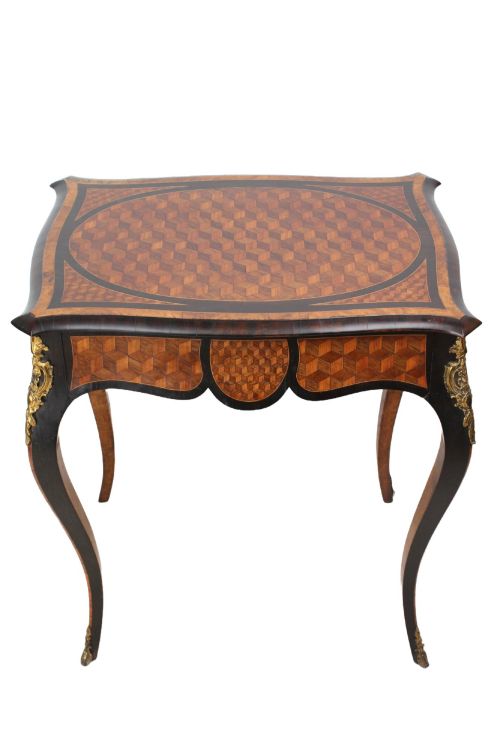
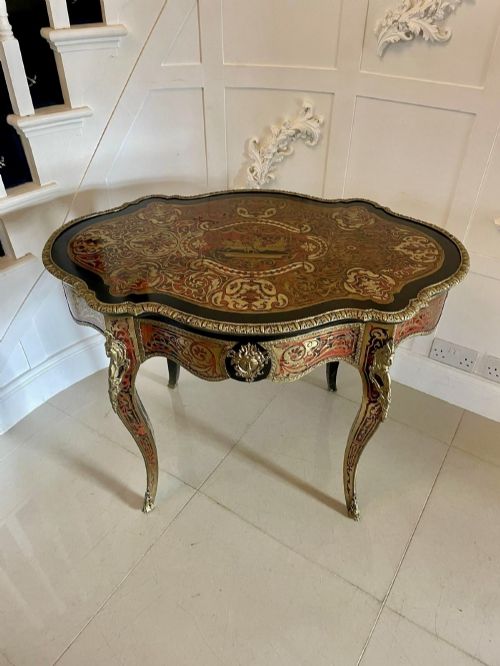
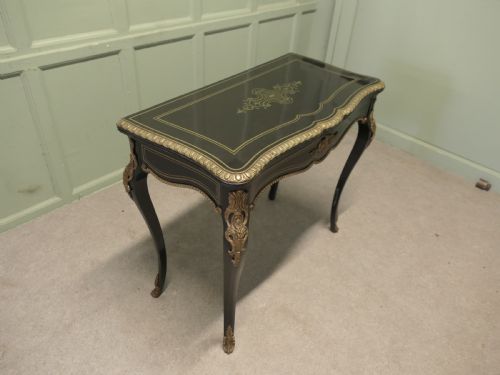
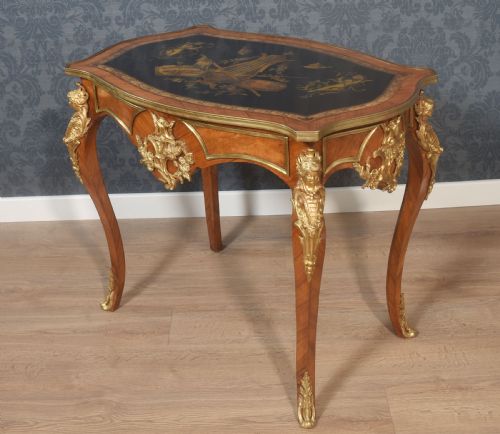
The selection on this page ranges widely in form, from centre tables and writing desks to card tables, games tables, and jardinieres. You will frequently meet pieces featuring characteristic cabriole legs and serpentine edges finished in deep ebonised wood.
Many examples draw heavily on Boulle marquetry traditions, incorporating brass, tortoiseshell, and gilt bronze mounts alongside intricate floral marquetry and parquetry. These forms reflect the enduring popularity of French design interpretations across British and continental workshops.
How they were made
Cabinetmakers constructed these tables using a timber carcass, often walnut or other foundational woods, before applying a dense ebonised finish to simulate expensive ebony. Surfaces were then polished to a deep sheen to contrast sharply with applied metal ornaments.
Craftsmen enriched the designs using intricate brass inlay, tortoiseshell work, and delicate marquetry in various woods. Gilt bronze or ormolu mounts were cast and chased to accentuate the sweeping contours of the legs, aprons, and corners.
Listings feature periods from Victorian and Napoleon III to the early twentieth century, utilising materials such as ormolu, tortoiseshell, and walnut.
What varies in quality
The distinction between standard production and exceptional work lies in the precision of the brass inlay and the depth of the marquetry. Superior examples display tightly fitted parquetry and meticulously hand-chased ormolu mounts rather than mass-cast replacements.
Structural refinement also separates the grades, visible in the seamless joining of serpentine aprons and the stability of freestanding centre tables. The crispness of the ebonised finish and the preservation of delicate surface details determine the standing of each piece.
JAS Shoolbred·Maison Millet·Edwards & Roberts
The Louis XV Ebonised Table Glossary
- Ebonised
- Wood treated to resemble true ebony through staining or painting. This dark finish provides a dramatic backdrop for metallic mounts.
- Ormolu
- Gilded bronze applied to furniture mounts and decorative hardware. It adds a bright metallic contrast to the dark ebonised surfaces.
- Boulle
- A form of marquetry using brass and tortoiseshell inlaid in contrasting patterns. Named after the royal cabinetmaker André-Charles Boulle.
- Marquetry
- Decorative patterns formed by fitted veneers applied to a wooden carcass. Floral motifs and geometric designs are common on these tables.
- Cabriole
- A furniture leg that bends outward and then tapers inward. This curved form defines the classic Louis XV aesthetic.
Louis XV Ebonised Table: Frequently Asked Questions
How do I identify a louis xv ebonised table?
Look for characteristic serpentine edges, cabriole legs, and a dark ebonised finish paired with gilt metal mounts or brass inlay. These revival pieces typically date from the nineteenth century.
examine the underside and construction methods to confirm period materials and assembly techniques.
Where should I place a centre table?
Centre tables are designed to be viewed from all sides, making them ideal as freestanding statement pieces in the middle of a room. They also function well in larger hallways or drawing rooms.
Ensure there is adequate walking space around the piece to appreciate its detailed marquetry and mounts.
How do I care for ebonised wood?
Dust regularly with a soft, dry cloth and avoid placing the table in direct sunlight or near heat sources. Excessive dryness can cause timber movement and affect the ebonised finish.
Use mild cleaning methods without harsh chemical polishes to preserve the integrity of the surface.
What is the difference between a card table and a writing table?
Card tables typically feature a folding or rotating top designed for gaming, often lined with felt or leather inside. Writing tables usually incorporate drawers and a dedicated surface for correspondence.
Both share the signature curves and decorative mounts typical of the style.