






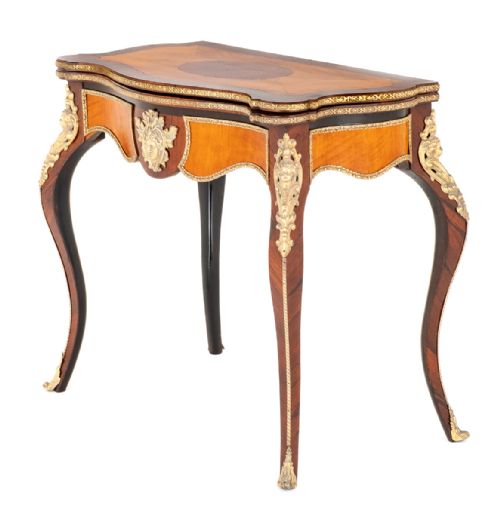
French Rococo Games Table
A french rococo games table brings exuberant curves and intricate marquetry into a room, offering a functional surface that folds open for play.
French Rococo Games Table
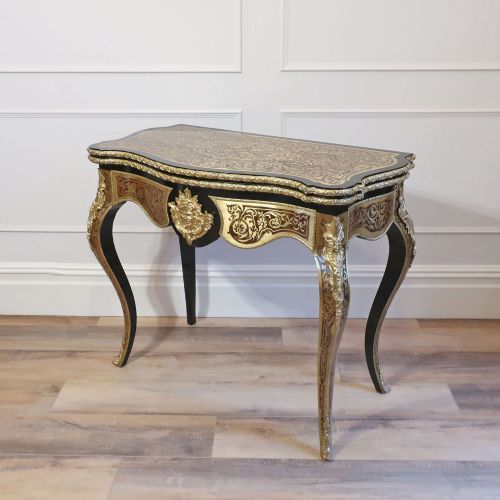
A french rococo games table combines the fluid, asymmetric lines of the revival styles with practical surfaces intended for cards or board games. These pieces emerge primarily from the nineteenth century, reflecting a Victorian appetite for continental revival forms.
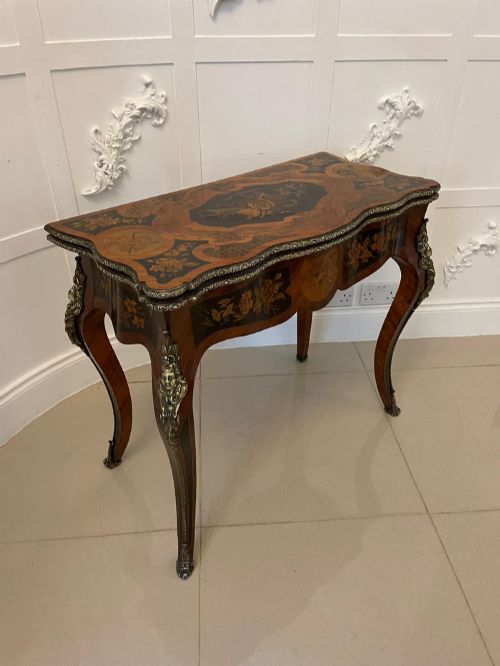
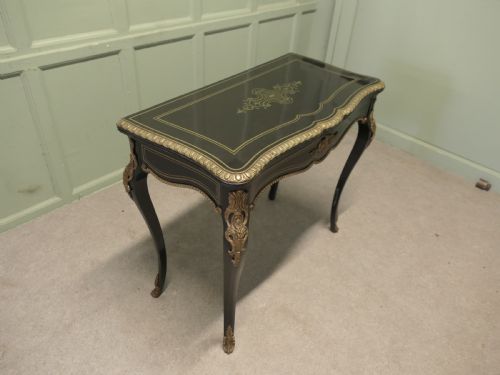
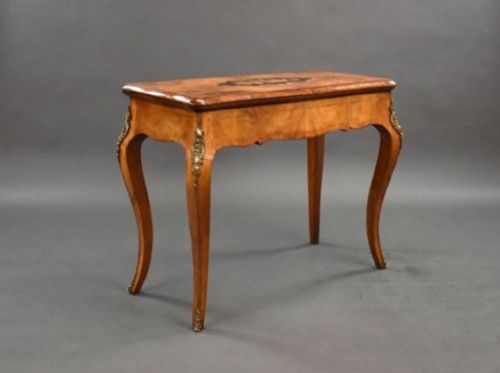
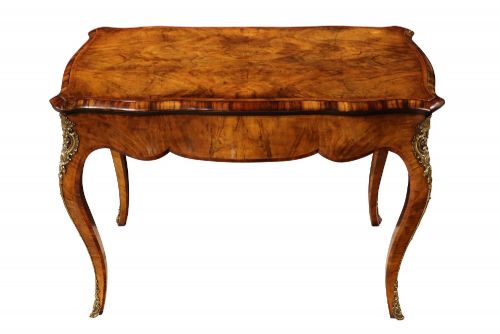
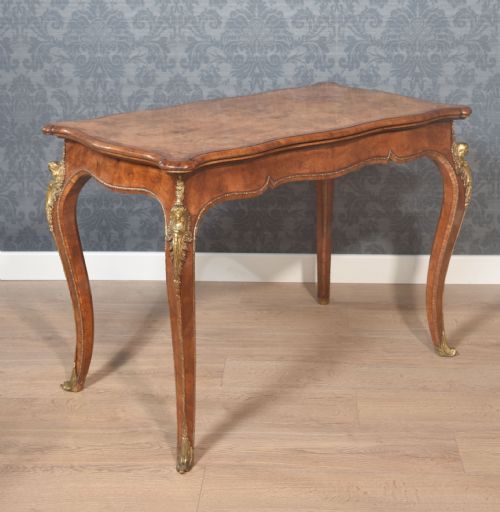
Buyers encounter various timber frames, most frequently kingwood, walnut, and burr walnut, alongside ebonised wood and mahogany. Many examples feature fold-over tops that conceal a baize-lined playing surface beneath decorative marquetry.
The aesthetic draws heavily on Louis XV and Louis XVI design vocabularies, adapted by English and continental makers during the Victorian era. Side tables and occasional tables with similar serpentine outlines and folding mechanisms often serve the same dual function.
Materials and Construction
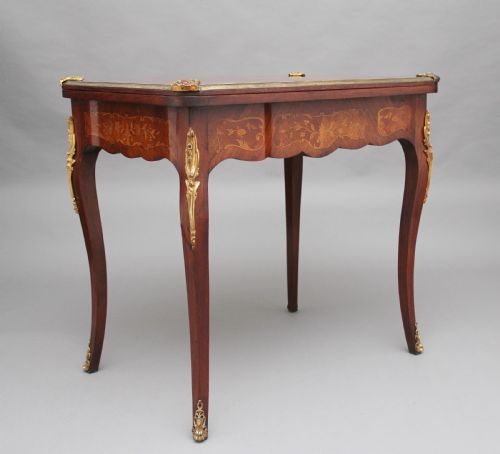
Cabinetmakers utilised dense hardwoods like kingwood and walnut as structural bases, applying elaborate marquetry and brass inlay to create intricate surface patterns. Exotic veneers were carefully cut and fitted to follow the sweeping contours of the table aprons and cabriole legs.
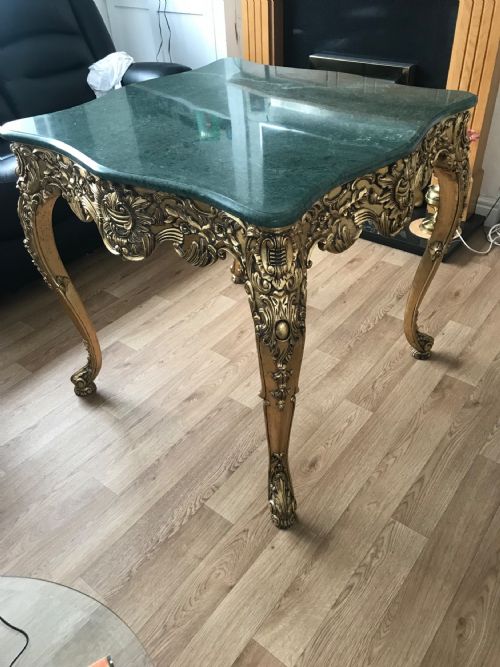
Ormolu and gilt bronze mounts cast in ornate scrollwork embellish the corners, knees, and feet, accentuating the organic shapes characteristic of the style. Solid marble tops appear on certain heavier occasional variants, providing a cool and durable contrasting surface.
French Rococo Games Table Retail Price Guide 2026
Typical asking prices for french rococo games table among the pieces listed under this phrase on Sellingantiques today, from the lower quarter to the upper quarter. They describe what is for sale here now, not the wider market.
A solitary marble-topped table breaks the wooden rule, bringing a cool stone surface to the parlour.
Indicators of Quality
The distinction between standard production and exceptional craftsmanship rests in the crispness of the bronze mounts and the precision of the wood marquetry. Finer examples display seamless veneer matching across the fold-over leaves and tightly fitted hinges that operate without friction.
Makers identified by stamped signatures or atelier marks command attention for their superior timber selection and structural integrity. The depth of hand-chased detail on the ormolu and the complexity of the floral or geometric inlay separate ordinary workshop output from master cabinetmaking.
Maison Millet·Edwards & Roberts
The French Rococo Games Table Glossary
- Marquetry
- Decorative veneer patterns assembled from thin slices of wood, shell, or metal to form pictorial or geometric designs. This technique covers the top and aprons of finer tables.
- Ormolu
- Gilded bronze mounts applied to furniture edges and corners to highlight the structural lines. The metal is cast and then finished with mercury gilding or gold plating.
- Cabriole leg
- A furniture leg that curves outward and then tapers inward with a pad or scroll foot, mimicking animal limbs. This form defines the rococo silhouette.
- Boulle
- A style of marquetry utilising tortoiseshell and brass inlaid in a counterchange pattern. Named after the royal cabinetmaker Louis XIV, it appears on select revival tables.
French Rococo Games Table: Frequently Asked Questions
How do I care for the polished wood?
Dust the surface regularly with a soft, dry cloth to prevent micro-scratches on the delicate veneer and French polish.
Keep the timber away from direct sunlight and rapid humidity shifts to avoid splitting the marquetry.
Can I use the table for card games today?
The folding mechanisms and hinges are designed to support a playing surface, but the antique timber requires gentle handling.
Avoid placing heavy items or drinks directly onto the antique polish to preserve the finish.
How can I tell a revival piece from an original?
Most pieces matching this description date from the nineteenth-century revival periods rather than the eighteenth century.
Examine the secondary woods, screw types, and construction methods inside the aprons to confirm the manufacturing era.
What is the purpose of the fold-over top?
The hinged top opens to double the surface area, revealing a baize or felt playing area underneath.
When closed, the table functions as a decorative side or console piece against a wall.