





Louis XV Style Games Table
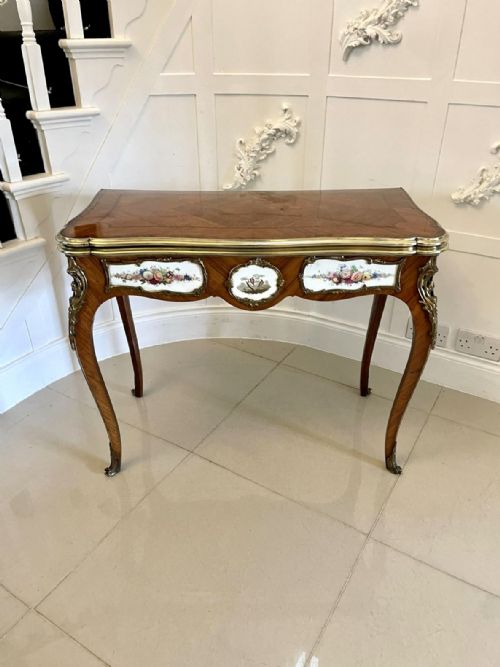
A louis xv style games table brings the flowing curves and decorative brass work of eighteenth-century France into a nineteenth-century interior.
Louis XV Style Games Table
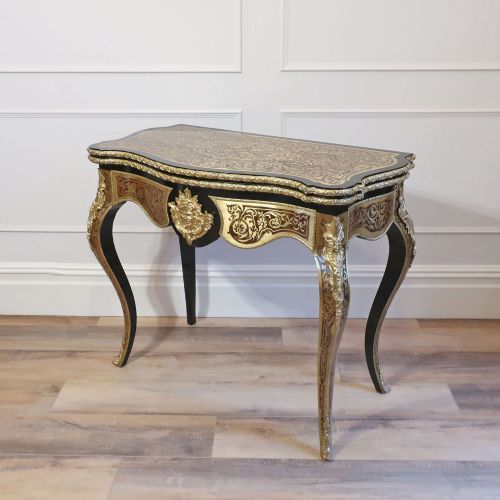
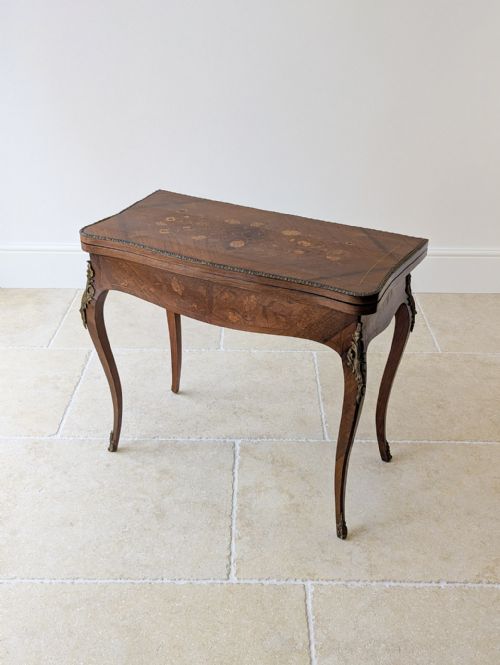
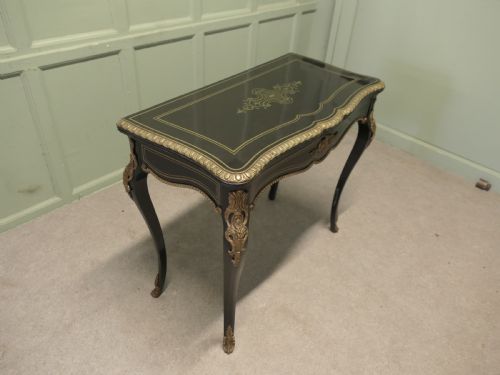
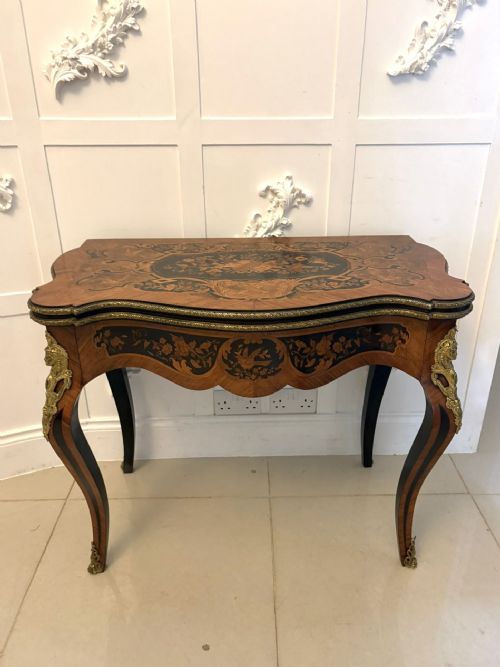
A louis xv style games table is primarily a card table designed for social gatherings during the nineteenth century, often featuring a fold-over top or an envelope mechanism to reveal a baize-lined surface. These pieces emerged in various forms including card tables, side tables, and occasional tables, drawing heavily on French Rococo revival aesthetics.
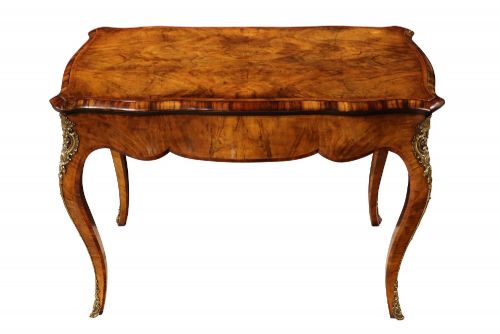
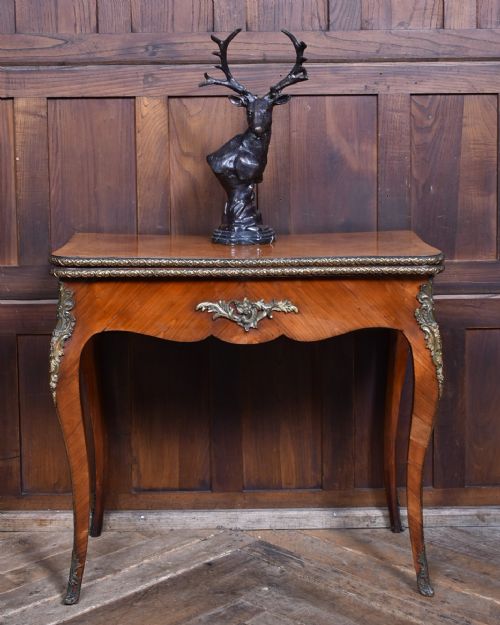
The version most commonly encountered on this page originates from the nineteenth century, particularly the Victorian era, spanning decades from eighteen-fifty to eighteen-ninety. They frequently display the characteristic serpentine outlines and cabriole legs associated with French models, adapted by English and continental makers.
How they were made
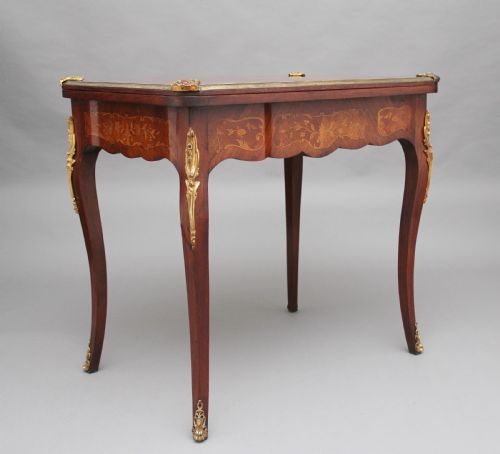
Cabinetmakers utilised rich timber veneers such as kingwood, walnut, mahogany, and ebonised wood over sturdy foundational carcases, often applying intricate marquetry, parquetry, or brass inlay in Boulle technique. These decorative wooden surfaces required meticulous hand-cutting and fitting to achieve complex geometric or floral patterns across the folding tops and aprons.
Metal ornamentation played a crucial role in the construction, employing cast ormolu and gilt bronze mounts to accentuate the sweeping contours of the frame and protect vulnerable corners. Artisans secured these heavy metal mounts with tiny brass pins, framing the wood grain and bridging the transition into the legs.
Louis XV Style Games Table Retail Price Guide 2026
Typical asking prices for louis xv style games table among the pieces listed under this phrase on Sellingantiques today, from the lower quarter to the upper quarter. They describe what is for sale here now, not the wider market.
The evidence records production spanning the mid-nineteenth century up to nineteen-ten, covering both English retail houses and Parisian workshops.
What varies in quality
The standard of a louis xv style games table depends heavily on the precision of the cabinetwork and the depth of the marquetry or brass inlay. Superior examples show seamless alignment when the top is folded shut, with timber grains matched symmetrically across the centre fold.
Finishing touches on the metal mounts and the complexity of the internal mechanism also separate simpler commercial pieces from workshop masterpieces. Crisp chasing on the ormolu and substantial timber thickness indicate a higher tier of production by established makers.
G T Morant·Joseph-Emmanuel Zwiener·Maison Millet·Edwards & Roberts
The Louis XV Style Games Table Glossary
- Ormolu
- Gilded bronze used for decorative mounts on furniture. It provides a bright golden contrast against dark timbers like kingwood and ebonised wood.
- Marquetry
- The art of applying pieces of veneer to a structure to form decorative patterns and pictures. It differs from parquetry through its pictorial or floral rather than geometric designs.
- Boulle
- A style of marquetry using brass and tortoiseshell inlaid together. Named after a French royal cabinetmaker, it creates a striking metallic sheen.
- Cabriole leg
- A furniture leg that curves out and then in, resembling the leg of an animal. This form defines the silhouette of louis xv revival pieces.
- Kingwood
- A dense, richly figured timber with dark violet-brown markings highly favoured in nineteenth-century French-style furniture. It forms the primary surface veneer on many surviving card tables.
Louis XV Style Games Table: Frequently Asked Questions
How do I open the table?
Most pieces feature a fold-over top that pivots on hinges, often swinging round to reveal a concealed compartment for cards and counters beneath the surface. Users simply lift and rotate the upper leaf to rest upon the extended rear legs.
Envelope versions operate through a central pivoting mechanism where four triangular flaps fold inward like an envelope. Care must be taken not to force older hinges that have stiffened with age.
What games were played on them?
These tables served primarily for card games such as whist, quadrille, and piquet, which were central to nineteenth-century drawing-room social life. The interior surfaces were typically lined with baize or velvet to provide a quiet, non-slip area for dealing cards.
Beyond cards, they accommodated chess, checkers, or general conversation when closed. The multi-purpose nature made them essential furniture for entertaining guests in a parlour.
Where should I place it?
A louis xv style games table works well against a drawing-room wall as a console or side table when folded shut. Placing it out of direct sunlight protects the delicate kingwood or walnut veneers from fading over time.
When opened for use, it requires floor space in the centre of a room so players can access all sides. Ensure the room's humidity remains stable to prevent the wood or brass inlay from expanding and contracting.
How do I tell revival from original?
Almost all pieces matching this style description date from the nineteenth century rather than the reign of Louis XV itself. Cabinet construction methods, secondary timbers like oak or pine beneath the veneers, and nineteenth-century screw types help confirm the Victorian revival period.
Maker marks, stamped signatures, or retailer stamps found on the locks or underside often point to specific London or Parisian workshops from eighteen-fifty onward. Comparing the secondary woods and hinge styles provides further clues to the exact decade of manufacture.