





Louis XV Deux Corps
Louis xv deux corps cabinets are substantial two-tier storage pieces from France that bring commanding presence and historical depth to a room.
Louis XV Deux Corps
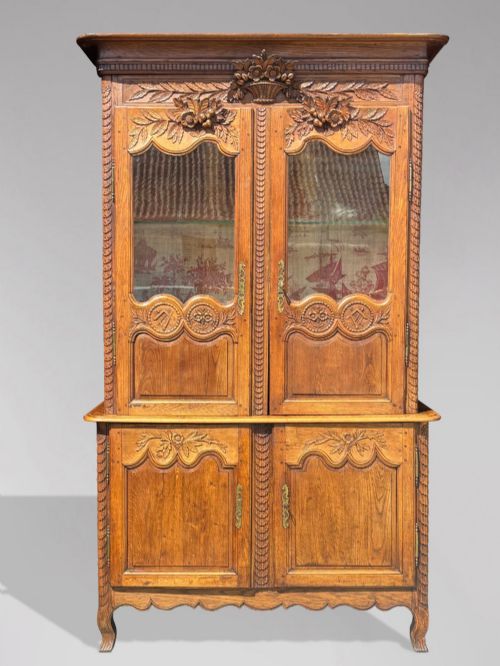
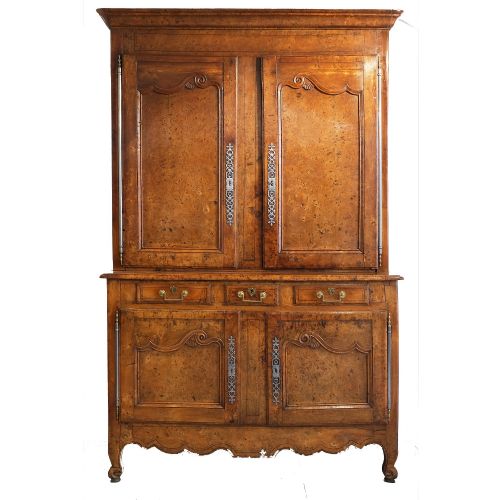
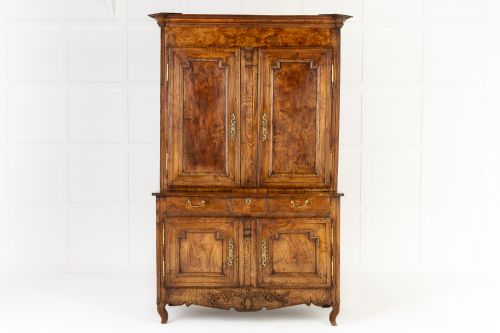
A louis xv deux corps is a large, two-bodied storage cabinet typically divided horizontally into an upper and lower section, designed for grand domestic interiors. You will most frequently encounter sturdy oak examples originating from the eighteenth century, often displaying the characteristic curved lines associated with French provincial furniture.
The form encompasses related regional variations such as buffets, vitrines, and housekeeper's cupboards that maintain the distinctive stacked architectural structure. These pieces combine display and concealed storage, making them practical focal points for large dining rooms or living spaces.
How they were made
Cabinetmakers constructed these large storage pieces using solid regional timbers such as oak, ash, elm, and walnut, chosen for structural strength and attractive grain patterns. Panels were frequently hand-carved and assembled using traditional joinery methods to accommodate the seasonal movement of large wooden sections.
Hardware such as iron and brass hinges, locks, and escutcheons were hand-forged or cast to secure the heavy doors of the upper and lower bodies. Glass panes were incorporated into upper display sections where the design called for vitrine storage.
Louis XV Deux Corps Retail Price Guide 2026
Typical asking prices for louis xv deux corps among the pieces listed under this phrase on Sellingantiques today, from the lower quarter to the upper quarter. They describe what is for sale here now, not the wider market.
Many an eighteenth-century housekeeper stored her finest linens within these towering frames, blissfully unaware they would one day cross the channel.
What varies in quality
Quality in a louis xv deux corps is dictated by the crispness of the hand-carved ornamentation and the harmonious proportion between the upper and lower bodies. Finer examples display deeply sculpted panels and fluid asymmetrical lines that reflect confident craftsmanship rather than rigid repetition.
The choice of primary timber significantly affects the character of the piece, with dense mature oak and figured walnut commanding greater visual weight than simpler ash or elm constructions. Original brass and iron hardware left intact adds considerably to the integrity of the piece.
The Louis XV Deux Corps Glossary
- Deux corps
- A large cabinet made in two distinct stacked sections, usually with a smaller or matching upper cupboard set upon a deeper lower base.
- Buffet
- A large sideboard or storage cupboard traditionally used for storing and serving food and tableware.
- Vitrine
- A glass-fronted cabinet designed specifically for the display of porcelain, glassware, or treasured objects.
- Escutcheon
- A protective plate surrounding a keyhole, often fashioned from brass or iron on these large cabinets.
Louis XV Deux Corps: Frequently Asked Questions
What is a louis xv deux corps?
It is a large two-part French storage cabinet featuring an upper section stacked upon a lower base, built primarily during the eighteenth and nineteenth centuries.
These imposing pieces were designed for domestic storage and display, combining enclosed cupboards with sometimes glass-fronted upper compartments.
How were these cabinets used?
They served as principal storage furniture in grand French homes and farmhouses, holding linens, tableware, and provisions.
The upper and lower sections allowed households to display prized possessions above while keeping utilitarian items securely hidden below.
What woods are typical?
Oak is the predominant timber found in these pieces, valued for its durability and suitability for deep carving.
Cabinetmakers also utilised regional hardwoods such as ash, elm, and walnut depending on the local availability and workshop traditions.
How do I fit one in a modern home?
Due to their towering two-tier construction, these cabinets require substantial wall space and high ceilings to sit comfortably in a room.
They function best as anchor pieces in spacious dining rooms, kitchens, or hallways where their scale can be properly appreciated.