



Louis XV Chevet Pair
A louis xv chevet pair brings French rococo elegance to the bedside, offering matched storage topped with fine marble.
Louis XV Chevet Pair
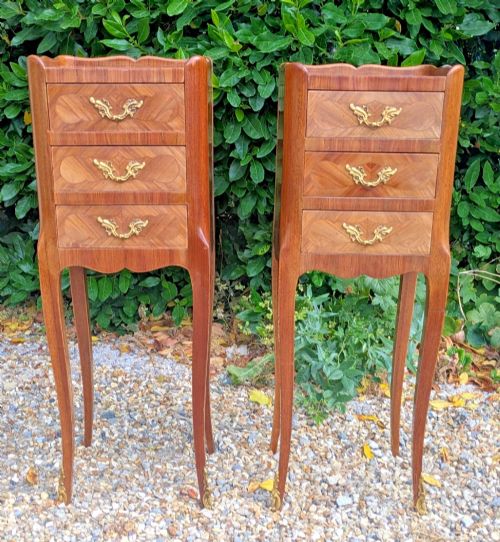
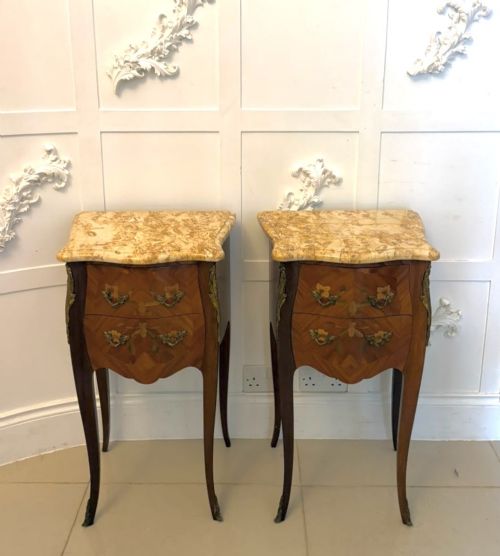
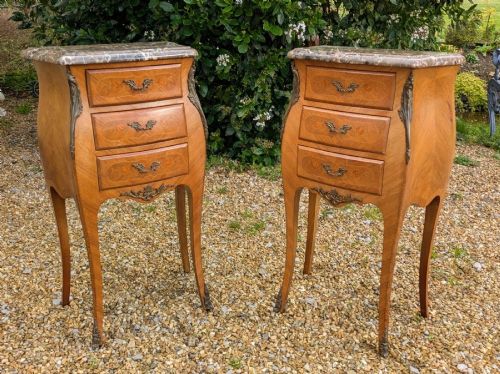
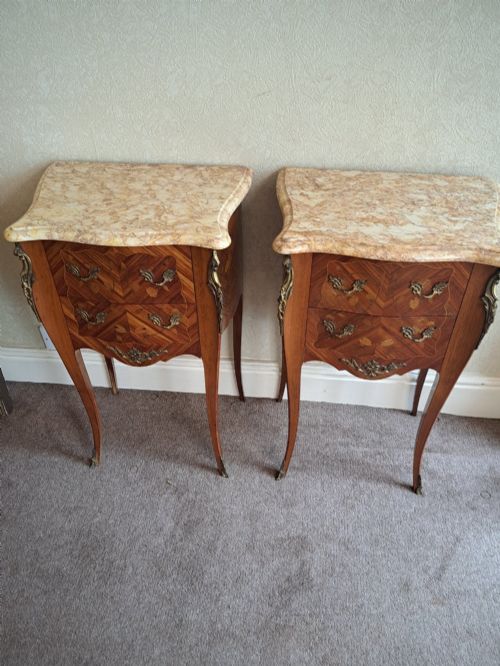
A louis xv chevet pair consists of two matching bedside cabinets or small tables designed for dual placement beside a bed. These pieces originate primarily from French workshops spanning the late nineteenth century through the early decades of the twentieth century, adopting revival styles inspired by earlier royal furniture.
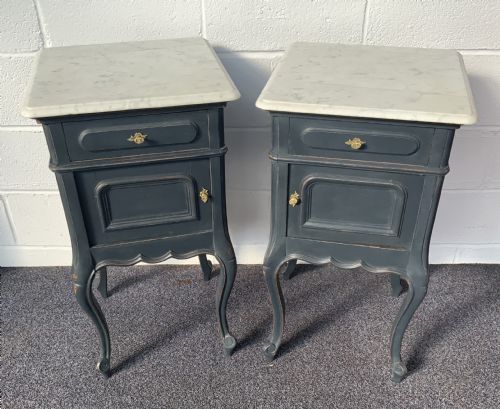
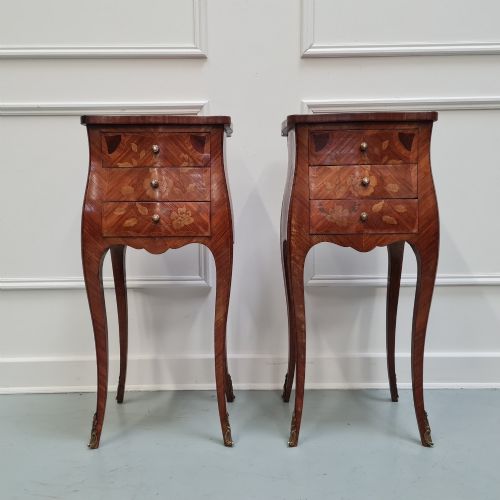
The form typically manifests as compact bedside chests of drawers, nightstands, or enclosed cabinets with distinctive serpentine lines. Examples on this page range from plain oak and walnut provincial models to highly decorative versions finished with elaborate marquetry and parquetry.
Makers designed these items to serve both functional and ornamental roles in the bedroom, providing concealed storage alongside surfaces suited for lamps and small objects. Buyers encounter various interpretations, from simple painted wood finishes to ornate varieties incorporating floral veneers.
Materials and Construction Techniques
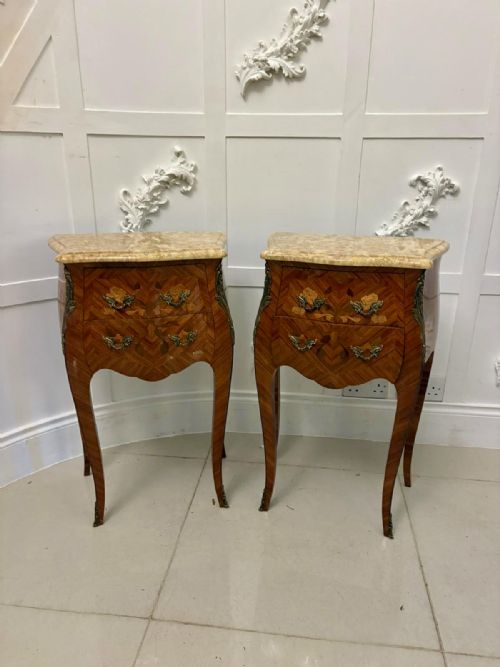
Cabinetmakers constructed these pairs using a foundation of solid timbers such as walnut, oak, mahogany, or satinwood, often applying decorative veneers like kingwood over the carcass. Artisans utilised marquetry and parquetry techniques to form geometric or floral patterns across the drawer fronts and sides.
Many specimens incorporate fitted marble tops in shades of white or coloured stone, edged to contain liquids or small items. Metal mounts cast in brass, ormolu, or gilt bronze accent the corners, handles, and sabots, complementing the curved wooden profiles characteristic of the style.
Listings span cabinet-making periods from the late nineteenth century through the 1930s, featuring walnut, oak, and kingwood.
Distinctions in Execution and Detail
The distinction between standard commercial output and superior craftsmanship rests in the precision of the veneer work and the weight of the hardware. Finer pairs display meticulously matched wood grains and complex floral marquetry that flows seamlessly across the drawer joints.
The integration of heavy, well-chased bronze mounts and thick, perfectly fitted marble slabs elevates the construction standard. Simpler oak or painted versions rely on clean proportions and neat joinery rather than decorative brass or intricate parquetry to achieve their appeal.
The Louis XV Chevet Pair Glossary
- Chevet
- A French term for a bedside table or small cabinet. These pieces sit beside the bed to hold small personal items and lighting.
- Marquetry
- Decorative veneer work arranged in pictorial patterns using various coloured woods. Artisans cut and fit thin pieces of timber together to create floral or geometric designs.
- Ormolu
- Gilt bronze mounts applied to furniture for decoration and protection. This technique involves gilding a metal base with powdered gold.
- Parquetry
- Geometric patterns formed by small pieces of wood veneer. This technique differs from marquetry by utilising strict angular shapes rather than pictorial motifs.
- Bombe
- A swelling, outward-curved shape found on the sides and fronts of furniture. This contour is typical of advanced rococo and revival pieces.
Louis XV Chevet Pair: Frequently Asked Questions
What is a chevet?
A chevet is the French term for a small bedside table or cabinet designed to stand next to a bed.
These compact items provide both surface space for a lamp and enclosed storage for nighttime necessities.
Are these matching pairs original?
Most entries represent matched pairs built together as bedroom suites during the nineteenth and twentieth centuries.
Craftsmen created them with identical dimensions and materials to flank a double bed symmetrically.
How do I care for marble tops?
Marble surfaces require gentle cleaning with mild soap and water, avoiding acidic liquids that etch the stone.
Using coasters and mats protects the polished finish from moisture and staining over time.
What is the difference between a chevet and a nightstand?
The terms are often used interchangeably, though chevet specifically denotes a French stylistic origin.
Both serve the exact same functional purpose beside the sleeping quarters.