


Louis XV Bureau Slope
A louis xv bureau slope is a slant-front writing desk designed for private correspondence, bringing French elegance and compact practicality to any room.
Louis XV Bureau Slope
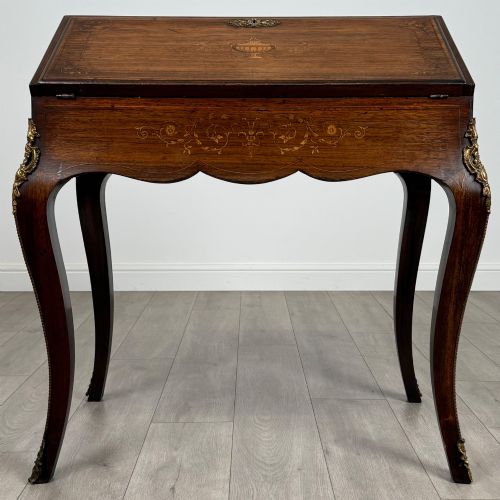
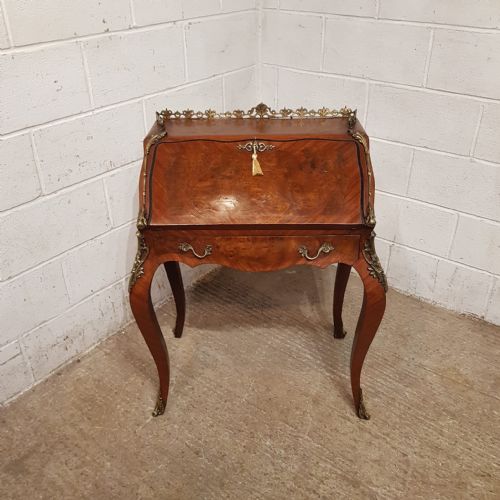
When searching for a louis xv bureau slope, buyers encounter slant-front writing desks spanning the mid eighteenth century to the Victorian era. These pieces frequently appear under alternative designations such as bureau de dame, writing desks, and bonheur du jour.
Most examples take the form of compact ladies desks designed for domestic correspondence. The form combines a sloping fall-front writing surface with interior compartments for stationery and small valuables.
How they were made
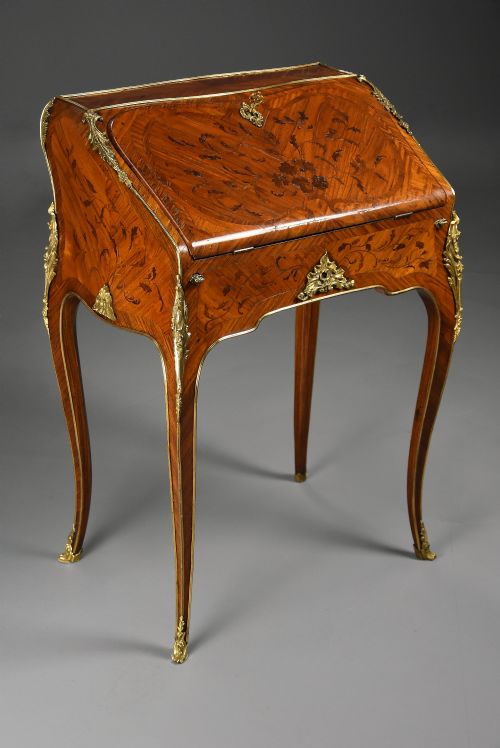
Cabinetmakers constructed the carcase using timber foundations like walnut, mahogany, and fruitwood. These surfaces received elaborate decorative veneers including kingwood, rosewood, satinwood, and burr-walnut arranged in parquetry and marquetry patterns.
Gilt bronze, ormolu, and brass mounts edge the curves and corners of the woodwork. Glass components and inlaid brass detailing also appear across the selection to highlight the distinctive serpentine contours.
Listings feature walnut, kingwood, rosewood, and fruitwood alongside brass and ormolu mounts.
What varies in quality
Quality reveals itself in the precision of the veneer work and the fluidity of the serpentine lines. Superior examples display carefully matched grain patterns and meticulous parquetry across every surface.
The refinement of the cast metal mounts distinguishes finer pieces from standard production. Crisply chased ormolu and substantial brass elements integrate harmoniously with the timber structure.
BVRB
The Louis XV Bureau Slope Glossary
- Bureau de dame
- A ladies writing desk, typically featuring a sloping fall-front and internal pigeonholes. These compact pieces were designed for domestic correspondence in private chambers.
- Ormolu
- Gilded bronze mounts applied to furniture for decorative enrichment. The technique requires mercurial gilding on bronze to achieve a rich golden lustre.
- Parquetry
- Geometric wood inlay patterns assembled from small veneer tiles. Makers arranged contrasting timbers like kingwood and walnut to create rhythmic surface designs.
- Bonheur du jour
- A light ladies writing desk featuring a small cabinet or superstructure above the writing surface. The form emerged in France during the mid eighteenth century.
- Marquetry
- Pictorial or decorative veneer work using various coloured woods to form floral or abstract motifs. Artisans cut thin slices of timber and fitted them together like a puzzle.
Louis XV Bureau Slope: Frequently Asked Questions
What is a louis xv bureau slope?
A louis xv bureau slope is a compact writing desk featuring a sloping lid that opens to reveal internal compartments. These desks were traditionally used for private correspondence and record keeping.
Originating in France, the form prioritises graceful curves and decorative veneers. The design allows writing materials to be concealed securely when not in use.
How do I date a bureau de dame?
Dating relies on examining the construction methods, timber choices, and decorative mounts. Mid eighteenth century pieces show authentic period framing while nineteenth century revival items reflect Victorian manufacturing techniques.
Stylistic markers such as the complexity of the marquetry and the composition of the bronze mounts also indicate the period of creation. Comparing the secondary timbers inside the drawers provides further chronological clues.
Where should I place a ladies writing desk?
These compact desks suit reception rooms, studies, or bedrooms where floor space is limited. Their finished backs often allow them to sit away from the wall in the centre of a room.
Position the desk near natural light sources while avoiding direct sunlight that could fade delicate rosewood or kingwood veneers over time.
How do I care for walnut and rosewood surfaces?
Maintenance involves dusting regularly with a soft, dry cloth and applying appropriate wax polish sparingly. Avoid using chemical sprays or liquid cleaners that might damage the antique finish.
Keep the furniture away from direct heat sources and dramatic humidity fluctuations to prevent the timber veneers from lifting or splitting.