
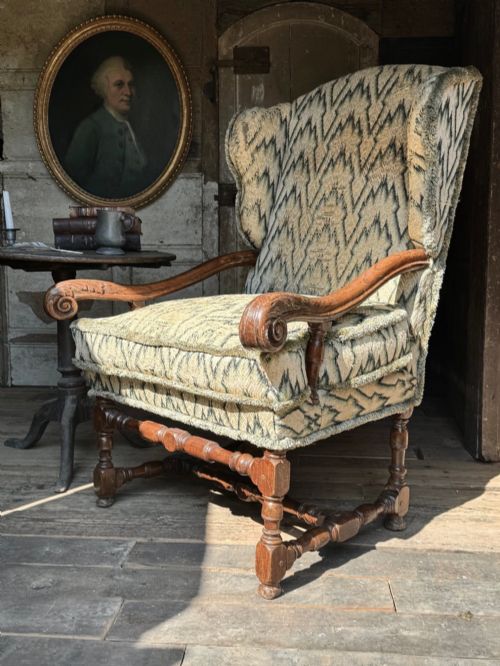


Louis XIV Chair
A louis xiv chair brings grand French Baroque lines into a room, offering deep seats and stately carved frames that command attention.
Louis XIV Chair
A louis xiv chair is an imposing seating form defined by high backs, scrolling arms, and robust underframes suited to formal interiors. Buyers searching for a louis xiv chair encounter armchairs and side chairs originating from the seventeenth century onward, capturing the substantial presence of the French Baroque period.
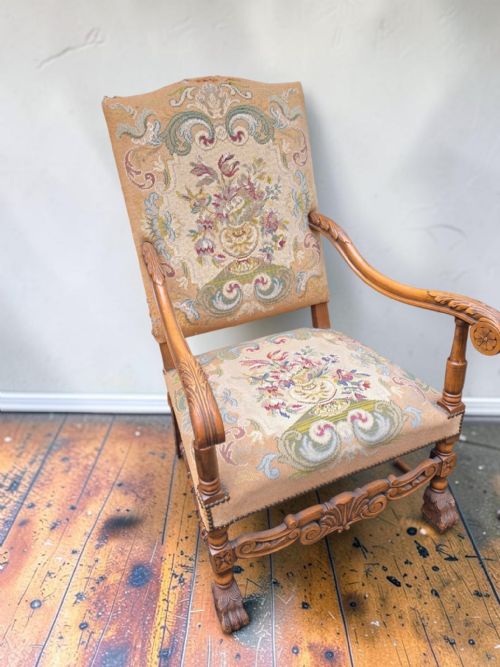
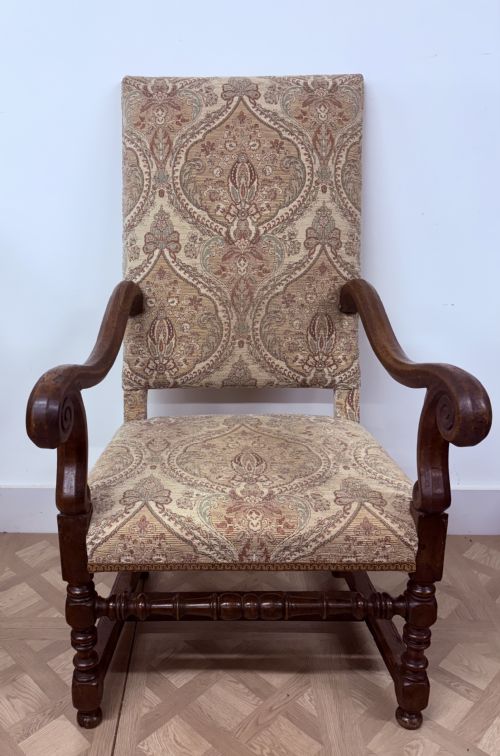
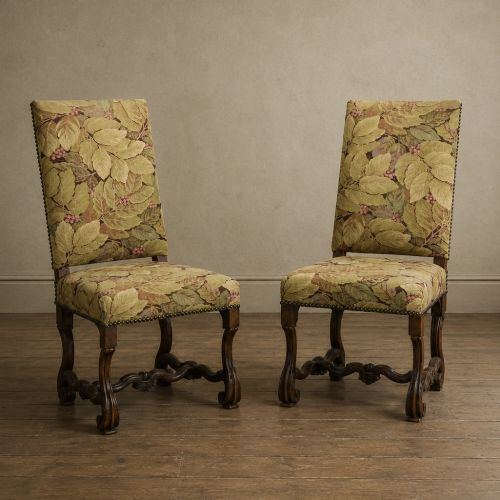
The walnut and oak versions seen here often reflect later revival periods, including nineteenth-century interpretations and pieces from nineteen-ten. These revival pieces channel the heavy carved dignity of earlier chateaux while remaining practical for contemporary rooms.
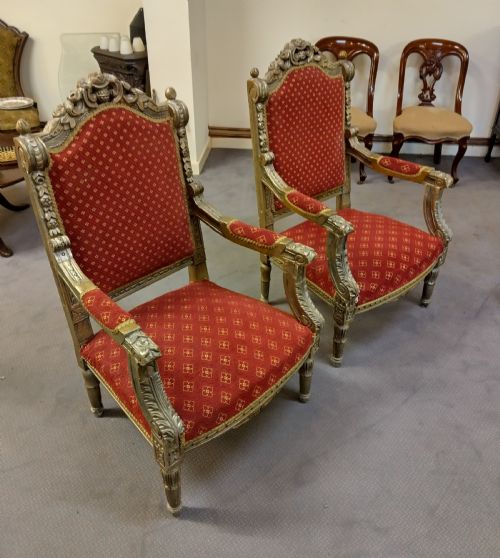
Most examples found on this page take the form of open armchairs or large giltwood throne chairs upholstered in tapestry, needlepoint, or silk. Such pieces anchor a room with architectural weight and traditional textile work.
What varies in quality
The depth and crispness of the wood carving dictate the visual impact of a frame, distinguishing masterwork joinery from simpler production. Well-executed giltwood and walnut frames exhibit sharp relief on the arms and crest rails, whereas lesser examples appear flat or heavily sanded.
The authenticity and execution of the covering textiles play a major role in the overall character of the seating. Handworked needlepoint and period tapestry elevate a chair, while degraded or poorly matched modern replacement fabrics alter the historical harmony of the piece.
Listings feature walnut, oak, and giltwood frameworks paired with tapestry, needlepoint, and silk upholstery across multiple centuries.
The Louis XIV Chair Glossary
- Giltwood
- Wood that has been coated with a thin layer of gold leaf or gold paint. This finish creates a luminous, reflective surface characteristic of formal palace furniture.
- Baroque
- An ornate artistic style originating in seventeenth-century Europe marked by dramatic movement and exuberant carved detail. It forms the stylistic backbone of these imposing chairs.
- Tapestry
- A heavy hand-woven textile featuring pictorial designs used to cover the backrests and seats. It provides both structural padding and rich texture.
- Needlepoint
- Embroidery stitched onto a stiff open-weave canvas ground to create dense decorative patterns. Many period armchairs wear this durable hand-stitched covering.
- Stretcher
- A horizontal wooden brace connecting the legs of a chair to provide stability. On these forms, stretchers are frequently carved and positioned low to support the heavy frame.
Louis XIV Chair: Frequently Asked Questions
How do I use a louis xiv chair in a modern room?
These imposing seats work effectively as standalone statement pieces in living spaces or libraries, contrasting sharply against minimalist walls.
Pairing a walnut or giltwood armchair with neutral surroundings allows the carved details and tapestry upholstery to command the room without visual clutter.
Are these chairs comfortable for daily sitting?
Most examples offer a wide, upright seating posture designed for formal reception rooms rather than deep lounging.
The high backrest and supportive arm height suit reading or quiet conversation, though interior padding varies depending on the period of upholstery.
How can I tell an eighteenth-century chair from a nineteenth-century revival piece?
Examining the timber age, tool marks on the frame, and the wear patterns on the joints helps reveal the true period of manufacture.
Revival pieces often display machine-assisted cuts or uniform nineteenth-century finishing techniques that differ from the hand-adzed surfaces of earlier centuries.
What maintenance do antique wood and tapestry frames need?
Keeping wooden frames away from direct heat sources and strong sunlight preserves the finish and prevents the timber from splitting.
Gentle dusting of the carved elements and professional textile cleaning for the tapestries or silk maintain the integrity of the materials over time.