


Gilt Tapestry Chair
A gilt tapestry chair brings French chateau elegance into a room through gilded timber and woven upholstery.
Gilt Tapestry Chair
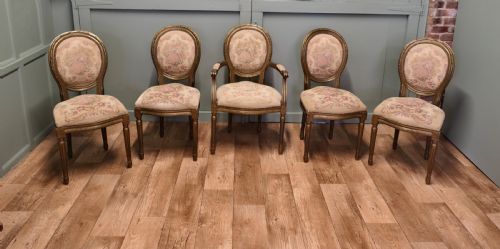
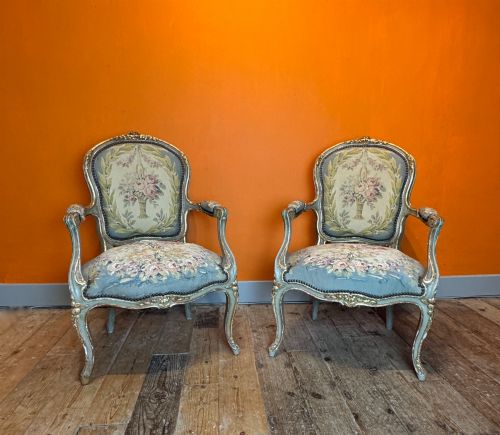
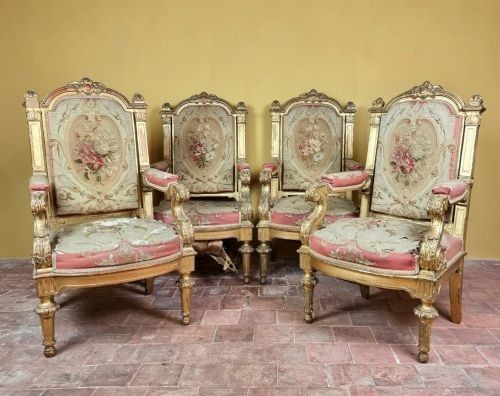
A gilt tapestry chair is a seating form defined by a gilded wooden frame paired with textile upholstery, drawing on 18th Century and 19th Century design traditions. When searching for a gilt tapestry chair, buyers encounter pieces ranging from single salon chairs to pairs of armchairs and complete salon suites.
The selections on this page span the 18th Century, 19th Century, and around 1900, with French revival styles and George III periods strongly represented. Formats include armchairs, salon chairs, side chairs, nursing chairs, and larger salon sets.
Makers and workshops of the 19th Century reproduced earlier French Louis XV, Louis XVI, and Baroque revivals for formal interiors. Buyers find both grand throne armchairs and smaller salon side chairs suited for domestic display.
How they were made
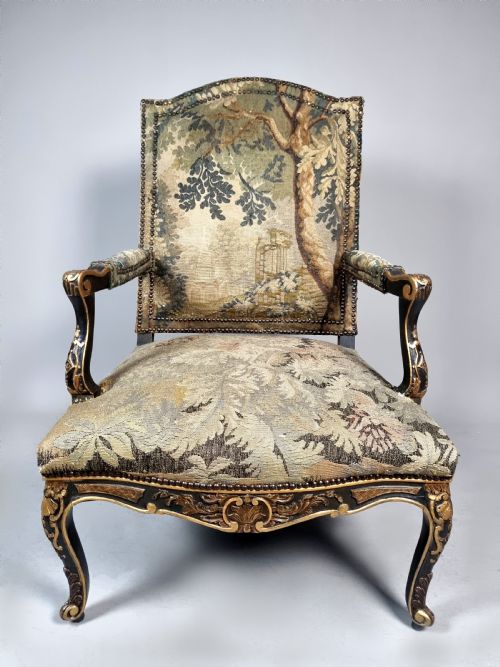
Frames are constructed from wood, specifically giltwood and gilded timber, finished with gold leaf and occasionally paint or parcel gilt decoration. Structural joints are secured with elements such as brass and brass tacks.
Upholstery consists of tapestry and tapestry covers, including Aubusson weaves, fixed directly to the frames. Carving is applied to the timber structure before gilding to create ornamental detail across the arms, rails, and crests.
Some chairs spent centuries observing gossip in French chateaux before retiring to modern corners.
What varies in quality
Quality rests upon the depth of the wood carving and the crispness of the gilded surface applied over the timber. Hand-carved details and the preservation of original gold leaf distinguish finer examples.
The refinement of the tapestry upholstery and the integrity of the textile weave contribute significantly to a piece's standing. Suites and matched pairs demonstrate greater consistency in design execution across multiple items.
Holland & Sons
The Gilt Tapestry Chair Glossary
- Giltwood
- Timber that has been coated with gold leaf or a gold-coloured finish. This surface treatment gives the wooden frame its reflective, metallic appearance.
- Aubusson tapestry
- Hand-woven textile originating from the French town of Aubusson, traditionally featuring pictorial scenes or floral motifs. These covers are frequently found on period French seating.
- Salon suite
- A matched set of seating furniture, typically comprising a sofa and several armchairs or side chairs intended for a formal reception room. They share identical carving, gilding, and tapestry upholstery.
- Gainsborough chair
- A wide-seated, open-armed armchair originating in 18th Century England, designed for comfort and often upholstered in rich textiles. The form accommodates the full skirts of period attire.
Gilt Tapestry Chair: Frequently Asked Questions
Where were these chairs placed originally?
These chairs were designed for formal reception rooms, drawing rooms, and parlours within grand residences and chateaux. They served both as functional seating and as decorative statements for entertaining guests.
In modern interiors, they function effectively as statement pieces in living areas or bedrooms, positioned to highlight their carved frames and textile upholstery.
How do I care for the gilded frame?
The gilded timber surface requires gentle dusting with a soft, dry cloth to prevent the accumulation of dirt. Moisture and harsh cleaning agents must be avoided to protect the underlying gold leaf.
Handling the chair by its wooden frame rather than the upholstered arms helps preserve the structural integrity over time.
Are the tapestry covers original?
Many pieces retain their period tapestry covers, including traditional Aubusson weaves, while others have been reupholstered during their history. Examining the tension, wear patterns, and method of attachment helps determine the age of the fabric.
Listings often specify whether the tapestry upholstery is original to the period of the frame.
How do I identify a revival style?
Revival pieces incorporate stylistic elements from earlier periods, such as the curved lines of Louis XV or the geometric symmetry of Louis XVI. These chairs were predominantly produced during the 19th Century to satisfy a renewed interest in historical French aesthetics.
Comparing the timber preparation, joinery techniques, and wear on the gilding helps distinguish a 19th Century revival piece from an 18th Century original.