


Louis Philippe Chest Drawers
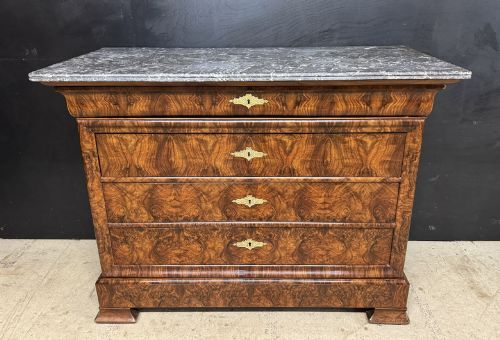
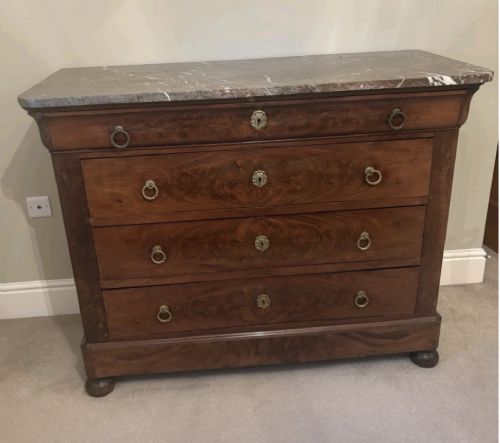
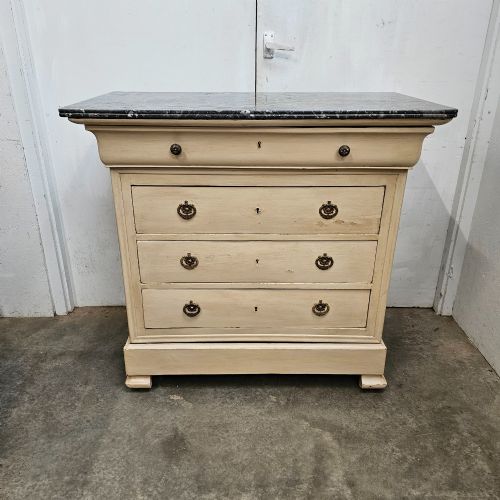
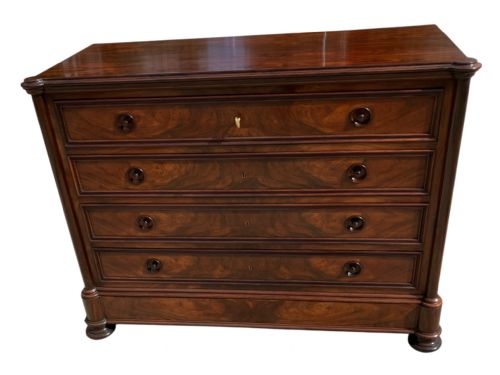
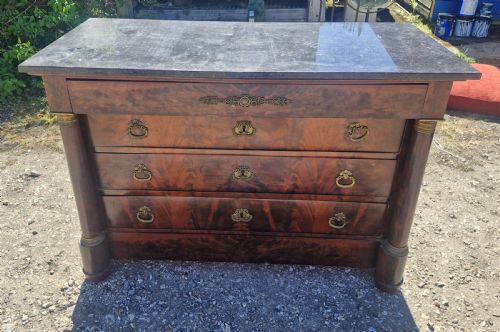
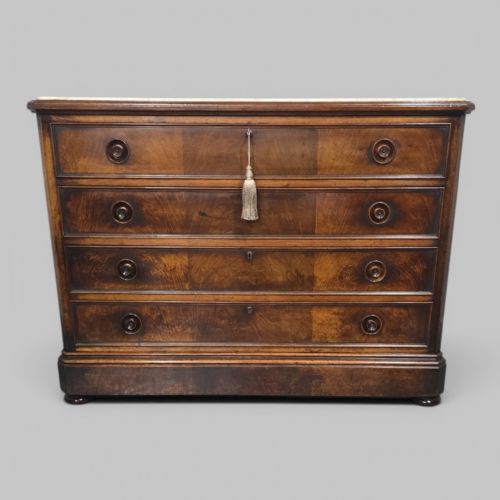
These louis philippe chest drawers are understated French timber pieces topped with heavy marble, designed for elegant bedroom storage.
Louis Philippe Chest Drawers
A louis philippe chest drawers, often called a commode, provides generous storage through a stack of wide horizontal drawers. These pieces emerge primarily from the nineteenth century, spanning decades from eighteen thirty to nineteen twenty.
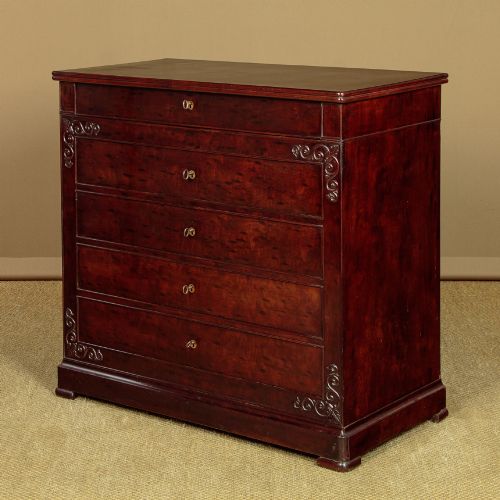
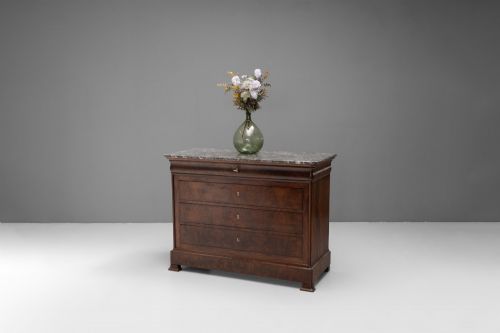
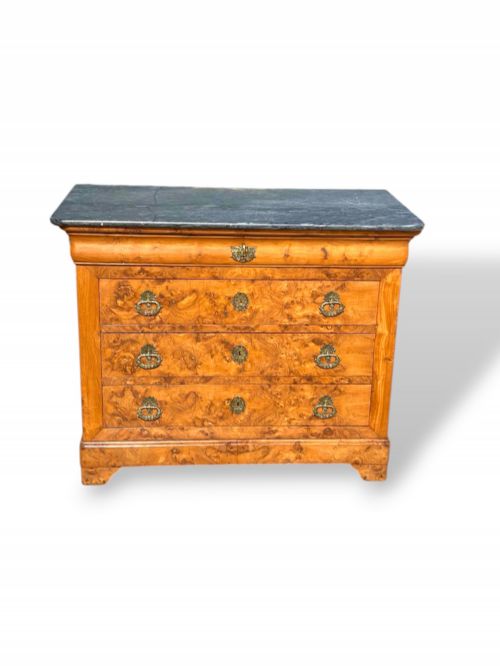
The version most commonly met on this page is a French timber carcase fronted by multiple drawers and finished with a stone slab. Makers frequently utilised walnut, mahogany, and rosewood veneers to cover the structural timber.
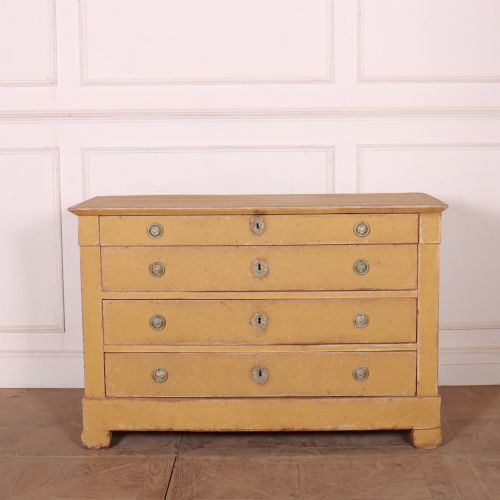
Beyond standard chests, variants include tall semainiers and painted provincial examples from the nineteenth century. The underlying aesthetic relies on clean architectural lines rather than heavy carving.
The Measure of Quality
The choice of surface timber dictates much of the visual distinction, with figured burr walnut and flame mahogany marking the upper tier of production. Matched grain patterns across consecutive drawer fronts demonstrate careful planning by the cabinetmaker.
The thickness and selection of the marble top also separate standard examples from finer commissions. Smooth drawer runners and tight joints indicate superior initial construction that survives through decades of use.
One recorded maker, Gomien, occasionally signed his name on furniture that otherwise hid its authorship.
Gomien
The Louis Philippe Chest Drawers Glossary
- Commode
- A low chest of drawers, particularly of French origin. This term frequently appears interchangeably with chest of drawers in nineteenth-century contexts.
- Semainier
- A tall chest of drawers designed traditionally to hold seven drawers, one for each day of the week. This form offers an alternative vertical profile to the standard low commode.
- Veneer
- A thin layer of decorative wood applied over a secondary timber carcase. Burr ash and flame mahogany veneers provide rich visual texture on these pieces.
- Escutcheon
- A protective plate surrounding the keyhole of a drawer. These brass fittings add functional detail to the timber drawer fronts.
Louis Philippe Chest Drawers: Frequently Asked Questions
What is a louis philippe chest drawers?
A louis philippe chest drawers is a nineteenth-century storage commode characterised by clean lines, minimal ornamentation, and a heavy marble top. These pieces originated in France and focus on timber grain rather than carved decoration.
Drawer configurations typically include a deep top drawer situated beneath the marble slab, followed by several lower drawers. Walnut and mahogany remain the most prevalent timber choices across surviving examples.
How do I care for the marble top?
The marble top requires gentle cleaning with warm water and a soft cloth to preserve the polished surface. Avoid acidic cleaners that can etch the stone over time.
Using coasters and mats protects the marble from stubborn stains and scratches. The stone lifts off the timber base on many examples, allowing for easier transport.
Where should I place a commode?
These chests function naturally in bedrooms as storage for clothing and linens. The flat marble surface also suits hallways and living areas as a display space.
Ensure the floor surface is level because the heavy marble construction places significant weight on the timber legs. Placing the piece away from direct heat sources protects the underlying wood veneers.
How do I distinguish walnut from mahogany?
Walnut exhibits rich brown tones with varied grain patterns, often incorporating swirling figures in burr examples. Mahogany tends towards reddish-brown hues with straighter, linear grain formations.
Flame mahogany displays distinct flickering patterns across the drawer fronts, whereas walnut often presents a softer, warmer visual texture.