

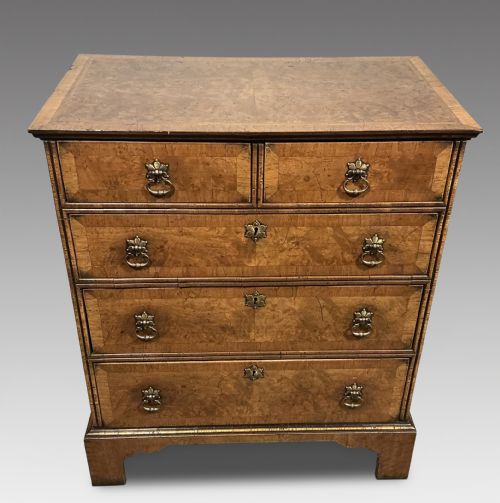
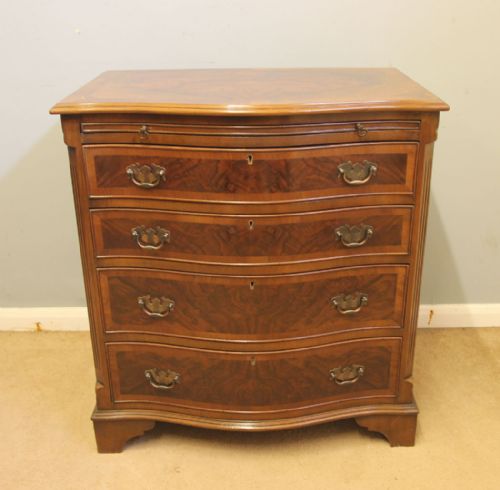
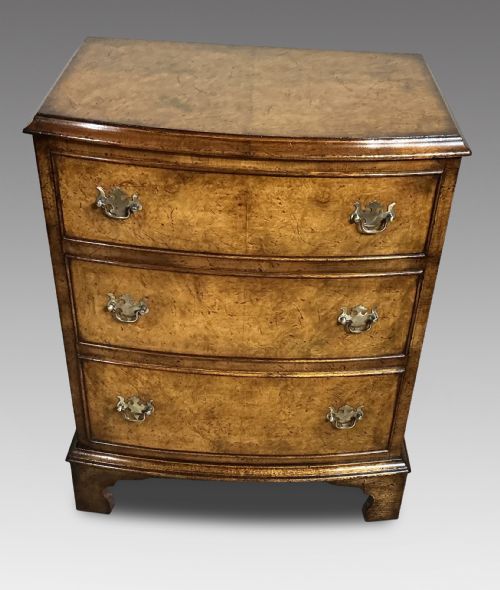


Vintage Burr Wood Commode
These vintage burr wood commode chests bring striking figured grain and substantial storage to a room, driven by skilled cabinetmakers.
Vintage Burr Wood Commode
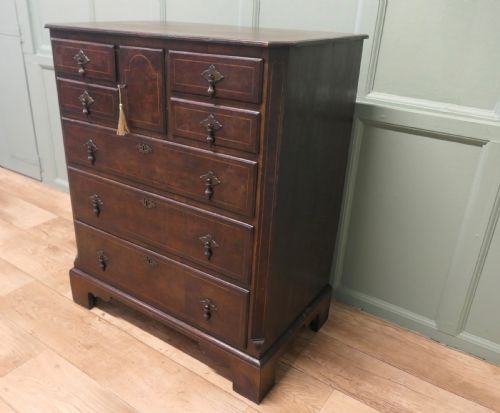
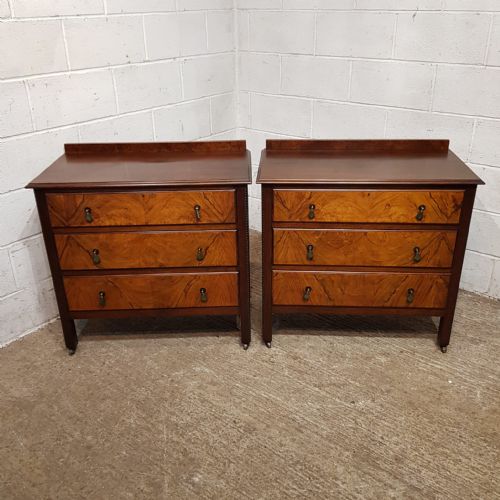
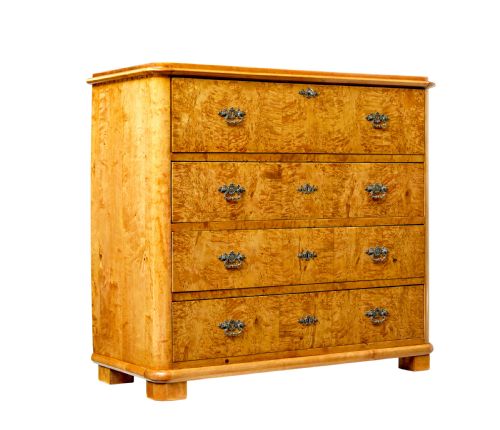
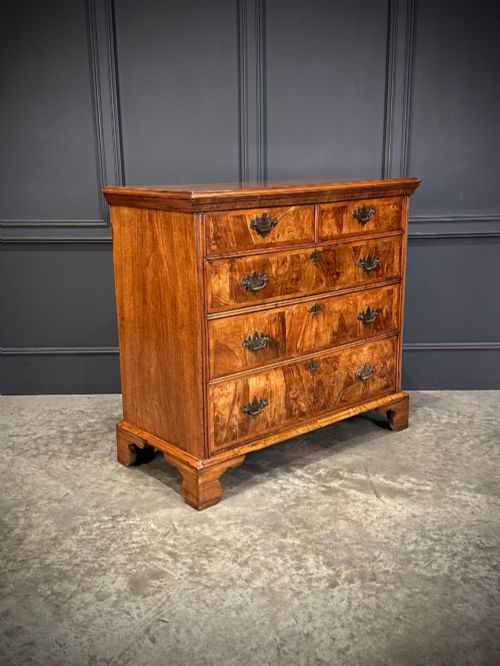
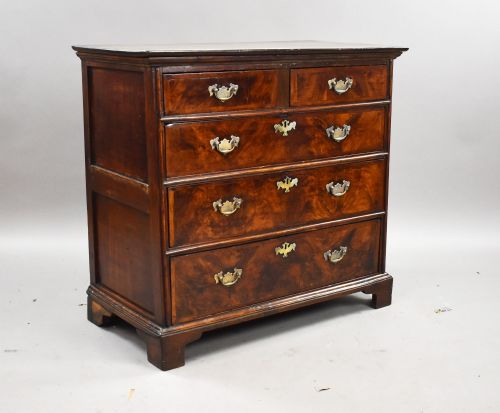
When you search for a vintage burr wood commode, you encounter a variety of substantial timber chests of drawers and commodes spanning from the eighteenth century through to the nineteen-twenties. The most common examples on this page are walnut and burr walnut chests of drawers originating from the Georgian period up to the nineteen-twenties.
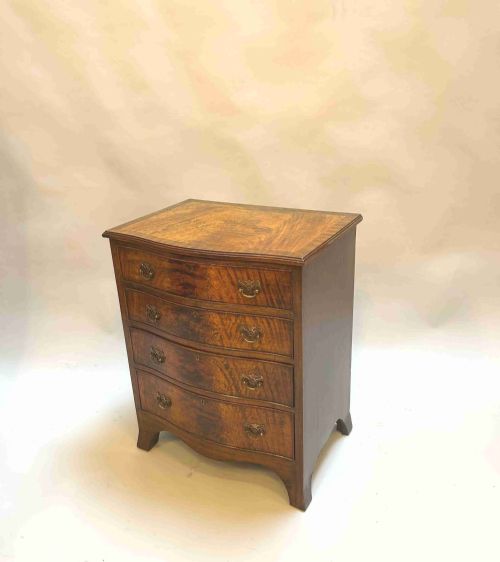
These pieces function primarily as deep drawer storage units, occasionally taking specific forms such as secretaire chests with fitted writing drawers, or continental serpentine and bombe shapes. Makers utilised rich burl timbers across British, French, Swedish, and Italian workshops to produce striking focal points for bedrooms and living spaces.
How they were made
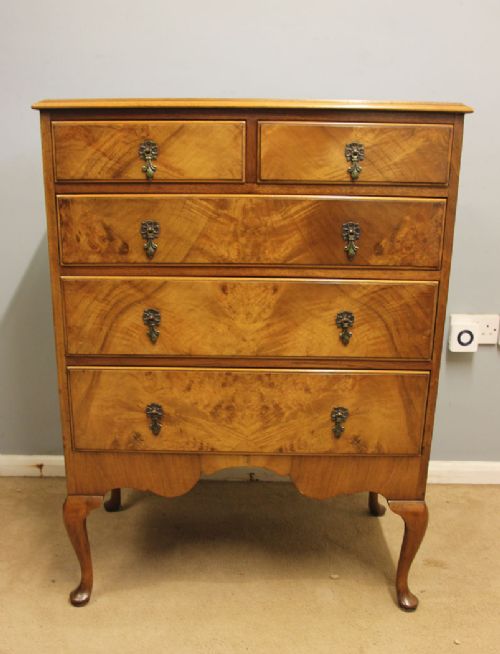
Cabinetmakers constructed these pieces using solid secondary woods like oak and pine for internal carcases and drawer linings, applying fine veneers of burr walnut, burr birch, and burr ash to the exterior surfaces. This technique displayed the intricate, swirling knot patterns of the timber to maximum visual effect across drawer fronts and top panels.
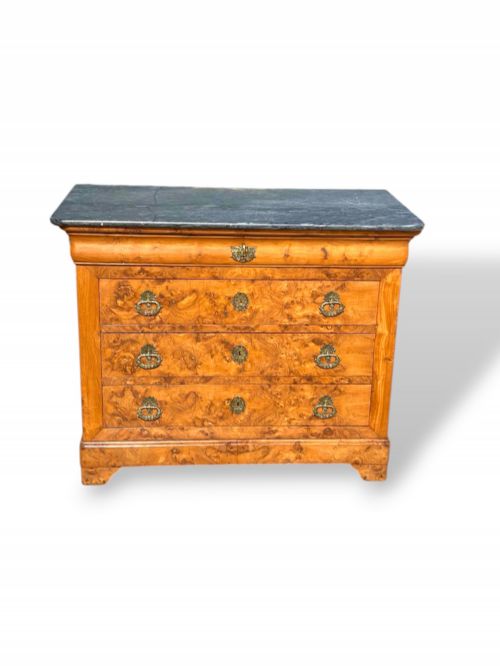
Hardware such as brass handles and escutcheons were fitted to secure the drawers, while specialised stone tops, including marble, were occasionally integrated onto continental commodes. Joinery methods varied from eighteenth-century dovetailed drawer construction to later revival techniques employed in the twentieth century.
Listings span from the 1700 Queen Anne period through Georgian, Victorian, and Edwardian eras up to 1930s revivals, incorporating walnut, burr birch, ash, elm, and marble.
What varies in quality
Quality in these pieces is dictated by the selection and matching of the burr veneers across the primary facades, where symmetrical grain alignment elevates the visual impact. The crispness of the cabinetmaker's original joinery and the retention of proportional hardware contribute significantly to the standing of an individual chest.
The integrity of the internal drawer construction and the stability of the secondary timbers, such as oak or pine, determine the structural longevity of the commode. Pieces that retain their original brass work and uncompromised timber surfaces command greater appreciation among collectors.
The Vintage Burr Wood Commode Glossary
- Burr wood
- Timber harvested from tree growths containing distorted, knotty grain patterns that create highly decorative swirling designs when sliced into veneer. This material was favoured by elite cabinetmakers for principal display surfaces.
- Commode
- A low chest of drawers or cabinet originating in French furniture design, often featuring decorative mounts and shaped fronts. In British contexts, the term frequently overlaps with standard drawer chests.
- Secretaire chest
- A chest of drawers featuring a dedicated fall-front top drawer that opens to reveal a fitted writing surface and small pigeonholes. It combines standard storage with a compact bureau function.
- Bombe
- A distinct furniture profile characterised by outward-curving, bulging sides and fronts, frequently seen on eighteenth-century continental commodes. This curved form demands advanced woodworking skill to execute properly.
- Veneer
- A thin slice of figured timber applied over a stable secondary wood carcase to provide a decorative exterior without warping. Cabinetmakers used this method to showcase expensive burr patterns.
Vintage Burr Wood Commode: Frequently Asked Questions
What is a burr wood commode?
A burr wood commode is a chest of drawers or cabinet surfaced with highly figured wood grain derived from tree burls. These pieces range from eighteenth-century continental designs to twentieth-century British walnut chests.
They combine practical drawer storage with decorative facades, making them prominent focal points in traditional and eclectic interiors.
How do I date a walnut chest?
Dating a walnut chest involves examining the construction methods, such as hand-cut dovetails on the drawers, and the thickness of the timber carcase. Earlier eighteenth-century examples exhibit different proportions and joinery compared to later revival pieces from the nineteen-twenties.
Hardware styles, timber patination, and secondary woods like oak or pine also provide reliable clues to the period of manufacture.
Where should I place a commode?
These chests suit bedrooms, hallways, or living rooms where their figured grain patterns can be appreciated while providing functional storage. A marble-topped continental commode works well in a reception room or hallway as a statement surface.
Ensure the piece is kept away from direct heat sources and strong sunlight to protect the delicate burr veneers from drying out.
What is the difference between a commode and a chest of drawers?
While both provide drawer storage, the term commode often denotes a continental European piece with decorative shaping, such as bombe or serpentine fronts, and sometimes a marble top. A chest of drawers more typically refers to standard British forms with rectangular carcases.
In modern listings, the terms frequently overlap depending on the regional origin and stylistic influence of the furniture.