
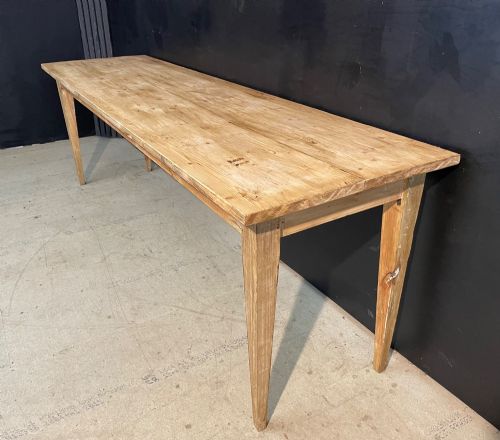
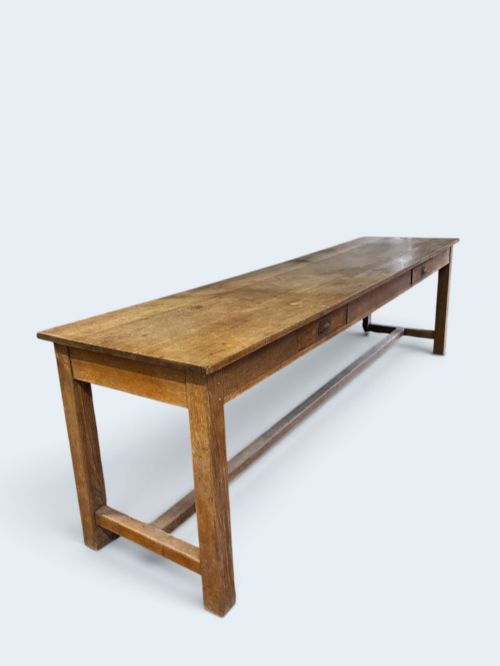
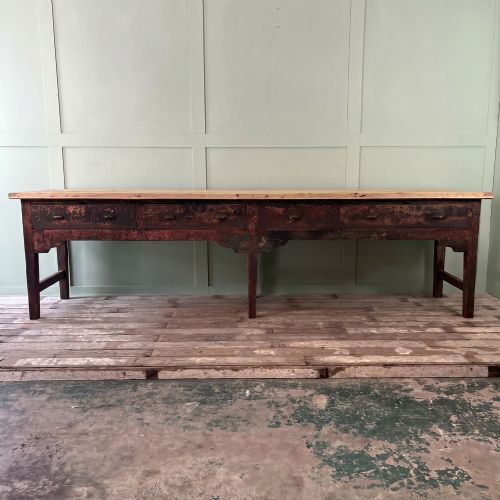
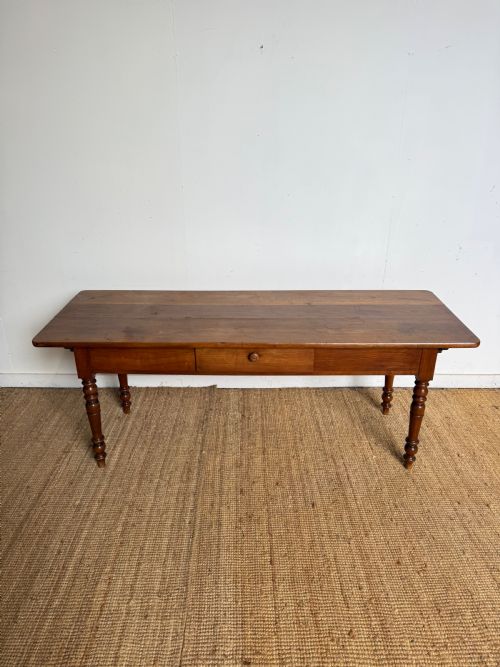

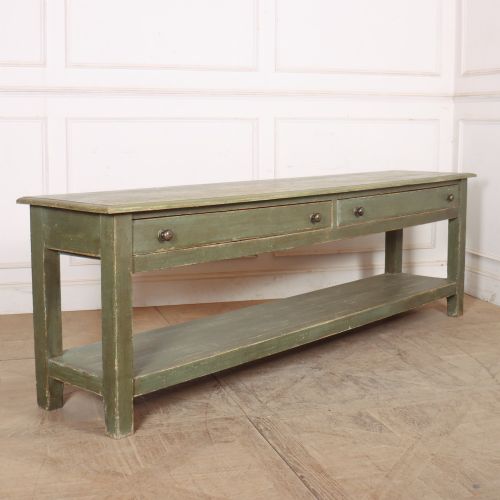


Long Rustic Serving Table
A long rustic serving table brings enduring utility and robust timber character into a country kitchen or dining space.
Long Rustic Serving Table
A long rustic serving table provides a substantial surface designed for food preparation, serving meals or general domestic utility. These heavy timber forms bridge the gap between working kitchen furniture and formal dining pieces.
The versions most commonly met on this page span the nineteenth century into the early twentieth century, drawing on English, French and Scandinavian country traditions. You encounter forms designated as serving tables, drapers tables, console tables and preparation tables.
The construction typically emphasises straightforward utility rather than delicate ornamentation, resulting in long rectangular surfaces often supported by sturdy legs. Lower potboards or multiple drawers frequently appear to maximise storage capability in working interiors.
How they were made
Makers relied primarily on solid timbers such as pine, oak and cherrywood, selected for structural strength and everyday resilience. Boards were joined to create generous rectangular surfaces capable of withstanding heavy daily use.
Surface finishes range from natural bleached oak and warm pine to painted timber surfaces that show the marks of long domestic service. Iron and brass hardware appear selectively for drawer pulls and structural reinforcement.
Listings feature items dated from the nineteenth century up to nineteen-twenty, spanning English, French, Swedish and Scandinavian country traditions.
What varies in quality
Quality rests in the integrity of the timber selection and the honesty of the construction details. Tables built from solid oak or dense pine demonstrate greater structural endurance than those assembled from lesser timbers.
Proportion and scale dictate the visual success of the piece, with well-balanced legs and sound joinery separating utilitarian furniture from finer country house examples. The presence of original working drawers or integrated pot-shelves adds architectural interest.
The Long Rustic Serving Table Glossary
- Potboard
- A lower shelf fitted beneath a table top, traditionally used to store pots and heavy kitchen utensils. This feature adds substantial lower weight and stability to the frame.
- Drapers table
- A long utility table originally utilised in textile shops for measuring and folding cloth, characterised by exceptional length and generous working height.
- Bleached oak
- Timber that has undergone a whitening process, either naturally through age and sun exposure or via finishing, creating a pale matte surface.
- Console table
- A table designed to stand against a wall, frequently sharing proportions suitable for narrow hallways or serving areas.
- Preparation table
- A heavy-duty work table constructed specifically for culinary tasks, prioritising a robust timber top and steady stance.
Long Rustic Serving Table: Frequently Asked Questions
Where should I put a long rustic serving table?
These tables find natural placement in large country kitchens, boot rooms or dining spaces where substantial surface area is required. Their considerable length makes them effective as sideboards or serving stations during gatherings.
In living areas, a narrower console or serving table functions well against a blank wall to display lamps and ceramics without obstructing movement.
How do I clean a rustic timber top?
Maintenance requires little more than a soft damp cloth to remove everyday dust and debris from the surface. Avoid harsh chemical cleaners that strip natural patinas or damage aged timber finishes.
Applying occasional suitable wax to unpainted wooden surfaces helps nourish the grain and protects against accidental moisture marks.
Can I use a serving table for daily dining?
Many of these pieces possess adequate height and knee clearance to function comfortably as everyday dining tables. Checking the specific dimensions of the apron and lower stretchers ensures chairs fit properly underneath.
Preparation and drapers tables often provide generous proportions that accommodate multiple diners with ease.
What is the difference between an English and French table?
English country examples frequently utilise heavy oak or pine construction with straightforward rectangular forms and practical potboards. They reflect a utilitarian aesthetic rooted in traditional rural houses.
French provincial and country pieces often incorporate softer fruitwoods like cherrywood, or painted timber surfaces with integrated drawers, displaying regional decorative flair.