





Vintage Kitchen Island Table
A vintage kitchen island table brings heavy timber utility and hard-wearing preparation surfaces straight from historical sculleries and workshops into a modern home.
Vintage Kitchen Island Table
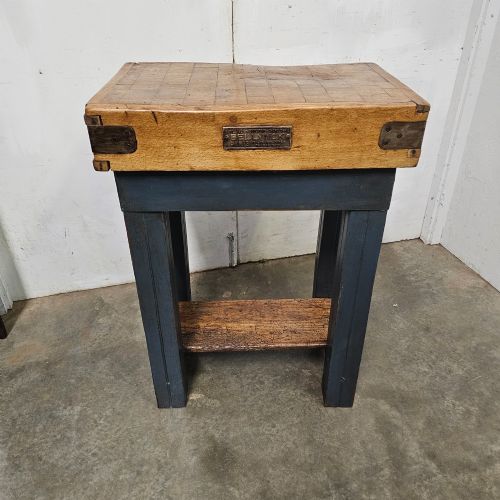
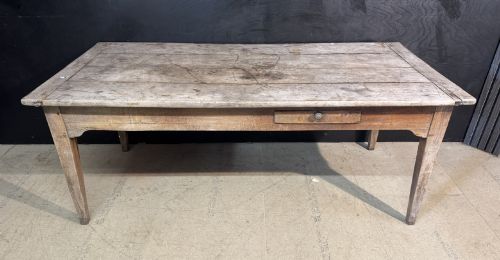
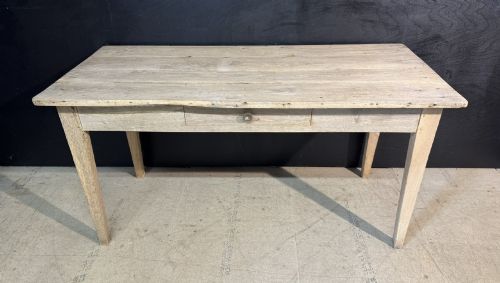
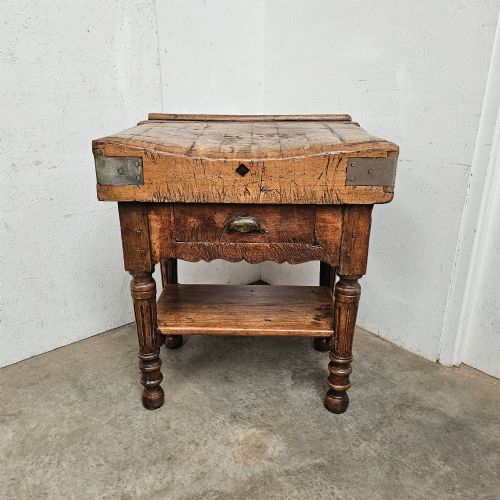
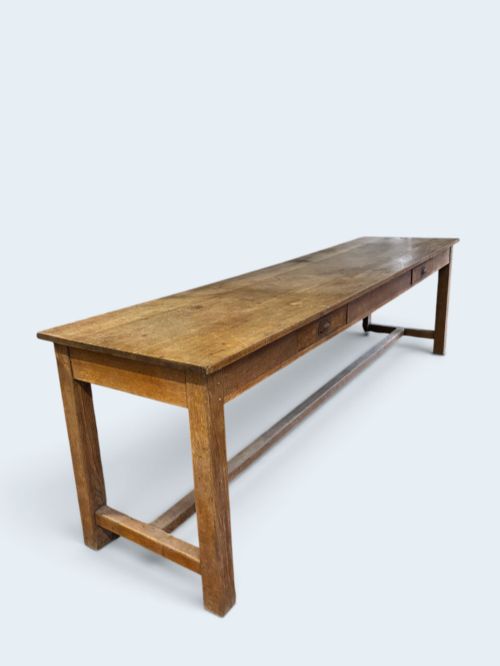
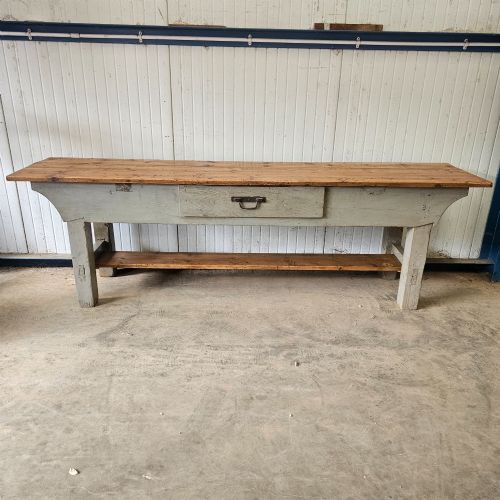
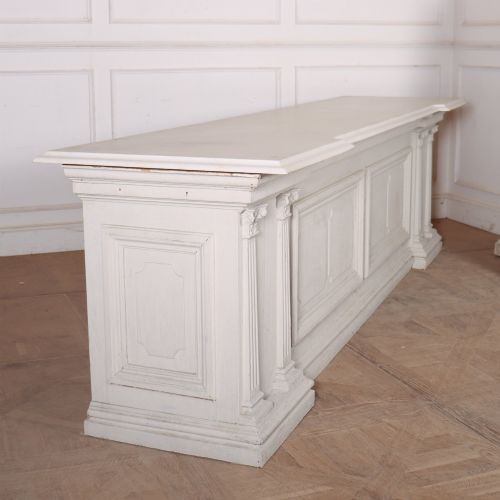
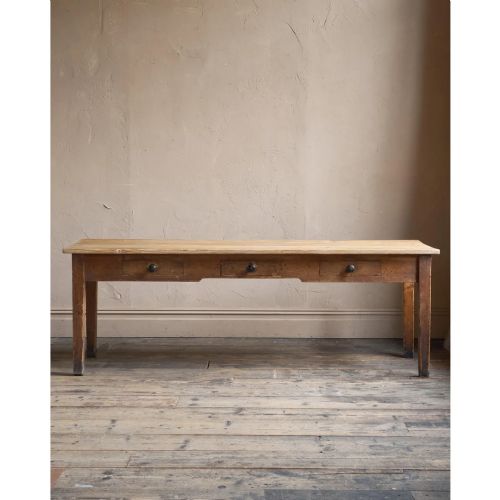
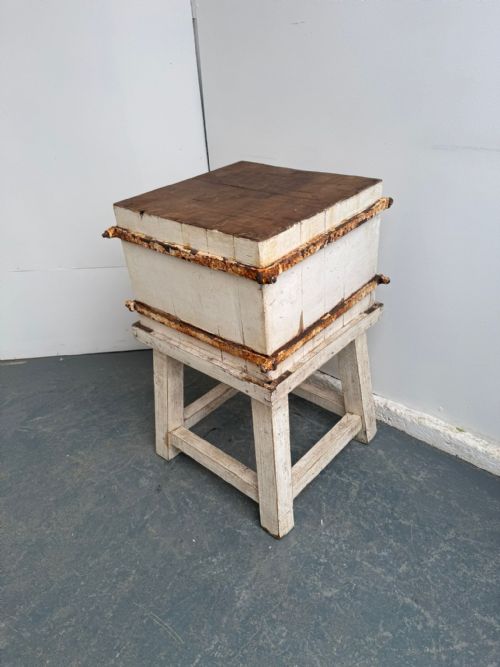
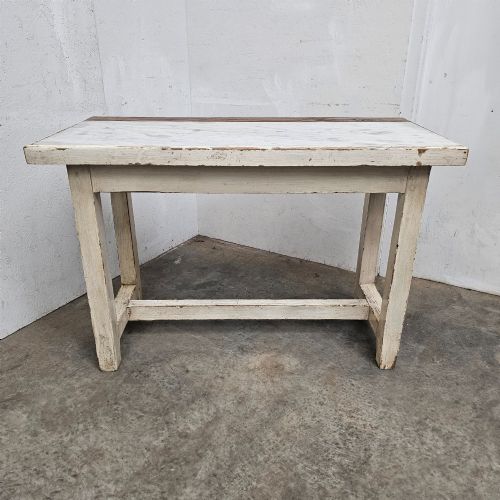
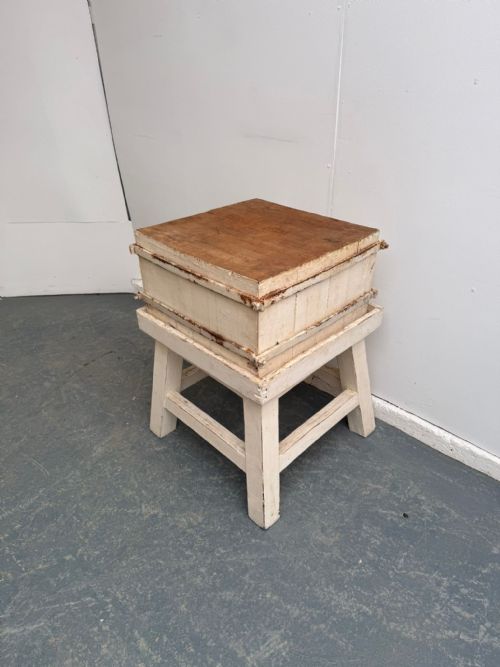
When searching for a vintage kitchen island table, buyers encounter sturdy utilitarian furniture originating from domestic sculleries, commercial shops, and artisan workshops. The selection relies heavily on heavy-duty wooden work tables, butchers blocks, drapers tables, and shop counters.
The most common forms found on this page are French and English prep tables constructed from pine, oak, and beech. These pieces span the nineteenth century and early twentieth century, reflecting styles such as French Provincial, Rustic Farmhouse, and Scandinavian Country.
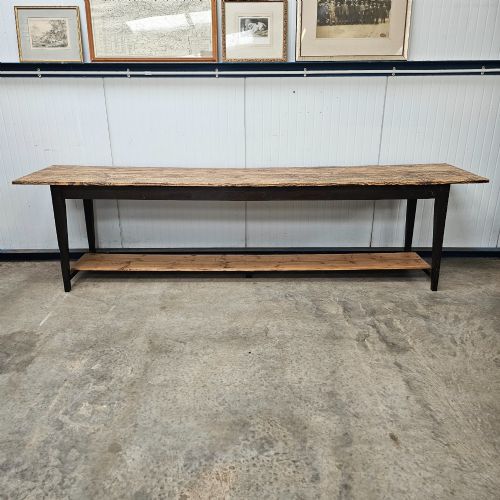
Items range from compact chopping blocks on stands to monumental four-metre harvest and drapers tables. Many feature practical additions like drawers, lower tiers, and integrated vices from their previous working lives.
How they were made
These tables were built to endure heavy manual labour using dense domestic timbers such as oak, pine, beech, and elm. Carpenters joined thick timber tops to robust frames using traditional joinery, occasionally incorporating iron brackets, brass fittings, and marble inserts for hygiene and durability.
Surfaces frequently show the honest marks of historical utility, from layers of old paint to scored chopping timber and bleached finishes. Iron vices, enamel insets, and lower storage tiers were fitted directly into the heavy wooden framework to meet the daily demands of bakers, butchers, and drapers.
Vintage Kitchen Island Table Retail Price Guide 2026
Typical asking prices for vintage kitchen island table among the pieces listed under this phrase on Sellingantiques today, from the lower quarter to the upper quarter. They describe what is for sale here now, not the wider market.
Several historical work tables still retain their original heavy wooden vices, ready for clamping down stubborn loaves of sourdough.
What varies in quality
The distinction between standard utility items and superior examples lies in the integrity of the original timber and the presence of authentic working hardware. Pieces retaining their original painted finishes, makers' stamps, integrated vices, or heavy marble tops command greater interest among collectors.
Proportion and scale also dictate quality, as unusually long harvest tables, monumental drapers tables, and multi-tiered workbenches demonstrate superior craftsmanship built for demanding commercial environments rather than domestic use.
Trussant & Cie
The Vintage Kitchen Island Table Glossary
- Drapers Table
- A long, wide wooden table historically used in fabric shops for measuring and cutting textiles, characterised by generous proportions and lower storage tiers.
- Scullery Table
- A robust utility table built for washing, food preparation, and heavy domestic tasks in the back quarters of large historical houses.
- WorkBench
- A heavy carpenter or artisan table fitted with wooden or iron vices, designed to hold materials firmly in place during hand-tool work.
- Harvest Table
- An exceptionally long dining or prep table traditionally used to feed large groups of agricultural workers during seasonal farming peaks.
Vintage Kitchen Island Table: Frequently Asked Questions
How were vintage kitchen island tables used originally?
These tables served as heavy-duty work surfaces in commercial shops, bakeries, butcher shops, and domestic sculleries. They were built specifically for kneading dough, chopping meat, cutting cloth, and general food preparation.
Over decades of daily commercial use, their thick wooden tops accumulated the cuts, stains, and patination that define their character today.
Are these tables suitable for modern kitchens?
Yes, their robust timber construction and generous proportions make them ideal central islands for food preparation and casual dining. Many feature practical lower tiers or drawers for additional kitchen storage.
Because they were built as independent work tables rather than fitted cabinetry, they introduce flexible workspace and historical presence into contemporary layouts.
How do I identify the period of a work table?
Dating relies on timber selection, construction methods, and hardware details such as forged iron brackets or integrated vices. Nineteenth-century examples often feature hand-planed pine or dense oak frames, while early twentieth-century versions may show simpler industrial fastenings.
Original painted finishes and historical wear patterns also help establish the age and working background of each specific piece.
What is the difference between a prep table and a drapers table?
Prep tables are generally heavier, featuring thick chopping tops of beech, oak, or marble designed for culinary tasks. Drapers tables are typically longer and wider, originally built with clean wooden surfaces for handling textiles.
While both function well as kitchen islands, drapers tables offer expansive surface areas and often include lower shelving for displaying items.