



Antique Wood Trestle Desk
An antique wood trestle desk brings solid timber construction and practical writing surfaces into a study, drawing on centuries of table-making traditions.
Antique Wood Trestle Desk
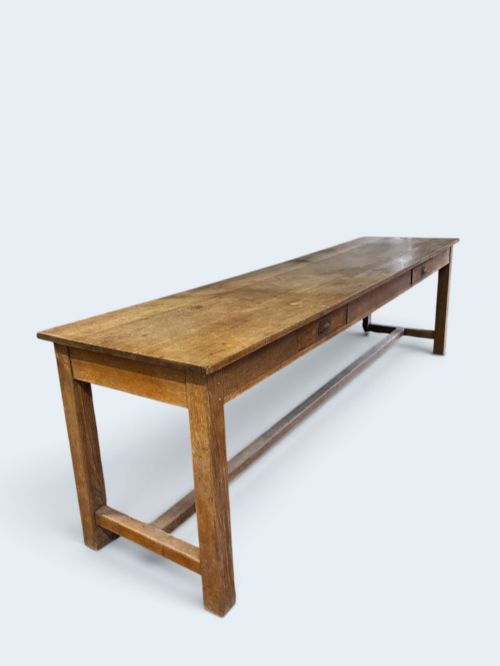
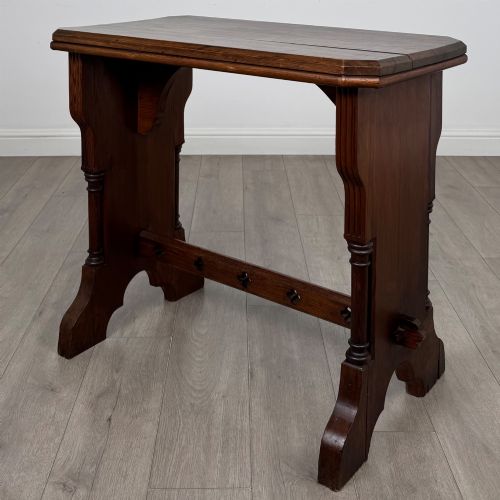
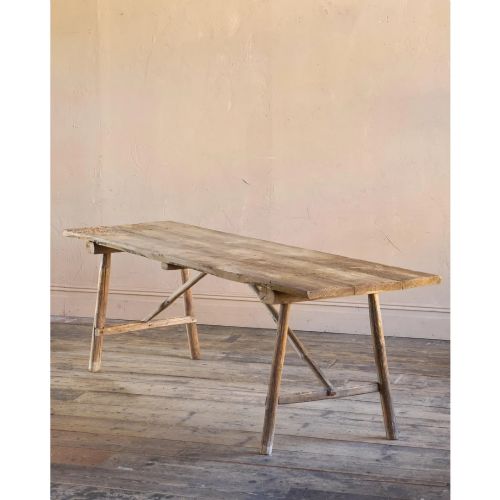
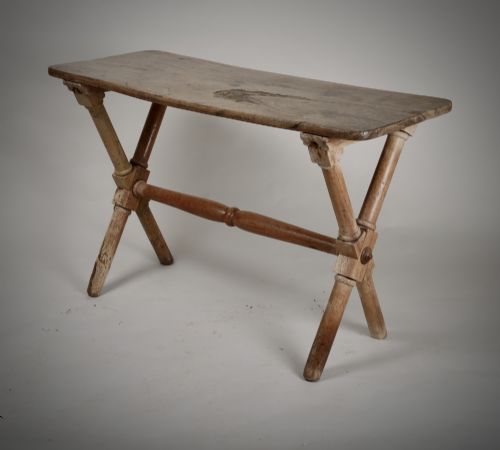
An antique wood trestle desk shares its heritage with sturdy refectory and library tables adapted for writing. Buyers searching this phrase encounter substantial timber furniture spanning from the seventeenth century through to the early twentieth century.
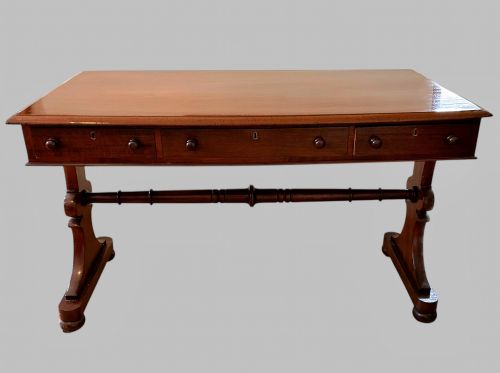
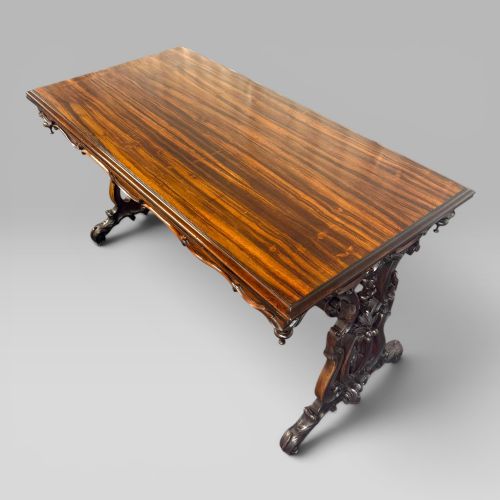
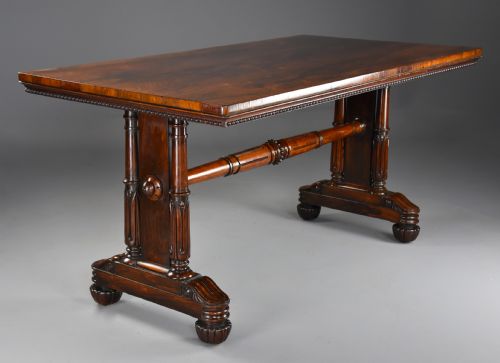
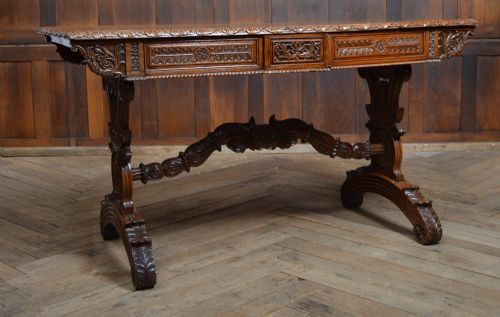
The selection includes pieces constructed in solid oak, mahogany, and rosewood, reflecting periods from the Regency era to the Victorian age. Many listings present versatile writing and library tables that serve the same functional purpose as traditional desks.
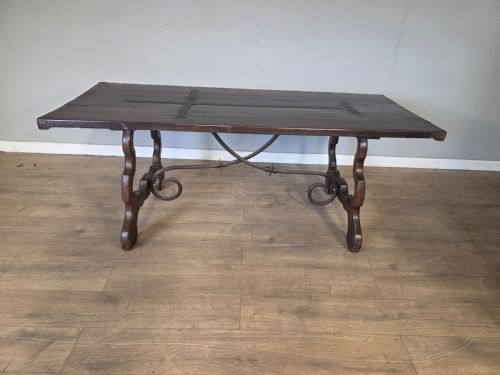
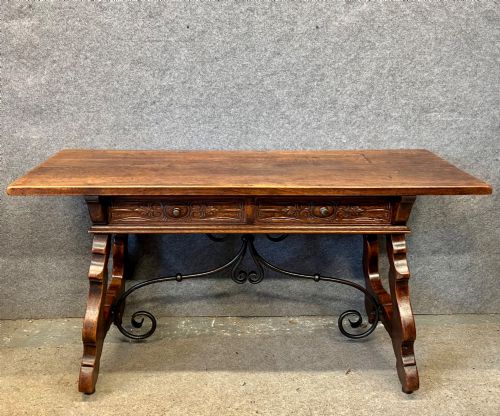
Regional variations appear across the inventory, ranging from Spanish provincial styles to Scandinavian country designs and English library pieces. Buyers will find both simple rustic forms and finely detailed pieces featuring drawers or marquetry.
Materials and construction
Cabinet makers utilised dense hardwoods such as mahogany, walnut, and rosewood alongside structural oak and pine. These timbers provided the durability required for daily writing and library work.
Surface decoration incorporated brass mounts, leather inserts, and intricate marquetry inlay. Joinery methods relied on traditional pegged and tenoned framing to support heavy timber tops.
One curious child desk emerges from the production lines of an anonymous manufacturing company.
Judging the range
Quality separates simple utilitarian timber framing from refined cabinet work featuring book-matched veneers, flame mahogany, and precise brass detailing. The choice of timber grain and the integrity of the original surface patina dictate the standing of each piece.
Finer examples demonstrate disciplined proportions and sophisticated stylistic references, whereas simpler country pieces rely entirely on the honest weight of their solid oak or pine construction.
Gillows·Gillingtons of Dublin·Pairs MFG Co
The Antique Wood Trestle Desk Glossary
- Library Table
- A large freestanding table designed for reading and writing, often finished on all sides to allow placement in the centre of a room.
- Marquetry
- Decorative veneer patterns formed by fitting together small pieces of tinted wood, bone, or brass to create geometric or floral scenes.
- Patina
- The surface sheen and colour developed over decades of handling, polishing, and natural ageing of timber.
- Refectory Table
- A long, narrow dining or working table characterised by sturdy trestle supports and a central longitudinal stretcher.
- Sofa Table
- A small drop-leaf table designed to stand in front of a sofa, typically fitted with two small drawers and trestle ends.
Antique Wood Trestle Desk: Frequently Asked Questions
What is an antique wood trestle desk?
It is a heavy timber table or writing desk supported by trestle ends rather than standard corner legs. These pieces combine utilitarian strength with domestic writing functions.
They draw on historical table forms adapted for libraries, studies, and drawing rooms across various centuries.
How do I identify a Regency writing table?
Regency tables typically feature rosewood or mahogany timbers, elegant proportions, and classical brass mounts. They often include freestanding designs finished on all sides.
Look for refined stretcher rails and occasional marquetry details characteristic of the early nineteenth century.
Were these tables originally used as desks?
Many large library and centre tables served multiple domestic purposes including writing, serving, and reading. Writing tables frequently incorporated one or two narrow drawers for ink and paper.
Buyers often adapt these versatile tables to modern home office use.
What woods were commonly used?
Cabinet makers relied heavily on dense tropical hardwoods like mahogany and rosewood for formal pieces. Oak and pine appear frequently in rustic, provincial, and earlier seventeenth-century examples.
Secondary woods such as walnut also feature in regional European furniture.