

Long Refectory Dining Table
A long refectory dining table brings historic scale and sturdy timber into modern dining rooms.
Long Refectory Dining Table
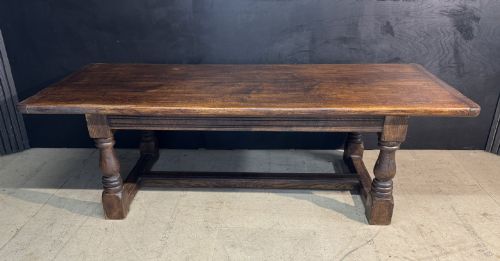
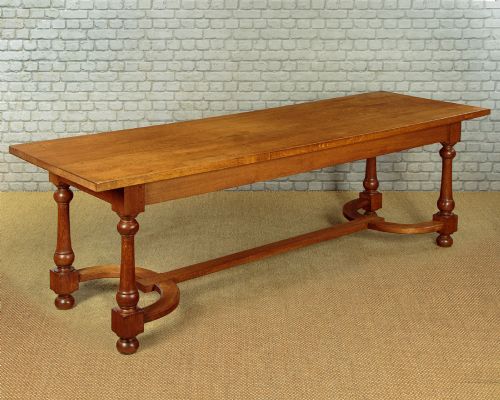
A long refectory dining table is a substantial piece built to seat many guests for communal meals. The versions most often met on this page span the seventeenth through the twentieth centuries, originating from English and French traditions.
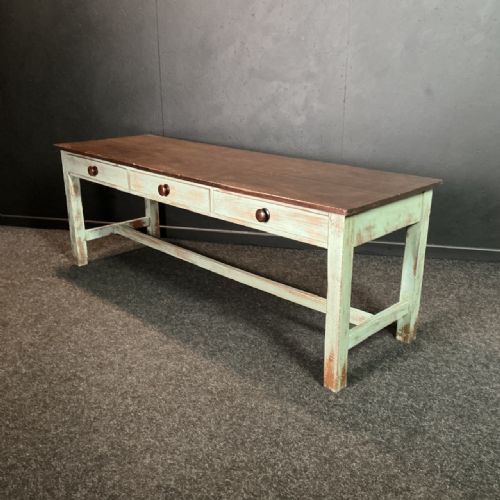
Makers designed these boards primarily for communal halls, kitchens, and large dining spaces. Examples appear in various regional styles, including Georgian, rustic farmhouse, and Arts and Crafts.
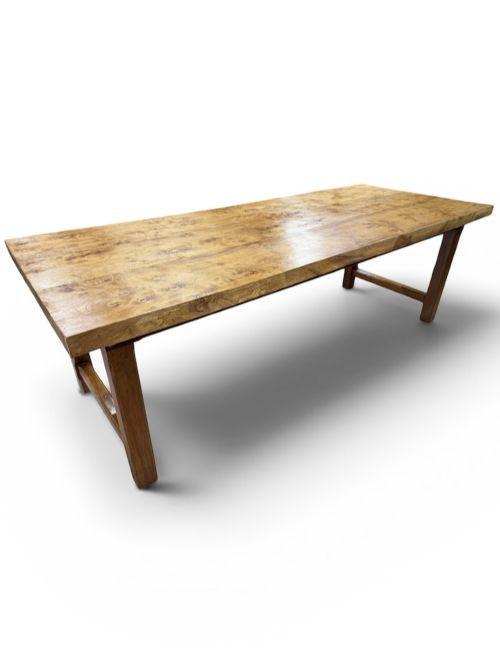
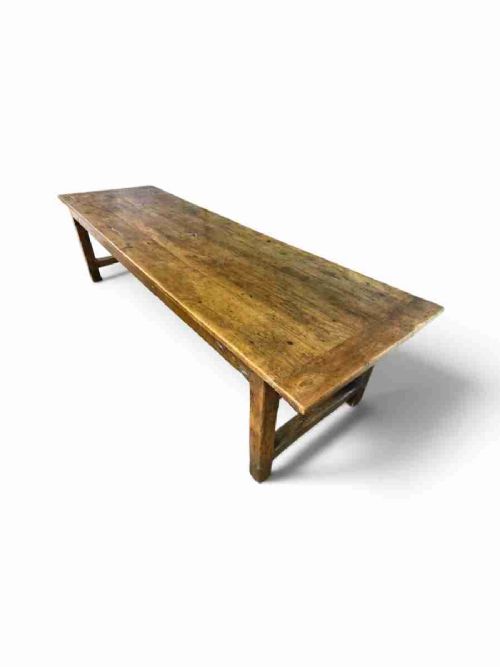
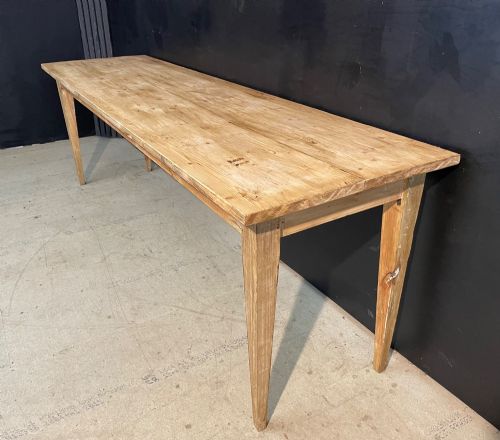
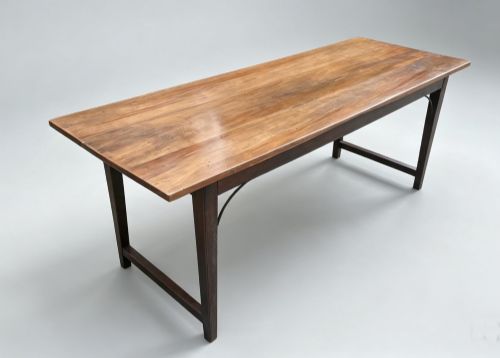
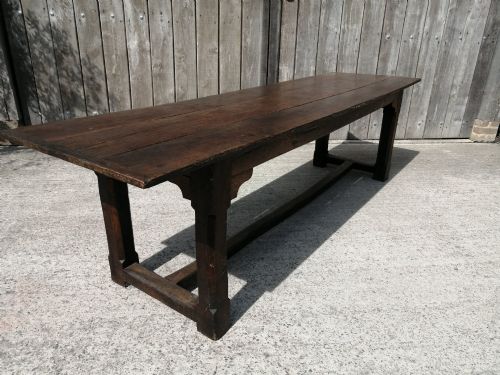
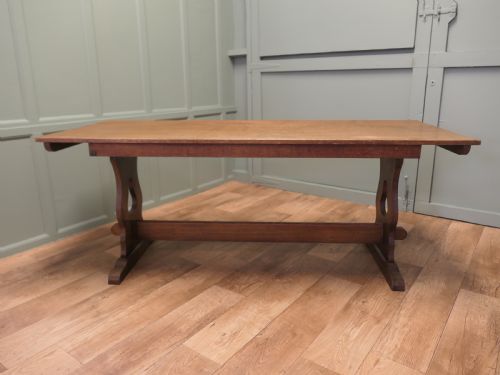
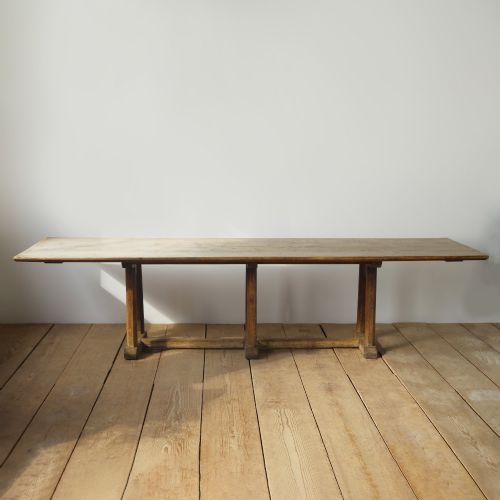
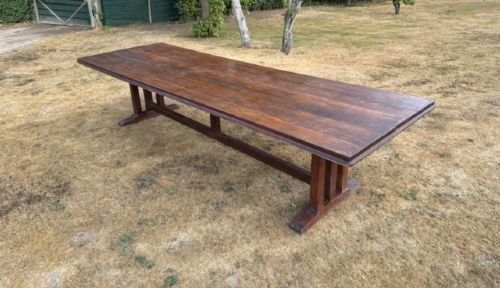
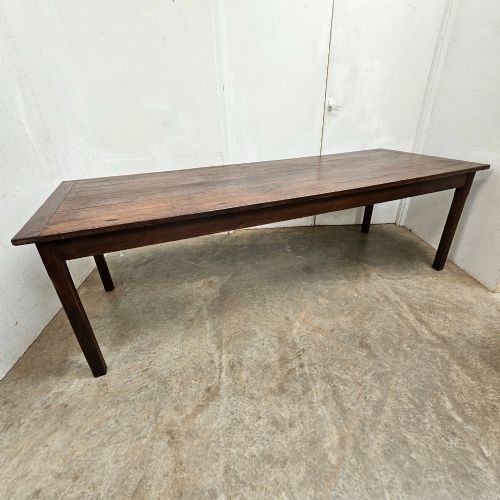
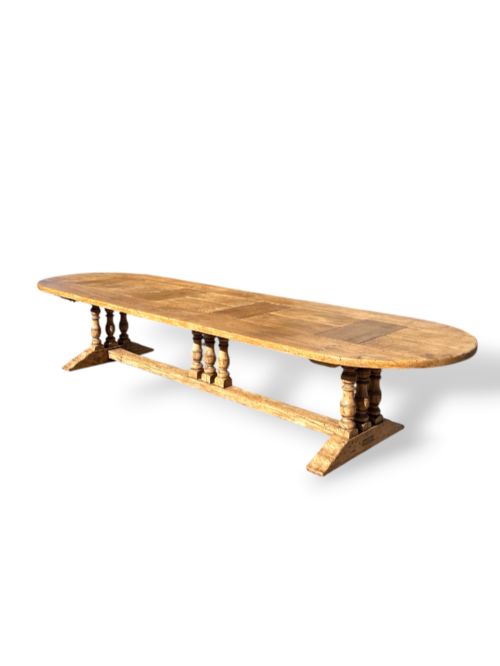
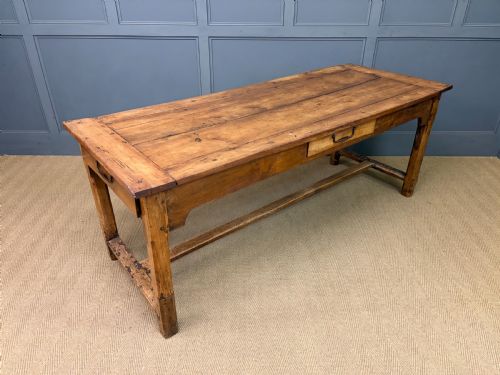
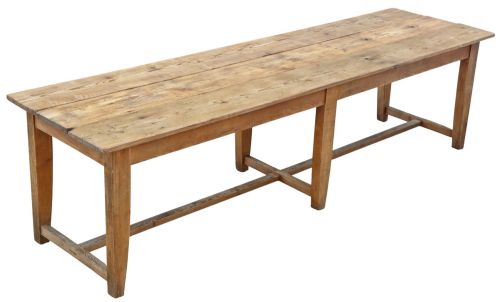
The form relies on long timber planks supported by trestles, turned legs, or stretcher bases. Buyers find formats ranging from standard proportions to extended four-metre lengths.
What Varies in Quality
Quality rests on the character and integrity of the timber used for the top planks. Single or twin-board oak and fruitwood tops show superior material selection compared to multi-plank assemblies.
The sophistication of the underframe construction and joinery dictates the structural grade. Hand-turned legs, well-fitted stretchers, and original patination elevate an example above standard utility pieces.
Listings feature oak, pine, walnut, and fruitwood spanning from the seventeenth century through the 1930s.
The Long Refectory Dining Table Glossary
- Stretcher
- A horizontal wooden beam connecting the legs of a table to provide lateral stability. These supports often show wear from the feet of diners resting upon them.
- Plank top
- A table surface constructed from parallel boards joined edge to edge. Older examples utilise wide, individually sawn planks that display natural grain movement and age.
- Trestle base
- A support system where the tabletop rests on two or more upright frames connected by a central beam. This design allows maximum legroom along the length of the table.
Long Refectory Dining Table: Frequently Asked Questions
How many people can sit at a long refectory dining table?
These tables vary significantly in length, with many examples comfortably seating eight to twelve diners. Their narrow proportions allow guests to converse easily across the width while providing ample legroom.
Buyers should measure their dining space carefully, allowing clearance around the perimeter for chairs and movement. Length dictates seating capacity more than width in these communal formats.
What woods were used for these tables?
Oak is the predominant timber found in English and continental examples, prized for its strength and rich grain. Fruitwood, walnut, chestnut, and pine also appear frequently across regional workshops.
Softer woods like pine were typically utilised for domestic kitchen tables, while dense hardwoods served grander halls. Each timber ages differently, developing a distinct surface sheen over decades of use.
How do I care for an antique wooden top?
Routine maintenance involves wiping surfaces with a soft, dry cloth to remove dust and debris. Excessive moisture should be avoided, and natural beeswax can be applied periodically to nourish the grain.
Avoiding direct heat sources prevents the timber planks from warping or splitting over time. Gentle care preserves the historical patination accumulated across generations.
Are these tables suitable for everyday family dining?
Solid construction makes these surfaces exceptionally durable for daily meals and household activities. The robust timber frames withstand heavy daily use without losing structural integrity.
Historic surfaces already carry the marks of past living, so normal family use adds to their evolving character. Using coasters and placemats helps protect vulnerable areas from extreme heat or moisture.