
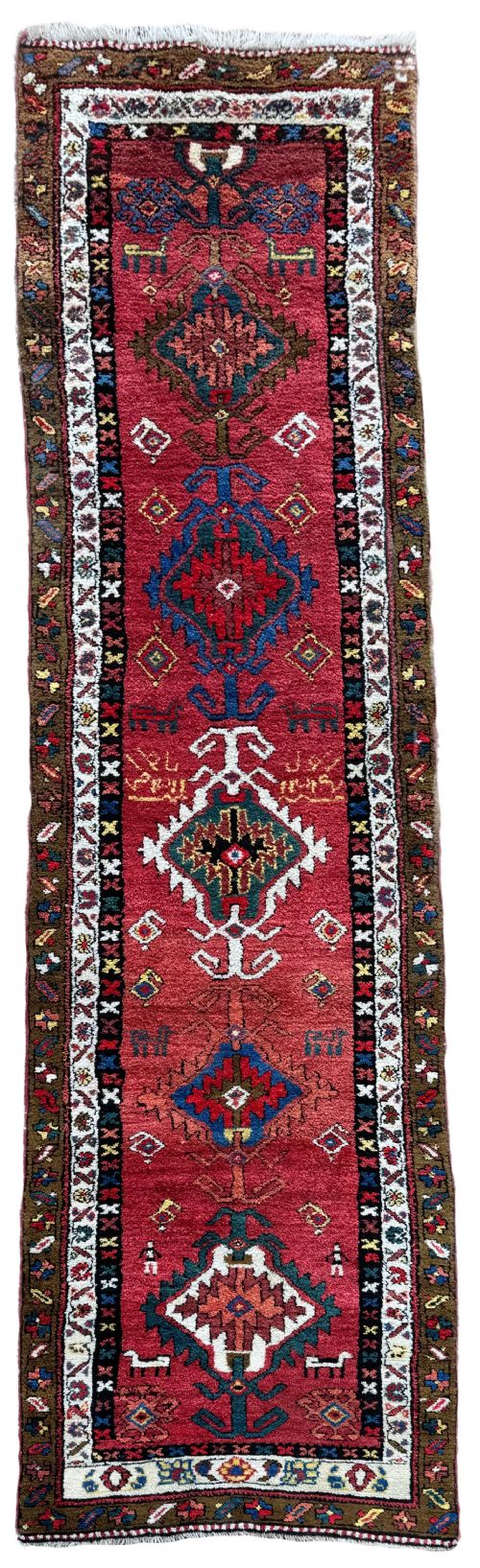
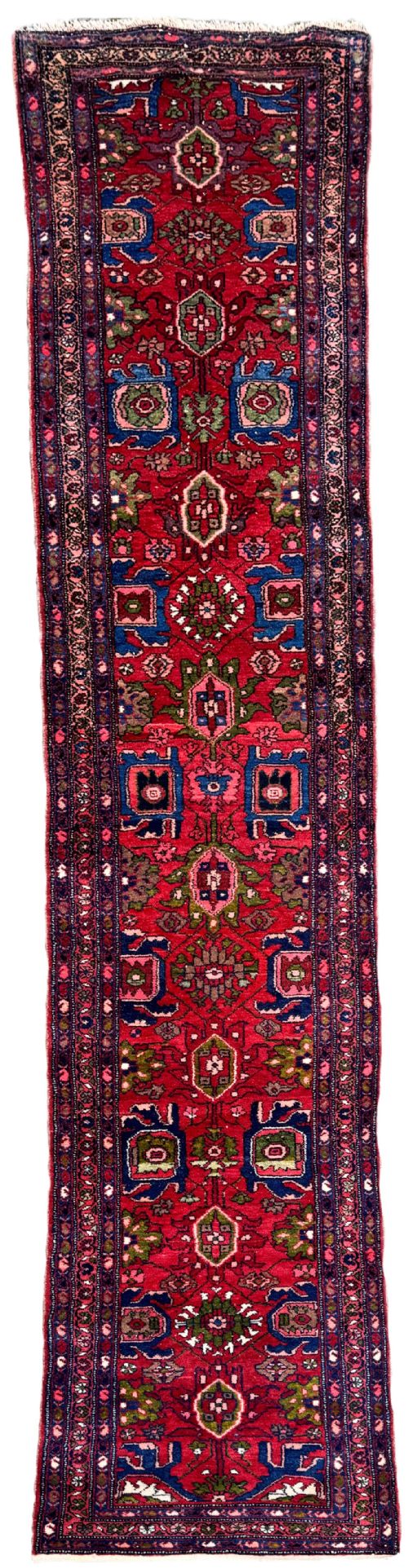
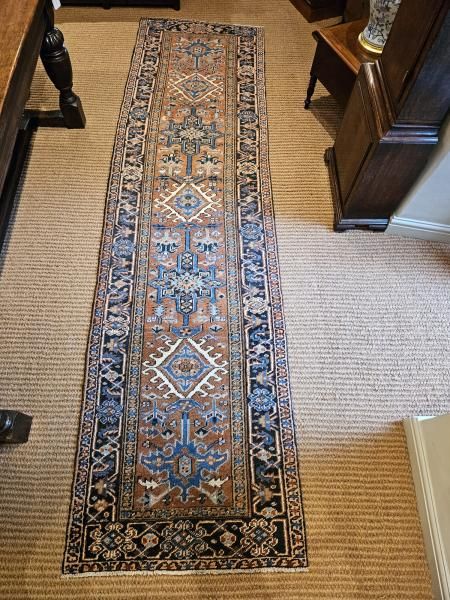
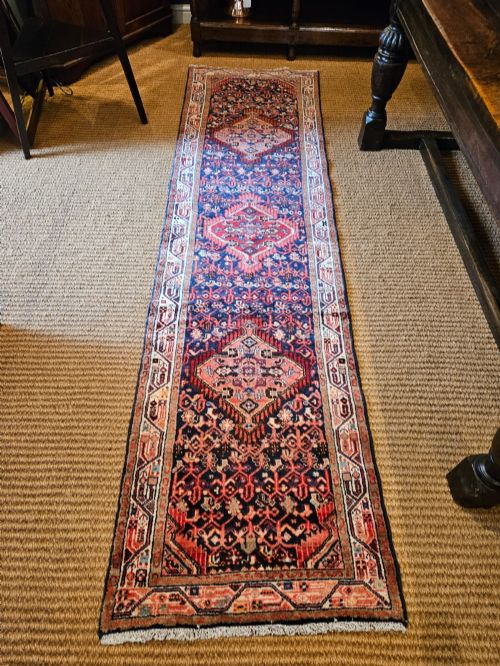
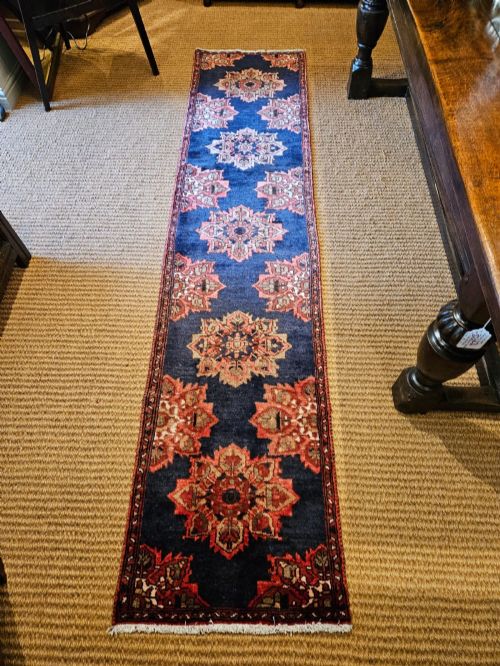
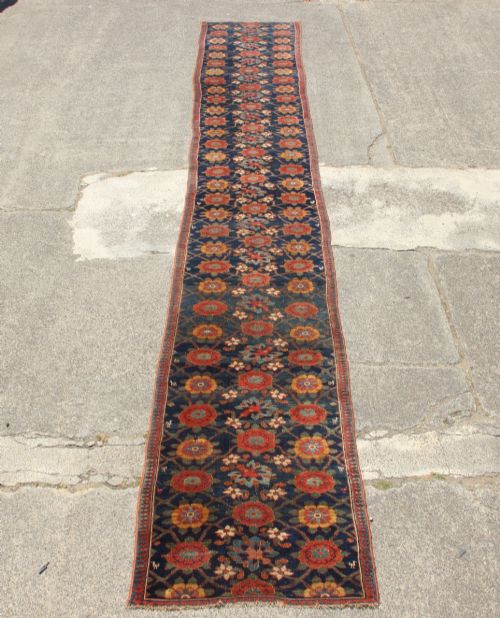
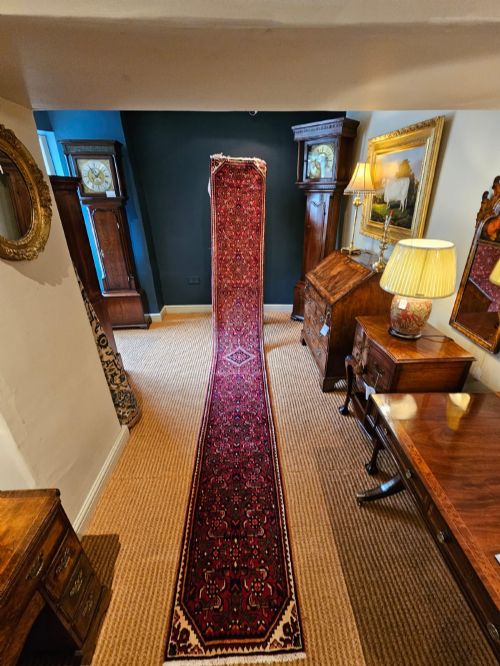
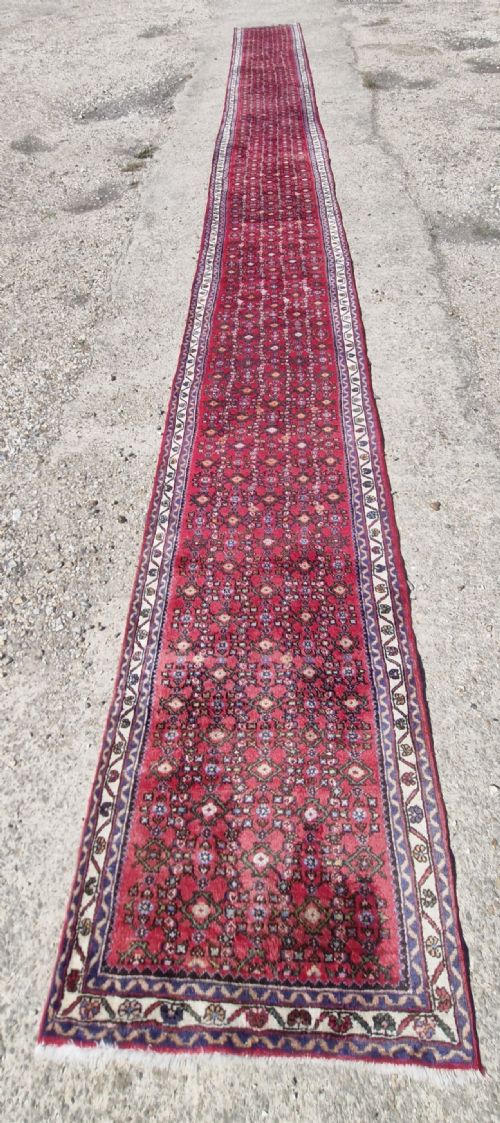
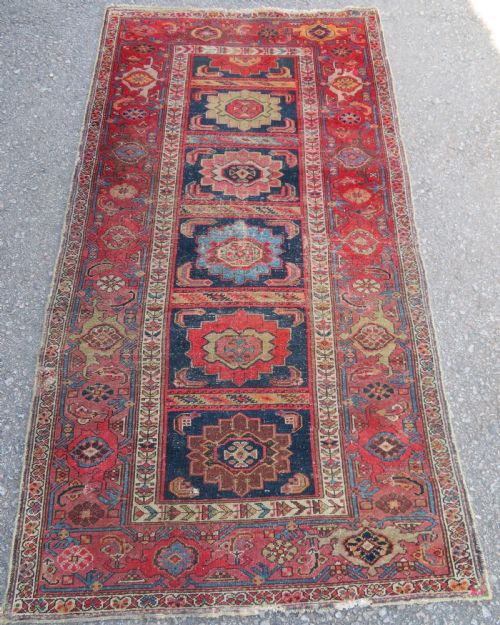
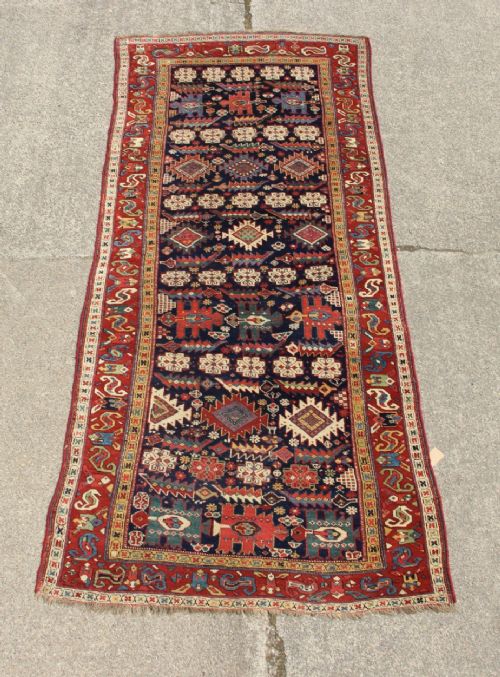

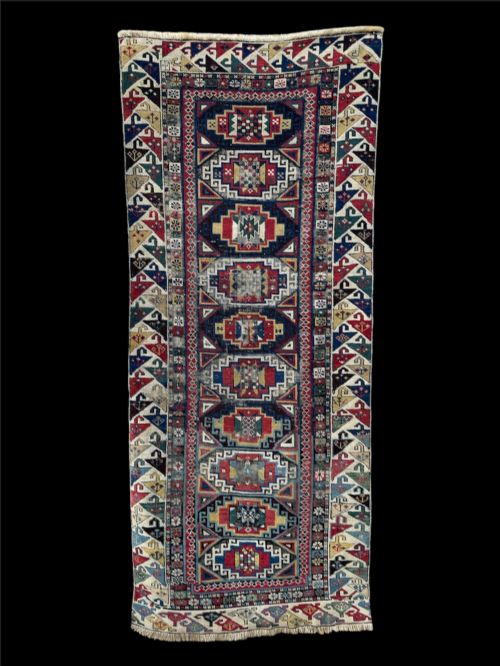
Long Persian Hallway Rug
A long persian hallway rug grounds a narrow space with patterned wool and tribal warmth.
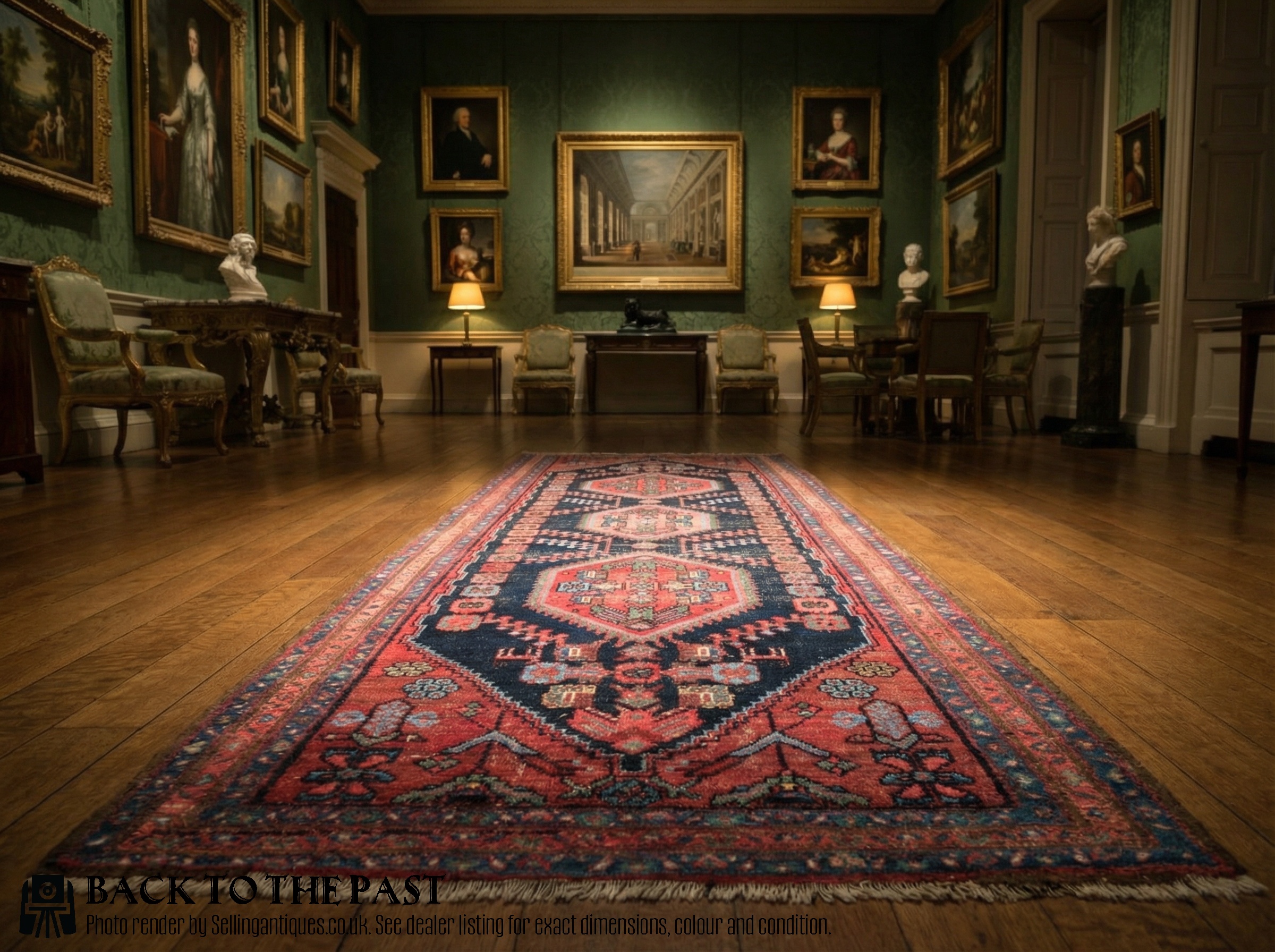
Long Persian Hallway Rug
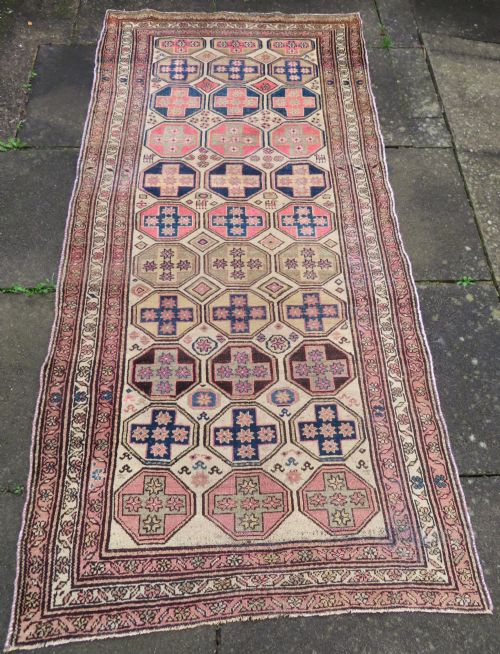
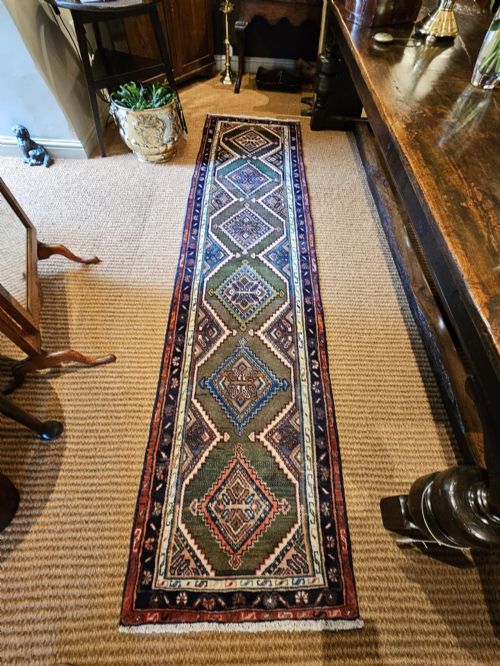
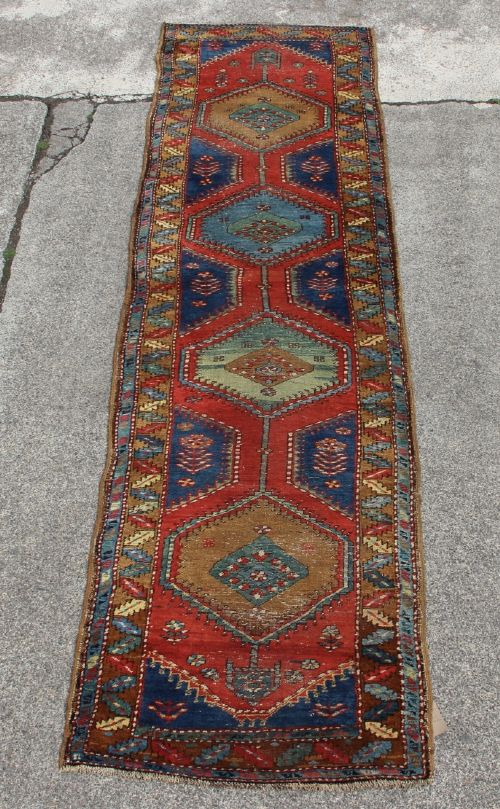
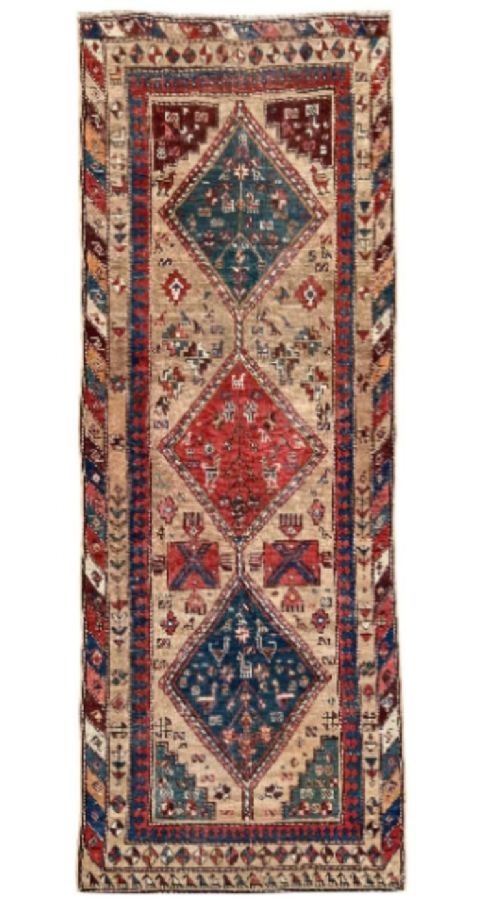
When you search for a long persian hallway rug, you are looking at narrow floor coverings designed for corridors, landings and extended spaces. These pieces span the nineteenth and twentieth centuries, taking the form of traditional runners and long rugs originating from various weaving traditions.
Tribal and village pieces dominate the selection, bringing geometric motifs and earthy palettes to narrow floors. Each format serves the specific architectural requirement of guiding movement through a home while displaying traditional weaving patterns.
Materials and construction
Weavers constructed these long persian hallway rug examples using wool and hand-spun wool pile set against cotton foundations. The natural resilience of wool provides the durability necessary for high-traffic corridors and heavy domestic use.
Traditional handweaving techniques unite these pieces, utilising local dye sources and wool preparation methods passed through generations. The structural tightness of the weave determines how well the runner retains its shape along extended dimensions.
Listings feature pieces spanning from the mid nineteenth century through to the nineteen sixties, employing wool and hand-spun wool.
Distinctions in quality
The standard of a long persian hallway rug rests in the density of its knotting and the precision of its geometric or floral drawing. Finer examples display intricate rendering of traditional motifs like the Mina Khani pattern, achieved through meticulous hand-spinning and careful dye application.
Structural integrity also separates workshop productions from simpler tribal pieces, with tight foundation tension ensuring the runner lies straight over extended lengths. Pile depth and wool quality further dictate how gracefully the textile ages under daily foot traffic.
Heriz·Hamadan·Bidjar·Bakshaish·Bakhtiar
The Long Persian Hallway Rug Glossary
- Runner
- A long, narrow carpet format specifically proportioned for hallways, corridors and stairs. These pieces measure significantly longer than they are wide.
- Kelleh
- A large, extended format carpet, often narrower than a standard room-size rug but broader than a typical corridor runner. Such pieces serve grand entranceways and spacious galleries.
- Bidjar
- A durable Persian rug type originating from Kurdish areas, known for heavily packed foundations and stiff, robust wool construction. These items withstand heavy usage in busy household spaces.
- Heriz
- A region in northwest Persia famous for bold, geometric medallion designs and robust structural foundations. Such carpets utilise strong wool to hold sharp, architectural patterns.
- Hamadan
- A major trading hub in western Persia that gathered woven goods from hundreds of surrounding villages. These textiles typically feature repeating field patterns and sturdy utility.
Long Persian Hallway Rug: Frequently Asked Questions
How do I choose the right length?
Measure your hallway while leaving a consistent margin of bare floorboards or stone visible around the perimeter of the runner. Consider how doors swing along the corridor to ensure the thickness of the wool does not obstruct movement.
Longer formats require straight walls and consistent corridor geometry to lie flat without bunching. Check the specific dimensions listed for each runner to match your exact spatial layout.
Where should I place a long runner?
These textiles find their natural home in high-traffic corridors, entrance halls, wide stair landings and connecting galleries. Their narrow proportions guide the eye down the passage while protecting high-use flooring.
Avoid damp areas or spaces exposed to direct, harsh sunlight for extended hours. Proper placement highlights the geometric design while distributing foot traffic evenly across the wool pile.
How do I care for antique wool runners?
Vacuum the rug regularly using a low-suction attachment without a rotating brush bar to protect the hand-spun wool pile. Lift the piece occasionally to clean underneath and prevent grit accumulation within the foundation.
Professional specialist cleaning is recommended for antique textiles to preserve natural lanolin and dye stability. Address spills immediately by blotting gently rather than rubbing the fibres.
What is a Kelleh carpet?
A Kelleh is a specific format that sits between a standard runner and a full room-size carpet, offering an elongated rectangular shape. These grand textiles were traditionally woven for large Persian reception rooms and extended halls.
Their substantial dimensions provide a dramatic presence in spacious corridors or open-plan modern interiors. The weaving density on these larger formats often reflects high technical skill.