

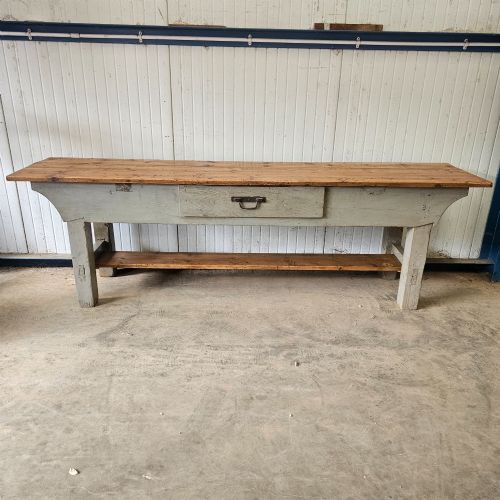
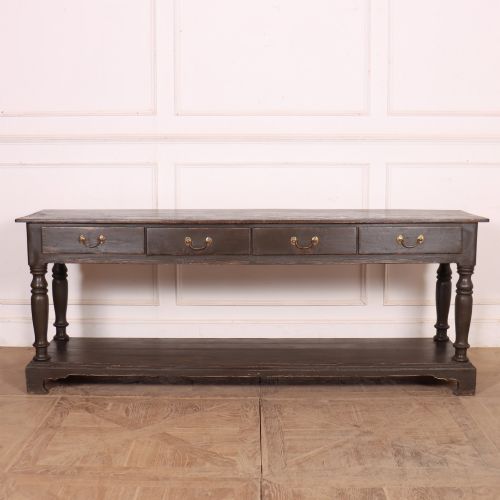
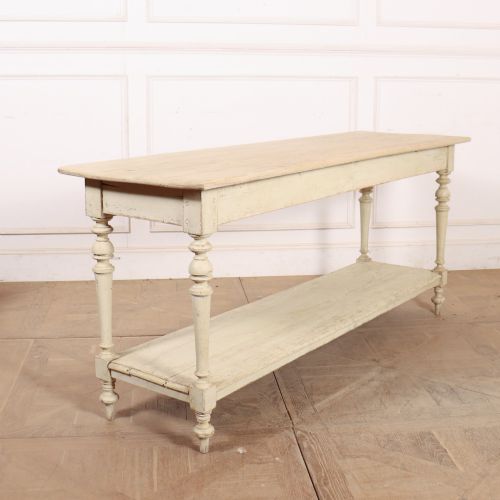
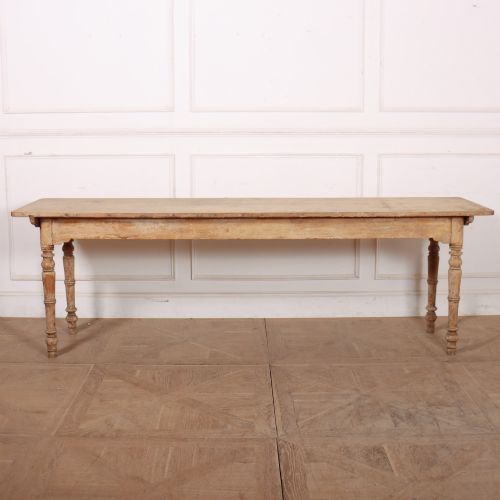

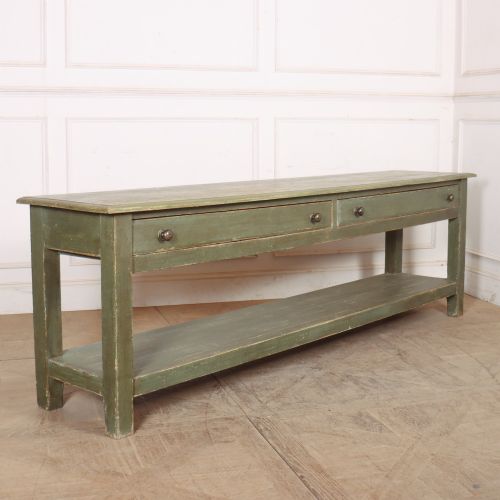


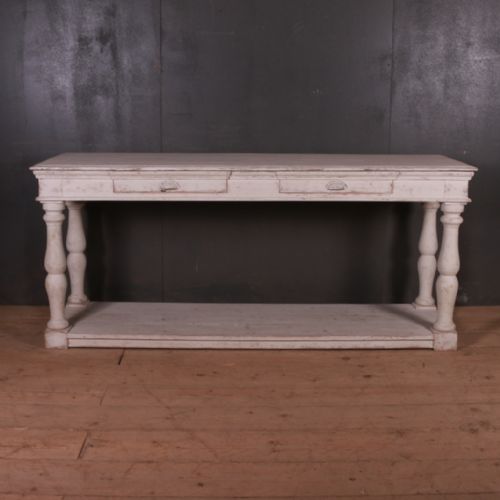

Long Painted Console
A long painted console offers generous surface space and distinct regional character, making it a practical anchor for a hallway or living space.
Long Painted Console
A long painted console brings substantial surface area and decorative paintwork to domestic interiors, serving as a functional piece for hallways, living spaces, and dining rooms. These items appear across various styles, including French Country, English Country, Rustic Farmhouse, French Provincial, Italian Country, Regency Style, Scandinavian Country, and Victorian.
The version most commonly met on this page is a nineteenth-century example fashioned from pine, painted wood, or timber, often taking the form of a console table, serving table, drapers table, or dresser base. Many incorporate practical storage elements such as drawers, potboards, or pot-shelves beneath the main surface.
Origins span across English, French, Italian, and Swedish traditions, showing regional variations in proportion and paint finishes. Pieces range from simple utilitarian preparation tables to more refined console tables and servers.
How they were made
Construction relies primarily on traditional carpentry using timber bases like pine, oak, beech, and general wood, paired with applied paint finishes. Structural hardware sometimes incorporates brass or metal components, particularly on functional tables.
Surfaces are typically finished with layered paintwork that has aged organically over time, reflecting the utilitarian origins of drapers tables, preparation tables, and serving tables from the nineteenth century and early twentieth century.
Long Painted Console Retail Price Guide 2026
Typical asking prices for long painted console among the pieces listed under this phrase on Sellingantiques today, from the lower quarter to the upper quarter. They describe what is for sale here now, not the wider market.
Pine and painted wood dominate the material selection across these nineteenth-century and early twentieth-century listings.
What varies in quality
The distinction between ordinary and superior pieces rests in the integrity of the timber framing and the character of the painted surface. Original surface treatments that show honest patination hold greater visual depth than later repainting.
Proportion and utility also separate examples, with well-balanced tables featuring integrated drawers and potboards demonstrating more thoughtful regional craftsmanship than simpler utilitarian boards.
The Long Painted Console Glossary
- Console table
- A narrow table designed to stand against a wall, frequently used in entrance halls or principal rooms.
- Drapers table
- A long, sturdy table originally utilised in fabric shops for measuring and cutting cloth, characterised by lower storage shelves.
- Potboard
- A lower open shelf fitted beneath a table or dresser base, traditionally used for storing pots and kitchen utensils.
- Preparation table
- A heavy-duty work table built for food or material preparation, typically constructed from solid timber.
- Dresser base
- The lower section of a kitchen or dining dresser, featuring cupboards or drawers beneath a wide surface.
Long Painted Console: Frequently Asked Questions
What is a long painted console used for?
These tables provide a long surface for displaying decorative objects, lamps, or everyday items in narrow spaces like hallways and corridors.
They also function effectively as serving surfaces in dining areas or as work tables in domestic settings.
How do I identify the period of a console?
Dating relies on examining the timber construction methods, tool marks, and the nature of the painted finish.
Nineteenth-century examples often display hand-planed boards and older paint layering compared to twentieth-century pieces.
Are these tables suitable for everyday use?
Solid timber construction and sturdy frames make these tables durable for daily household activities.
Care should be taken to protect antique painted surfaces from excessive moisture and heavy impact.
What styles are common among these consoles?
Styles draw on rural and regional European traditions, including French, English, Italian, and Scandinavian country aesthetics.
Victorian and Regency influences also appear, reflecting more formal architectural periods.