






Large French Sideboard
A large french sideboard anchors a room with substantial presence, bringing generous storage and distinct regional character to an interior.
Large French Sideboard
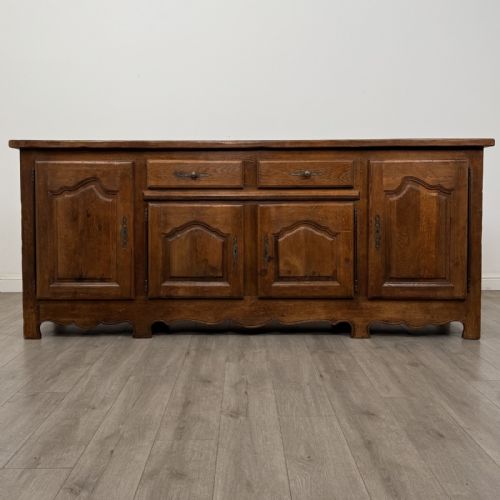
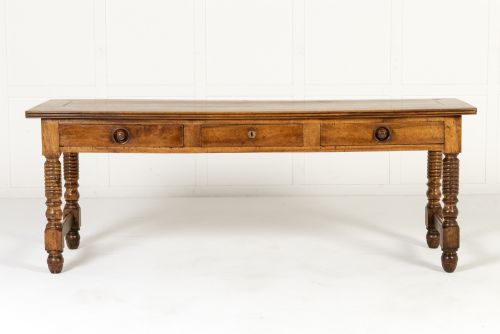
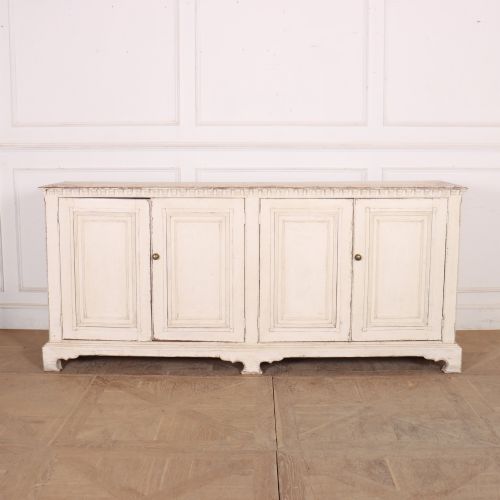
A large french sideboard fulfills the search for a commanding storage piece, appearing most frequently as an oak, walnut, or pine enfilade, buffet, or credenza dating from the nineteenth century. These substantial pieces originate from various regional traditions including French country, provincial, and chateau styles, offering deep cupboards and long surfaces suited to dining rooms and large living spaces.
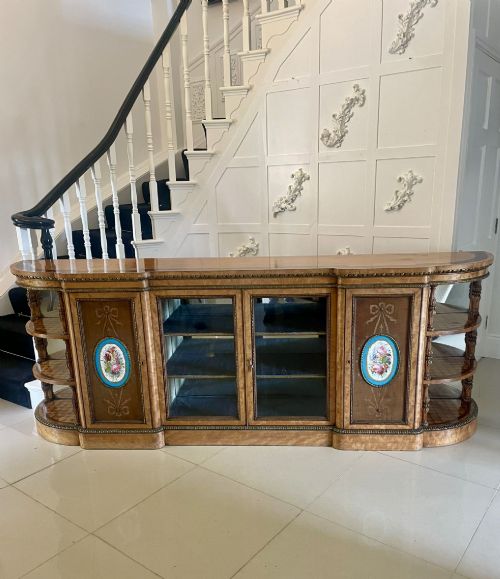
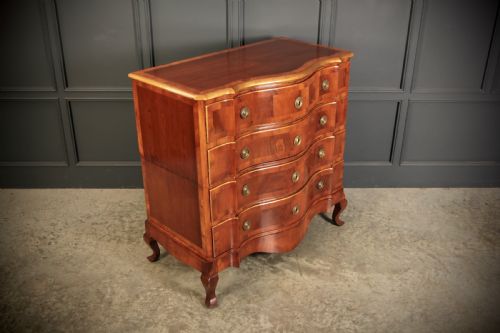
The forms encompass serpentine shapes, bow fronts, and rectilinear cabinets, often featuring panelled doors and carved details. Alongside traditional sideboards, the selection includes related low storage furniture such as enfilades and commodes that provide similar floor-standing capacity and surface area.
Origins span formal nineteenth-century urban workshops to rural departments, where makers utilised local timbers. Buyers select these pieces for their scale and utility, finding them in finishes ranging from scrubbed pine and painted wood to polished burr walnut.
Materials and construction
Cabinetmakers constructed these large sideboards using dense hardwoods such as oak, walnut, cherry, and rosewood, alongside softer timbers like pine for internal carcases and regional country pieces. Timber selection dictated the structural integrity of these wide frames, with heavy oak and walnut providing durability for substantial top boards and doors.
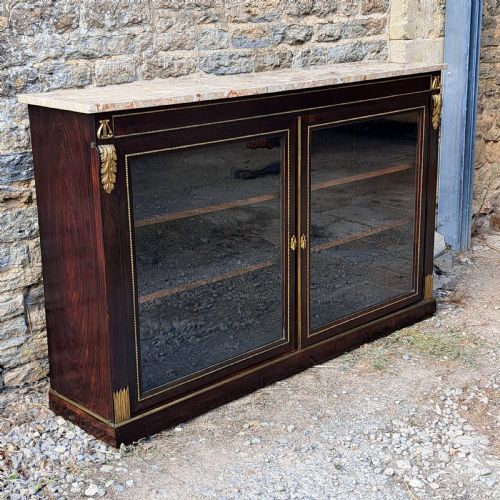
Decoration relied on hand carving, marquetry inlay, and applied brass or ormolu mounts, particularly on pieces reflecting Louis XV or Empire tastes. Marble tops appeared on formal credenzas and commodes, adding weight and a cool durable surface above wooden bodies.
Joinery techniques involved traditional mortise and tenon frames for doors and structural supports, alongside hand-cut dovetails for drawer construction. Surfaces received wax polishing, French polishing, or historic paint layers that protected the timber while highlighting grain patterns.
Large French Sideboard Retail Price Guide 2026
Typical asking prices for large french sideboard among the pieces listed under this phrase on Sellingantiques today, from the lower quarter to the upper quarter. They describe what is for sale here now, not the wider market.
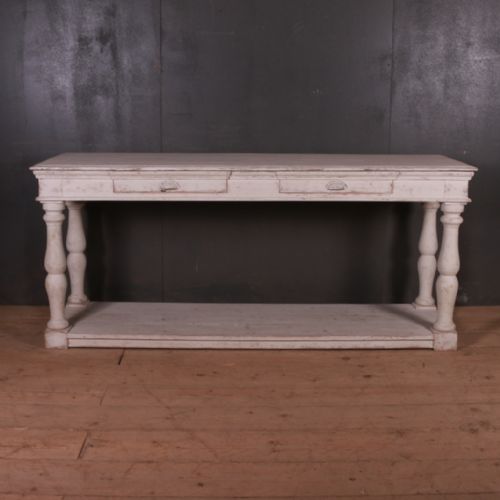
Several pieces show deep drawer banks originally built to hold endless quantities of table linen, napkins, and family silver.
Markers of quality
Quality rests in the selection of timber and the precision of the cabinetwork, visible in the grain matching across large door panels and drawer fronts. Superior pieces display crisp, hand-carved detailing and tightly fitted joints that maintain stability across wide spans.
The integration of decorative elements separates standard production from finer examples, seen in the weight and chasing of ormolu mounts, the complexity of marquetry patterns, and the quality of fitted marble slabs. Original hardware, working locks, and secondary woods matching the primary timber indicate a high standard of original manufacture.
The Large French Sideboard Glossary
- Enfilade
- A long sideboard or buffet featuring a series of cabinet doors in a single continuous line. This form was traditionally used in grand dining rooms for serving food and storing silver.
- Ormolu
- Gilded bronze applied as decorative mounts, feet, and escutcheons on nineteenth-century furniture. The technique involves applying a mercury and gold amalgam to bronze before firing.
- Serpentine
- A furniture front or top curving outward in the centre and inward at the sides in a gentle S-shape. This contour requires skilled woodworking to shape solid timber or apply veneers.
- Credenza
- A low cabinet or sideboard, frequently fitted with glass doors or decorative mounts. Originating in Italy, the form became popular in nineteenth-century formal salons.
- Marquetry
- The art of applying pieces of veneer to a structural surface to form decorative patterns and pictures. Craftsmen cut contrasting woods, brass, and shell to create intricate pictorial designs.
Large French Sideboard: Frequently Asked Questions
How were large french sideboards used originally?
These substantial pieces served primarily in dining rooms and halls for storing tableware, linens, and serving dishes. Their long top surfaces provided space for displaying silver, porcelain, and serving food during large gatherings.
In country houses, sturdier oak and pine versions handled heavier domestic provisions and kitchen preparation tasks. They acted as the central utility hub for the household before fitted kitchens became standard.
Where should I place a large sideboard?
A large sideboard requires a substantial wall space, typically in a dining room, wide hallway, or spacious living area, where its scale can anchor the room. Ensure the floor is level and measure clearance for doors and drawers to open fully.
Keep these wooden pieces away from direct heat sources and strong sunlight to protect the polish and prevent timber movement. Balance the visual weight above the surface with a large mirror or painting.
How do I tell regional styles apart?
Regional pieces, often termed French country or provincial, tend to use local woods like cherry, pine, or oak with simpler carved panels and pegged joints. They reflect practical rural utility rather than urban fashion.
Formal chateau or Empire pieces display refined veneers, symmetrical layouts, ormolu mounts, and polished walnut or mahogany. These urban pieces follow academic design traditions like Neoclassicism and Louis XV revivals.
What is the difference between an enfilade and a sideboard?
An enfilade is a specific type of long sideboard featuring three or more cabinet doors arranged in a continuous straight line along the front. This extended format was designed for long formal dining rooms in large European residences.
Standard sideboards can feature various configurations of drawers and cupboards, sometimes with raised backs or central open sections. Enfilades emphasise symmetry and unbroken horizontal length across the room.