

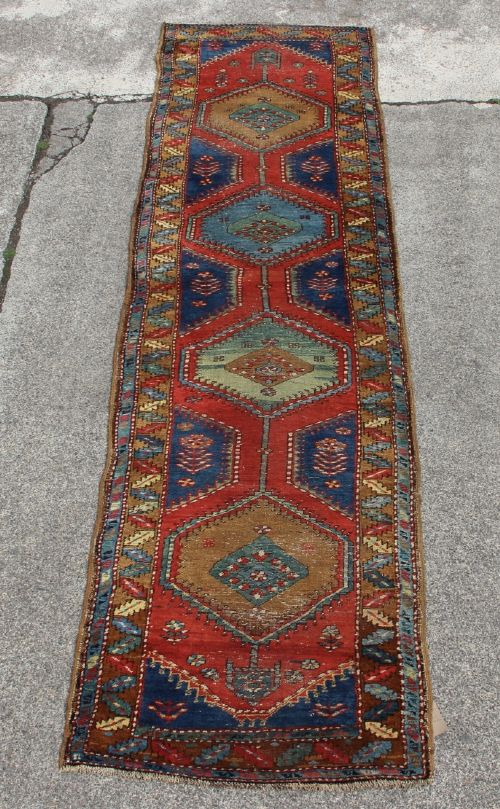
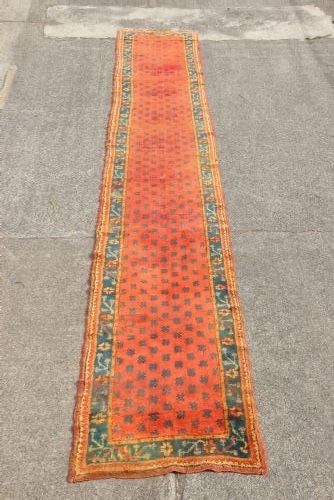
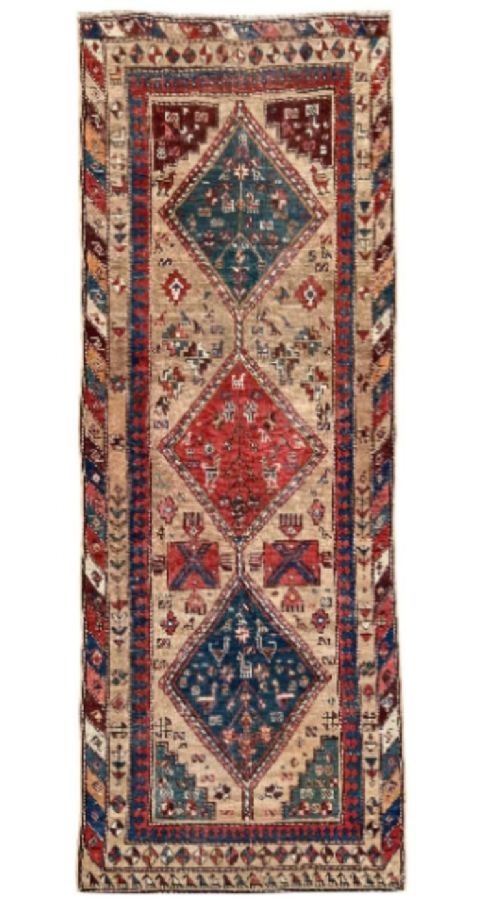
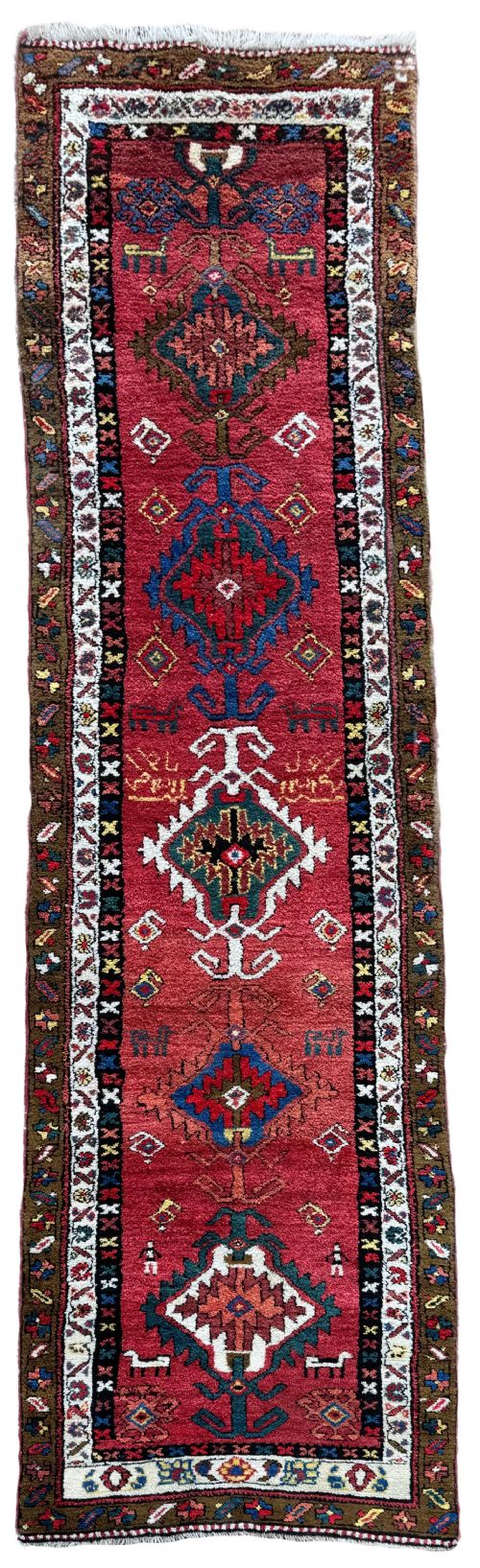


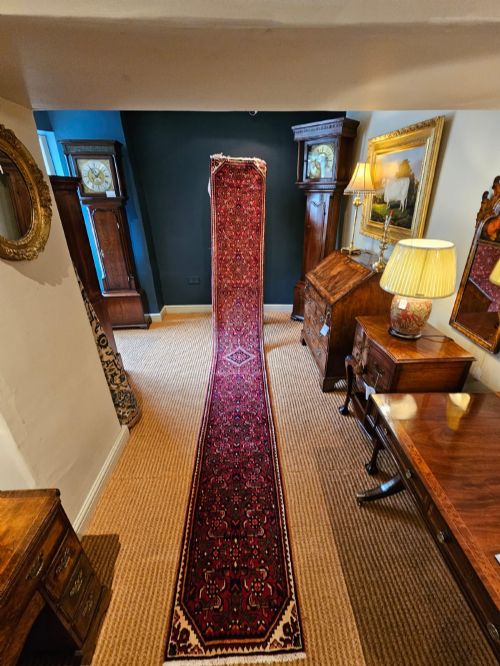
Long Oriental Carpet Runner
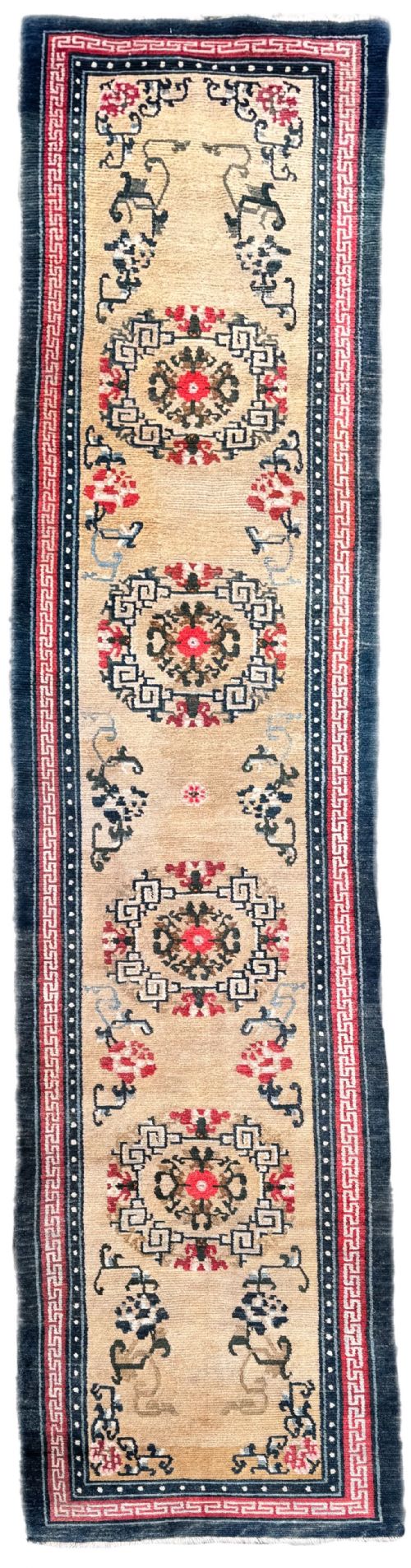
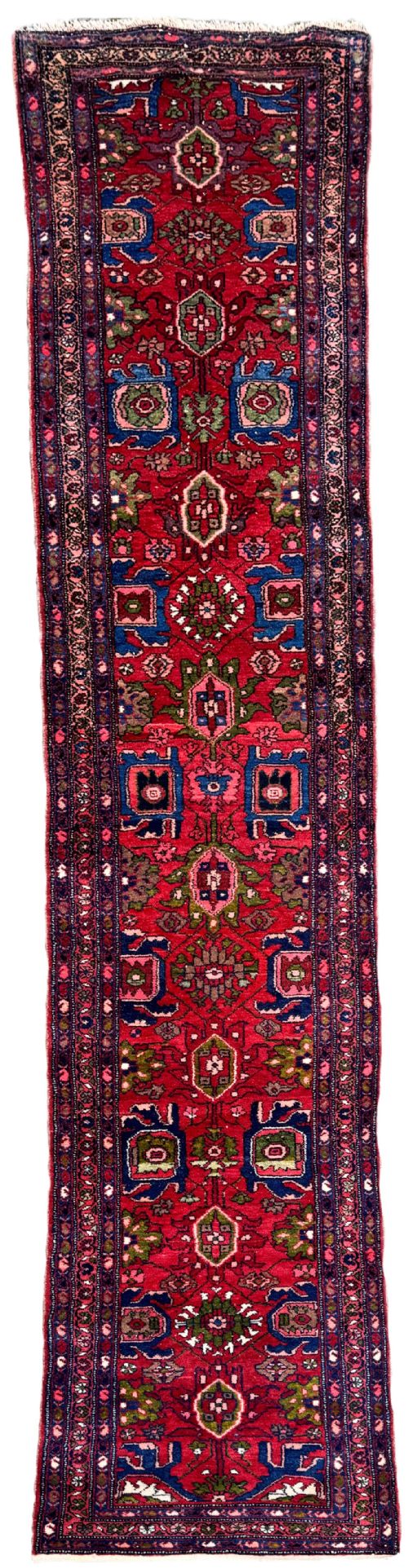
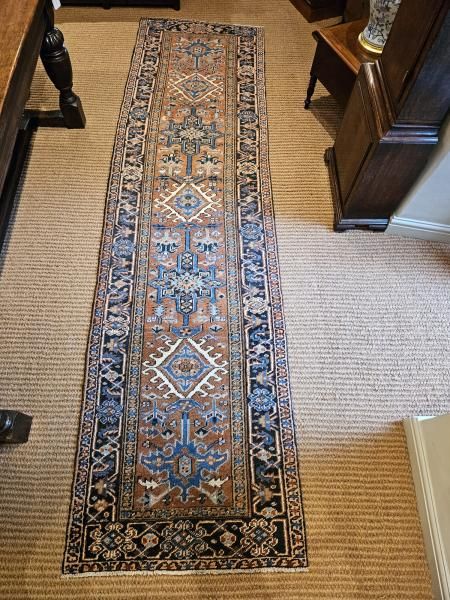
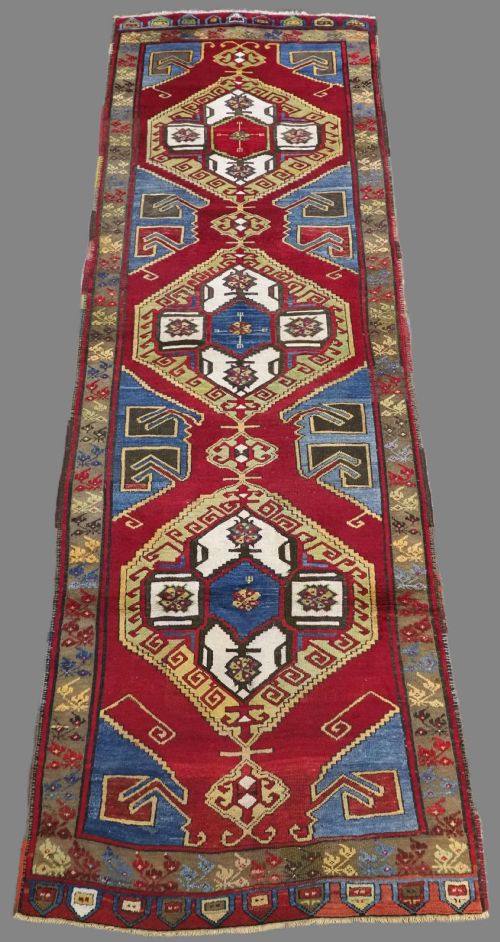
A long oriental carpet runner spans hallways and landings with woven wool and cotton geometry from the nineteenth and early twentieth centuries.
Long Oriental Carpet Runner
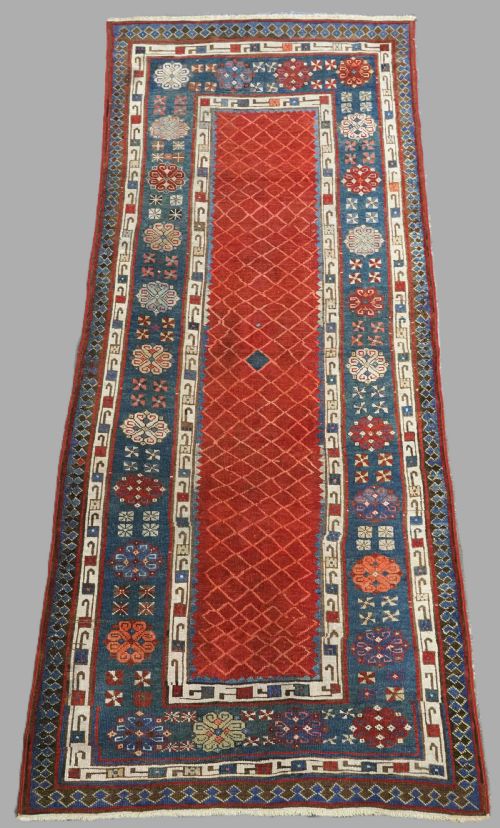
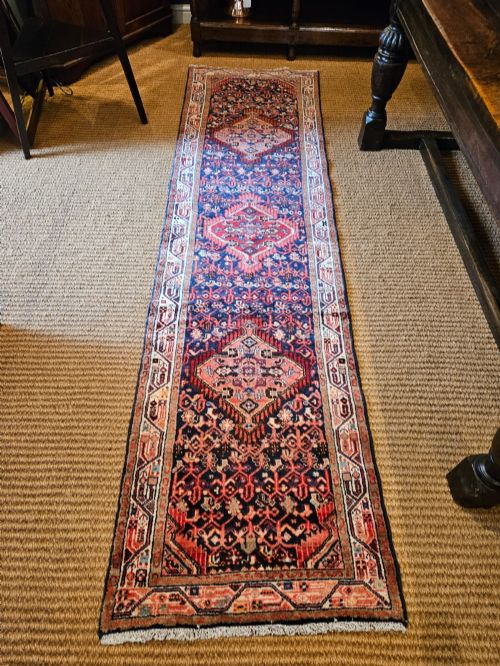
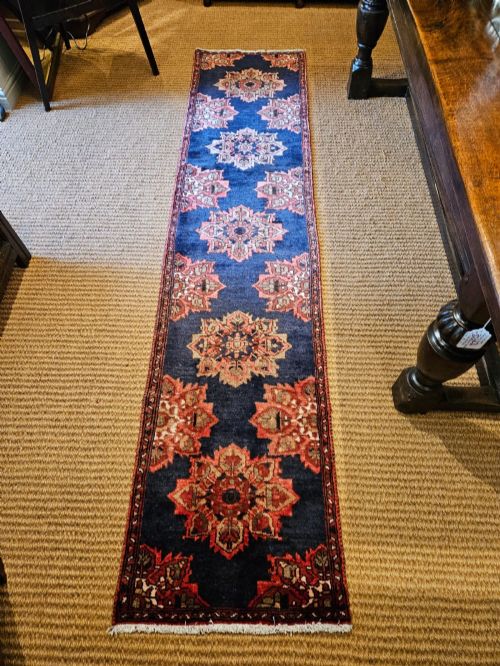
A long oriental carpet runner provides narrow floor coverings designed for corridors, halls, and staircases. These pieces originate from Persian, Caucasian, Turkish, and Tibetan weaving traditions, spanning periods from the mid-nineteenth century up to the mid-twentieth century.
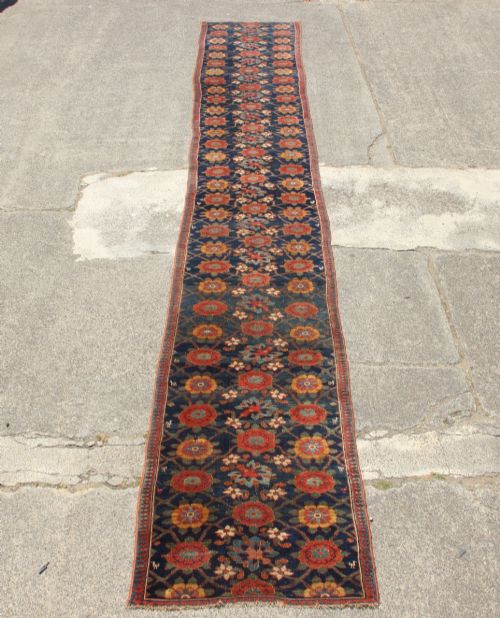
Buyers encounter long runner rugs, kellehs, and long carpets displaying tribal and traditional village designs. Formats range from narrow configurations exceeding five metres in length to broader country house room sizes.
How They Were Made
These textiles utilise pure wool pile handwoven onto cotton or wool foundation warps and wefts. Weavers construct geometric motifs, lattice patterns, and turreted guls using traditional hand-knotting techniques.
Natural dyestuffs yield olive green, navy blue, and saturated polychrome backgrounds across Anatolian, Kurdish, and Caucasian workshops.
One recorded runner stretches out to an impressive thirty-two feet of continuous nineteenth and twentieth-century hallway geometry.
What Varies in Quality
Quality rests in the density of the knotting, the crispness of the geometric drawing, and the integrity of the wool pile. Finer examples display precise lattice and Mina Khani designs executed with stable structural foundations.
Condition shifts between robust pile and distressed surfaces with historical wear, altering the visual texture of the textile.
The Long Oriental Carpet Runner Glossary
- Runner
- A long, narrow carpet format intended for corridors and hallways. These pieces measure significantly longer than their width.
- Kelleh
- A large format carpet or long rug originating from Persian and Caucasian weaving centres. This term designates proportions intermediate between a standard rug and a gallery runner.
- Gul
- A repeating octagonal medallion motif frequently found in Turkmen and Afghan tribal weaving. Each design represents a specific clan or tribal grouping.
- Mina Khani
- An all-over lattice pattern composed of connected floral rosettes and diamond shapes. This traditional design occurs frequently on Kurdish and Persian carpets.
- Warp
- The stationary lengthwise threads stretched on a loom that form the structural foundation of the rug. Wefts are then interwoven across these vertical elements.
Long Oriental Carpet Runner: Frequently Asked Questions
Where should I place a long runner?
These narrow textiles suit long hallways, landings, and entrance corridors where floor protection and linear design impact are required.
Their elongated proportions bridge open spaces while providing durable wool footing for high traffic areas.
How do I identify a Kurdish runner?
Kurdish examples display robust wool foundations, heavy saturated colour palettes, and characteristic geometric or Mina Khani lattice patterns.
Village weavers in these regions utilised durable materials that withstand centuries of domestic use.
What is an Oushak runner?
Oushak runners originate from the Turkish weaving town of Ushak, known for softer pastel or distressed wool aesthetics.
These pieces often feature oversized floral or geometric field patterns scaled for nineteenth-century architecture.
How do I care for an antique wool runner?
Vacuum gently without rotating brush bars to protect the hand-knotted pile and historic cotton foundations.
Professional specialist cleaning preserves natural wool lanolin and dyestuff stability over decades.