

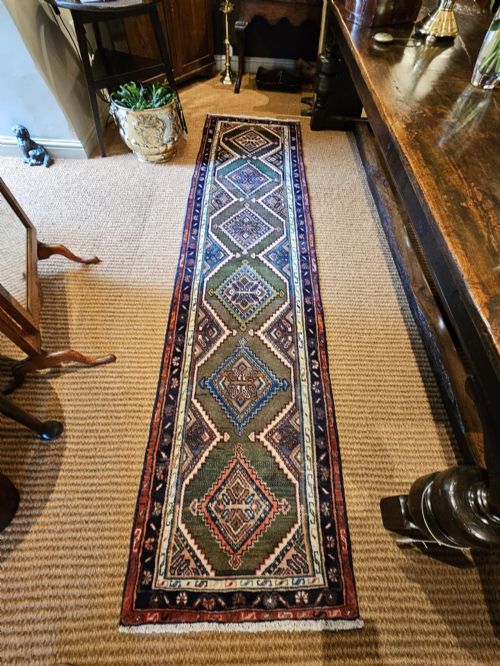



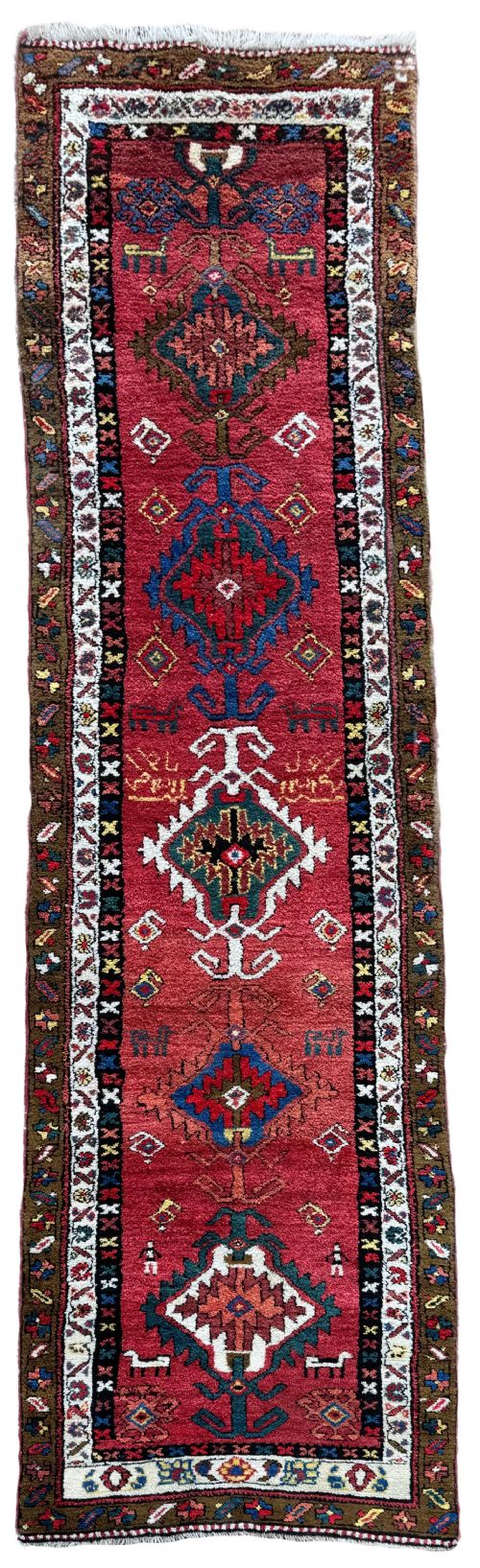
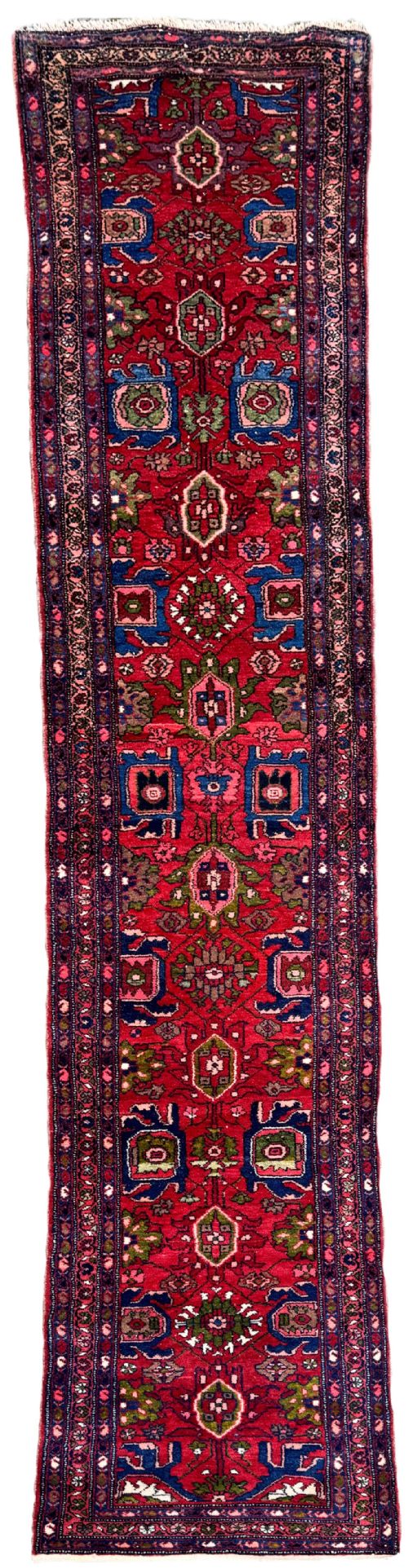
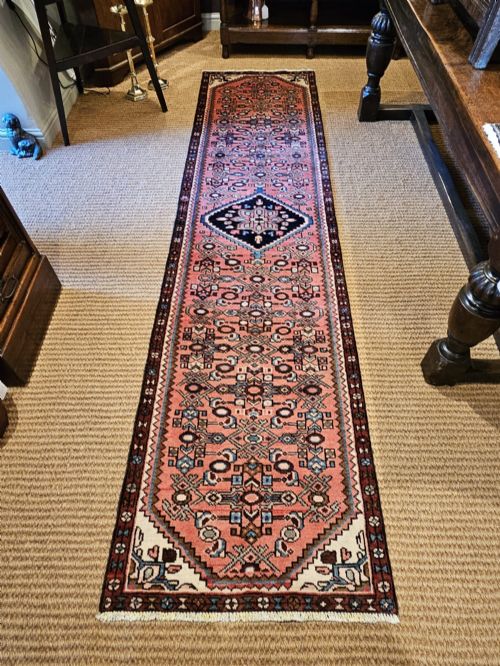
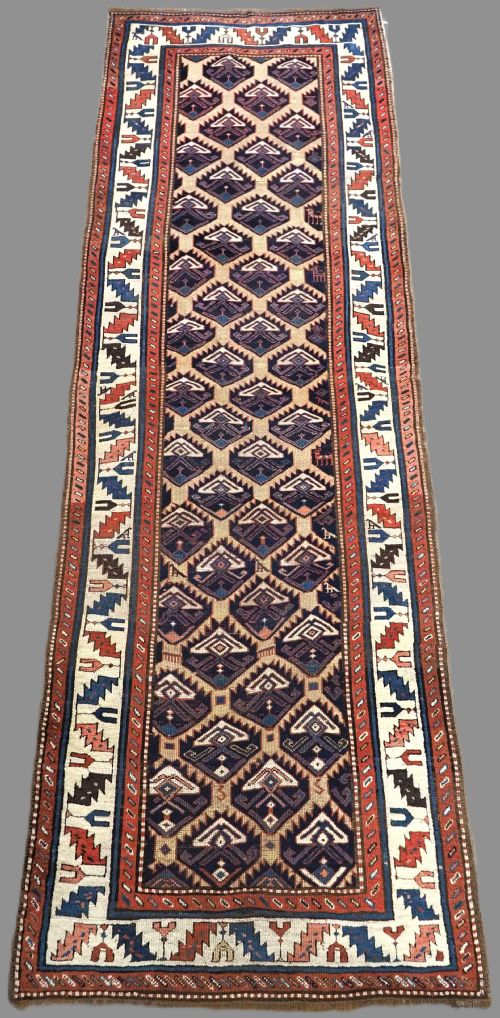
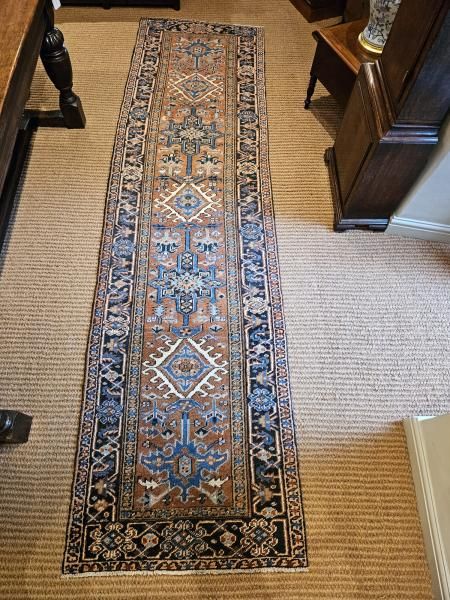
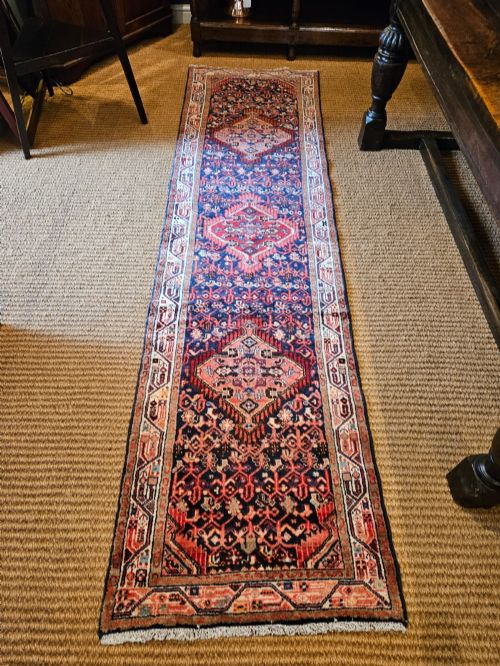
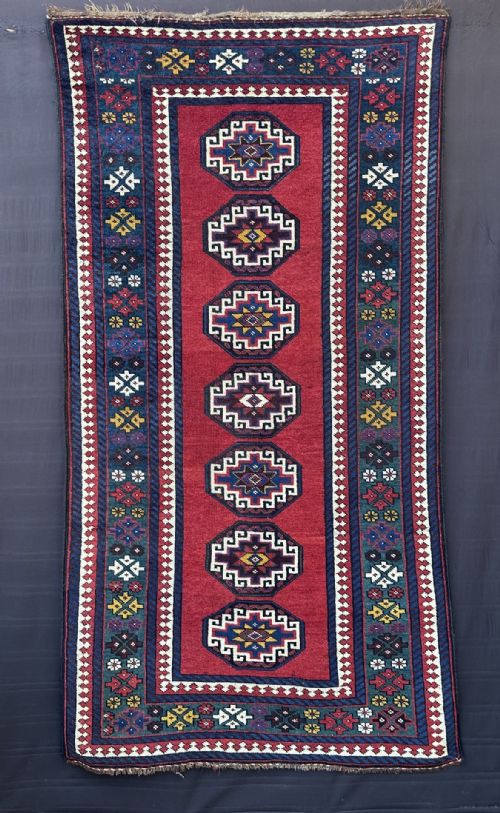
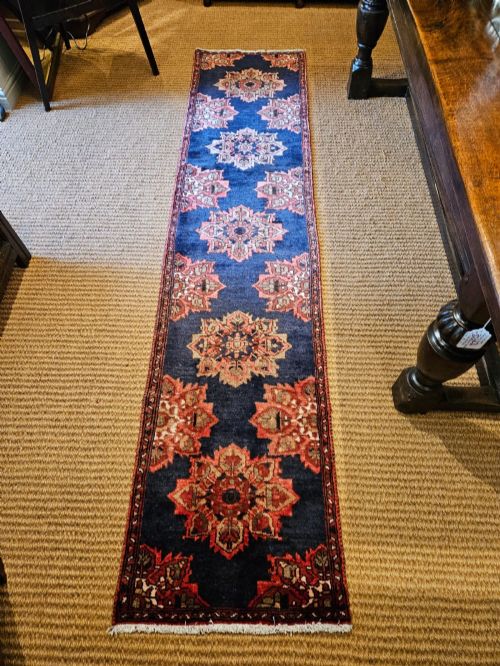
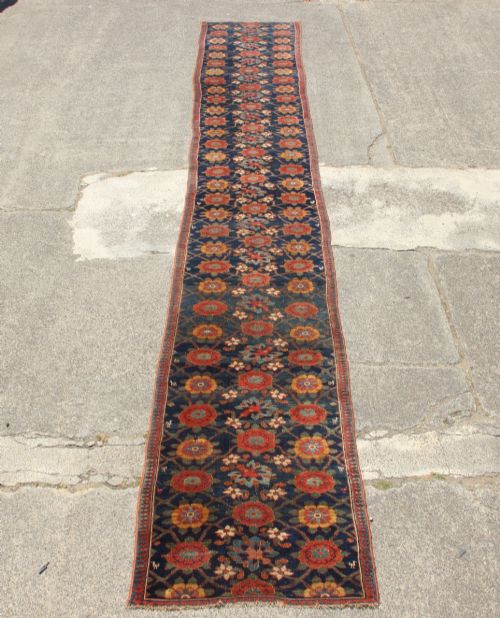
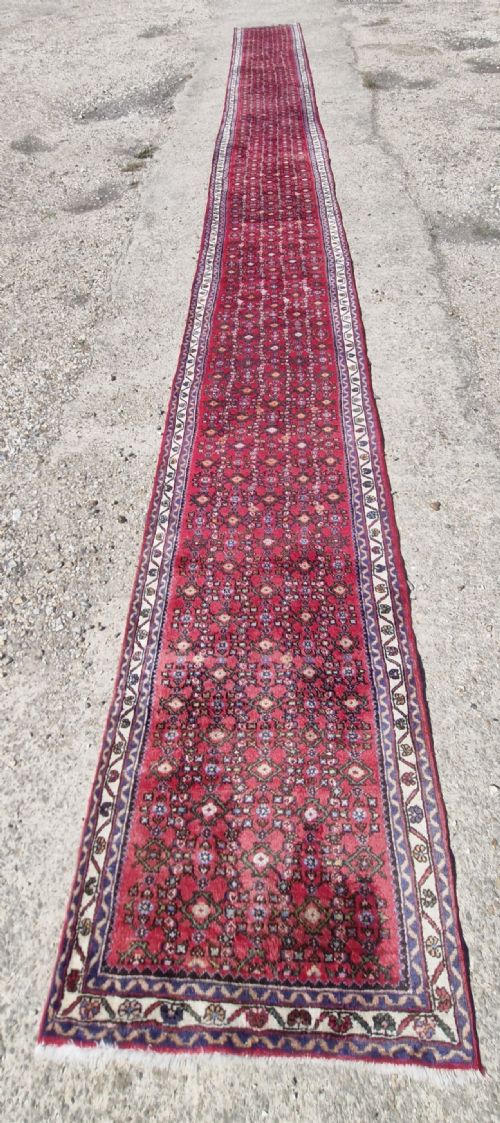
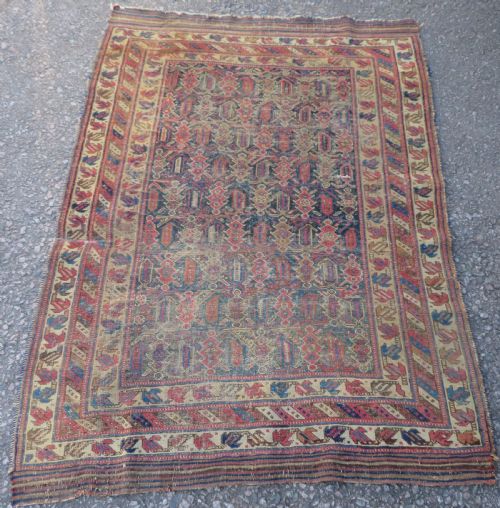
Tribal Persian Hallway Runner
A tribal persian hallway runner brings geometric patterns and rich wool texture directly into narrow spaces, shaped by the hands of village and nomadic weavers.
Tribal Persian Hallway Runner
A tribal persian hallway runner is a long, narrow floor covering produced by village or nomadic weavers across regions like Kurdistan, Hamadan, and Heriz. These pieces serve to line corridors and landings with robust geometric patterns, rectilinear medallions, and repeating lattice motifs.
The selections encountered here stretch from the late nineteenth century through the early decades of the twentieth century. They arrive in formats ranging from narrow village strips to substantial long runners designed for country houses and wide halls.
How They Were Made
Makers utilised durable wool and hand-spun wool for the pile, combined with sturdy cotton foundations to withstand heavy foot traffic in corridors. The natural fibres absorbed rich dye colours that softened gracefully over decades of use.
Weavers knotted these long carpets by hand on vertical looms, employing traditional village techniques that produced dense, resilient piles and distinct tribal designs without mass-produced uniformity.
The inventory includes named regional village types such as Kurdish, Hamadan, Heriz, and Afshar.
What Varies in Quality
The fineness of the knotting and the handling of the wool dictate the structural integrity of each runner. Tighter packing of the weft and finer hand-spun fleece yield a crispness in the geometric drawing and a superior handle.
The integrity of the original borders and the preservation of the pile determine the visual balance of the piece. Runners that retain their outer guard stripes and balanced proportions demonstrate superior village craftsmanship.
The Tribal Persian Hallway Runner Glossary
- Runner
- A long, narrow carpet format specifically woven for corridors, hallways, and staircases. It directs movement through domestic spaces.
- Pile
- The vertical or diagonal loops of yarn that form the soft surface of the rug. It is shorn to an even level after knotting.
- Weft
- The horizontal threads passed back and forth across the warp threads to hold the knots in place. It determines the structural firmness of the weave.
- Knot
- The individual loops of wool tied around warp threads by the weaver to build up the pattern and pile. Different regions employ distinct knot types.
- Mina Khani
- A traditional repeating geometric flower and lattice pattern frequently found in Kurdish and Persian weaving. It creates an orderly, continuous field design.
Tribal Persian Hallway Runner: Frequently Asked Questions
How do I place a runner in a narrow hall?
A long runner should leave an equal margin of bare floorboards or stone visible on either side along the length of the corridor.
Centring the piece allows the geometric borders and tribal motifs to draw the eye down the entire passage without crowding the walls.
What underlay works best for these rugs?
A breathable, rubberised mesh underlay provides the necessary grip on smooth hallway floors to keep the wool structure stable.
This adds a layer of cushioning that protects the historic cotton foundation from sharp impacts against hard floor surfaces.
How do I clean old wool runners?
Routine gentle vacuuming without a rotating power brush removes embedded grit from the base of the hand-spun pile.
Professional specialist washing remains essential for deep cleaning to protect the natural dyes and historical wool fibres from damage.
How do I date an antique runner?
Examination of the natural dye palette, the spin of the wool, and the structural characteristics of the foundation reveals the likely period of manufacture.
Village pieces from the nineteenth century often display more organic dye variations and softer wool textures compared to later production.