



Long Hallway Console
A long hallway console anchors a passage with character, offering surface space for post and lamps while keeping the floor plan clear.
Long Hallway Console
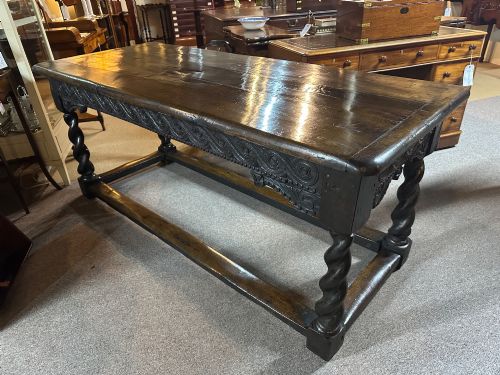
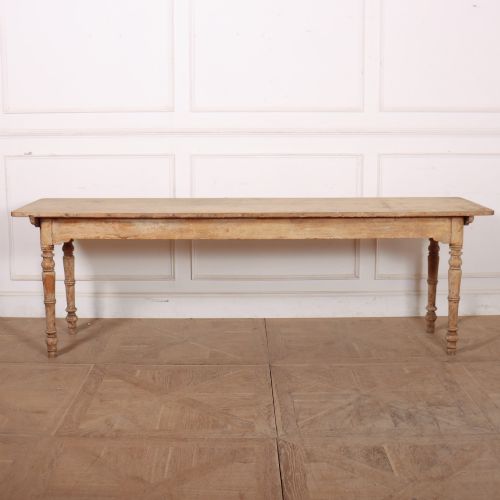
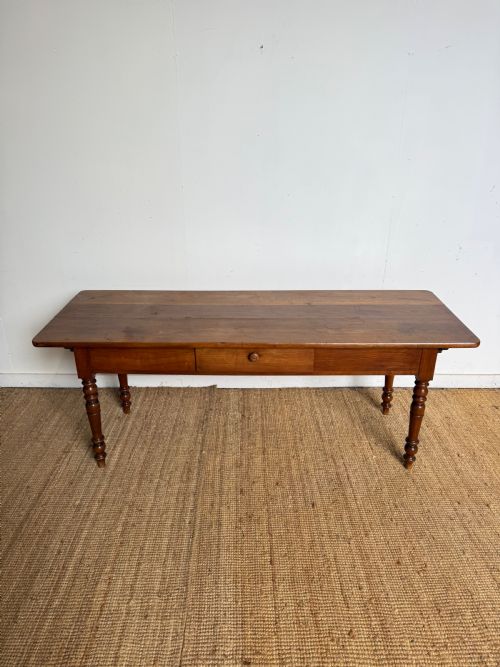
A long hallway console serves as a narrow surface for corridors and entrance spaces, bringing utility to awkward depths. The pieces gathered here span from the 18th century through to 1920, covering Georgian, French Provincial, and rustic farmhouse aesthetics.
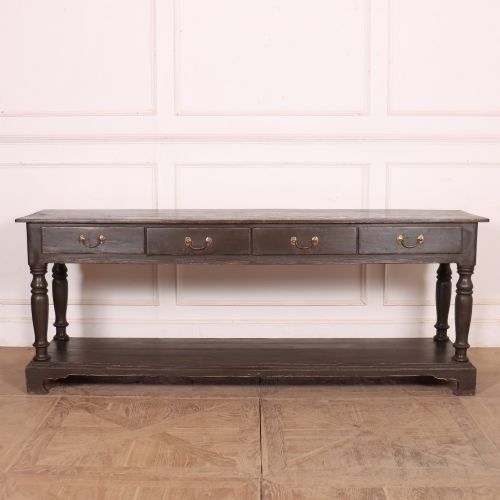
Forms include console tables, serving tables, dresser bases, and altar tables. You will encounter painted wood, pine, oak, elm, and cherrywood constructions alongside specific regional variations like French country and Italian country.
The layout prioritises shallow depths suitable for transit routes while providing substantial length. Many pieces show functional drawer configurations or open potboard lower shelves for storage.
Materials and construction
Construction relies heavily on timber framing using oak, pine, elm, and beech. Joinery reflects the period of origin, from 18th-century pegged joints to early 20th-century workshop assembly.
Surface finishes include original paint layers, red lacquer, and carved detailing. Structural elements incorporate potboards, drawer banks, and occasionally Gothic underframes or gallery edges.
One piece even includes an unexpected Gothic underframe, proving that medieval architectural whimsy occasionally found its way into domestic hallways.
Assessing quality
Quality rests on the integrity of the timber and the preservation of original surface finishes like early paint or lacquer. Untouched patination on oak and pine commands attention.
Proportion and scale dictate success in a narrow corridor, where balanced leg arrangements and sound structural joinery ensure daily stability without visual bulk.
The Long Hallway Console Glossary
- Potboard
- An open lower shelf on a dresser base or serving table, traditionally used for displaying pottery or storing kitchen vessels.
- Dresser base
- A low cabinet featuring drawers or cupboards beneath a surface, repurposed successfully as a hall console.
- Altar table
- An elevated, narrow table originating from ritual contexts, prized for its slender proportions in modern hallways.
- Serving table
- A long surface designed for dining rooms, functioning effectively in narrow spaces due to its shallow depth.
- Refectory table
- A long, narrow dining table occasionally adapted for hall use when length and sturdy underframing match the corridor scale.
Long Hallway Console: Frequently Asked Questions
Will a long hallway console fit my narrow passage?
These pieces are specifically chosen for their shallow depth, making them ideal for corridors and narrow entrance halls without obstructing movement.
Measure your clearance carefully, ensuring enough space remains for doors to open and people to pass comfortably alongside the table.
How do I care for a painted wood console?
Painted surfaces require gentle dusting with a dry or slightly damp cloth to preserve the original finish and patina. Avoid harsh chemical cleaners that can strip historical paint layers.
Keep wooden furniture away from direct heat sources and strong sunlight to prevent the timber from warping or the paint from cracking over time.
Can I use a dining serving table in a hallway?
Serving tables share the ideal elongated, narrow proportions needed for corridors, offering ample surface space for lamps and daily items. Their historical use for food service translates well to domestic entranceways.
Ensure the height matches your wall space and that the legs do not create a tripping hazard in high-traffic zones.
What is the difference between an altar table and a standard console?
Altar tables typically feature slender proportions with distinct end struts or upturned flange ends, originating from Asian architectural traditions. Standard western consoles often rely on conventional four-leg designs or wall-bracketed framing.
Both serve the same functional purpose in a hallway by providing a narrow display surface, but they bring entirely different visual histories to the interior.