




Dark Painted Console Table
These dark painted console table options bring grounded surface space and moody colour into a room, shaped by centuries of regional craft.
Dark Painted Console Table
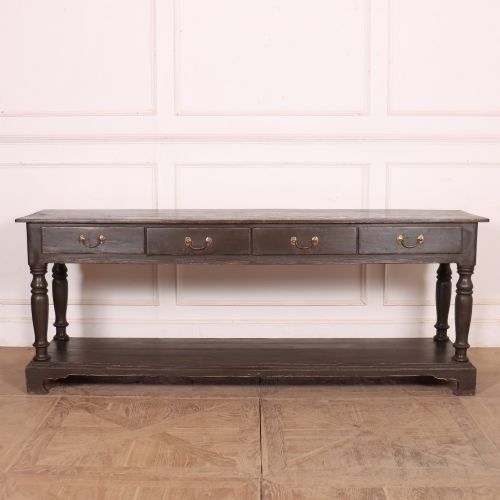
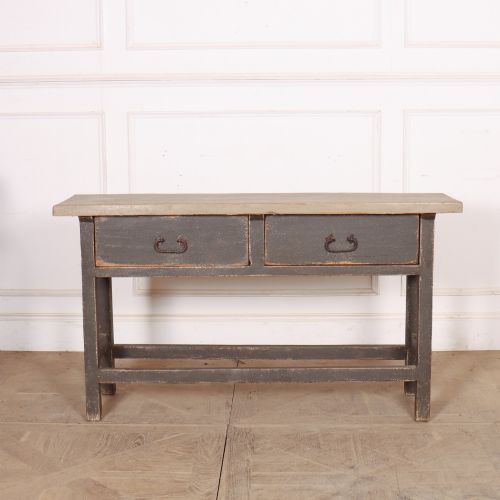
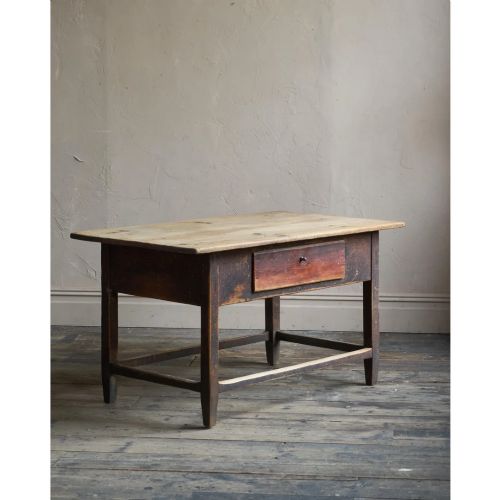
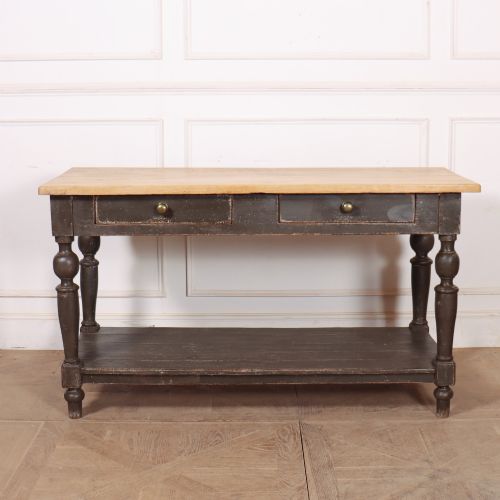
A dark painted console table provides a functional narrow surface for display or service, frequently anchored against a wall in a hallway or living space. When exploring this selection, buyers encounter forms ranging from English potboard dresser bases and French servers to Swedish tables with box stretchers.
The objects span multiple eras, drawing heavily from the eighteenth and nineteenth centuries alongside Georgian and Victorian periods. English, French, Swedish, Italian, and Dutch origins appear across the listings, showing diverse regional interpretations of utilitarian and formal furniture.
Makers and workshops utilised various timber carcase structures beneath dark paint, yielding side tables, serving tables, and dedicated console tables. These pieces serve practical household needs while introducing aged surface character and deep pigment to interior schemes.
Materials and Construction
Makers built these pieces primarily from solid woods such as pine, oak, and beech, frequently employing painted finishes to seal and colour the timber. Some examples incorporate brass hardware or gold leaf details to accent the darker pigments on the wood.
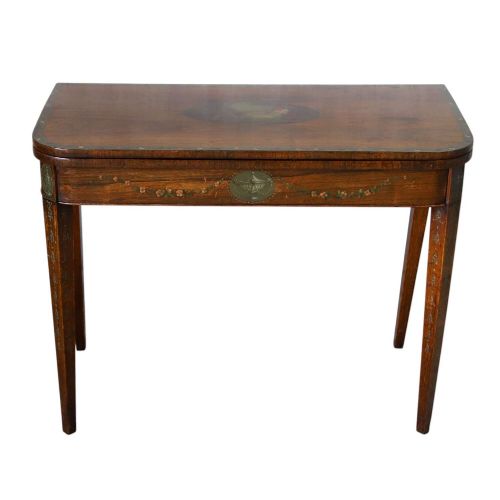
Construction techniques rely on traditional joinery suited to heavy domestic use, visible in potboards, box stretchers, and fitted drawers. Surface treatments range from original painted pine to later decorative painting applied over earlier timbers like rosewood or mahogany.
The listings feature nineteenth-century pieces alongside eighteenth-century Georgian and Victorian examples, constructed in pine, oak, and beech.
Distinguishing Quality
Quality rests in the integrity of the original timber frame and the historical depth of the painted surface. Tables retaining their early or original paint layers demonstrate greater historical consistency than those with later surface interventions.
Proportion and structural balance also separate utilitarian workshop pieces from more formally styled neoclassical or Regency examples. Refined carving, integrated stretchers, and well-proportioned console dimensions indicate higher design ambition during manufacture.
The Dark Painted Console Table Glossary
- Console table
- A table designed to stand against a wall, frequently supported by brackets or legs at the front. These tables often served decorative or serving functions in formal rooms.
- Potboard
- A lower slatted or solid shelf incorporated into a dresser base or serving table. It was traditionally used for storing pots and heavy kitchen utensils.
- Box stretcher
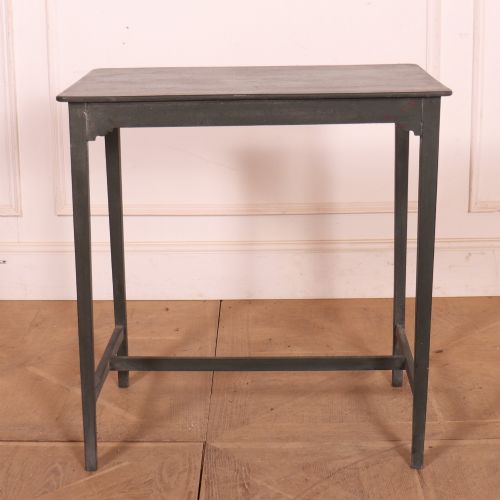
- A system of horizontal wooden bars connecting the lower legs of a table on all four sides. This framework adds structural rigidity to the piece.
- Drapers table
- A long, utilitarian table originally used in textile shops for measuring and folding cloth. They usually feature generous surface areas and simple underframes.
- Galleried
- A tabletop bordered by a low raised rim or rail. This feature prevented small objects or lamps from sliding off the edge.
Dark Painted Console Table: Frequently Asked Questions
Where should I place a dark painted console table?
These tables suit narrow entrance halls, corridors, or living rooms where floor space is limited. Their shallow depth allows them to sit flush against walls without obstructing movement.
They also function well beneath mirrors or artwork, providing a stable surface for lamps, books, or decorative objects.
How do I care for painted wooden furniture?
Dust the surface regularly with a soft, dry cloth to prevent dirt accumulation. Avoid harsh chemical cleaners that can degrade aged paint layers.
Keep the table away from direct sunlight and strong heat sources to prevent the underlying wood from warping and the paint from cracking.
Are these tables sturdy enough for daily use?
Most surviving examples have already withstood generations of domestic service and remain structurally robust. Potboards, box stretchers, and sturdy timber frames provide inherent stability.
Heavier items can be placed on the main surface, though exceptionally heavy loads should be avoided on antique stretchers.
How can I tell an older painted finish from a modern one?
Older painted finishes typically show natural wear patterns, minor craquelure, and integration with the underlying timber. Brush marks and pigment consistency often reflect historical hand-application methods.
Modern paints applied later tend to sit uniformly on the wood without the softening effects of age and handling.