

Vintage Painted Console
These vintage painted console pieces bring character and colour to a room through aged surfaces and traditional forms.
Vintage Painted Console
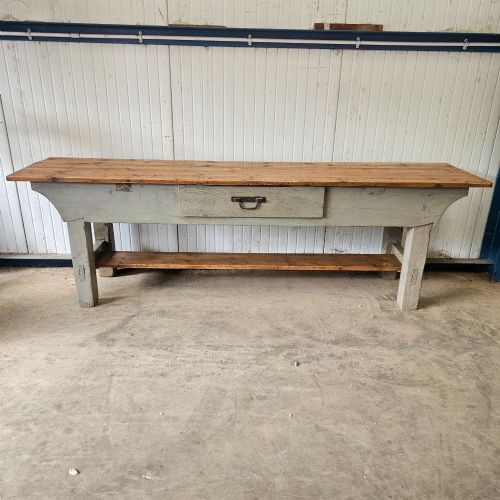
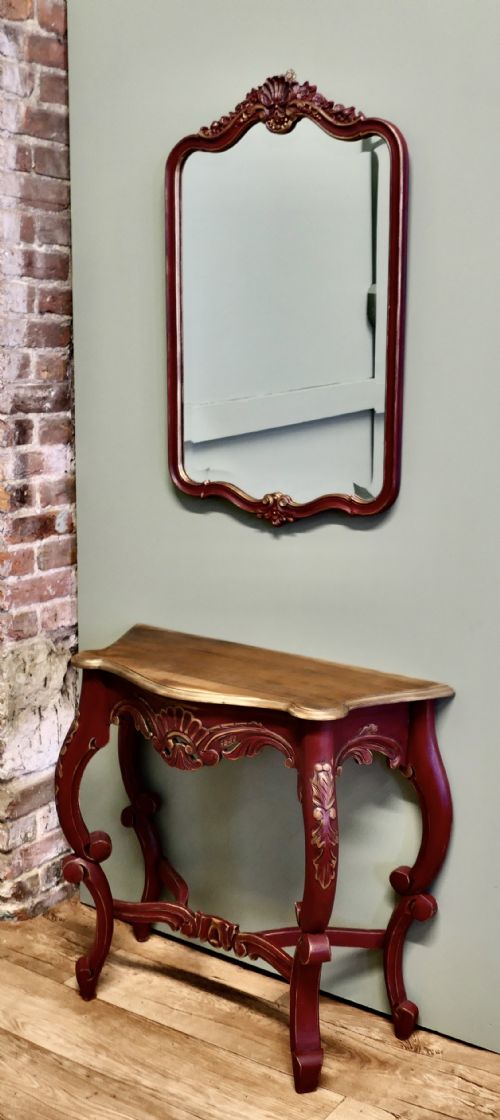
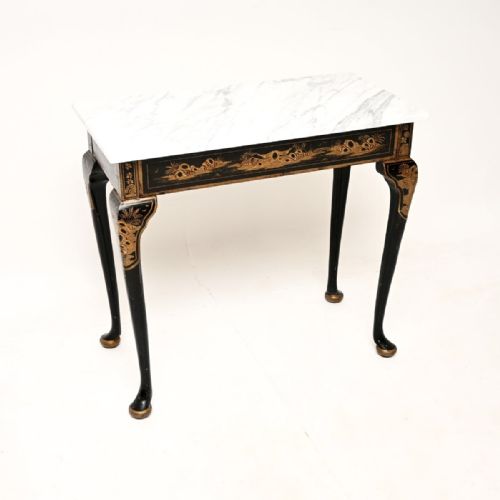
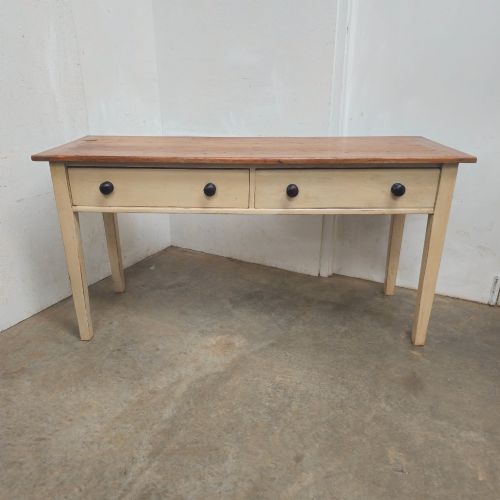
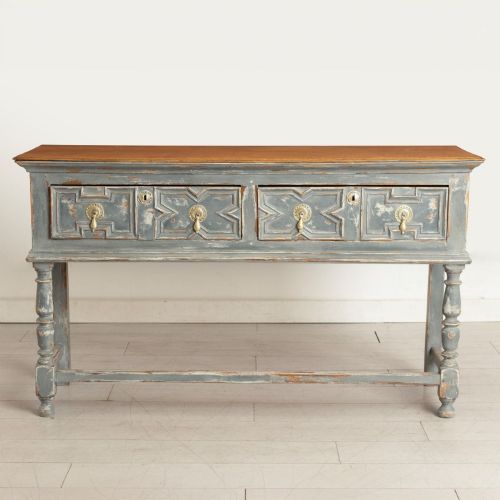
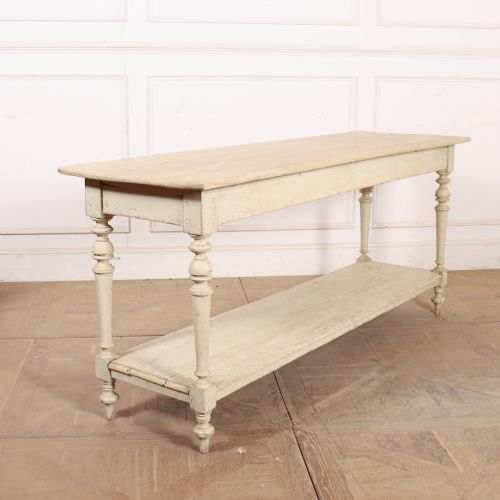
A vintage painted console serves as a functional surface for hallways, living areas and dining spaces, drawing on a long history of domestic furniture making. The selection spans the eighteenth century, nineteenth century and early twentieth century, taking in English country house pieces, French provincial designs, and striking Chinoiserie lacquered works from the 1920s and 1930s.
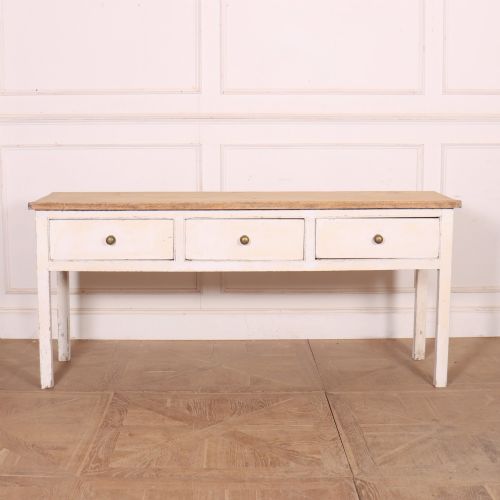
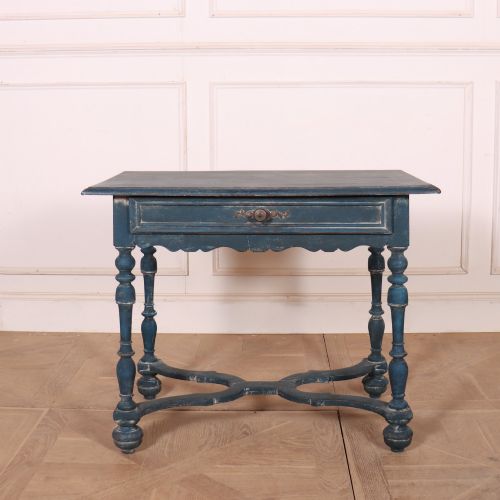
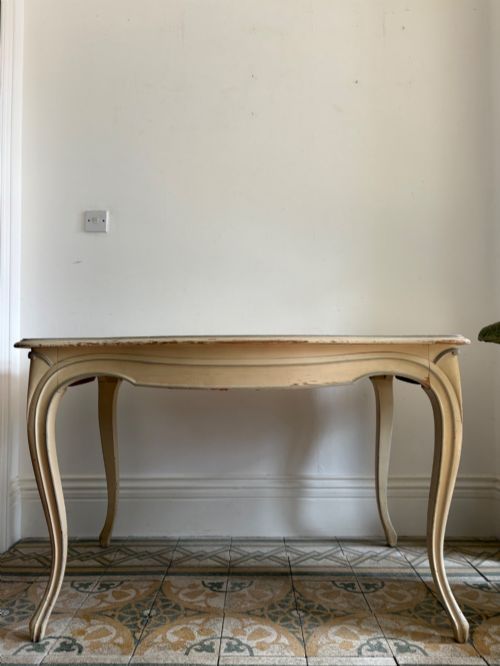
The most common forms you will encounter on this page include console tables, dresser bases, serving tables, and lamp tables. Many originate from country houses and farmhouses, showing vernacular traditions from England, France, Italy, and Sweden.
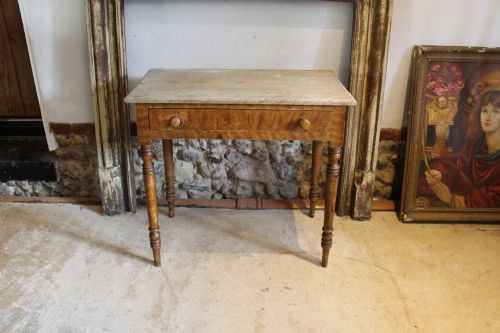
Makers and workshops constructed these tables to be useful, employing sturdy timbers like pine and oak beneath decorative painted, scumbled, or lacquered finishes. A vintage painted console often displays the marks of everyday utility, bridging practical storage and display with distinct decorative charm.
How they were made
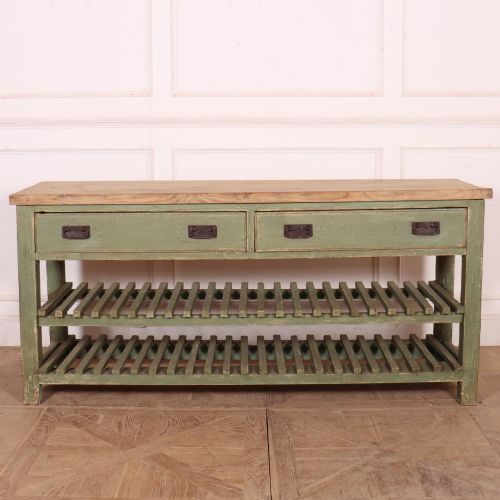
Craftsmen built these tables primarily using solid timbers such as pine, oak, and other native woods, often assembling frames with traditional joinery. Potboard shelves, box stretchers, and bracket supports provided structural stability for heavy daily use in domestic kitchens, dairies, and halls.
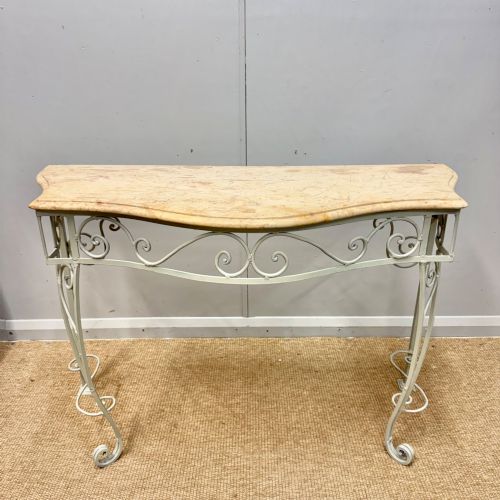
Surfaces were finished with layers of paint, gesso, or lacquer, sometimes featuring scumbled effects or hand-carved details in the French and English traditions. Marble tops appeared on select French and Victorian console tables, paired with wrought iron or timber bases to create durable prep and display surfaces.
Some nineteenth-century tables spent their youth holding dripping cheeses in damp dairies before finding their way into polite modern hallways.
What varies in quality
Quality rests in the survival of original decorative surfaces, whether layered paint, scumble finishes, or black and red Chinoiserie lacquer. Tables retaining their early or original paint schemes carry greater authenticity than later re-paintings.
Proportion and construction detail distinguish the finer examples, from hand-carved wall consoles to tables featuring inset suede tops or shaped marble slabs. The integrity of the timber frame and the balance of the proportions dictate how successfully the piece holds its space.
The Vintage Painted Console Glossary
- Console table
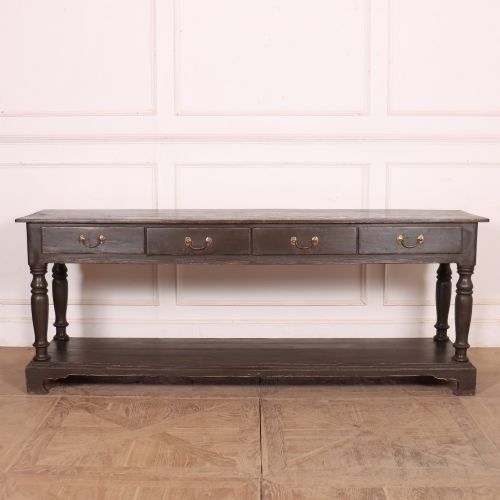
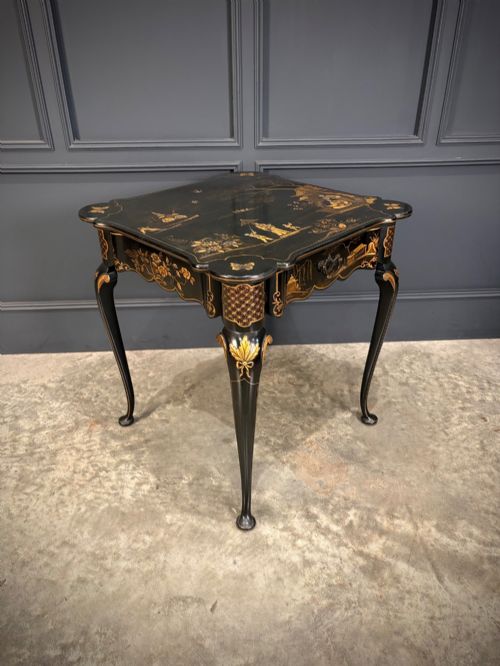
- A table designed to stand against a wall, frequently secured with wall brackets or supported by cabriole legs. These pieces serve decorative and functional roles in entrance halls and reception rooms.
- Dresser base
- A low, heavy wooden cabinet featuring drawers or cupboards, often fitted with a lower potboard shelf. They originated in working kitchens and service rooms for food preparation and storage.
- Scumble
- A decorative painting technique involving a translucent layer applied over a lighter base colour to imitate grain or create mottled textures. It appears on nineteenth-century pieces to lend depth to pine and timber surfaces.
- Chinoiserie
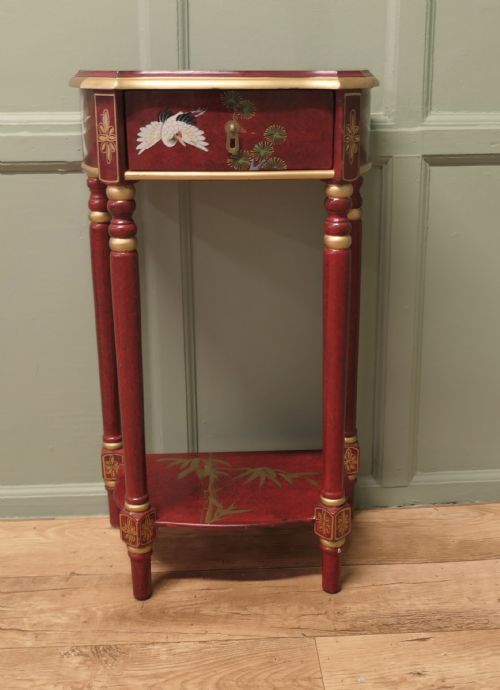
- A European decorative style influenced by Chinese art and design, popular in the early twentieth century. It relies on black or red lacquered grounds adorned with gilded motifs and figures.
- Potboard
- An open slatted lower shelf built into dresser bases and serving tables. Historically, it provided space for drying pots and heavy kitchenware.
Vintage Painted Console: Frequently Asked Questions
Where should I put a vintage painted console?
These tables suit narrow entrance halls, living rooms, or dining spaces where surface space is needed without a heavy visual footprint.
Their varied widths and shallow depths allow them to fit easily against empty wall spaces.
How do I care for the painted surface?
Dust gently with a dry, soft cloth and avoid chemical cleaning products that might lift aged paint or lacquer.
Keep them away from direct heat sources and strong sunlight to protect the original finish.
Are these tables sturdy enough for daily use?
Most pieces were built for practical tasks in kitchens, dairies, and country houses, using solid timbers and robust joinery.
Stretchers and potboards add extra rigidity to the frames, making them suitable for holding lamps, books, and decorative objects.
How can I tell an older console from a later piece?
Look for construction markers such as hand-cut joints, timber shrinkage, and the natural wear patterns on working surfaces.
Original paint layers and patination build up slowly over decades of use, giving an authentic depth that modern reproductions cannot replicate.