
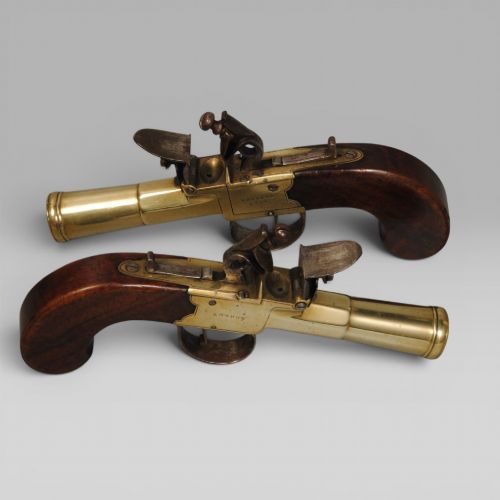
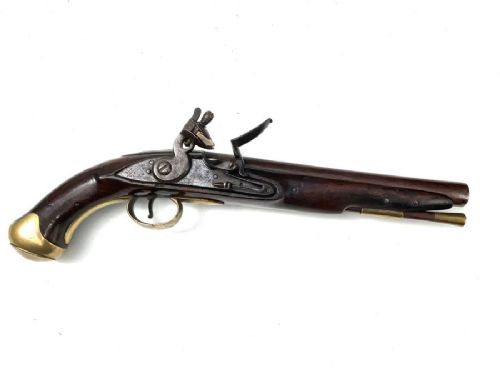


London Flintlock Pistol
These london flintlock pistol items are historical personal arms built for defence and duelling, prized by collectors for their precision mechanics and period craftsmanship.
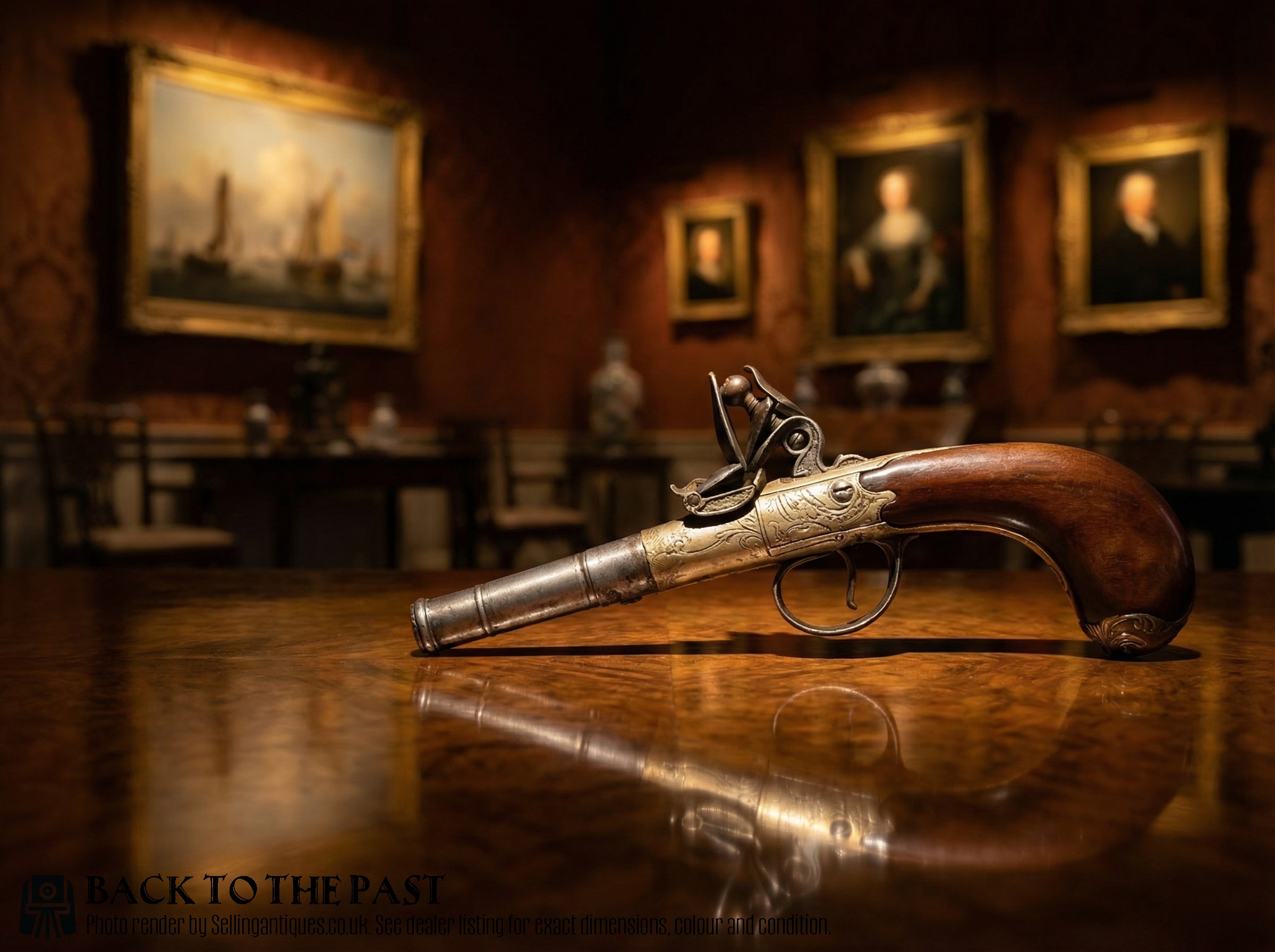
London Flintlock Pistol
A london flintlock pistol represents an era of ingenious mechanical firearm design originating from workshops across the capital during the eighteenth and early nineteenth centuries. When you examine a london flintlock pistol on this page, you encounter forms ranging from compact pocket pocket pieces to full-sized cavalry holster weapons and precise duelling pairs.
The survival of these arms reflects the high standards of urban gunsmiths working during the Georgian period and the eighteenth century. Most examples you meet combine steel mechanisms with wooden stocks, often displaying signatures of notable makers on the lock plates or barrels.
Materials and construction
Makers built the structural components using forged steel for barrels and locks, paired with shaped timber stocks in walnut or mahogany. Some pocket variants incorporate brass barrels and frames formed as a single unit.
Detail work involved intricate embellishments such as silver wire inlay, engraved brass mounts, and silver band details. Proof marks stamped into the metal indicate official testing of the barrels before assembly.
Listings feature steel, walnut, brass, hardwood, silver, mahogany, baize, and iron across Georgian and Victorian periods.
Factors of quality
Quality rests in the crispness of the lock mechanism, the legibility of the maker signature, and the crispness of engraving on the steel or brass surfaces. Superior pieces retain matching components and original wood finish without heavy alteration.
The presence of fitted wooden cases with internal compartments for accessories elevates the standing of cased pairs. Condition of the metal and the integrity of the stock timber largely determine the desirability of an individual piece.
Harrison of London·T Potts London·Twigg London·James Barber London·Thomas Henshaw London·I Parr London·John Rimes London·Dutton London·Spencer London·Knubley London·Sutherland of London·Ketland And Co London·Wheeler London·Richard Wilson London·Knock London·Ezekiel Baker London·Nock of London·Charles Moore London·Collumbell Of London
The London Flintlock Pistol Glossary
- Flintlock
- An ignition mechanism that uses a piece of flint held in a cock to strike a steel frizzen, creating sparks to ignite priming powder.
- Turn-off barrel
- A barrel that unscrews from the breech to allow loading from the front of the chamber, common on pocket pistols.
- Duelling pistol
- A precision-made firearm designed for formal single combat, built with accurate sights and responsive trigger mechanisms.
- Proof marks
- Official stamps applied to barrels to confirm they passed pressure testing at a designated testing house.
- Boxlock
- A pistol design where the action frame and breech are forged as a single piece with the cock positioned centrally.
London Flintlock Pistol: Frequently Asked Questions
What is a london flintlock pistol?
A london flintlock pistol is a historical firearm produced by gunsmiths operating in the capital, utilising a flint and steel ignition system.
These arms served various roles from personal self-defence in pockets and greatcoats to military service and formal duelling.
How do I date an 18th century pistol?
Dating relies on stylistic clues, barrel shapes, lock plate contours, and maker signatures recorded in historical directories.
Proof marks stamped on the metal also provide clues regarding the active working periods of the smiths who produced them.
Were these pistols used for duelling?
Certain examples are specifically constructed as duelling pistols, featuring longer barrels, adjustable triggers, and high manufacturing precision.
Other formats, such as pocket pistols and holster pistols, served entirely different purposes like personal protection during travel.
How should I display a cased pistol pair?
Cased pairs are typically housed in fitted wooden boxes lined with baize, containing space for powder flasks, bullet moulds, and cleaning rods.
Keeping them in stable environmental conditions away from direct sunlight preserves the wood and internal metal finishes.