


Engraved Brass Flintlock
These engraved brass flintlock pistols combine mechanical ingenuity with decorative mastery, offering collectors a tangible piece of military and domestic history.
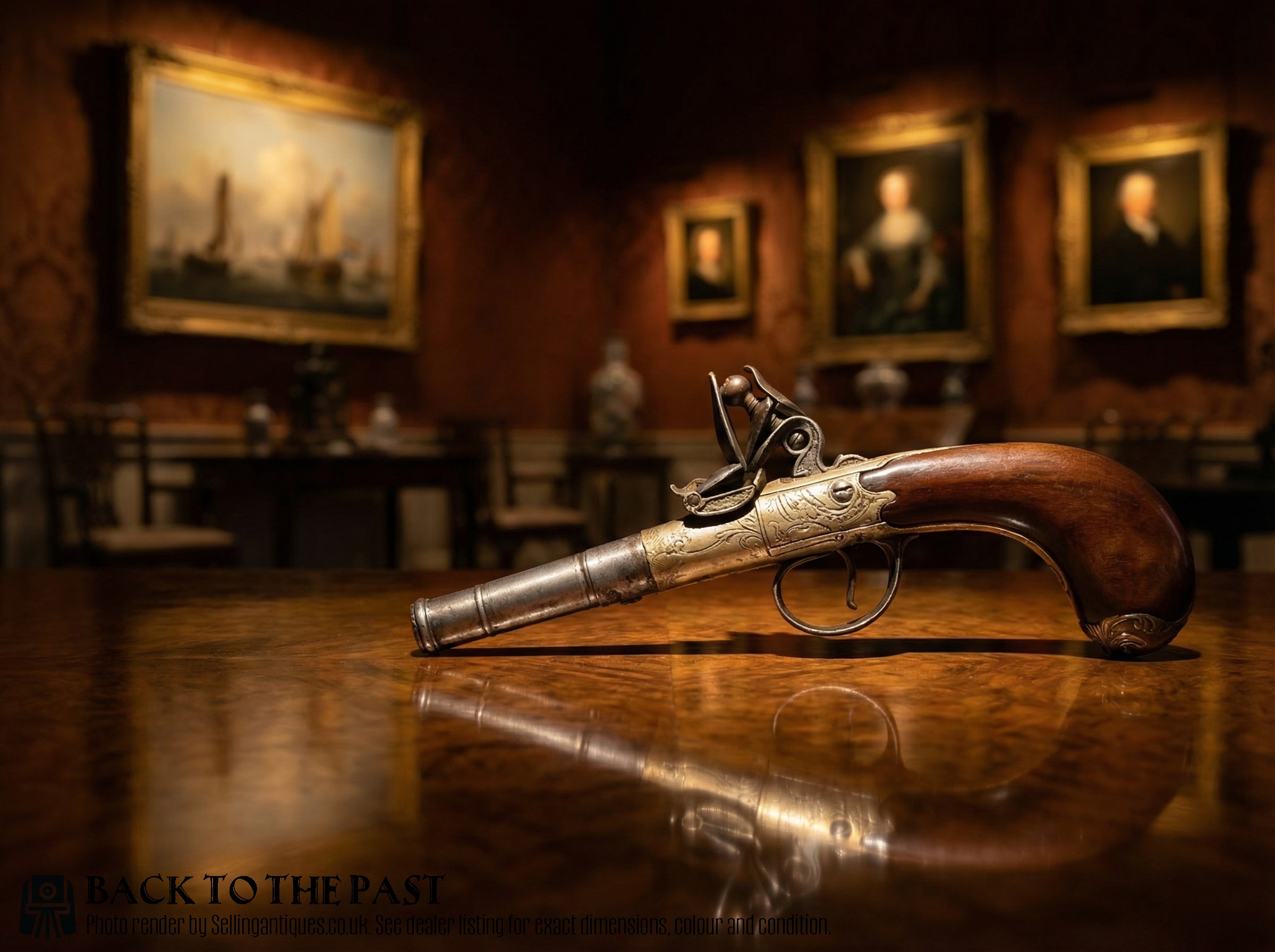
Engraved Brass Flintlock
When you search for engraved brass flintlock, you encounter historic firearms dating from the seventeenth, eighteenth, and nineteenth centuries. These pieces encompass diverse regional forms, ranging from Balkan and Ottoman holster pistols to English Queen Anne and French pocket designs.
The specimens on this page reflect distinct manufacturing traditions across Europe and the Near East. You will find examples featuring brass barrels, lock plates, and mounts, frequently accompanied by steel mechanisms and wooden stocks.
How they were made
Makers utilised forged steel for internal locks and barrels, pairing these robust metal components with stocks fashioned from walnut and other woods. Brass mounts provided structural reinforcement and a suitable surface for intricate hand engraving.
Craftsmen enriched many pieces with supplementary decoration, incorporating silver inlay and mother-of-pearl panels into the wooden grips. Regional workshops employed distinct lock mechanisms, such as miquelet, snaphaunce, and standard flintlock configurations.
Listings span the seventeenth to the nineteenth century, uniting English, French, and Ottoman traditions through the shared use of brass, steel, and walnut.
What varies in quality
The distinction between average and superior examples lies in the depth and execution of the brass engraving. Master gunsmiths achieved crisp, detailed ornamentation on mounts and lock plates that remained sharp despite centuries of handling.
Integration of materials also dictates overall merit. Finer pieces demonstrate precise fitting between the brass mounts, wooden stocks, and steel components, alongside legible maker signatures and official proof marks.
Thomas Henshaw·I Parr·J. Robinson·A.W Spires
The Engraved Brass Flintlock Glossary
- Flintlock
- A firearm ignition mechanism that uses a flint struck against a steel frizzen to generate sparks for the gunpowder charge.
- Miquelet
- A distinct Mediterranean and Near Eastern lock type featuring an external mainspring and a combined steel and frizzen.
- Snaphaunce
- An early precursor to the flintlock incorporating a sliding pan cover linked to the dog holding the flint.
- Turn-off
- A barrel design that unscrews from the breech to facilitate loading from the front without a ramrod.
- Mounts
- Decorative and structural metal fittings attached to the stock, typically cast and engraved in brass or silver.
Engraved Brass Flintlock: Frequently Asked Questions
How do I identify the period?
Dating relies upon stylistic markers, lock mechanisms, and regional characteristics evident in the brass mounts and stock shapes. Maker signatures and official proof marks further anchor specific pieces to defined historical decades.
Changes in barrel construction and the evolution from snaphaunce to standard flintlock systems also provide reliable chronological indicators for the serious collector.
Were these pistols used in combat?
Many examples served practical military or self-defence roles, particularly the heavier holster and cavalry pistols from the Ottoman frontier and European conflicts. Pocket and turn-off variants were primarily carried by civilians for personal protection during travel.
Their robust construction in steel and brass ensured they could withstand active service, though surviving decorative elements suggest ownership by officers or affluent individuals.
How should I display them?
Displaying these firearms requires a stable environment away from direct sunlight and excessive humidity to protect the wooden stocks and steel components. Secure wall mounts or dedicated glass cabinets allow clear visibility of the engraved brass mounts.
Regular, gentle dusting with a soft, dry cloth preserves the aged patina on both the brass and the timber without risking damage to delicate engravings.
What maintenance do they need?
Preservation involves maintaining a stable room temperature to prevent the wooden stocks from warping and applying a micro-crystalline wax or light oil to metal surfaces to inhibit oxidation. Avoid aggressive cleaning agents that strip away the historic patina.
Professional consultation is recommended if mechanical components require attention, ensuring the internal steel springs and lock mechanisms remain undamaged.