


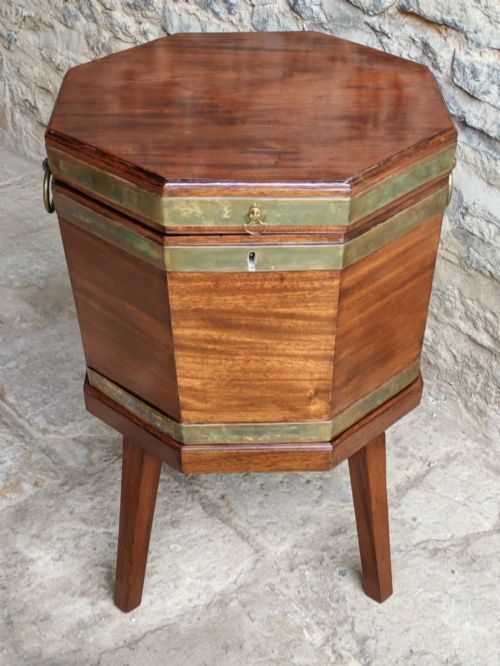


Liquor Cabinet Box
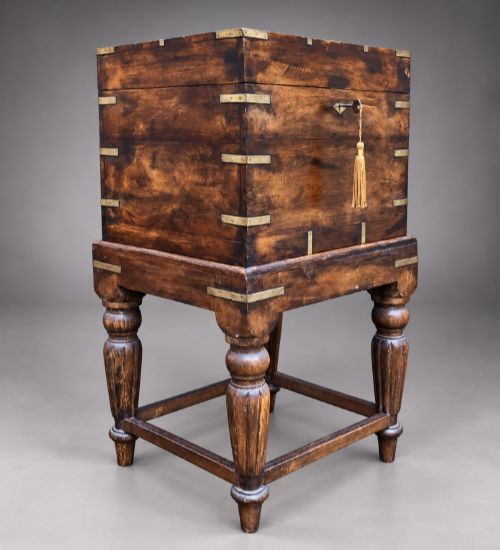
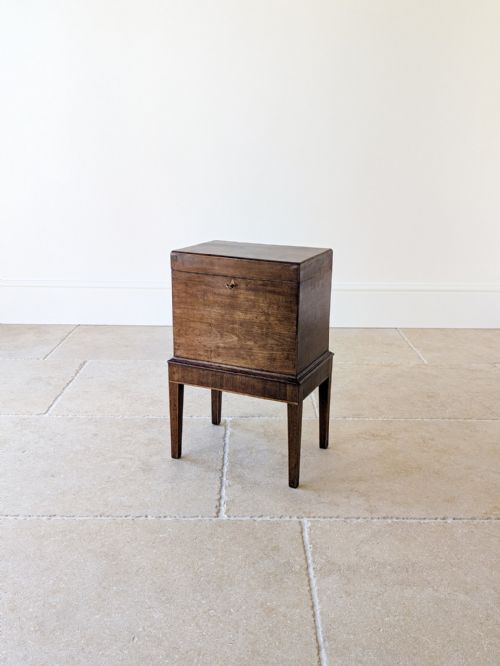
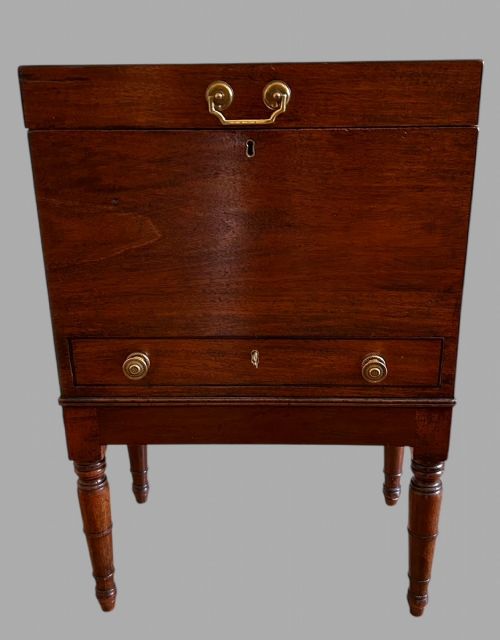
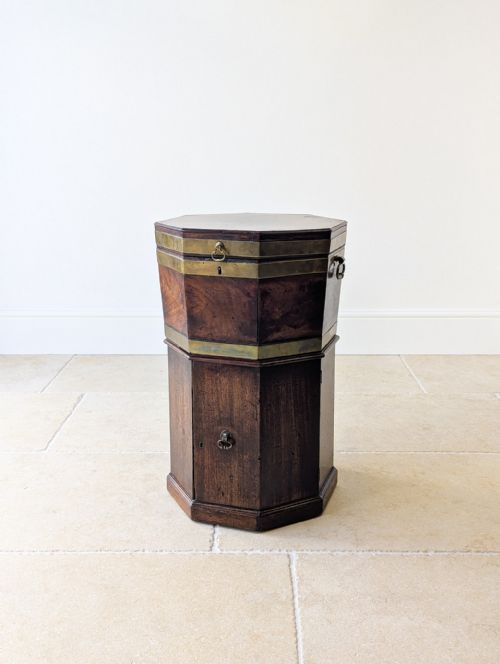
These pieces form a liquor cabinet box, designed to secure and present vintage spirits and wine for formal dining.
Liquor Cabinet Box
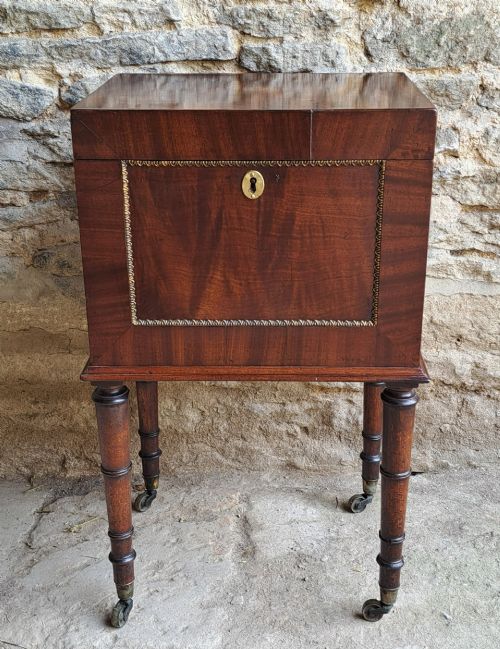
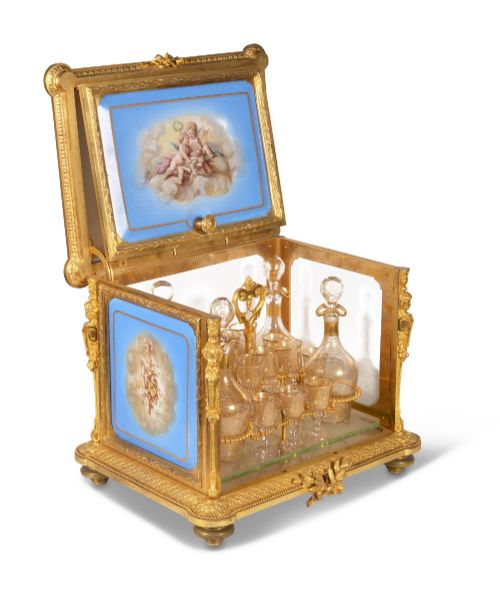
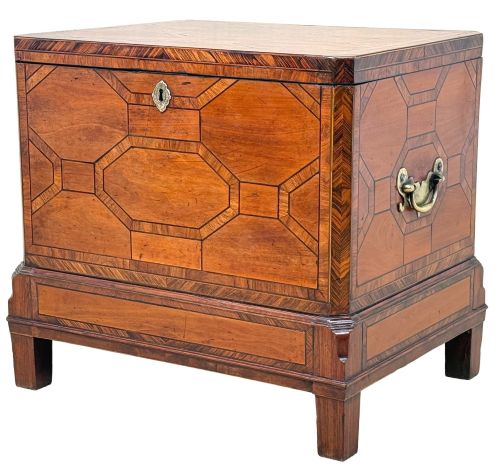
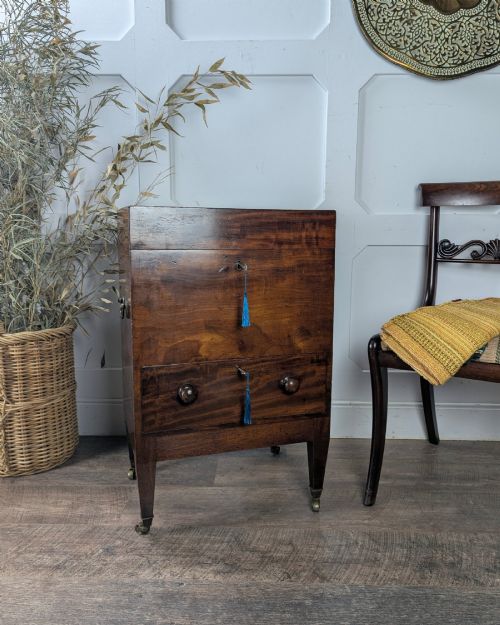
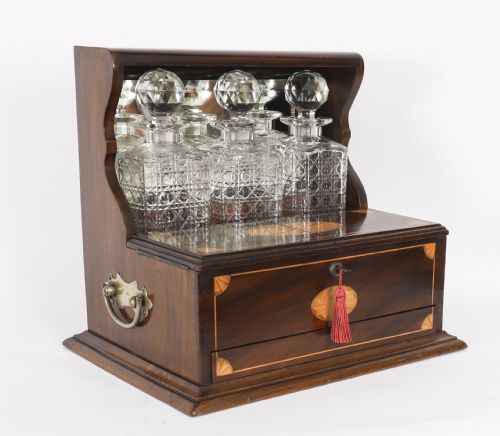
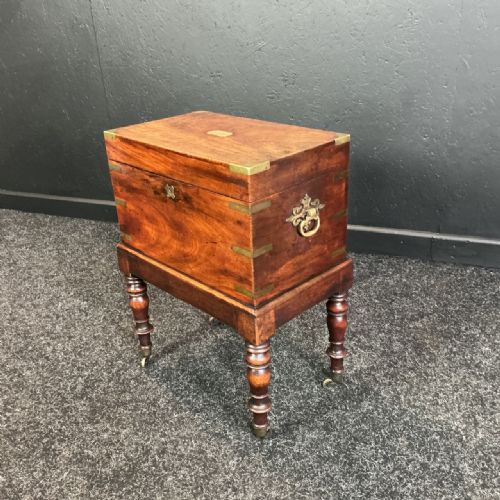
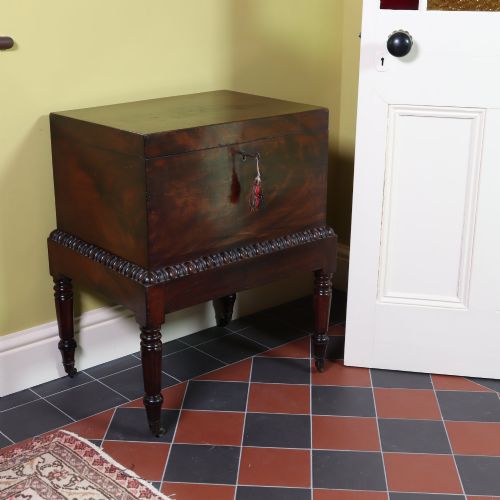
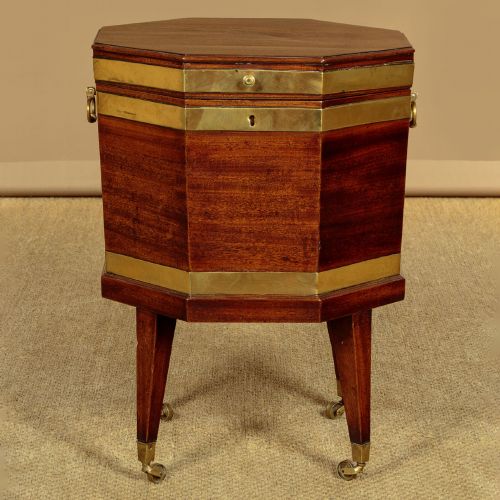
A liquor cabinet box collects portable storage vessels intended to hold bottles, decanters, and glasses securely within domestic dining spaces. These items appear across Georgian, Regency, Victorian, and Edwardian periods, manifesting as octagonal bins, sarcophagus chests, and fitted tantalus boxes.
The most common examples met on this page are mahogany cellarettes and wine coolers originating in the eighteenth and nineteenth centuries. Buyers frequently encounter brass-bound boxes designed to sit upon the floor or dedicated stands alongside table-top tantalus cabinets containing cut crystal decanters.
How they were made
Cabinet makers utilised dense hardwoods such as mahogany, pollard oak, satinwood, and walnut, frequently selecting flame veneers and contrasting stringing for visual depth. Structural frames rely on tight joinery to support the substantial weight of liquid-filled glass bottles.
Mounts, bands, and carrying handles employ cast brass and occasional ormolu, fastened securely to reinforce corners and lids. Interiors often feature fitted wooden divisions or mirror glass bases designed to cushion cut crystal decanters.
Liquor Cabinet Box Retail Price Guide 2026
Typical asking prices for liquor cabinet box among the pieces listed under this phrase on Sellingantiques today, from the lower quarter to the upper quarter. They describe what is for sale here now, not the wider market.
Many campaign-style boxes include hidden compartments originally designed to conceal private liquor rations from domestic servants.
What varies in quality
The standard of timber selection and cabinet construction dictates the distinction between ordinary utility items and exceptional examples. Superior pieces display carefully matched grain patterns across every surface, while simpler versions utilise plain secondary woods.
The intricacy of internal fittings and the weight of the hardware alter the character of each box. Robust brass binding, original locking mechanisms, and intact cut crystal sets elevate the historical integrity of the piece.
Gillingtons·Gillows of Lancaster and London·Withers Safe
The Liquor Cabinet Box Glossary
- Cellarette
- A secure box, chest, or stand designed to hold wine bottles and spirits near the dining table. They frequently incorporate lead linings or wooden dividers to organise individual bottles.
- Tantalus
- A locking wooden cabinet frame that holds decanters securely in place while displaying the bottles through a barred cage. The mechanism prevents guests from pouring drinks without a key.
- Sarcophagus
- A monumental chest form featuring a domed or steep-pitched lid and heavy proportions, popular during the Regency period for wine coolers. These containers rested on low feet or dedicated plinths.
- Decanter box
- A portable wooden case fitted with internal compartments to hold glass decanters and drinking glasses upright during travel or domestic service.
- Wine cooler
- A large container used historically to chill bottles in ice or water before dining, often sharing forms with stationary cellarettes.
Liquor Cabinet Box: Frequently Asked Questions
How do cellarettes differ from tantalus boxes?
Cellarettes function as enclosed chests or bins designed to store bottles upright or stacked within fitted internal compartments. They often feature solid wooden lids and heavy brass carrying handles.
Tantalus cabinets display decanters openly through a locking metal or wooden bar mechanism that restricts access to the contents. Both forms fulfilled the same social role in hosting guests.
Which woods were used for these boxes?
Mahogany remains the predominant timber found across these listings, appearing in plain, flame, and figured varieties. Cabinet makers also utilised walnut, pollard oak, satinwood, padouk, and kingwood.
Hardwoods provided the necessary structural strength to support heavy glass decanters and frequent movement.
How do I date a Georgian wine chest?
Dating relies on observing construction methods, timber choices, and prevailing decorative styles across the Georgian and Regency periods. Pieces from the eighteenth century often show simpler brass banding and linear proportions.
Later nineteenth-century examples introduce more elaborate veneers, complex internal game boards, and multiple cut crystal decanters.