




Linen Embroidered Panel
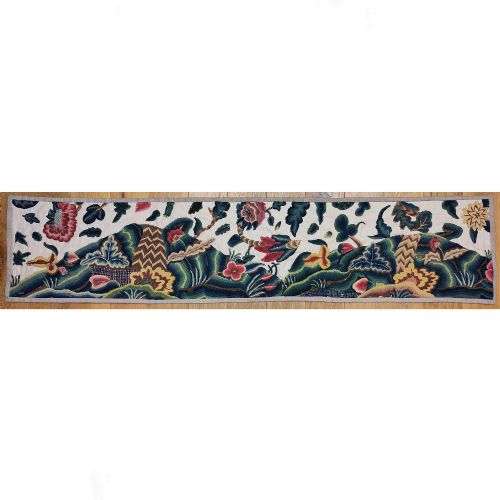
A linen embroidered panel brings centuries of handwork into a room, carrying the stitches of early makers across English crewelwork, Greek island borders, and Georgian samplers.
Linen Embroidered Panel
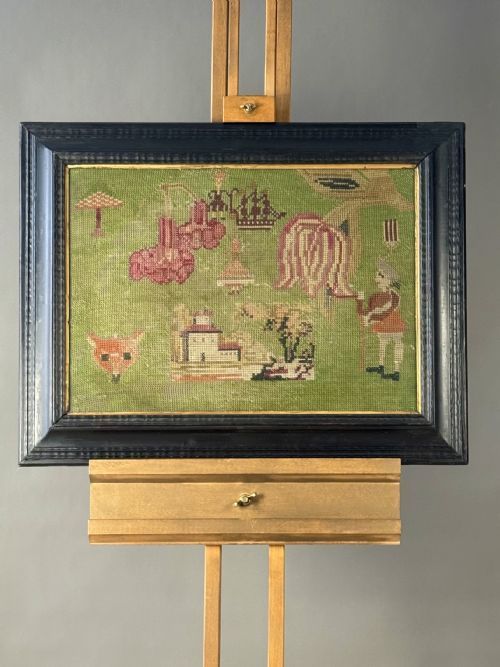
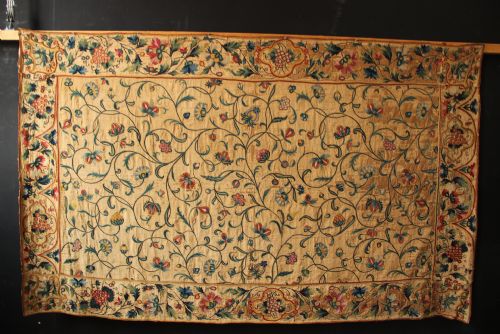
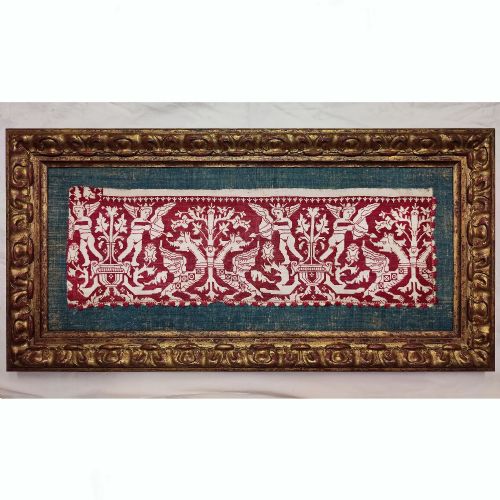
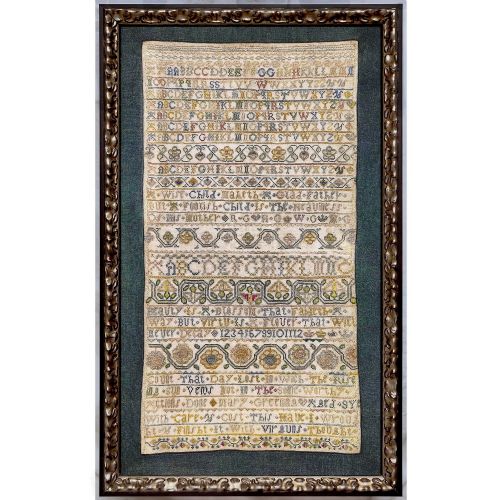
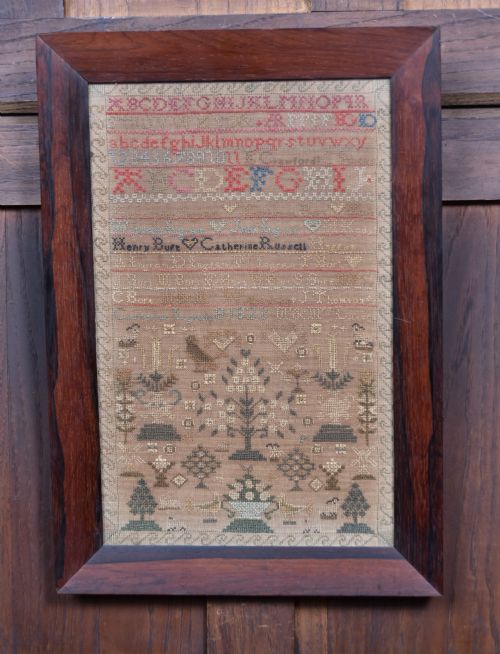
A linen embroidered panel encompasses needlework samplers, framed textile art, wall hangings, and decorative borders worked on a plain linen ground. You will encounter English crewelwork, Greek island embroideries from Skyros and Crete, and Ottoman panels alongside dated schoolgirl samplers from the Georgian and Victorian periods.
The objects take several distinct forms, from long band samplers and alphabet exercises to bedsheet borders, coifs, and room screens. Many pieces preserve specific dates and the names of young makers, while others display regional motifs originating from Italy, Persia, and Uzbekistan.
How they were made
Makers stitched onto woven linen grounds utilising silk thread, wool, and silk floss. Crewelwork pieces typically employ thick wool yarns to build dense, flowing plant and floral motifs across the linen foundation.
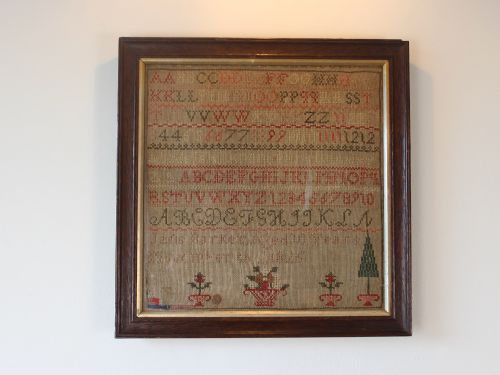
Sampler makers relied on counting linen threads for precise alphabets and geometric bands, while regional Greek and Ottoman panels combined counted thread work with free-form surface embroidery using vibrant coloured threads.
Twelve-year-old makers occasionally recorded their exact age and completion date, immortalising childhood diligence in wool and silk.
What varies in quality
Quality rests in the precision of the needlework, the complexity of the stitch vocabulary, and the survival of the original linen ground. Early English crewelwork demonstrates mastery through varied stitch densities and dynamic line work, whereas samplers derive their distinction from the neatness of the lettering and the balance of the composition.
The condition of the materials also separates examples, as clean linen and stable, unfaded silk or wool threads retain their visual impact far better than grounds compromised by heavy fragmentation or chemical deterioration from early iron-based mordants.
The Linen Embroidered Panel Glossary
- Band sampler
- A long, narrow piece of linen divided into horizontal rows of different embroidery stitches and pattern bands. These served as reference manuals for young needleworkers.
- Coif
- A close-fitting cap worn in the sixteenth and seventeenth centuries, frequently constructed from linen embroidered with silk and metal threads.
- Silk floss
- Unspun or loosely twisted silk fibres used to create smooth, high-sheen surfaces in needlework panels. It reflects light differently than standard spun threads.
- Nim-Suzani
- A half-size embroidered wall hanging from Central Asia, typically featuring bold floral patterns worked in silk on a cotton or linen foundation.
Linen Embroidered Panel: Frequently Asked Questions
How were linen embroidered panels originally displayed?
Many samplers and panels were framed for domestic display after completion, serving as household decoration or evidence of a young woman's accomplishments.
Larger textiles such as bedsheet borders and room screens functioned as architectural elements or soft furnishings within period interiors.
Why do some samplers include names and dates?
Makers frequently stitched their name, age, and the date into samplers to record their progress during needlework instruction. Schoolgirls undertook these exercises under the guidance of mistresses in establishments like the Lozells.
This personal detail provides a direct link to the individual who held the needle generations ago.
How do I care for an antique linen panel?
Protect antique embroidery from direct sunlight to prevent the fading of natural silk and wool threads. Keep them behind UV-filtering glass when framed and maintain stable indoor humidity levels.
Avoid hanging textiles in damp areas or near heat sources that could embrittle the old linen fibres.
What is the difference between English and Greek island embroidery?
English needlework tends to focus on crewelwork flora, religious texts, and alphabet samplers worked in orderly rows. Greek island panels from places like Skyros and Crete utilise distinct regional geometries, stylized human figures, and border repeats.
Each tradition reflects the specific domestic craft practices and local trade connections of its origin.