
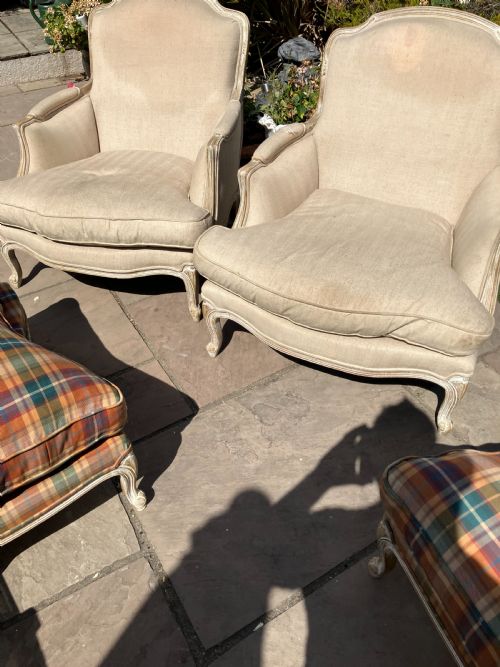
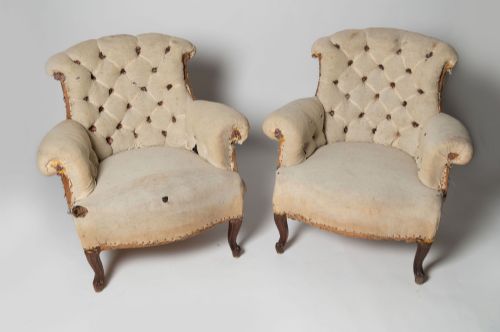
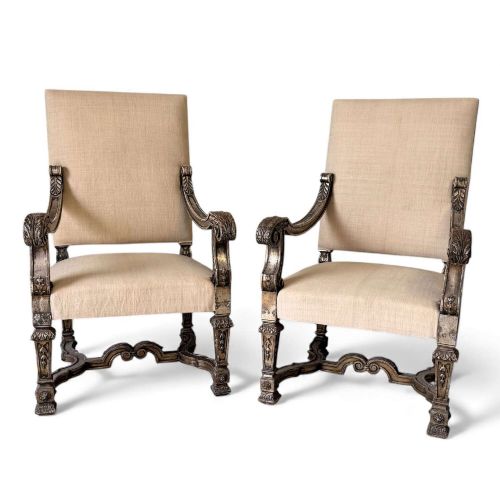
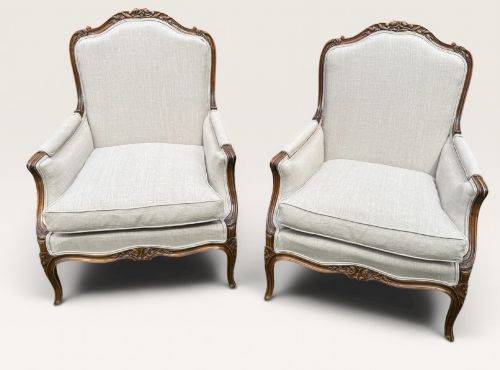


Linen Carved Armchairs
Linen carved armchairs combine robust timber frames with textural upholstery, offering enduring comfort and distinct period character.
Linen Carved Armchairs
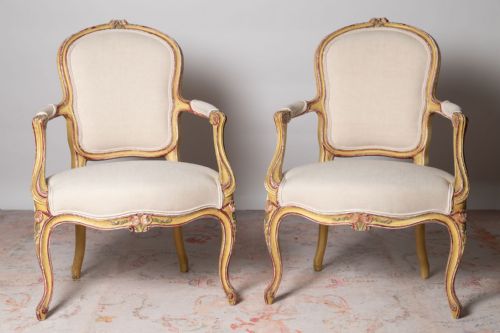
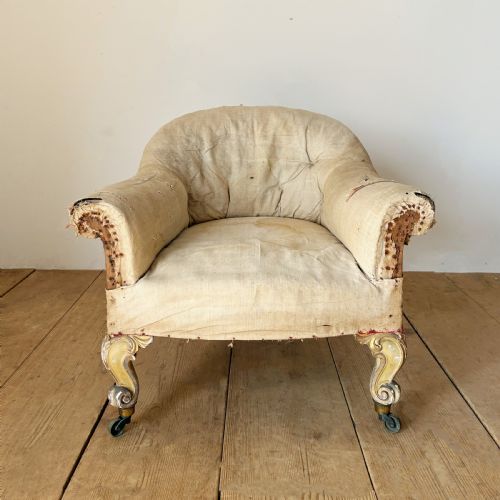
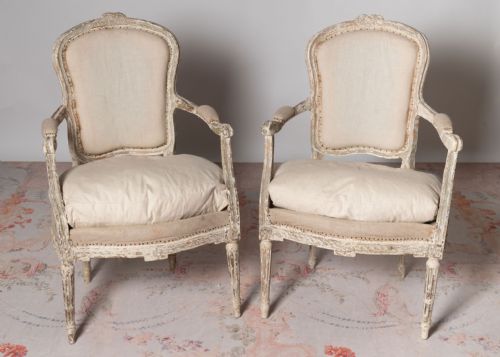
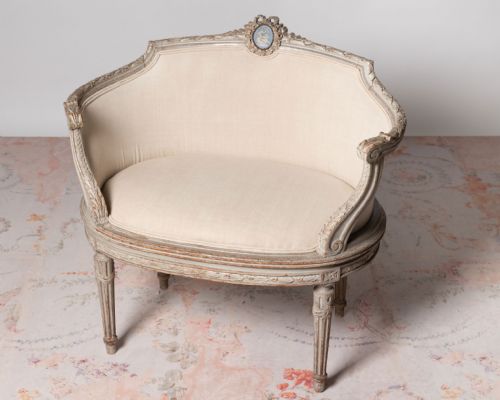
These linen carved armchairs encompass various historical periods including the eighteenth and nineteenth centuries, alongside later nineteenth and twentieth-century interpretations. You will encounter styles ranging from French Louis and Régence to Baroque Revival and Victorian wing backs.
Origins span across French chateau aesthetics and British traditional designs, utilising paint, brass, and exposed timber frames. Buyers looking for linen carved armchairs will find pairs and single items suited to diverse domestic interiors.
How they were made
Construction relies primarily on hardwood frames carved from walnut, mahogany, beech, or finished with giltwood and paint. Artisans shaped these timbers to support upholstered components and intricate structural details.
Upholstery incorporates heavy linen textiles paired with supportive internal padding. Brass elements often accent the joinery and decorative trimming of the frames.
Some chairs arrive bearing the invisible ghosts of nineteenth-century drawing rooms where polite disagreements were settled in deep upholstery.
What varies in quality
The refinement of the timber carving distinguishes foundational joinery, with crisper floral and scroll motifs indicating greater workshop skill. Subtleties in the application of paint and giltwood finish separate standard production from more ambitious output.
Upholstery execution, from the tightness of the linen fit to the underlying suspension, dictates the longevity and tactile presence of each armchair.
Howard & Sons
The Linen Carved Armchairs Glossary
- Fauteuil
- An open-arm armchair originating in France, typically featuring an exposed wooden frame and upholstered seat and back. This form defines many classic saloon seats.
- Giltwood
- Timber treated with gold leaf or gold paint to create a lustrous decorative surface. It frequently characterises Baroque and revival seating.
- Bergère
- An enclosed upholstered armchair with wooden framing and a stuffed back and sides, often including a loose seat cushion. These pieces offer deep comfort.
- Gainsborough armchair
- A wide, upholstered armchair with open padded arms, a high back, and short cabriole legs. They date back to the eighteenth century.
- Wing armchair
- A high-backed seat featuring side panels designed to shield the sitter from drafts. These chairs utilise substantial timber frames beneath dense textile covers.
Linen Carved Armchairs: Frequently Asked Questions
How do I date an antique armchair?
Dating relies on examining the timber species, joinery methods, and stylistic cues present in the carved framework. Secondary woods and tool marks often reveal the manufacturing era.
Comparing structural proportions against known historical periods helps narrow down the decade of production.
Are these armchairs comfortable for daily use?
Many examples are designed with generous proportions and supportive upholstered backs suited for regular seating. Reupholstered pieces often integrate modern internal cushioning while retaining vintage aesthetics.
Their ergonomic design varies depending on whether they originate from formal French salons or traditional British libraries.
How should I care for antique linen upholstery?
Regular gentle vacuuming with a soft brush attachment prevents dust accumulation within the linen fibres. Professional cleaning is recommended for stubborn marks to avoid damaging the textile.
Keep these chairs away from direct sunlight to preserve the natural colour and integrity of the fabric.