


Linen Alphabet Sampler
Linen alphabet sampler works show young hands practising stitches and letters across Georgian and Victorian centuries.
Linen Alphabet Sampler
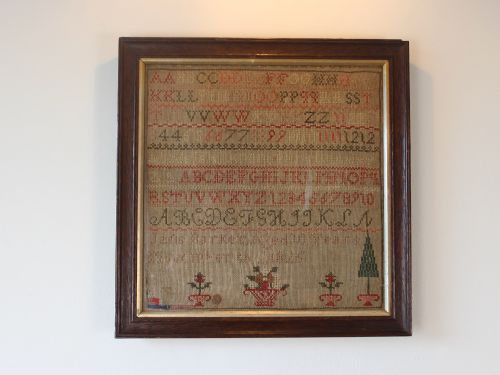
A linen alphabet sampler is a textile piece worked by hand to record letters, numbers, and pious texts. These needlework panels capture domestic education across the 18th and 19th centuries, often finished with names and ages.
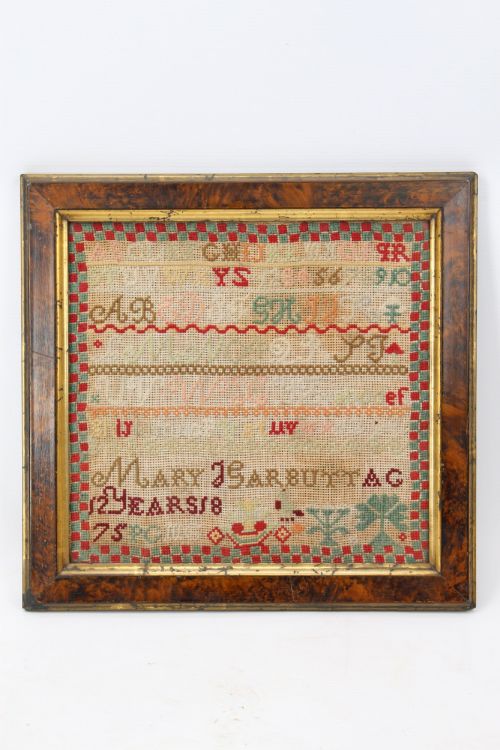
The versions most common on this page date from the Georgian and Victorian periods. They take the form of framed wall art, presenting stitched alphabets alongside names such as Mary J Garbutt or Ann Hodson.
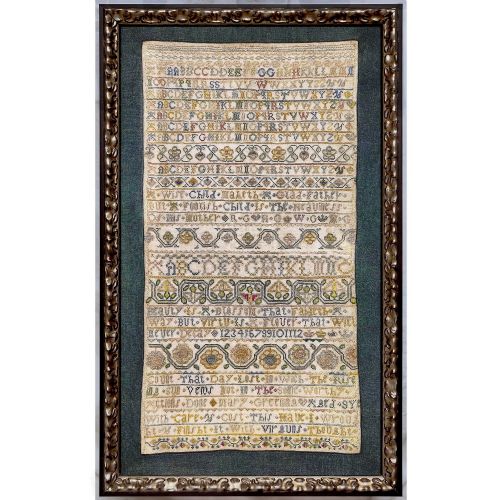
Earlier examples bridge into the 17th century through band samplers, while later pieces stretch towards the close of the Victorian era. Each surviving panel preserves a distinct schoolroom exercise executed in thread on woven cloth.
Materials and construction
Makers worked with linen as a ground fabric, pulling thread, wool, and silk through the weave. Silk thread and wool provide the contrasting tones for the rows of lettering and pictorial motifs.
Needlepoint and embroidery techniques form the rows of letters, numbers, and verses. Workers framed these finished cloths in wood and glass to protect the delicate textile panels from dust and handling.
Qualities that distinguish the works
The density and regularity of the stitchwork separate standard schoolroom exercises from finer pieces. A steady hand and careful spacing across the linen ground produce legible, balanced alphabets and borders.
The survival of original framing and glass protects the underlying silk and wool threads from fading. Complete inscriptions including dates, maker names, and ages add historical depth to the textile.
The Linen Alphabet Sampler Glossary
- Band sampler
- A long, narrow textile featuring horizontal bands of different embroidery stitches and patterns. These early formats allowed young workers to practise diverse techniques in a single piece.
- Needlework
- The craft of decorating fabric using a needle and thread. This term covers all embroidered panels found in the listings.
- Ground fabric
- The base material upon which embroidery is stitched. Linen serves as the primary ground fabric for these historical pieces.
Linen Alphabet Sampler: Frequently Asked Questions
What do these samplers show?
These textiles display alphabets, numbers, and occasionally religious verses or moral texts stitched by hand. Many include the name of the child maker, her age, and a specific date.
Makers often added decorative motifs such as flora, fauna, or buildings beneath the lettering. Each piece records a distinct domestic or schoolroom exercise from the past.
How were they displayed?
Historical pieces are commonly mounted behind glass within wooden frames to shield the fragile threads. This framing preserves the linen ground from atmospheric dirt and physical wear.
When hanging these textiles, owners avoid direct sunlight to prevent the silk and wool threads from fading. Proper placement keeps the delicate needlework secure on the wall.
Who made these pieces?
Young girls in homes or schools stitched these works as part of their education in needle arts. Signatures and ages on the cloth often name individuals such as Margaret Ann Blackow or Sarah Reading.
Institutional pieces also exist, originating from establishments like the Oswestry National School. These named examples tie the textile directly to a specific person and date.
How do I date a sampler?
Makers frequently stitched explicit dates and years directly into the linen alongside their names. Lettering styles, framing methods, and the choice of materials offer further clues for the period.
Georgian and Victorian pieces display shifts in palette and composition that help separate the decades. Examining the reverse of the frame often reveals old papers or labels from previous eras.