


Line Inlaid Chest
A line inlaid chest combines structural timber with precise contrasting stringing, offering both storage and sharp linear detail.
Line Inlaid Chest
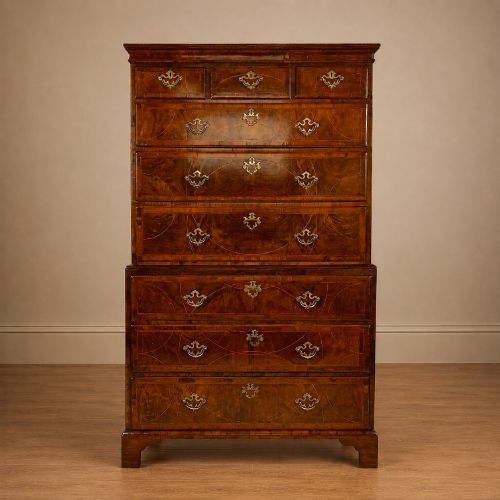
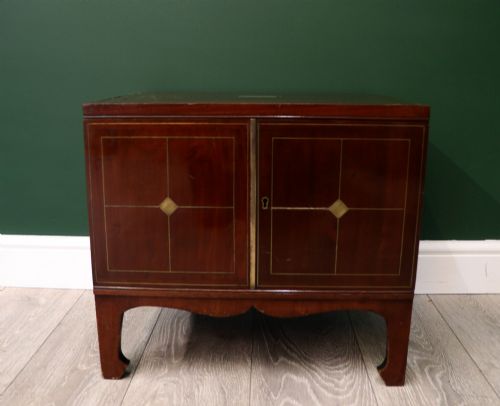
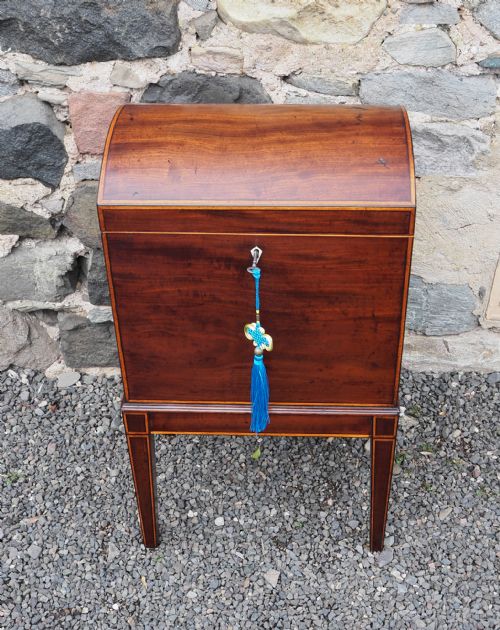
A line inlaid chest brings together traditional timber construction and crisp stringing to define drawers, panels, and borders. When you search for a line inlaid chest, you meet pieces ranging from Georgian and Regency cabinet work to Victorian and Edwardian examples.
The form spans standard chests of drawers, secretaire chests, and chests on chests, alongside smaller items like wine coolers and cabinets. Mahogany, oak, and walnut dominate the selection, often enriched with boxwood, ebony, or satinwood lines.
Georgian and Regency pieces frequently show figured mahogany with dark ebony or pale boxwood stringing framing the drawer fronts. Later Victorian and Edwardian iterations maintain the linear theme across dressing chests, commodes, and music cabinets.
How they were made
Cabinet makers built these pieces using solid timbers like oak and mahogany, frequently applying figured mahogany, burr walnut, or rosewood veneers to primary surfaces. Drawer linings are commonly oak, demonstrating traditional hand-cut dovetails and structural stability.
Inlay work relied on cutting narrow channels into the timber or veneer to receive contrasting strips of boxwood, ebony, or satinwood. These fine lines were glued flush and scraped level before polishing, creating a sharp border that frames the drawer or top.
Listings feature mahogany, oak, walnut, rosewood, and burr walnut, accented with boxwood, ebony, and satinwood stringing across several centuries.
What varies in quality
Quality rests in the crispness of the timber selection and the precision of the stringing work. Superior pieces display continuous, tightly fitted inlay without gaps, paired with well-figured mahogany or walnut veneers that wrap harmoniously across the front.
Internal construction dictates durability, separating standard output from finer workshop production. Oak-lined drawers with precise dovetailing and original brass hardware elevate a piece far above simpler constructions.
The Line Inlaid Chest Glossary
- Stringing
- A narrow strip of contrasting wood inlaid into the surface of furniture to form delicate lines. It defines drawer edges and panels.
- Cross banding
- A border of veneer laid around the edges of a surface so that the grain runs at right angles to the central panel. This technique creates a neat framing effect.
- Secretaire chest
- A chest of drawers featuring a fitted top drawer that pulls down to reveal a writing surface and small compartments. It combines chest storage with a desk.
- Commode
- A low cabinet or chest of drawers designed in the French taste, often featuring a concave or serpentine front. These pieces serve as decorative storage.
- Chest on chest
- A tall case furniture piece comprising an upper chest of drawers stacked directly onto a slightly wider lower chest. It maximises vertical storage.
Line Inlaid Chest: Frequently Asked Questions
What is a line inlaid chest?
A line inlaid chest is a storage piece decorated with narrow strips of contrasting wood set into the surface. These lines follow the outlines of drawers, tops, or panels to create a refined geometric frame.
Such pieces appear across multiple periods, from Georgian walnut chests on chests to Edwardian mahogany dressing chests and Regency commodes.
How do I identify a Georgian chest?
Georgian chests typically utilise dense mahogany or oak linings with hand-cut dovetails and restrained boxwood or ebony stringing. Proportions remain balanced, and hardware often consists of brass swan-neck handles on backplates.
Examining the timber inside the drawers and the crispness of the linear inlay helps distinguish these 18th-century pieces from later revivals.
Where were these chests used?
These chests functioned primarily in bedrooms and dressing rooms for storing garments, linens, and personal valuables. Secretaire variants also served in studies or parlours where writing space was required.
Today, they integrate easily into bedrooms, hallways, or living spaces as functional storage surfaces.
How do I care for a veneer chest?
Veneered surfaces require stable indoor humidity away from direct heat sources and sunlight to prevent timber movement and cracking. Regular dusting with a dry, soft cloth maintains the polish without building up residue.
Applying occasional appropriate wax preserves the sheen of mahogany, walnut, and rosewood without harming the historic finish.
What is a secretaire chest?
A secretaire chest resembles a standard chest of drawers from the exterior, but the top drawer front pulls down on hinges. This drop-front reveals a fitted interior with small drawers and pigeonholes for writing.
It offers dual function as both a chest for garments and a compact bureau for correspondence.