




Limed Oak Table
These limed oak table designs span the early twentieth century and Victorian periods, bringing a pale, pickled finish to dining rooms and studies.
Limed Oak Table
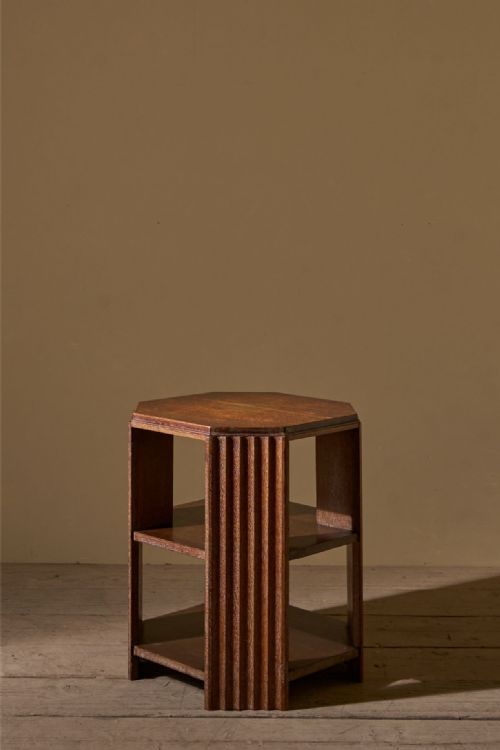
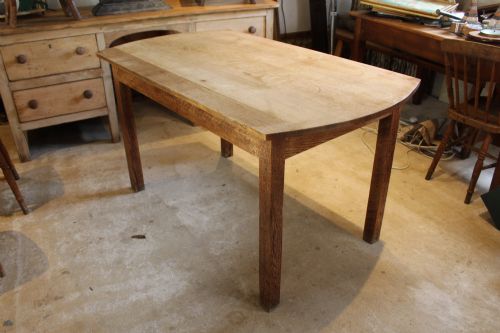
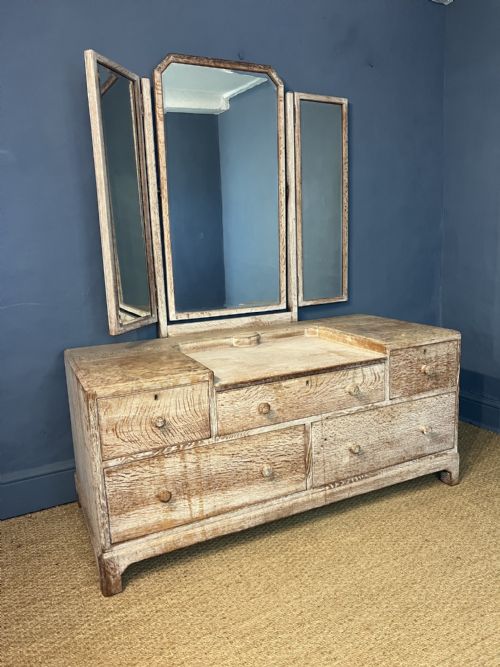
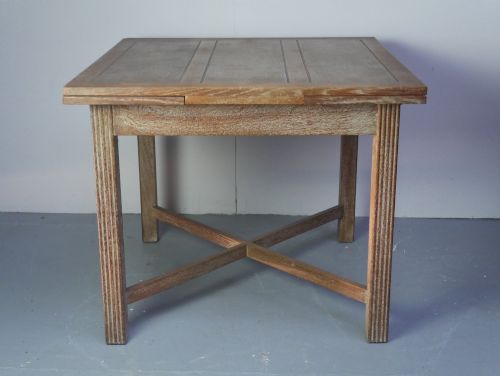
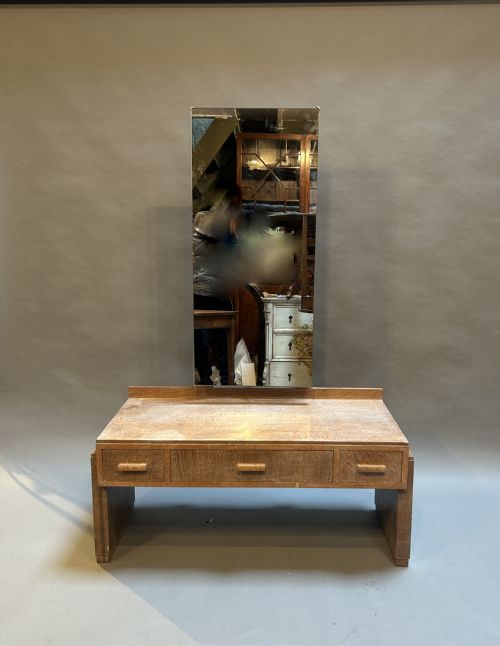
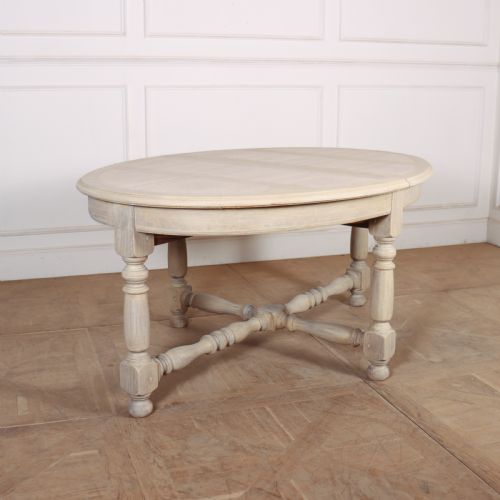
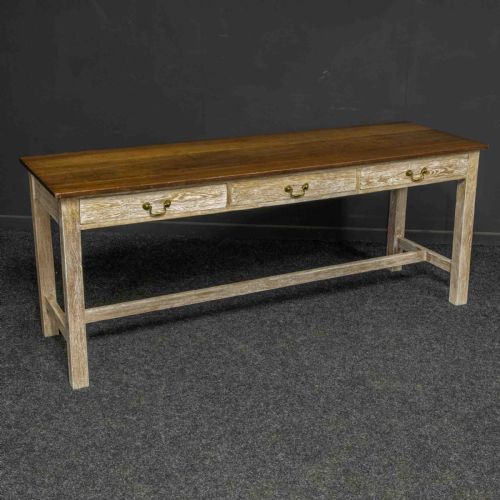
A limed oak table takes several forms across the inventory, ranging from large dining and refectory pieces to smaller side tables, coffee tables, and desks. The finishes often display a pale, brushed appearance created by filling the grain with a white pigment.
Dining and extending versions appear frequently alongside occasional pieces like bedside tables, dressing tables, and book tables. These forms date primarily from the early twentieth century, particularly the 1920s and 1930s, alongside nineteenth-century antecedents.
Makers working in the Arts and Crafts and Art Deco styles utilised this pale finish to highlight the natural grain of timber without resorting to dark varnish. Buyers meet both British workshop pieces and continental European examples in French provincial or farmhouse styles.
What varies in quality
Quality rests upon the integrity of the timber framing and the depth of the limed finish. Pieces produced by recognised workshops exhibit crisp lines, substantial plank thickness, and carefully balanced proportions that separate them from standard commercial output.
The execution of the liming compound dictates visual success, where an even distribution in the grain enhances the character of the oak rather than sitting as a flat, opaque paint layer upon the surface.
Listings feature oak, bleached oak, and pine materials across 1920, 1930, and Victorian periods.
Heals of London·Bath Cabinet Makers·Waring and Gillows
The Limed Oak Table Glossary
- Liming
- A wood finishing technique originally developed to protect timber from insects, later adopted for decorative pale effects on oak furniture. It involves rubbing a white compound into the open pores of the grain.
- Refectory table
- A long, narrow dining table traditionally used in communal halls and domestic dining spaces. Examples in this category often feature solid oak plank tops and sturdy stretcher bases.
- Arts and Crafts
- A design movement emphasising handcraftsmanship, simple forms, and traditional joinery. Pieces from this tradition often prioritize honest construction and natural materials.
- Art Deco
- A style popular during the 1920s and 1930s characterised by sleek geometric shapes, streamlined forms, and modern material pairings. In limed oak, this translates to curved silhouettes and stepped details.
- Bleached oak
- Timber treated with chemical agents to lighten its natural colour before finishing. This process produces a pale, uniform tone distinct from traditional pigment liming.
Limed Oak Table: Frequently Asked Questions
How do I clean a limed oak table?
Dust the surface regularly with a soft, dry cloth to prevent dirt from settling into the porous grain. Avoid harsh chemical cleaners or excessive water, which can strip the white liming compound from the wood.
For stubborn marks, use a slightly damp cloth with mild soap, then dry the area immediately. Periodic waxing helps protect the timber without disturbing the pale grain finish.
What is the difference between limed oak and bleached oak?
Liming involves applying a white pigment or paste directly into the open pores of oak timber after staining or finishing. This leaves a contrasting white line within the darker grain pattern.
Bleaching uses chemical agents to strip the natural dark colour from the wood fibres entirely. This creates an even, pale blonde timber tone across the whole surface rather than filling the grain.
Are these tables suitable for everyday dining?
Most solid oak dining and refectory formats were built for daily use and robust family life. Their sturdy frames and thick plank tops handle regular meals well.
Use placemats and coasters to protect the finish from heat and moisture rings. Promptly wipe up spills to prevent staining the porous oak.
How can I date an antique limed oak table?
Examine the construction methods, hardware, and overall stylistic markers such as Arts and Crafts joinery or Art Deco curves. Edwardian and 1920s pieces often display hand-planed surfaces alongside machine-cut elements.
Look for maker stamps, labels, or attribution details beneath the top or inside drawers. Nineteenth-century examples typically feature heavier carved detailing and hand-cut joinery.