





Light Wood Tallboy
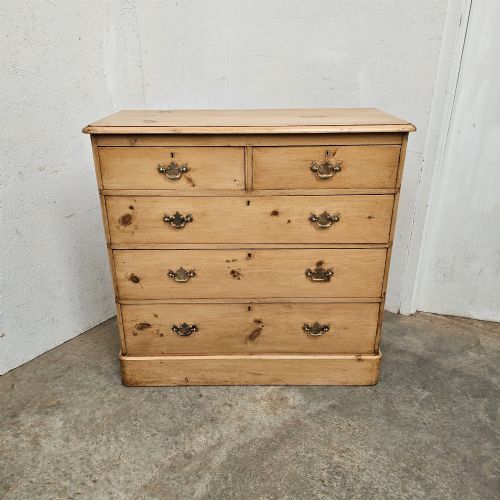
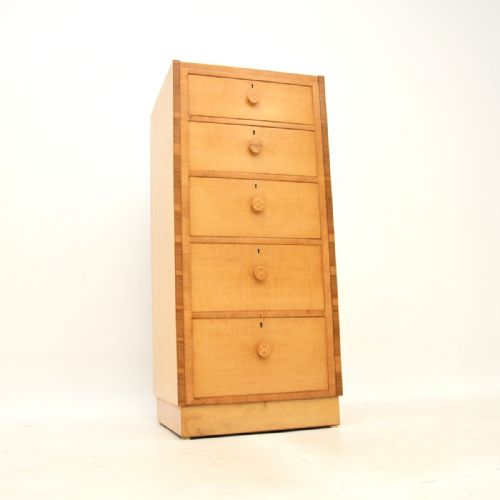
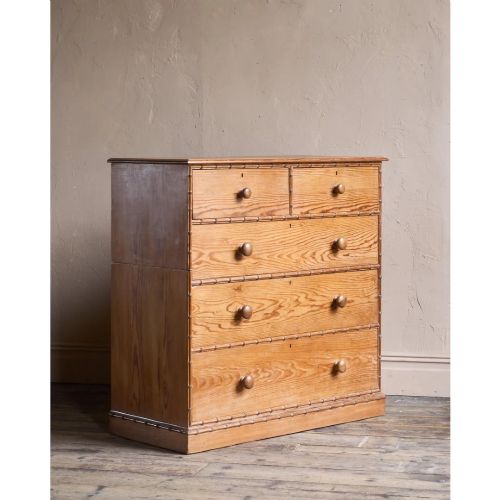
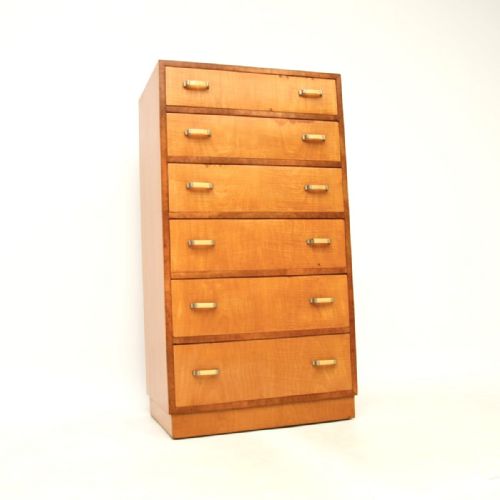
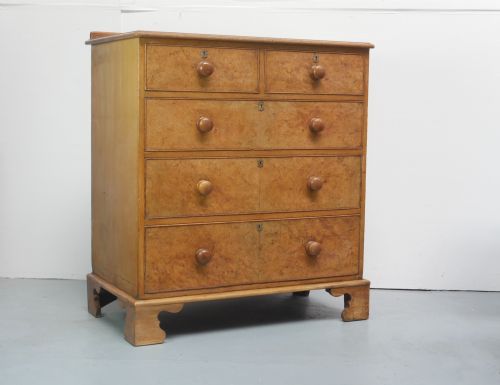
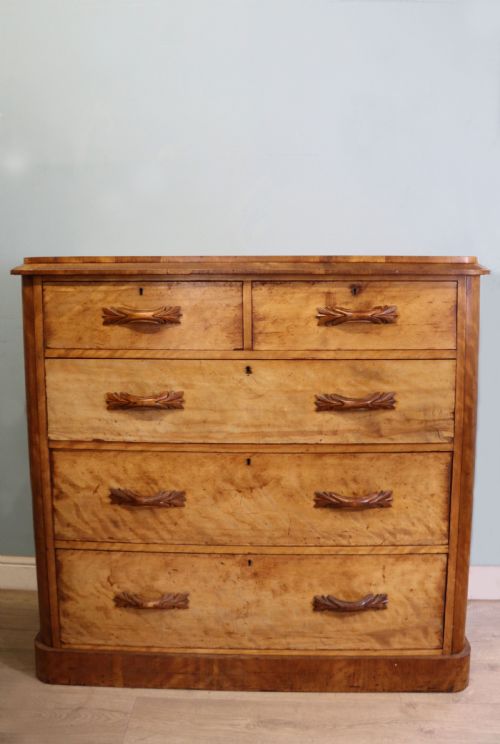
These light wood tallboy pieces offer generous storage in pale timbers like satinwood and sycamore, bringing both height and understated character to a room.
Light Wood Tallboy
A light wood tallboy provides vertical storage through stacked drawers, drawing on periods from the Georgian era through to Art Deco and the nineteenth century. Buyers searching this phrase encounter chests of drawers, cabinets, and chest on chest forms fashioned from pale timbers rather than dark hardwoods.
The pieces on this page span styles such as Swedish Biedermeier, Arts and Crafts, and English Country, reflecting a broad geographic spread from British workshops to French and Swedish makers. Satinwood, birch, sycamore, and ash dominate the material palette, offering a distinct visual lightness compared to traditional mahogany or walnut.
Tallboys and chests of drawers in this selection often utilise clean lines, particularly in Art Deco iterations from the nineteen-thirties featuring blonde birds eye maple or walnut and satinwood combinations. Robust nineteenth-century constructions in pine and oak also appear, providing substantial capacity without heavy visual weight.
How they were made
Makers constructed these pieces using solid timbers and select veneers applied to supportive carcases of pine, oak, or general timber. Flame birch, satinwood, and birds eye maple appear as decorative surface treatments that highlight natural grain patterns across drawer fronts and doors.
Hardware details typically involve brass fixtures, while specific forms incorporate metal elements alongside timber framing. Construction methods range from traditional joinery found in Georgian and nineteenth-century examples to the streamlined cabinetry characteristic of nineteen-thirties production.
Some nineteenth-century French designers built double Wellington chests with locking arms, ensuring midnight garment selections remained strictly confidential.
What varies in quality
The refinement of the timber selection distinguishes pieces across the range, particularly in how decorative veneers like birds eye maple or flame birch are matched and balanced across multiple drawer fronts. Subtleties in grain movement and the crispness of edge detailing separate standard cabinetwork from exceptional maker-attributed examples.
Proportion and structural integrity also define the grade of a piece, with well-balanced heights and harmonious brass hardware elevating the overall presence. The cohesion of the design, whether adhering to Arts and Crafts simplicity or Art Deco styling, dictates the success of the execution.
Hille·Howard and Sons·Betty Joel
The Light Wood Tallboy Glossary
- Tallboy
- A tall chest of drawers, typically comprising a chest placed upon another or built as a single high unit to maximise vertical storage. This form is common in various period pieces.
- Satinwood
- A hard, durable timber with a characteristic golden sheen and satin-like lustre. It was frequently utilised for fine cabinetwork during the eighteenth and nineteenth centuries.
- Birds eye maple
- Figured timber showing small dots or swirls that resemble bird's eyes caused by depressions in the annual rings. Art Deco designers favoured this decorative wood for its striking surface pattern.
- Biedermeier
- A Central European style dating from the nineteenth century characterised by utilitarian focus and clean, minimalist lines. Swedish examples in birch are particularly notable.
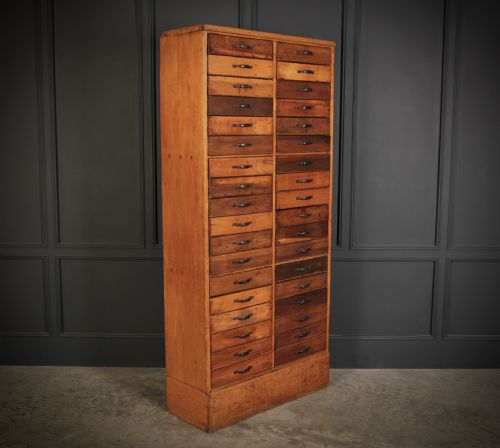
- Haberdashery cabinet
- A multi-drawer storage unit originally designed for retail display or sorting small dry goods. These pieces feature numerous shallow drawers suitable for organised storage.
Light Wood Tallboy: Frequently Asked Questions
Where did tallboys originate?
The tallboy form evolved in the eighteenth century as a practical solution for maximising storage capacity within a compact floor footprint. Cabinetmakers adapted standard chest designs by stacking sections vertically.
Over subsequent centuries, makers across Britain, France, and Sweden reinterpreted the form to suit changing domestic interiors and prevailing stylistic movements.
How do I style a light wood tallboy?
Light timbers naturally brighten domestic spaces, making these pieces suitable for bedrooms, hallways, or living areas where heavy furniture would overwhelm the room. Their neutral tones coordinate easily with various colour schemes.
Allowing the grain pattern to remain the primary focus prevents visual clutter and highlights the natural characteristics of satinwood, birch, or maple.
What is the difference between a tallboy and a chest on chest?
A chest on chest strictly consists of one cabinet stacked directly upon another larger cabinet, creating a tall two-part structure. Tallboys often describe similar high storage units built as a single tall carcass.
Both forms offer multiple tiers of drawers designed to hold clothing and household linens while occupying minimal floor space.
How do I care for satinwood and birch surfaces?
Preserving light wood surfaces involves keeping furniture away from direct sunlight and excessive heat sources that can dry out timber or fade veneers. Regular dusting with a soft, dry cloth maintains the finish.
Applying appropriate wax polishes occasionally helps nourish the wood and protects the natural lustre without building up heavy residues.