

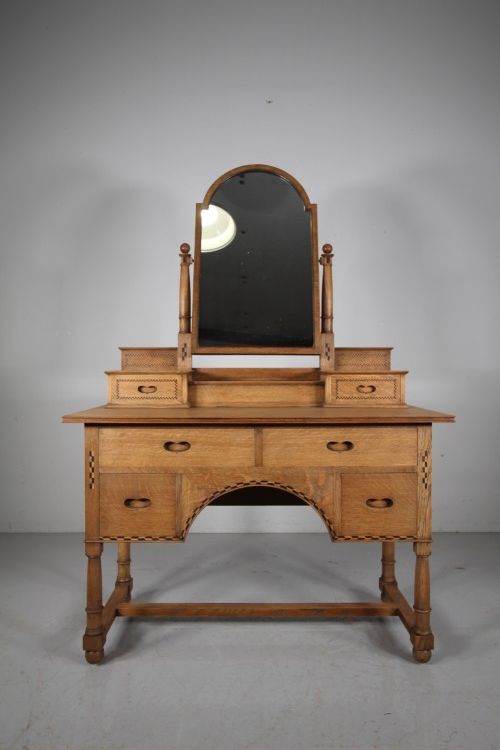
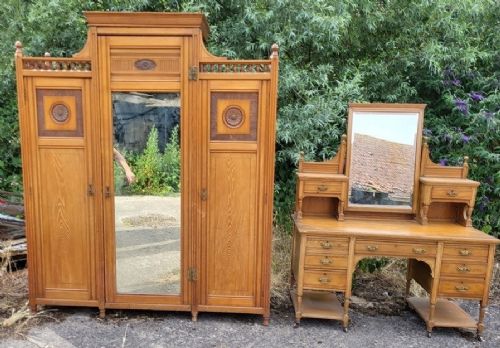


Light Oak Dressing Mirror
These pieces of light oak dressing mirror bring warmth and clear reflection to a bedroom, combining honest timber with practical design.
Light Oak Dressing Mirror
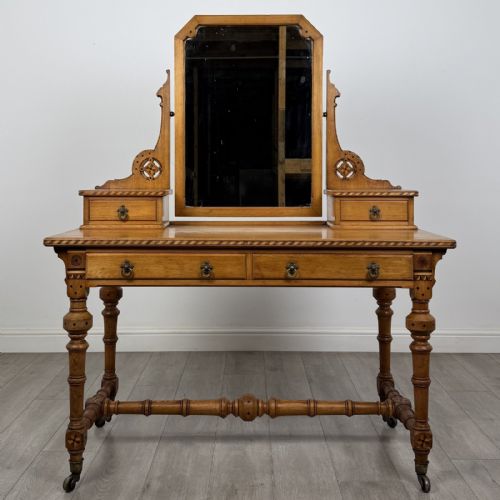
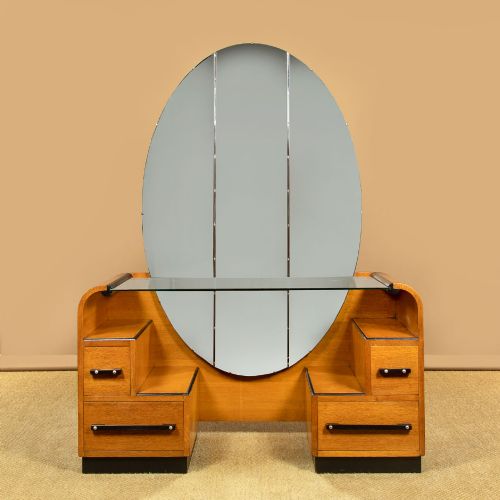
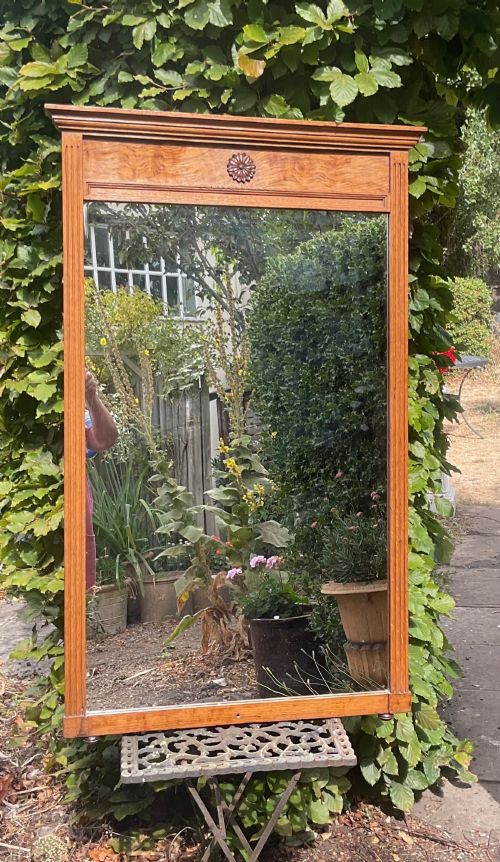
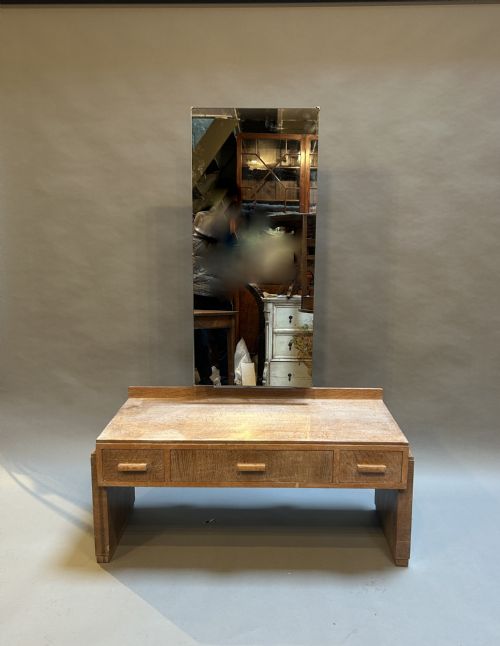
A light oak dressing mirror provides a functional surface and glass for grooming, emerging in forms ranging from compact table pieces to tall cheval mirrors and complete bedroom suites. These objects combine pale wood frames with adjustable glass, often resting upon dressing chests or standing independently on the floor.
The pieces on this page span from the late nineteenth century into the nineteen-thirties, covering Arts and Crafts, Edwardian, and Art Deco periods. Buyers frequently encounter dressing tables and chests fitted with pivoting mirrors alongside dedicated cheval glasses.
How they were made
Cabinetmakers constructed these frames primarily from solid oak, frequently incorporating ash, walnut, and wood inlay for contrast and decoration. Brass fittings secure the pivoting mechanisms of the glass, while fabric occasionally lines interior compartments.
Craftsmen applied techniques characteristic of the Arts and Crafts, Cotswold School, and Art Deco movements, joining timber with visible skill and precision. Marquetry inlay appears on select surfaces, demonstrating careful hand-cutting of contrasting veneers into the oak.
Light Oak Dressing Mirror Retail Price Guide 2026
Typical asking prices for light oak dressing mirror among the pieces listed under this phrase on Sellingantiques today, from the lower quarter to the upper quarter. They describe what is for sale here now, not the wider market.
Object forms span dressing tables, bedroom suites, cheval mirrors, and wall mirrors.
What varies in quality
Quality rests upon the integrity of the timber selection and the restraint of the design, distinguishing standard commercial production from pieces bearing the marks of notable workshops. Grain selection in the oak and the balance of the proportions dictate the visual success of the mirror.
The sophistication of the hardware, such as cast brass pivots and original mirror plates, separates finer examples from later replacements. Pieces retaining maker labels or originating from recognised circles demonstrate superior construction and finish.
Shapland & Petter·Heals·Arnott & Co Dublin
The Light Oak Dressing Mirror Glossary
- Cheval mirror
- A freestanding full-length mirror suspended within a frame that allows it to tilt. These tall glasses originated in the eighteenth century and remained popular through the Edwardian period.
- Arts and Crafts
- A design movement emphasising handcraftsmanship, simple forms, and honest materials. It rejected mass production in favour of traditional construction methods.
- Marquetry
- The art of applying pieces of veneer to a structure to form decorative patterns. Craftsmen use contrasting woods to create pictorial or geometric designs.
- Cotswold School
- A twentieth-century British craft movement rooted in the ideals of the Arts and Crafts exhibition society. It values traditional woodworking techniques and unadorned oak.
- Dressing chest
- A low chest of drawers fitted with an attached mirror. This form became a bedroom staple in the Victorian period.
Light Oak Dressing Mirror: Frequently Asked Questions
How do I date a light oak dressing mirror?
Dating relies upon stylistic markers, construction methods, and hardware. Pieces from the late nineteenth century often display Victorian revival details, whereas nineteen-twenties and thirties examples show cleaner geometric lines influenced by Art Deco.
Makers' labels or stamps provide definitive periods. Examining the joinery and the type of mirror glass further helps establish the era of manufacture.
Can I adjust the angle of the mirror?
Most table and chest mirrors use side pivots made of brass or wood that allow the glass to tilt forward and backward. Tightening or loosening the screws on the arms controls the resistance.
Freestanding cheval mirrors hang in a vertical frame on side axes, enabling a full tilt to suit different heights. Original fittings move smoothly without slipping.
Are these mirrors fixed to the dressing tables?
Many mirrors detach from the underlying chest or table for ease of transport and placement. They mount onto upright supports secured by wooden pegs or metal bolts.
Some Arts and Crafts and later pieces integrate the mirror frame directly into the main structure of the dressing chest. Checking the back reveals how the glass connects to the base.
How do I care for the oak frame?
Maintain the timber by dusting with a soft, dry cloth and applying a quality beeswax periodically to nourish the grain. Avoid placing the mirror in direct sunlight or near heat sources to prevent the oak from drying out.
Keep glass cleaner away from the wooden frame when cleaning the mirror plate. Natural oils in the wax help preserve the pale tone of the oak.