


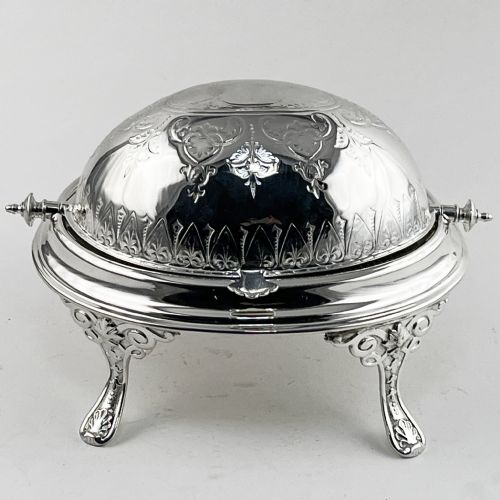


Lidded Serving Dish
A lidded serving dish brings functional elegance to the dining table, offering covered warmth for sauces, vegetables, and entrees.
Lidded Serving Dish
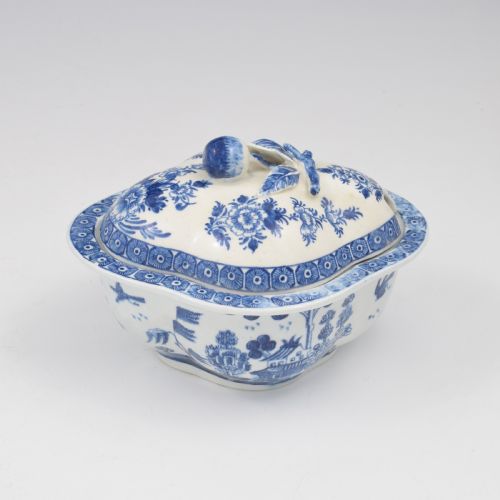
A lidded serving dish encompasses diverse table vessels such as sauce tureens, vegetable dishes, entrée dishes, and warming dishes. These pieces originate across multiple eras, stretching from eighteenth-century porcelain workshops to nineteenth-century silver plate manufacturers and twentieth-century modernist studios.
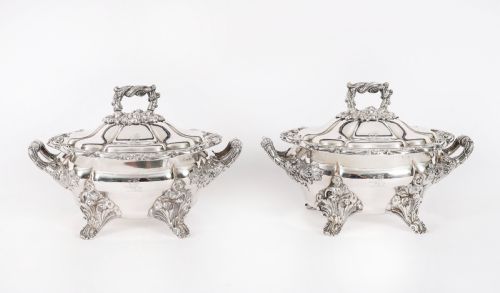
The most common examples encountered in this selection are silver plated Edwardian and Victorian entrée dishes alongside nineteenth-century earthenware and ironstone tureens. Buyers also find Georgian Old Sheffield plate vessels and porcelain pieces decorated with transfer prints or hand-painted patterns.
Forms range from simple rectangular and oval boxes to quatrefoil sauce tureens, boat-shaped dishes, and revolving butter holders. Each shape reflects the dining customs of its period, designed to keep food warm and presentable at the table.
Materials and Techniques
Metal vessels rely on silver plate, Old Sheffield plate, copper, and electroplated nickel silver, shaped into rectangular or oval containers often featuring applied handles and lids. Makers utilised fusing techniques for Old Sheffield plate and later adopted electroplating processes to coat base metals with silver.
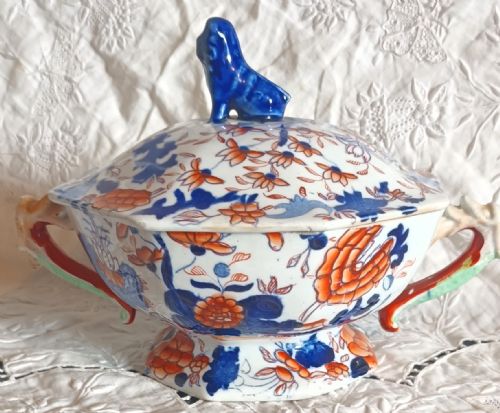
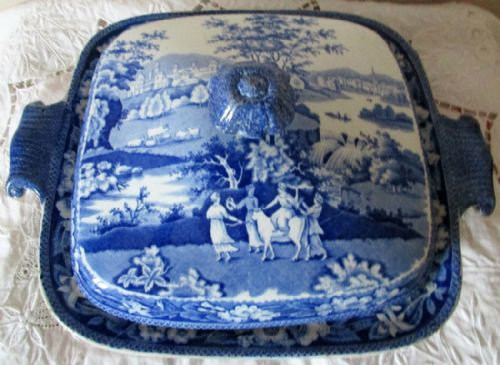
Ceramic and porcelain examples involve earthenware and ironstone bodies finished with glazes, gold leaf accents, and blue and white transfer printing. Potteries shaped these bodies into tureens and vegetable dishes before applying intricate patterns like Japanese Imari designs or Chinoiserie motifs.
Listings feature silver plate, copper, earthenware, and porcelain lidded serving dish forms spanning the Georgian, Victorian, and Edwardian eras.
Assessing Craftsmanship
Quality rests on the crispness of decorative details, from the relief moulding on ironstone bodies to the weight and finish of silver plated mounts. Superior metal pieces exhibit robust construction with well-fitted lids and substantial handles, while finer ceramics display clean glaze surfaces and sharply printed transfer details.
The distinction between standard production and exceptional work also involves the prominence of the maker or pottery, with documented pieces from established firms demonstrating superior execution in form, engraving, and proportion.
John and Richard Riley·Hamilton and Inches·Flight Barr and Barr·Daniel and Arter·James Wallace and Company·Walker and Hall·Elkington·Matthew Linwood·William Hutton and Sons·Cresswick
The Lidded Serving Dish Glossary
- Entrée Dish
- A lidded container specifically designed for serving the main course or side dishes at the dining table. These rectangular or oval vessels frequently feature removable handles for versatile table arrangement.
- Sauce Tureen
- A small covered vessel equipped with handles and often a matching ladle, intended for serving gravies and sauces. Eighteenth and nineteenth-century examples often sit on fixed bases or attached stands.
- Old Sheffield Plate
- A composite material created by fusing a thin sheet of silver to a thicker copper base before rolling and shaping. This technique preceded modern electroplating and remains identifiable by subtle copper edges.
- Ironstone
- A durable type of heavy earthenware patented in the nineteenth century to rival porcelain. It provides a sturdy body for vegetable tureens and serving dishes decorated with transfer prints.
- Transfer Print
- A decoration method where an engraved copper plate transfers a design onto paper, which is then stamped onto ceramic before glazing. This technique enabled uniform production of complex blue and white patterns.
Lidded Serving Dish: Frequently Asked Questions
What is an entrée dish?
An entrée dish is a lidded container used during formal meals to serve portions of food directly at the table. They were standard additions to nineteenth-century dining services.
Most examples include a fitted cover to retain heat, and many feature handles that detach to allow the base to function as an open platter.
How do I clean silver plated serving dishes?
Silver plated items require gentle cleaning with warm water, mild soap, and a soft cloth to protect the delicate plated surface. Avoid harsh abrasive cleaners that strip the silver layer.
Regular polishing with a specialised silver cream maintains the shine without wearing down the underlying base metal.
What is Old Sheffield plate?
Old Sheffield plate is an early form of plated metal produced by fusing silver and copper together under high heat. This method results in a durable material used extensively for Georgian tableware.
Under close inspection, tiny lines of exposed copper reveal themselves along the extreme edges and seams of these older pieces.
Can I use these antiques for daily dining?
Many lidded serving dishes remain entirely functional for modern dining and entertaining, particularly silver plated or ironstone pieces. Hand washing preserves their finishes and structural integrity.
Ceramic items with extensive crazing or delicate gold leaf detailing benefit from lighter use or display rather than heavy everyday service.