


Lidded Pewter Vessel
These lidded pewter vessel examples span centuries of drinking culture, offering heavy metal and ceramic forms built to hold spirits, beer, and church wine.
Lidded Pewter Vessel
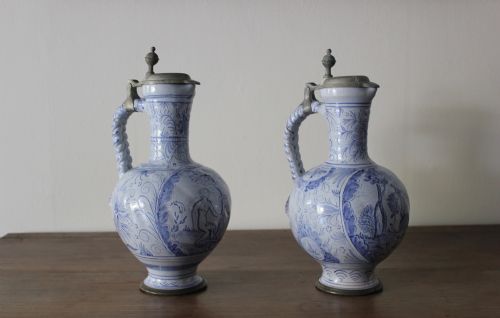
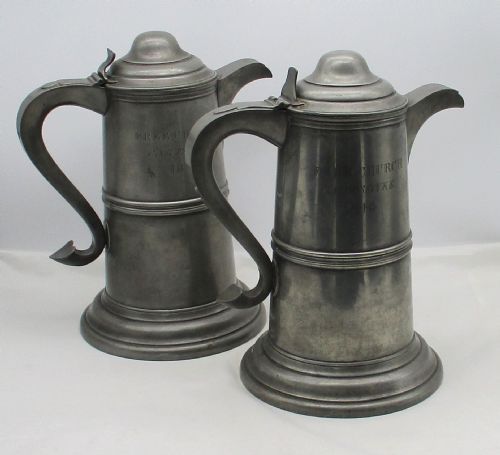
A lidded pewter vessel encompasses a diverse group of drinking and pouring containers, ranging from tall church flagons and heavy beer tankards to small spirit measures and relief-moulded pitchers. When exploring a lidded pewter vessel, buyers encounter pieces fashioned in styles spanning Dutch Baroque, Georgian, Victorian, Arts and Crafts, and Art Nouveau.
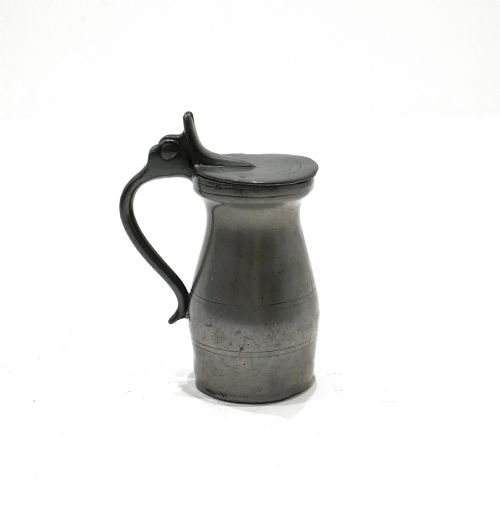
Domestic pieces such as pint dome-lid tankards and half-gill spirit measures sit alongside monumental German beer flagons and ecclesiastical church flagons. Each lidded pewter vessel serves as a functional artefact of historical hospitality and ritual, retaining hinged lids designed to protect contents.
Materials and construction
Makers constructed these pieces primarily from cast pewter alloy, alongside salt-glazed stoneware, white stoneware, earthenware, and tin glaze. Metalworkers poured molten pewter into moulds, finishing the surfaces by hammering and turning on a lathe.
Potters shaped ceramic pitchers and tankards on the wheel or pressed clay into moulds to achieve raised decorative reliefs, adding applied cobalt highlights or tin-glazed surfaces. Hinged metal lids, thumbpieces, and handles were subsequently soldered or fitted to secure the contents of each vessel.
Listings span the eighteenth century, nineteenth century, Edwardian period, and nineteen hundred, uniting metalwork with stoneware and earthenware.
Factors of quality
Quality in these objects rests upon the crispness of cast or moulded detail and the structural integrity of the hinged lid assembly. Superior examples maintain the original balance of their thumbpieces, handles, and thumb-lifts without heavy solder repairs or replacement parts.
The presence of legible touchmarks, maker stamps, or capacity verification marks elevates an item by confirming its origin and period authenticity. Finer pieces demonstrate careful finishing of the metal surface and harmonious proportions between the vessel body and its lid.
John Heaney of Dublin·Archibald Knox for Liberty & Co·Charles Meigh·Robert Iles of London·Burgum & Catcott of Bristol
The Lidded Pewter Vessel Glossary
- Flagon
- A large drinking vessel with a handle and lid, frequently used for church services or communal drinking. These pieces often feature capacity marks and tall spires.
- Spirit measure
- A small container utilised for dispensing exact quantities of alcohol, such as a half gill. They display precise volumetric regulation.
- Salt-glazed stoneware
- A ceramic material fired at high temperatures where salt is thrown into the kiln to produce a pitted, orange-peel texture. This technique creates robust, impermeable vessels.
- Touchmark
- An official stamp or hallmark impressed into pewter by a maker or guild member to guarantee standard quality and alloy composition. These marks help identify the workshop and date.
- Thumbpiece
- The small lever attached to the lid of a tankarded vessel, designed to be pushed by the thumb to open the lid easily. It forms a key stylistic element of the handle.
Lidded Pewter Vessel: Frequently Asked Questions
What is a lidded pewter vessel used for?
These vessels served primarily to store, measure, and serve liquids such as beer, wine, spirits, and church communion wine.
The attached lid helped keep dust out and retained the temperature and effervescence of the drink inside taverns, homes, and churches.
How do I identify an eighteenth century piece?
Eighteenth-century examples often display flat lids, early thumbpiece designs, and narrow capacity marks associated with pre-imperial measurements.
Look for touchmarks stamped directly onto the metal surface, which connect the piece to specific regional guilds and known makers.
Why are some vessels ceramic instead of metal?
Potters across Germany and the Netherlands produced ceramic flagons and pitchers alongside metalsmiths to serve similar drinking and pouring functions.
Materials like salt-glazed stoneware and tin-glazed earthenware offered alternative decorative possibilities through moulded reliefs and cobalt painting.
How should I clean a lidded pewter vessel?
Pewter requires gentle cleaning with warm water and mild soap, followed by thorough drying with a soft cloth to prevent spotting.
Avoid harsh chemical polishes and abrasive scouring pads that strip away the historical surface patina and damage softer metal alloys.